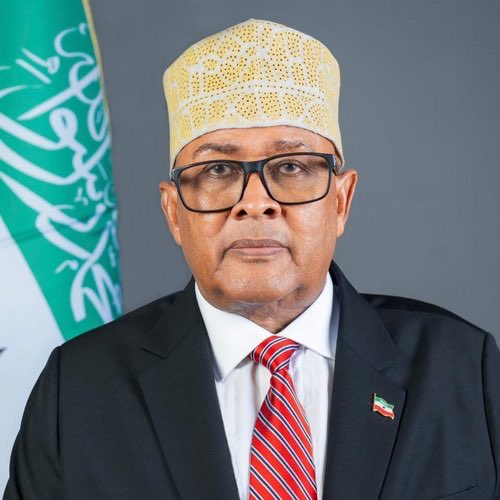
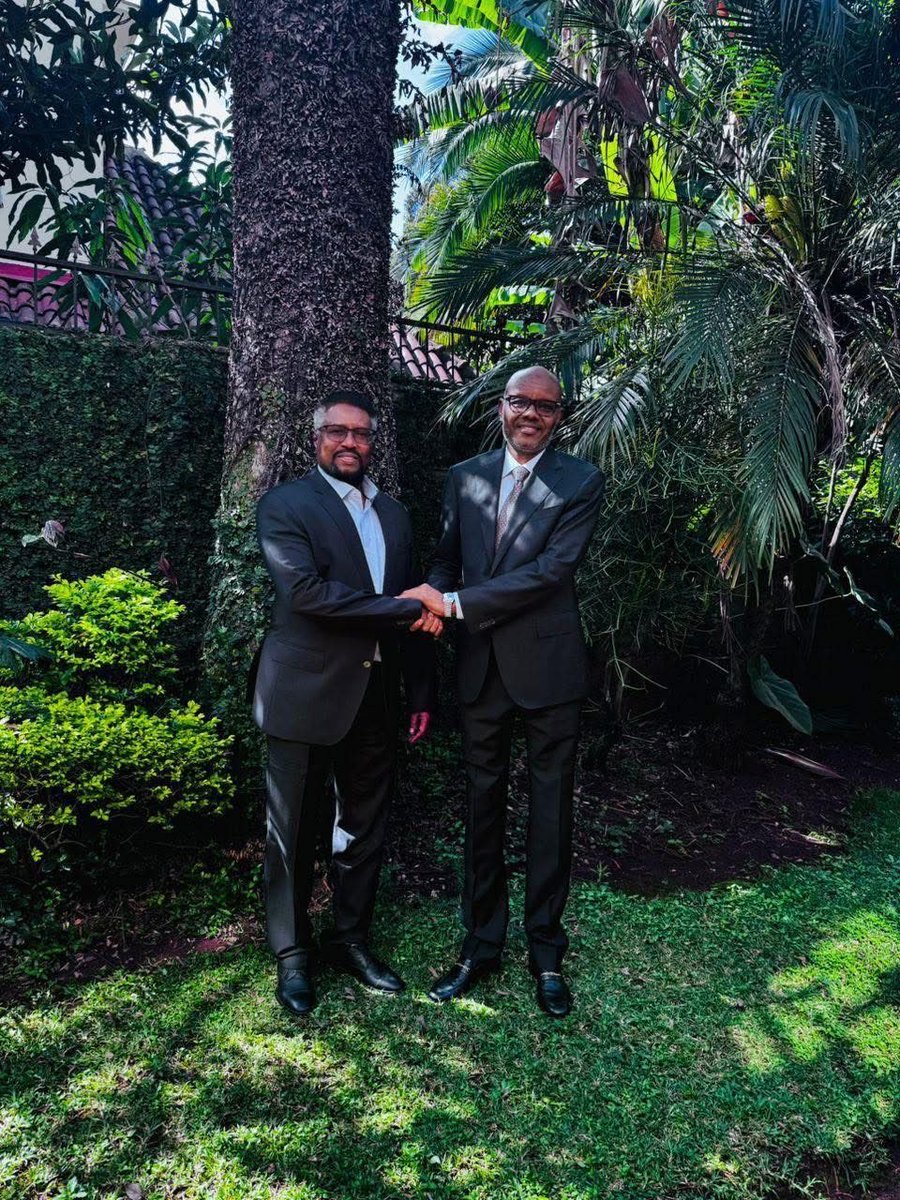
President Cirro's appearance at the Hudson Institute was a missed opportunity. While his lobbyists succeeded in securing high-level access in Washington, that access did not translate into a compelling case for policy change.
The reality remains that the United States continues to adhere to a one-Somalia policy. This position is not driven solely by access to Somalia. It is rooted in broader concerns about the African Union's border principle, regional stability, and precedent. From Washington's perspective, it already maintains security and diplomatic cooperation with partners across Somalia, including Somaliland, without incurring the costs of shifting its recognition policy.
This highlights a strategic gap. Mogadishu is underperforming on governance and unity, but pointing that out is not a strategy. For Hargeisa, continued reliance on visibility in Washington without a clear offer that addresses US strategic interests will not move the needle.
It is time to change approach and pursue a directly negotiated settlement with Mogadishu that secures Somaliland's core interests, rather than waiting for external recognition that is not forthcoming.
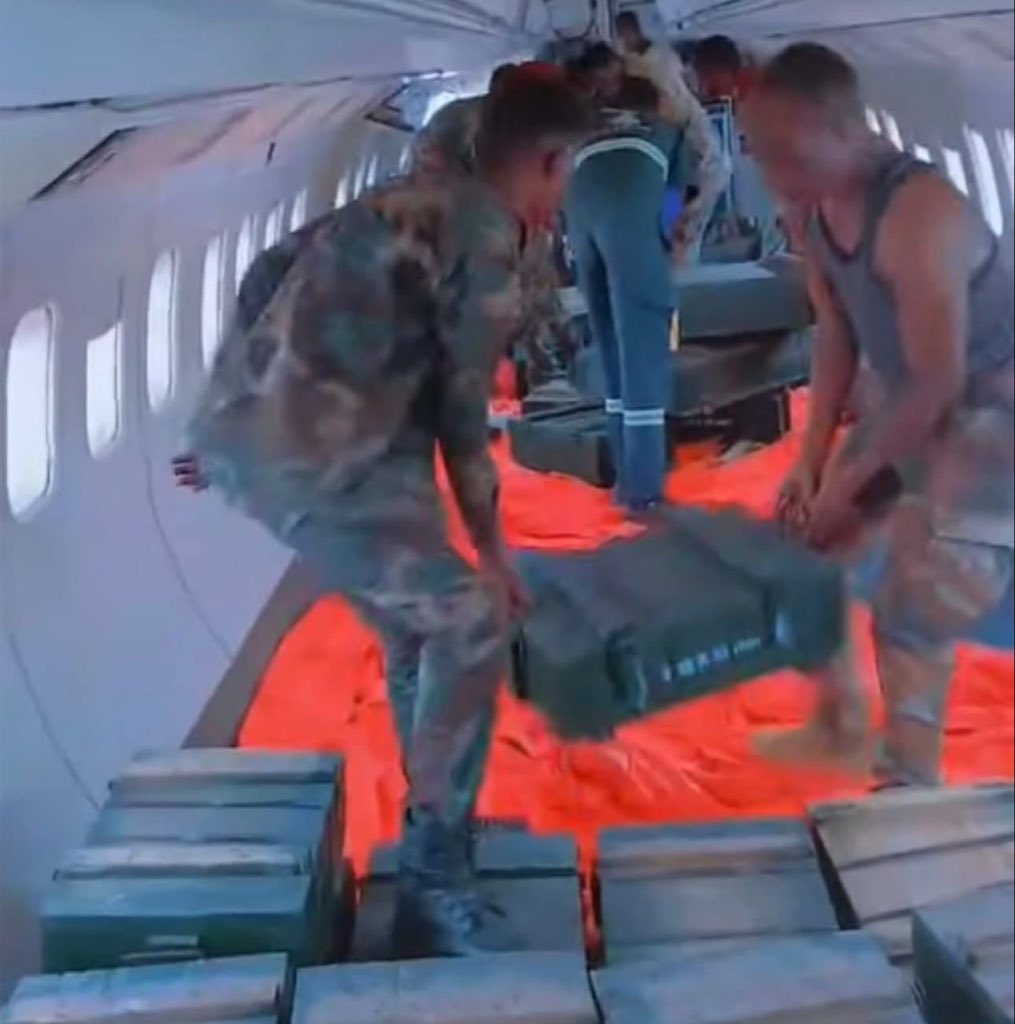
There are deeply troubling reports that the federal government, under President Hassan Sheikh, is loading weapons onto planes for use against Southwest State (see the picture below for proof). These are not just weapons; they belong to the Somali people. They were meant to defend the country and protect its citizens, not to be turned inward.
Seeing them prepared for use in an internal confrontation is painful and unsettling. It raises serious questions about the direction the country is taking. At a time when Somalia needs calm, dialogue, and unity, this kind of move risks pushing the nation toward unnecessary conflict.
No political objective should come at the cost of Somali lives. If this path continues, the consequences will be felt far beyond Southwest State.
@sec_council@UKinSomalia@US2SOMALIA@EU_in_Somalia@AmbWangYu@AsstSecStateAF@ACAfricaCenter@_AfricanUnion@US_SrAdvisorAF
@UNTMIS @francescaDM_EU@ymahmoudali
“Barawe” has never functioned as a capital city, neither in practice nor in governance. Not a single parliamentary session has ever been held there, and no cabinet meeting has taken place in the city.
The real seat of authority has always been in Baidoa, where the parliament and executive institutions operate and where governance is actually exercised.
Against this undeniable reality, the Federal Government of Somalia’s aggressive push to impose elections in Barawe is not only unjustifiable, it is reckless. The deployment of SNA troops to the city this morning sends a clear and troubling message. This is no longer about consensus or legality, but about forcefully imposing a political agenda.
Southwest State forces are now on high alert and prepared to defend their position. The risk of confrontation is no longer hypothetical, but it is imminent.
Let there be no mistake provoking instability in Barawe is a grave miscalculation. It is not in the interest of the Federal Government, nor the Somali people. If this escalation leads to conflict, the responsibility will rest squarely with the FGS.
The constitutional amendments pushed through unilaterally have now been declared complete. For a moment, let us set aside the dispute over whether a legitimate quorum was present or not.
Yet the reality on the ground remains the same. The day still has twenty-four hours. Al-Shabaab is still active. Drought continues to affect communities across the country. No one has suddenly become prosperous, and Villa Somalia has certainly not turned into a golden dome overnight.
In truth, nothing meaningful has changed for ordinary people. If anything, the only visible result so far is that the political divisions within the country appear to have grown even deeper.
The Upcoming Meeting between the Opposition and the Somali Government: What to Expect?
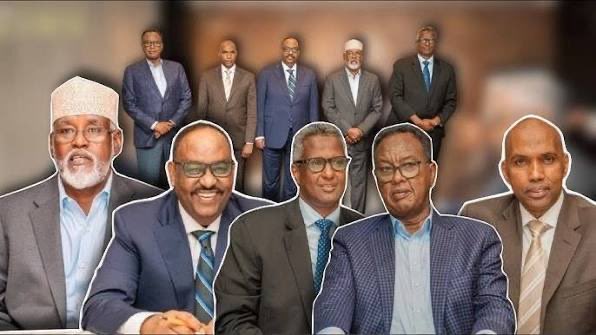
So far, the Federal Government has shown little sign of easing its stance on two issues at the center of the dispute: the modality of the upcoming elections and its unilateral push to amend the constitution. These moves have already hardened opposition resistance, and the opposition appears unwilling to treat them as negotiable or acceptable starting points.
In this climate, the meeting may fail before it truly begins. The political divide has become so sharp that there seems to be little appetite to negotiate in good faith. On the government side, flexibility appears limited, with signals that the administration is prepared to remain in office even if its term expires. The opposition, meanwhile, is equally uncompromising, insisting it will not accept the government staying in power for even a single day beyond its mandate.
To avoid a constitutional crisis and to reduce the space for external interference, both sides must approach the talks with genuine good faith. That means coming to the table ready to compromise and stepping away from the mindset of “I must win.” Somalia does not need victors and losers from this meeting. It needs a workable agreement that protects legitimacy, stability, and national sovereignty.
Every time parliament meets lately, it descends into chaos. As the leadership is determined to push through the remaining parts of the federal constitution by force, then it would have been better to finish and approve it away from the parliament floor.
Either way, many people already see the process as unlawful, so turning it into a televised spectacle only makes the harm deeper and further destroys public trust.
Af-Somali
Mar kasta oo Baarlamaanka uu kulmo waayadan, kulanku wuxuu ku dhammaadaa fowdo. Maadaama hoggaanku go’aansaday in ay awood ku meel-mariyaan qaybaha ka dhiman Dastuurka Federaalka, waxaa ka habboonaan lahayd in ay iska ansixiyaaan iyagoon Baarlamaanka keenin.
Si kastaba ha ahaatee, dad badan ayaa u arka habraaca mid sharci-darro ah; sidaas darteed in loo beddelo bandhig si toos ah loo daawado oo telefishin laga sii daayo waxay kaliya sii kordhinaysaa dhaawaca, kana sii burburinaysaa kalsoonida shacabka.
Prez Donald Trump seems unusually fixated on Somalia, so much so that it’s starting to feel personal.
Yes, Somalia has real problems, but Somali people are also resilient, hardworking, and widely known for succeeding wherever they go and rebuild their lives.
What’s even more telling is how many people who barely knew Somalia before are now hearing its name over and over and asking the obvious question: Why this fixation on one community?
No ethnic group is “bad.” Every society has the full range of human beings; those who do well, those who struggle, and everyone in between. That’s not ideology; it’s simply how human populations work. It’s the bell curve (see below).
Mr. President, this is not leadership. A president is supposed to rise above cheap stereotypes and careless attacks. Your words carry weight. Use them with discipline, fairness, and respect, especially when you’re speaking about an entire nation and its people.
If Israel’s recognition of Somaliland is not treated as a national crisis, then it is hard to imagine what ever would be. This is not the time for denial, and it is not the time for complacency. The stakes are too high, and the cost of misreading the moment could be permanent.
Somalia cannot afford failure on an issue this fundamental. The government must respond with urgency, discipline, and a clear national strategy, one that puts the country’s unity above short-term politics.
That starts with direct engagement. Mogadishu should open serious, sustained dialogue with Somaliland’s leaders, not through insults or grandstanding, but through structured talks aimed at preventing rupture and rebuilding confidence. At the same time, Somalia must use every legitimate instrument available, diplomatic, legal, political, and regional to block any steps that would normalize division or reward secession.
This is a test of leadership. The country needs realism, unity of purpose, and action before a dangerous situation becomes an irreversible one.
Judge Abdulqawi Ahmed Yusuf is a highly respected international jurist and former President of the International Court of Justice. He is also the founding President of the African Institute of International Law, which he established to strengthen Africa’s role in shaping international law.
After retiring from the ICJ, he returned to lead the Institute, which brings together judges, diplomats, lawyers, scholars, and students through training programs, seminars, and academies focused on international law and African realities. Based in Arusha, the Institute offers valuable opportunities for Africans including Somali jurists and law students interested in international law.
The world has made its position clear: Somalia’s sovereignty and territorial integrity are not up for debate. With that reassurance in place, the burden now rests on the country’s leader @HSM to rise to the moment. This is not a time for hesitation or business as usual.
Somalia has endured too many cycles of tension, dispute, and uncertainty. Moving from one crisis to another has taken a heavy toll on the people. What the country needs now is a pause, a moment to listen to one another and to rebuild trust. A sincere, inclusive national dialogue is no longer optional; it is necessary.
If there was ever a time to bring Somalis together around a shared vision, it is now. Leadership must choose unity over rivalry and long-term stability over short-term gains.
The chance to turn global support into lasting national cohesion is here, but it will only matter if it is matched by honest effort at home.
I’m glad to announce that my memoir, “Through the Lens of Time” will be published soon.
This book is a personal reflection on memory, experience, and the passage of time. It brings together moments that shaped how I see the world, drawn from different periods of my life and the places that left their mark on me.
Rather than offering easy conclusions, the memoir lingers on observation, change, and the quiet weight of lived experience.
“Through the Lens of Time” is written as an invitation to reflect, to remember, and to look at the past with clarity and honesty. I’m grateful to everyone who encouraged me along the way, and I look forward to sharing this work with readers.”
Somaliland has welcomed the recognition by Israel as a major political victory. But the critical question remains: do its leaders and people truly understand the consequences that may follow?
First, Israel has openly pursued policies that result in the displacement of Palestinians from their homeland. There are growing rumors that Somaliland may be pressured to accept displaced Palestinians in cities such as Hargeysa or Berbera. If true, this would place Somaliland in a morally and politically fraught position, effectively making it complicit in relieving Israel of responsibility for a population forcibly removed from its land.
Second, such an arrangement would amount to indirectly assisting the ethnic cleansing of Palestine and undermining the Palestinians’ internationally recognized right to self-determination and statehood. Rather than supporting justice or peace, it would contribute to the erosion of a people’s historical and legal claims to their homeland.
Third, Israel is widely accused of funding and supporting anti-Muslim movements and of interfering in political processes across parts of the Muslim world to advance its strategic interests. Aligning with such an agenda risks alienating Somaliland from the broader Muslim community and exposing it to regional backlash that it is ill-equipped to manage.
Fourth, Israel’s interest in Somaliland is not symbolic, it is strategic. Recognition is a gateway to gaining military and intelligence access to the Red Sea and the Gulf of Aden, two of the world’s most critical maritime corridors.
Such a presence would pose serious security concerns for neighboring countries, including Djibouti, Yemen, Eritrea, Saudi Arabia, Egypt and Somalia, further destabilizing an already fragile region.
SO WHAT IN PRACTICAL TERMS, WILL SOMALILAND GAIN FROM THIS RECOGNITION?
The answer, unfortunately, is very little. Somaliland is likely to remain diplomatically isolated from much of the Middle East and the wider Muslim world. Rather than opening doors, this move risks deepening its isolation and inviting condemnation for supporting Israel’s expansionist policies.
Any short-term political symbolism may be vastly outweighed by long-term diplomatic, moral, and security cost, costs that Somaliland, and the region as a whole, can scarcely afford.
Abdirahman Cirro must understand that this move is both morally wrong and dangerously reckless. If he proceeds down this path, history may remember him not as a statesman, but as the man who set in motion the forces that led to Somaliland’s downfall.
The recognition of Somaliland by Israel is deeply disappointing and profoundly dangerous. It strikes at the very heart of Somalia’s already fragile unity and risks extinguishing, once and for all, the hope of a reunited Somali nation.
At a time when reconciliation and dialogue are desperately needed, this move entrenches division and legitimizes fragmentation, making the prospect of national cohesion more distant than ever.
While painful, this development was not entirely unexpected. Given the volatile political climate of the Middle East and the growing geopolitical and strategic importance of northern Somalia, particularly its location along vital maritime routes and its proximity to key regional flashpoints—external actors were always likely to pursue their own interests.
Unfortunately, those interests rarely align with Somalia’s long-term stability or sovereignty. Instead, they threaten to turn Somali territories into arenas for global power competition, with devastating consequences for the Somali people and the future of the nation as a whole.
This is a moment that calls for deep reflection and genuine soul-searching. President Hassan Sheikh must urgently set aside political stubbornness and take meaningful steps to bring together all parties who oppose or question his policies. Leadership at this critical juncture demands inclusivity, humility, and a willingness to listen.
Today, more than at any other time in Somalia’s history, the nation faces grave threats to its sovereignty and territorial integrity. The challenges confronting the country cannot be overcome through unilateral decisions or political exclusion. Only a sincere and comprehensive national dialogue can safeguard Somalia’s unity and lay the foundation for a shared future.
I paid a courtesy visit to former President H.E. Mohamed Abdullahi (Farmaajo) and presidential candidate at his residence in Mogadishu, together with former Deputy Prime Minister H.E. Ugas Abdiwahaab. We had a thoughtful and productive discussion on the current state of affairs in Somalia. The former President emphasized the importance of consensus-building and national unity, noting that meaningful progress can only be achieved through sincere and inclusive dialogue. Despite the many challenges facing our country, he expressed strong confidence that Somalia will continue to endure and move forward.
Why are Somali Americans being targeted?
Somali Americans are part of the American story. In just a few decades, they’ve built thriving communities, launched businesses, served in hospitals and labs, taught in classrooms, and stepped into public service. That success should be celebrated, not used against them.
- Somali Americans contribute across fields: medicine, science, academia, engineering (including computer science), law, and more.
- Entrepreneurship is strong, many run successful businesses that create jobs and support their neighborhoods.
- Running for office or getting involved isn’t a threat; it’s democracy in action.
- Like every community, Somali people aren’t perfect. A few bad actors never define an entire community.
- “Integration” needs a fair definition. Keeping cultural and religious values, family, faith, language doesn’t make someone anti-American. You can honor your heritage and embrace American life at the same time.
- Somali neighbors are part of the fabric of America: coworkers, classmates, volunteers, taxpayers, and friends.
- I’m one example: a naturalized American who has lived and worked alongside fellow Americans, paid taxes, and respected the culture and laws of this country.
Targeting a whole community because of their ethnicity or religion is racism and Islamophobia. It treats people as a monolith and amounts to collective punishment.
America is a nation of laws. Unlawful discrimination violates those laws and undermines Americans shared values.
It is important to judge people by their actions, welcome their contributions, and stop targeting Somali Americans. That’s not just fair; it’s American.
I’ve been reflecting on the current discussions about the military regime, and despite my efforts to stay quiet, I felt compelled to share my thoughts.
When I think back to the golden years of my youth, I can’t help but feel nostalgic for the life we had. We lived in a proud nation that was respected around the world. We enjoyed peace, and education was free from elementary school all the way to university. Many of us were able to receive government sponsored scholarships allowing us to pursue master’s degrees and even PhDs abroad.
I honestly don’t believe I would have achieved a successful scientific career without the opportunities the military regime provided me. Those chances really made a difference in my life.
I truly consider myself a proud product of Siyaad Barre’s revolutionary regime.
May Allah bless him
As the Speaker of the Southwest State of Somalia, I am delighted to witness today’s rapprochement between the former Speaker of the Federal Parliament, Honorable Mohamed Mursal, and the President of the Southwest State, H.E. Abdiaziz Laftagareen. This is an encouraging step forward, and I urge others to follow suit. The leadership in Southwest State is ready to engage in open discussions with any politicians who have differing viewpoints. It is through these conversations that we can truly achieve stability and progress together.
Af- Somali
Aniga oo ah Afhayeenka Dowlad-goboleedka Koonfur-galbeed Soomaaliya, waxaan ku faraxsanahay inaan arko heshiiska maanta dhexmarey Afhayeenkii hore ee Baarlamaanka Federaalka, Mudane Maxamed Mursal, iyo Madaxweynaha Dowlad-goboleedka Koonfur-galbeed, Mudane Cabdi Aaziiz Laftagareen. Tani waa talaabo dhiirrigelin leh, waxaana ku boorinayaa dadka kale inay ku daydaan. Dawlada Koonfur-galbeed waxay diyaar u tahay inay wada hadal u furto dhamaan siyaasiyiinta cabashada qaba. Wadahadalku waa sida keliya lagu gaari karo xasilooni siyaasadeed, taasoo horseed u noqoneysa Horumarinta KGS.