No matter how this account looks, I’m never above anyone. I’m a sinner with many faults, and I only share reminders hoping Allah forgives me and benefits others through them.
O Allah, pardon my sins, accept whatever good comes from this page, and make it a witness for me.
Amīn
Abu Sa‘id al-Khudri narrated a story about a wolf -
While a herdsman was herding his sheep, a wolf made for one of the sheep, but the herdsman took it
from him.
The wolf sat down on its haunches and said :
“Do you not fear Allah? You have come
between me and my provision.”
al-Imam Fakhr al-Din al-Razi رحمه الله said:
“Whoever loves something and loves that it be loved by others, that is the perfection of love
And if this is directed toward goodness, then it is the perfection of happiness”
Imam Fakhr al-Din al-Razi
رحمه الله said :
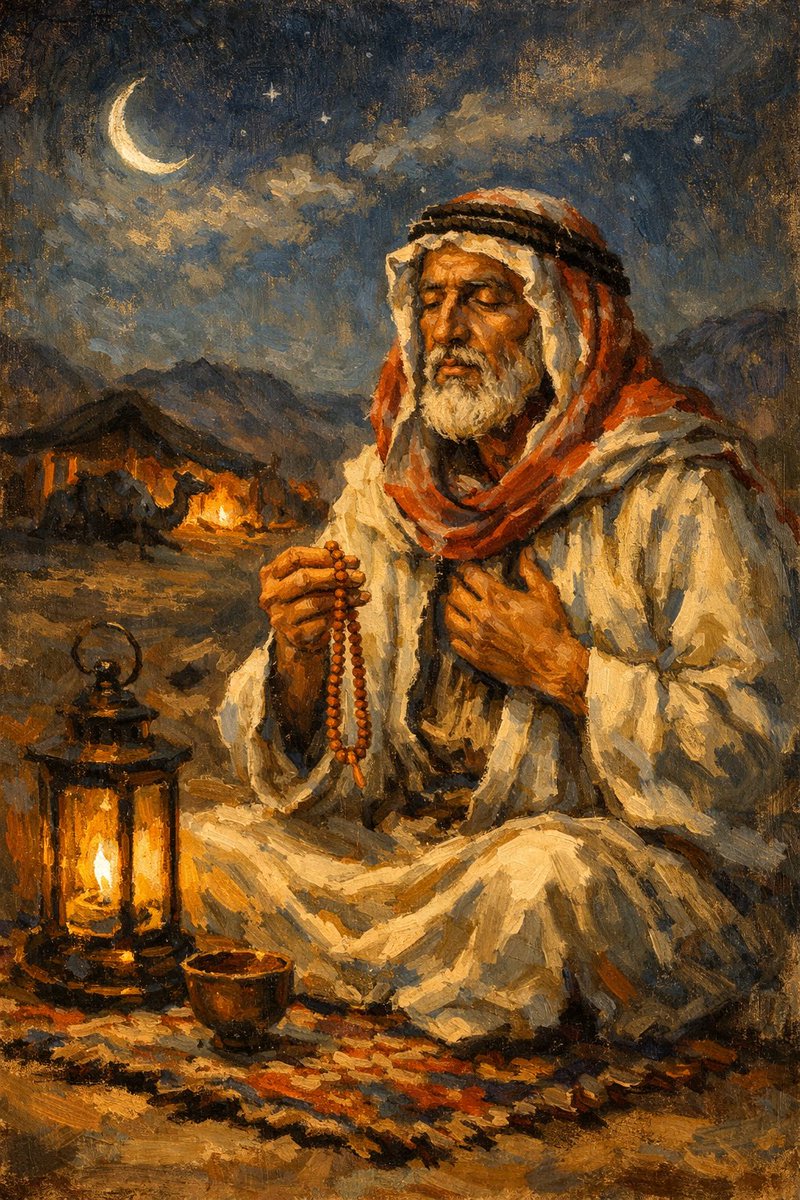
The best form of dhikr is that which is performed at night, because one’s inner gatheredness and concentration are then greater
Imam al-Ghazali رحمه الله said:
“How often it happens that love becomes firmly established between two people, not on account of beauty or good fortune, but purely due to a harmony between their souls”
- Ihya Ulum al-Din (Volume 4, Page 366)
“The best form of remembrance dhikr is that which is performed at night, because one’s inner gatheredness and concentration are then greater
This is due to the stillness of people, the calmness of their movements,
Imam al-Sha’rani رحمه الله said :
“One of the most astonishing behaviors of people is that they weep over the one whose body has died, but they do not weep over the one whose heart has died, even though that is far worse.”
Tanbih al-Mughtarrin p. 88
@IsmailKamdar The entire personality type hinges on finding the imperfect and criticising it/trying to encourage change
If they had lived both they’d probably prefer to live under one of them
Their behaviour however wouldn’t change
The aim is simple: expose selective traditionalism. Many invoke the Salaf where it suits them but quietly abandon or reinterpret other parts of the classical tradition once they become socially uncomfortable.