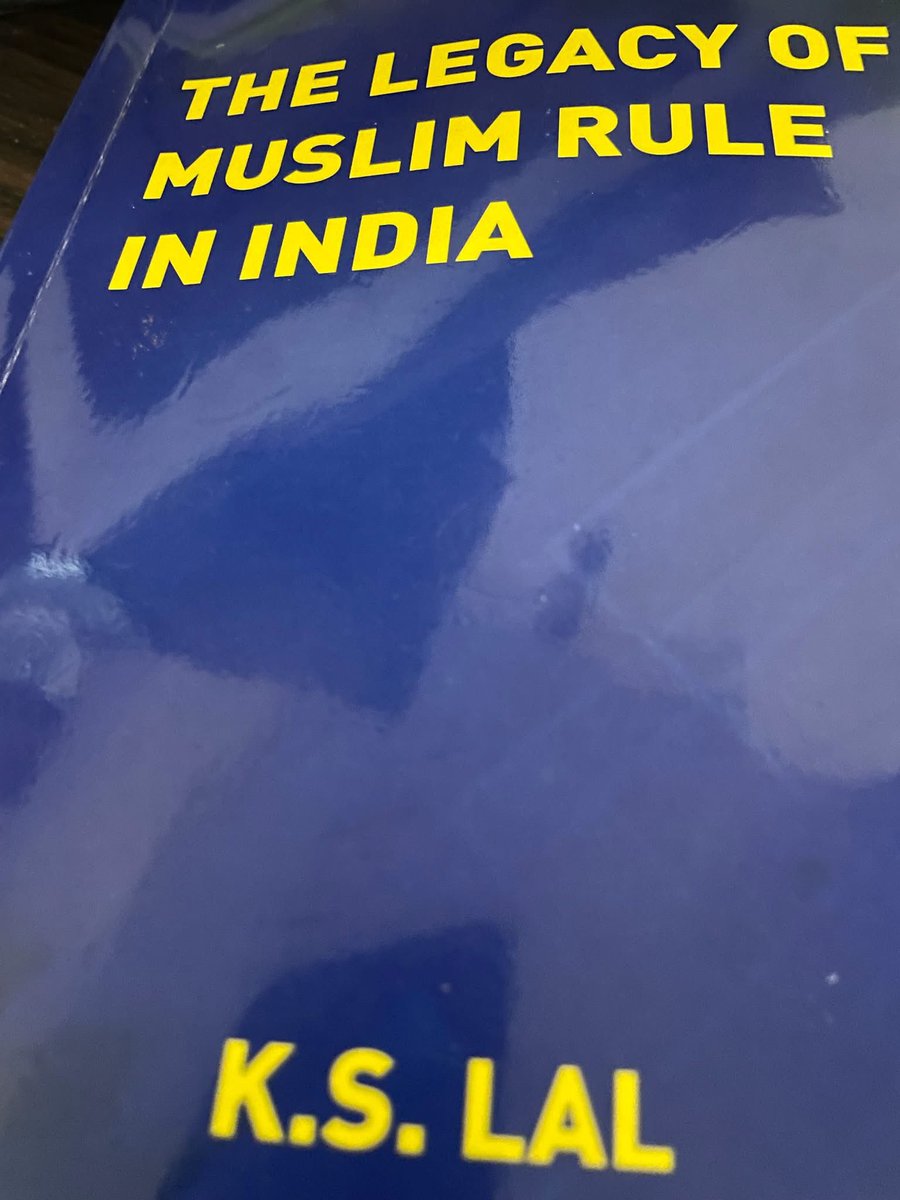
For those who don't know, Muslim writers recorded all of this themselves, and praised India even more highly than Havell does.
Al-Qifti, a biographer of the 7th century AH, cites Ibn al-Adami: in 156 AH a man from India came to the caliph, skilled in the reckoning known as the Sindhind, on the movements of the stars. Al-Mansur ordered it translated into Arabic, and gave the task to Muhammad ibn Ibrahim al-Fazari. Later, under al-Ma’mun, al-Khwarizmi abridged it and built his famous astronomical tables from it.
Al-Qifti didn't stop there. He wrote about India:
والهند هم الأمة الأولى كثيرة العدد فخمة الممالك قَدْ اعترف لَهَا بالحكمة وأقر بالتبريز فِي فنون المعرفة كل الملل السالفة
“India is the first nation, great in number, magnificent in its kingdoms; all earlier peoples acknowledged its wisdom and its excellence in the branches of knowledge.”
And about the numbers al-Khwarizmi explained:
يشهد للهند بذكاء الخواطر وحسن التوليد وبراعة الاختيار والاختراع
“It bears witness to India's sharpness of mind, fine invention, and brilliance in choice and creation.”
The physician Manka is there too, in Ibn Abi Usaybi‘a. Harun al-Rashid fell seriously ill and his doctors couldn't cure him. Someone told him: there's a physician in India called Manka, one of their devout men and philosophers. Harun sent for him, Manka treated him, and Harun recovered. He gave Manka a generous salary.
So Baghdad learned from India, and its own writers said so openly.
https://t.co/hlZyNwqMi3
“A deputation of Sindhi representatives in 771 C.E. presented many treatises to the Caliph and the Brahma Siddhanta of Brahmagupta and his Khanda-Khandyaka, works on the science of astronomy, were translated by Ibrahim al-Fazari into Arabic with the help of India scholars in Baghdad. The Barmak (originally Buddhist Pramukh) family of ministers who had been converted to Islam and served under the Khilafat of Harun-ur-Rashid (786-808 C.E) sent Muslim scholars to India and welcomed Hindu scholars to Baghdad. Once when Caliph Harun-ur-Rashid suffered from a serious disease which baffled his physicians, he called for an Indian physician, Manka (Manikya), who cured him. Manka settled in Baghdad, was attached to the hospital of the Barmaks, and translated several books from Sanskrit into Persian and Arabic. Many Indian physicians like Ibn Dhan and Salih, reputed to be descendants of Dhanpati and Bhola respectively, were superintendents of hospitals at Baghdad. Indian medical works of Charak, Sushrut, the Astangahrdaya, the Nidana, the Siddhayoga, and other works on disease of women, poisons, and their antidotes, drugs, intoxicants, nervous disease, etc were translated into Pahlavi and Arabic during the Abbasid Caliphate. Such works helped the Muslims in extending their knowledge about numeral and medicine (Quoted by K.S. La from Alberuini, Introduction, p xxxi; Singhal, Indian and its civilization).
Havell goes so far as to say that “…
It was India, not Greece, that taught Islam in the impressionable years of its youth, formed its philosophy and esoteric religious ideas, and aspired its most characteristics expression in literature and architecture” (E. B. Havell, history of Aryan Rule, p 256, quoted by lal).”
(K.S. Lal, The Legacy of Muslim Rule In India, Aditya Prakashi, New Delhi, 2022).
You're probably not the only one. And for those who don't know, there's a story about a scholar who turned back halfway to Hajj.
Abdullah ibn al-Mubarak, who died in 181 AH, once set out for Hajj. On the way, a bird in their group died, and he had it thrown on a rubbish heap. Walking behind his companions, he saw a girl come out of a nearby house and pick up the dead bird.
He asked her why. She said: my sister and I live here. We have nothing but this cloth, and carrion has become lawful for us. Our father had great wealth, but he was wronged, his wealth was taken, and he was killed.
Ibn al-Mubarak asked his steward how much money they had. A thousand dinars. He said: keep twenty, enough to get us home to Marw, and give her the rest.
فَهَذَا أَفْضَلُ مِنْ حَجِّنَا فِي هَذَا الْعَامِ
“This is better than our Hajj this year.”
Then he went home.
Hajj, as Ibn Rajab puts it, is required once in a lifetime of whoever is able. Not everyone can go every year, so the first ten days of Dhu al-Hijja belong to those who travel and those who stay home alike.
Even those who went often weren't sure. Ali ibn al-Muwaffaq performed Hajj sixty times, and still sat in the Hijr by the Ka‘ba wondering whether any of it had been accepted. Someone once told Ibn Umar: so many pilgrims! He said:
الرَّكْبُ كثيرٌ، والحاجُّ قليلٌ
“The caravans are many, but the pilgrims are few.”
And the interest itself? Ibn Rajab says the longing for His House is something God places in believers' hearts. So it may still come.
https://t.co/sbeyaS3Ekr
For those who don't know, some of those professional scribes were women.
Ibn Bashkuwal, in his biographical dictionary of Andalusian scholars, has an entry for Lubna:
لبنى، كاتبة الخليفة الحكم بن عبد الرحمن.
“Lubna, the scribe of the Caliph al-Hakam ibn Abd al-Rahman.”
He describes her as skilled in writing, a grammarian, a poet, sharp in arithmetic, versed in many sciences, expert in poetic meter, and a superb calligrapher. Then:
لم يكن في قصرهم أنبل منها
“There was no one in their palace more distinguished than her.”
She died in 374 AH, according to Ibn Bashkuwal.
She wasn't the only one. Al-Hakam's father, the Caliph al-Nasir, had a woman scribe too, Muzna, known for one of the finest hands among women.
And in Córdoba itself lived A’isha bint Ahmad. Ibn Hayyan wrote that no one in al-Andalus in her time matched her in understanding, knowledge, literature, poetry and eloquence. She praised the kings of her day and spoke to them about her needs, and her requests were never refused.
She also copied Qur’ans and books, collected manuscripts, and owned a large library of her own.
So the Córdoba of al-Hakam II had its books. It also had Lubna.
https://t.co/QPovPFYwS2
The Arab world was culturally far ahead, but western lethal technology and willingness to use it made a solid basis for imperialism. Around AD 975, Córdoba, capital of the Arabic-speaking Caliphate of al-Andalus, was probably the largest city in western Europe.
While much of Christian western Europe was run on the basis of farming with little surplus, Córdoba had palaces, sophisticated water infrastructure, public bathhouses, a mesmerizing mosque, and a flourishing culture of scholarship and book production.
Caliph al-Hakam II maintained one of the greatest libraries of his age.
Professional scribes copied manuscripts, scholars translated scientific works, and books arrived from as far away as Baghdad, long before Amazon.
Around this time, Córdoba's surgeon Al-Zahrawi was producing a 30-part medical encyclopedia, including illustrations of more than 200 surgical instruments: forceps, scalpels, hooks, specula and specialised tools for treating injuries.
Elsewhere in the Arabic-speaking world, Baghdad had charitable hospitals with trained physicians, treating Muslims and non-Muslims, and even sending doctors to underserved communities.
The physician Al-Razi had distinguished smallpox from measles.
More than a century earlier, the Baghdad-based mathematician Al-Khwarizmi had written pioneering works on algebra and Hindu-Arabic numerals.
The English words algebra and algorithm derive from his work and name. The latter being the thing that put this text in front of you.
Much of this scholarship, developed by Muslims, Christians, Jews, Arabs, Persians and others, would eventually reach Latin-speaking Europe through translations and transform its intellectual development.
Soon enough western militaries driven by profit seeking individuals would dominate the world and dominance has a way of also dictating what gets taught as history or who is seen as progressive and who as backward.
Then why are people converting in 2026? Good question. History has a few more examples.
Take the Mongols. They were the conquerors, the ones who brought the sword to Muslim lands. Then, in 694 AH, Ibn Kathir records that Ghazan, a descendant of Genghis Khan, became king of the Tatars:
فَأَسْلَمَ وَأَظْهَرَ الْإِسْلَامَ عَلَى يَدِ الْأَمِيرِ نَوْرُوزَ
“He became Muslim and declared his Islam at the hands of the emir Nawruz.”
The Tatars, or most of them, entered Islam with him. On the day he converted, he scattered gold, silver and pearls over people's heads, took the name Mahmud, and attended the Friday prayer.
The conquerors took the religion of the people they had conquered.
Then there's Sumatra. In the 14th century, the Moroccan traveler Ibn Battuta stopped there and found a Muslim sultanate. Its sultan, al-Malik al-Zahir, followed the Shafi‘i school, loved the jurists, and walked to Friday prayer on foot. Ibn Battuta wrote:
ورأيت ملك الجاوة يتذاكر بين يديه بعد صلاة الجمعة في الفروع على مذهب الشافعي خاصة
“And I saw the king of Jawa holding discussions in his presence after the Friday prayer on points of law, according to the Shafi‘i school specifically.”
To be fair, Ibn Battuta also says that sultan fought his non-Muslim neighbors often. But no caliph's army ever brought Islam to Sumatra.
Today, Indonesia is the largest Muslim country in the world.
https://t.co/cxii7t4owy
“Islam was spread by the sword.”
Then why are people converting in 2026 when there is no sword left?
The ummah is weak & yet the numbers are up.
I left Catholicism in 2012 because I would not call a man God. Converted to Islam in 2021 with nothing at my neck.
If it needed a sword, explain the people converting today?
For those who don't know, there's a story about the caliph who conquered Mesopotamia, recorded by Harun al-Rashid's chief judge.
In Kitab al-Kharaj, Abu Yusuf narrates from Abu Bakra: Umar ibn al-Khattab passed a door where an old blind man was begging. Umar tapped his arm from behind and asked: which of the People of the Book are you? A Jew. What brought you to this? He answered: I'm begging to pay the jizya, out of need, and old age.
Umar took him by the hand, brought him home and gave him something from his own house. Then he sent word to the keeper of the treasury:
فَوَاللَّهِ مَا أَنْصَفْنَاهُ أَن أكلنَا شبيته ثُمَّ نَخُذُلُهُ عِنْدَ الْهَرَمِ
“By God, we haven't been fair to him if we ate from his youth and then abandoned him in his old age.”
He lifted the jizya from him and from everyone like him. Abu Bakra said: I witnessed it, and I saw the old man.
Abu Yusuf then wrote it into the rules. No jizya from the poor who live on charity, the blind with no trade, the disabled, poor monks, or the very old who can't work.
And on collection:
وَلا يُضْرَبُ أَحَدٌ مِنْ أَهْلِ الذِّمَّةِ فِي اسْتِيدَائِهِمُ الْجِزْيَةَ؛ وَلا يُقَامُوا فِي الشَّمْسِ وَلا غَيْرِهَا
“None of the dhimmis is to be beaten in collecting the jizya, nor made to stand in the sun or the like.”
To be fair to the thread, the same book does allow detaining those who don't pay until they settle. But beating and abuse were written down as forbidden.
This was the rule as written for the caliph. Whether every governor followed it is another question.
https://t.co/bgBoEgivTw
Islamic conquest of Mesopotamia
Mesopotamia before the Islam:
Persians ruled Mesopotamia mostly since the fall of babylon.
There were also many Zoroastrians, Jews, and followers of ancient polytheistic faiths.
Aramaic was spoken.
There was a small Arab population in Iraq.
Lakhmids, Tanukhids, and Banu Tayy
Arabs mainly lived in southern Iraq.
The Conquest
In 633 Khalid ibn al-Walid attacked southern Mesopotamia.
In 634, the Persians won the Battle of the Bridge.
This was the only major battle that the Persians won against the Arabs in Mesopotamia.
In the year 636, the Muslim Arabs won the Battle of al-Qadisiyyah.
The battle lasted 4 days.
General Rostam Farrokhzad had been killed during the battle.
In the year 637, Arab Muslims occupied Ctesiphon, the capital of the Sasanian Empire.
Mesopotamia was fully controlled by Muslims by January 638.
Islamization of Mesopotamia
Arabs settled in Iraq in large numbers.
Arabic became the dominant language in Iraq in the 7th century.
There was no massive, sudden conversion to Islam by the local population.
Non-Muslims who accepted Muslim rule were classified as dhimmis.
In exchange for paying the jizya, they were permitted to keep their Religion.
Non-Muslims who did not pay the jizya were humiliated and socially abused.
Historical accounts describe instances where taxpayers faced humiliation, house arrest, or forced collection procedures if they withheld funds.
The rulers tried not to kill non-Muslims.
Because the killing of non Muslims harmed them financially.
Historians agree that Iraq became predominantly Muslim in the 9th century.
Nevertheless, a large minority of Christians, Jews, and Zoroastrians lived in Iraq.
Baghdad was founded on July 30, 762 AD by the Abbasid Caliph al-Mansur.
Kufa, Basra & Samarra were founded by Arab Muslims.
Sneako wishes he'd lived in the Golden Age. Funny thing is, the people who lived back then didn't feel golden either.
In Sahih al-Bukhari, people came to Anas ibn Malik complaining about what they suffered under al-Hajjaj. Anas told them:
اصْبِرُوا، فَإِنَّهُ لَا يَأْتِي عَلَيْكُمْ زَمَانٌ إِلَّا الَّذِي بَعْدَهُ شَرٌّ مِنْهُ، حَتَّى تَلْقَوْا رَبَّكُمْ
“Be patient, for no time will come upon you except that the one after it is worse, until you meet your Lord.”
He said he heard it from the Prophet Muhammad. That was the first century of Islam.
In the fifth century AH, Imam al-Ghazali opened his Ihya’ Ulum al-Din with a complaint. True scholars, he wrote, were gone. People had been led to think knowledge meant only court fatwas, debating to win, or ornate rhyming sermons to win over the crowd.
Sound familiar? “Clavicular is issuing fatwas.”
A century later in Baghdad, Ibn al-Jawzi read a line from Abu al-Darda’, a Companion of the Prophet:
ما أعرف شيئًا مما كنا عليه اليوم إلا القبلة!
“I don't recognize anything of how we used to be, except the qibla!”
Ibn al-Jawzi's response: how strange! What if he saw us today?
So the Companion complained. The scholar of the Golden Age complained. The scholar after him complained, quoting the Companion.
Every generation thought it was living in the decline. Including the one Sneako wishes he'd been born into.
https://t.co/QDPObMTpOW
SNEAKO says he wishes he was alive during the Islamic GOLDEN age instead of the end times 👀😳
"Imagine being alive during the Islamic golden age, the advancements in algebra, chemistry, science, with the caliphate"
"Instead we are Muslims during the time where we have no power, divided, Dajjal is around the corner, Clavicular is issuing fatwas"
For those who don't know, learning prayer step by step goes back to the Prophet's own mosque.
In Sahih al-Bukhari, a man came into the mosque, prayed, then greeted the Prophet Muhammad. The Prophet told him: go back and pray, because you haven't prayed. This happened three times. Then the man said:
وَالَّذِي بَعَثَكَ بِالْحَقِّ، مَا أُحْسِنُ غَيْرَهُ، فَعَلِّمْنِي؟
“By the One who sent you with the truth, I can't do any better than this, so teach me?”
So the Prophet taught him, one step at a time: say the takbir, recite what's easy for you from the Qur’an, bow until you're still, rise until you're upright, prostrate until you're still, sit until you're still.
A step-by-step guide, from the Prophet himself.
There's another man, in Sunan Abi Dawud, who told the Prophet he couldn't memorize anything from the Qur’an at all. The Prophet gave him short phrases to say instead: subhan Allah, al-hamdu lillah, la ilaha illa Allah, Allahu akbar. The man asked: that's for God, what's for me? The Prophet taught him:
اللهمَّ ارحَمْني وارزُقْني وعافِني واهْدِني
“O God, have mercy on me, provide for me, keep me well, and guide me.”
As the man stood up, he closed his hands like this. The Prophet said: as for him, he has filled his hands with good.
And a detail that surprises people. Imam al-Bukhari records that A’isha, the Prophet's wife, used to pray behind her servant Dhakwan, who read from a written copy of the Qur’an. Imam Ibn Hajar adds that it was in Ramadan.
Scholars did disagree on this. Some took it as proof that reading from a copy during prayer is allowed. Others forbade it, as too much movement in prayer.
Either way, starting from zero, with something written in front of you, has a long history.
https://t.co/ThyBiWQnss
For those who don't know, the Rumi in the old Muslim biographies looks quite different from the one in this tweet.
In al-Jawahir al-Mudiyya, a biographical dictionary of Hanafi scholars from the 8th century AH, Abd al-Qadir al-Qurashi lists him as Mawlana Jalal al-Din of Konya, with a lineage traced back to Abu Bakr al-Siddiq. His description:
كان عالما بالمذهب، واسع الفقه، عالما بالخلاف، وبأنواع من العلوم.
“He knew the school of law, was broad in fiqh, knew the disagreements between the schools, and many kinds of knowledge.”
A jurist, with a madrasa, books, and students. So where did the poetry come from?
Al-Qurashi tells a story. One day Jalal al-Din was sitting at home, surrounded by books and students. Shams al-Din al-Tabrizi walked in, greeted him, sat down, pointed at the books and asked: what is this?
Jalal al-Din said:
هذا لا تعرفه
“This is something you don't know.”
Before he finished, fire was burning through the house and the books. Now Jalal al-Din asked: what is this? Al-Tabrizi answered: “This is something you don't know.” Then he got up and left.
After that, Jalal al-Din left his children, his household, and his madrasa, wandered the lands, and composed a great deal of poetry. He never met al-Tabrizi again. Al-Tabrizi vanished, and it is said people from Jalal al-Din's circle killed him. God knows best.
His son, Baha’ al-Din, known as Sultan Walad, became a jurist too, and taught at his father's madrasa in Konya.
So the love in Rumi's poetry began with a scholar who lost his teacher and walked away from his books. That's a long way from being too shy to confess.
https://t.co/8bElwZWBNm
“I choose to love you in silence, for in silence, I find no rejection.”
- Rumi
Rumi, born in 1207 in present-day Afghanistan, was a renowned Persian poet, scholar, and spiritual thinker. His writings explored love, heartbreak, longing, and the deeper connection between the human soul and spirituality. His poetry continues to resonate with readers through its powerful reflections on human emotions and relationships.
The deeper meaning behind this quote captures the pain of loving someone without having the courage to express it. Sometimes, the fear of rejection is stronger than the desire to confess your feelings. Rather than risk discovering that the love isn’t mutual, you choose to admire someone silently, keeping your emotions hidden.
What makes this kind of love especially heartbreaking is that the other person may never realize how much they mean to you. You carry feelings that consume your thoughts, while they remain completely unaware. Sometimes, the most painful love is the one that never gets the chance to be expressed.
Why learn a whole new language just to pray? For those who don't know, Muslims were already asking this in the first generation.
According to a report cited by al-Sarakhsi, the Persians wrote to Salman al-Farisi asking him to write out al-Fatiha for them in Persian. They recited it in their prayers until their tongues grew used to Arabic.
Imam Abu Hanifa took this as evidence. In his view, reciting in Persian during prayer was valid, though disliked. His reasoning, as al-Sarakhsi explains:
ثُمَّ الْوَاجِبُ عَلَيْهِ قِرَاءَةُ الْمُعْجِزِ وَالْإِعْجَازُ فِي الْمَعْنَى
“What's required is reciting the miraculous, and the miracle lies in the meaning.”
His two students disagreed: it's valid only for someone who can't manage Arabic. Imam al-Shafi‘i said it isn't valid at all.
And here's the twist. According to a report from Abu Bakr al-Razi, Abu Hanifa later came back to his students' view, and the Hanafi school relies on that.
What about talking to God in your own words? That's a separate question. Al-Laqani, a Maliki scholar, allowed any language whose meaning is known, in prayer and outside it, citing the Qur’an:
وَمَا أَرْسَلْنَا مِنْ رَسُولٍ إِلا بِلِسَانِ قَوْمِهِ
“We have not sent any messenger except in the language of his people.”
The Hanafis, Ibn ‘Abidin notes, at most considered supplication in other languages mildly disliked.
So the question is old, and scholars argued it hard. Roughly where it landed: the Qur’an recited in prayer stays in Arabic, while your own supplication can be in any language you understand.
https://t.co/cq6NTvXtBH
Congratulations. And for those who don't know, there's a shahada in Sahih al-Bukhari that had no ceremony either.
Thumama ibn Uthal was a man of Banu Hanifa, brought in as a captive by a cavalry unit sent toward Najd and tied to a pillar of the mosque. The Prophet Muhammad came out and asked him: what do you have, Thumama?
He answered: if you kill me, you kill a man whose blood will be avenged. If you're generous, you're generous to someone who will be grateful. If you want money, ask for whatever you like.
Then the Prophet said: release Thumama.
He was free to go. Instead, he went to a palm grove near the mosque, washed, came back in, and said:
أَشْهَدُ أَنْ لَا إِلَهَ إِلَّا اللَّهُ، وَأَشْهَدُ أَنَّ مُحَمَّدًا رَسُولُ اللَّهِ
“I bear witness that there is no god but God, and I bear witness that Muhammad is the Messenger of God.”
Then, in his own words:
يَا مُحَمَّدُ، وَاللَّهِ مَا كَانَ عَلَى الْأَرْضِ وَجْهٌ أَبْغَضَ إِلَيَّ مِنْ وَجْهِكَ، فَقَدْ أَصْبَحَ وَجْهُكَ أَحَبَّ الْوُجُوهِ إِلَيَّ
“Muhammad, by God, there was no face on earth I hated more than yours, and now your face has become the dearest of all faces to me.”
There's also Amr ibn al-‘As. He came to the Prophet to pledge allegiance, then pulled his hand back. He wanted a condition first: that he be forgiven. The Prophet said:
أَمَا عَلِمْتَ أَنَّ الإِسْلَامَ يَهْدِمُ مَا كَانَ قَبْلَهُ؟
“Don't you know that Islam wipes out what came before it?”
Amr told this story on his deathbed.
So a shahada in a car works just fine. And everything before it starts over.
https://t.co/dDxepyDumW
The tweet says the dome was covered in lead in 1917 and turned gold only in the late 1950s. For those who don't know, an older Muslim source says it was golden once before, right from the start.
Mujir al-Din al-‘Ulaymi, a historian of Jerusalem, tells how the caliph ‘Abd al-Malik ibn Marwan built it. Before starting, he wrote to every province asking his subjects' opinion. He wanted, he said, a dome over the Rock to protect Muslims from heat and cold.
He put the project in the hands of a scholar, Raja’ ibn Haywa, and a man from Jerusalem, Yazid ibn Sallam. It's said the small Dome of the Chain beside it was built first, as a model, so ‘Abd al-Malik could see the shape.
When the work was done, the two wrote to the caliph: 100,000 dinars were left over. He told them to keep it as a reward. They refused, saying they'd rather add their wives' jewelry to it. So he ordered the gold melted and poured over the dome:
فما كان أحد يقدر أن يتأملها مما عليها من الذهب
“No one could bear to look at it, because of the gold on it.”
In winter, it was dressed in a cover of felt and leather, to protect it from rain, wind and snow.
And the guards? Long before 1917, Raja’ and Yazid had a staff who, every Monday and Thursday, bathed, put on fresh clothes, and perfumed the Rock with saffron, musk and ambergris.
https://t.co/KyrxqafWlh
📍 Jerusalem | Rare footage of the Dome of the Rock, guarded by Muslim troops of the British Indian Army, filmed in 1917 during the First World War.
At the heart of Masjid al-Aqsa stands the Dome of the Rock (قبة الصخرة, Qubbat al-Sakhrah). Its dome, golden today, was then covered in lead and would have appeared dark grey; the gold-coloured covering was added only during restoration in the late 1950s and early 1960s
The film captures the open stone-paved courtyard, the building's distinctive octagonal structure and dome, its entrances, and people moving through the sacred precinct. It offers a rare glimpse of the site’s appearance and atmosphere more than a century ago.
🔹 Who are the men walking inside?
The Imperial War Museums catalogue identifies Indian infantry regiments changing guard at the shrine, one probably the 58th (Vaughan’s) Rifles. The original film caption states that the site was guarded by Muslim troops of the British Indian Army, showing how soldiers from the Indian subcontinent took part in guarding one of Islam’s most sacred places. Other individuals in the footage cannot be identified from the film alone.
🔹 Who ruled Jerusalem in 1917?
Jerusalem had been under Ottoman rule for around four centuries. During the First World War, the Ottoman Empire fought against Britain and its allies. British forces under General Sir Edmund Allenby captured the city in December 1917, and Allenby formally entered Jerusalem on 11 December. The city then came under British military administration, ending Ottoman rule.
🔹 A moment of transition
This footage records the Haram al-Sharif’s historic Islamic architecture and sacred spaces, with Muslim Indian soldiers on guard, at the close of the Ottoman era and the beginning of British military rule in Jerusalem.
📚 Source: Imperial War Museum
Islam at 1,400 years? That's the age of the Prophet Muhammad's message. But Muslims don't think of Islam as starting there.
The question of whose religion is older once came up in front of the Prophet. Ibn Kathir cites a report from Ibn ‘Abbas: Christians from Najran and Jewish rabbis gathered before the Prophet and argued. The rabbis said Abraham was a Jew. The Christians said he was a Christian. Then this verse came down:
يَا أَهْلَ الْكِتَابِ لِمَ تُحَاجُّونَ فِي إِبْرَاهِيمَ وَمَا أُنزلَتِ التَّوْرَاةُ وَالإنْجِيلُ إِلا مِنْ بَعْدِهِ أَفَلا تَعْقِلُونَ
“People of the Book, why do you argue about Abraham, when the Torah and the Gospel were only sent down after him? Don't you reason?”
The answer was about chronology. Abraham came before the books.
The Prophet also described the prophets this way, in Sahih al-Bukhari: the prophets are brothers from one father, their mothers are different, and their religion is one. Ibn Hajar explains: the core of their religion is one, the oneness of God, even if the details of their laws differ.
And Ibn Kathir explains “Islam” in the Qur’an as following the messengers in what God sent them with, in every age, until they were sealed with Muhammad.
So for Muslims, 1,400 years marks the last prophet, not the first.
https://t.co/LTwG7ANqkb
10 Oldest Religions in the World
1. 🕉️ Hinduism ~ 4,000 years
2. 📜 Zoroastrianism ~ 3,500 years
3. 🕎 Judaism ~ 3,000 years
4. 🌿 Shinto ~ 2,600 years
5. 🧘 Jainism ~ 2,600 years
6. 🌼 Buddhism ~ 2,500 years
7. ☯️ Taoism ~ 2,500 years
8. ⚖️ Confucianism ~ 2,500 years
9. ✝️ Christianity ~ 2,000 years
10. ☪️ Islam ~ 1,400 years
Fair question. For those who don't know, the same verse that forbids pork allows it when someone is starving.
Ibn Kathir explains:
ثم أباح تعالى تناول ذلك عند الضرورة والاحتياج إليها، عند فقد غيرها من الأطعمة
“Then God allowed eating these in necessity and need, when no other food can be found.”
“These” being carrion, blood and pork. If someone is forced, without transgressing, “there is no sin on him.”
So the ban isn't about pork being supernatural.
Still, classical scholars were curious about the reason too. Al-Razi cites “people of knowledge” with a theory from their time:
الْغِذَاءُ يَصِيرُ جُزْءًا مِنْ جَوْهَرِ الْمُغْتَذِي
“Food becomes part of the substance of the one who eats it.”
The pig, they said, is by nature extremely greedy and full of appetite, so eating it was forbidden lest people take on that trait. The sheep, by contrast, is a very calm animal, so eating it passes on nothing foreign to human nature.
That's a medieval “you are what you eat.” Al-Razi credits it to others, not to revelation.
https://t.co/0ALPITfWJC
The first item on that list has a story. Al-Qarawiyyin in Fez was built by a woman.
The modern historian ‘Umar Farrukh writes:
بنته أمّ البنين فاطمة بنت محمّد الفهريّ من أهل القيروان
“It was built by Umm al-Banin Fatima bint Muhammad al-Fihri, from the people of Kairouan.”
Construction began in 245 AH, 859 CE. Farrukh calls it the oldest university in the world.
In the same year, a modern editor's note adds, her sister Maryam funded another mosque in Fez, the Andalusian Mosque, named after the people from al-Andalus who lived around it and helped build it.
So two of Fez's great mosques began with two sisters, in the same year.
The House of Wisdom on that list has a detail too. Ibn al-Nadim records that the Banu al-Munajjim paid translators like Hunayn ibn Ishaq and Thabit ibn Qurra:
في الشَّهْر نحو خَمْس مائة دِينَار للنَّقْل
“about five hundred dinars a month, for translating.”
https://t.co/25DEDC3CEj
The First University in History (Al-Qarawiyyin)
Algebra
Arabic Numerals (the one yall use these days 1234567890)
Algorithms
Coffee
The Astrolabe
The House of Wisdom
The Bimaristan Hospital System
Cataract Surgery
Distillation
The Oud
Arabic Calligraphy
Cryptanalysis
The Camera Obscura
The Surgical Suture
The Canon of Medicine
The Muqarnas Architectural Style
The Crankshaft
The Camshaft
The Reciprocating Piston Pump
The Double-Action Suction Pump
Programmable Automata
The Combination Lock
The Elephant Clock
The Fountain Pen
Decimal Fractions
Spherical Trigonometry
Had an empire that controlled 3 regions, Asia, Africa, Europe
And soo much more but yall are blinded by hetred and the ignorance has consumed your brain cells that you can not do a 30 sec research in google before you say some dumb bs
You're right about one thing: if Ramadan were only about lunch, it would be the easy part. Al-Ghazali, who died in 505 AH, divided fasting into three levels:
اعْلَمْ أَنَّ الصَّوْمَ ثَلَاثُ دَرَجَاتٍ صَوْمُ الْعُمُومِ وصوم الخصوص وصوم خصوص الخصوص
“Know that fasting has three levels: the fast of the general, the fast of the select, and the fast of the most select.”
The first is holding back the stomach and sexual desire. That's the lunch part. The second is holding back the ears, the eyes, the tongue, the hands, the feet and every limb from sin. The third is the fast of the heart, from low desires and worldly thoughts, and from everything other than God.
The Prophet Muhammad said, in Sahih al-Bukhari:
مَنْ لَمْ يَدَعْ قَوْلَ الزُّورِ وَالْعَمَلَ بِهِ، فَلَيْسَ لِلَّهِ حَاجَةٌ فِي أَنْ يَدَعَ طَعَامَهُ وَشَرَابَهُ.
“Whoever doesn't give up false speech and acting on it, God has no need for him to give up his food and drink.”
Al-Ghazali also tells a story, from a report whose chain includes an unknown narrator. Two women fasting in the Prophet's time grew so weak by late afternoon that they asked permission to break their fast. The Prophet sent them a bowl and told them to vomit into it what they had eaten. They filled it with blood and raw flesh. He said: these two fasted from what God made lawful, and broke their fast on what God made unlawful. They sat together backbiting people, and this is the flesh of people they ate.
So skipping lunch is the first level. Two more come after it.
https://t.co/RiyReZUUE9
Beyoncé saying “alhamdulillah,” “praise be to God.” For those who don't know, Muslims say it every day, and the tradition says it weighs a lot.
In Sahih Muslim, the Prophet Muhammad said:
وَالْحَمْدُ لِلَّهِ تَمْلَأُ الْمِيزَانَ
“And alhamdulillah fills the scale.”
The scale of deeds. Two words, and they fill it.
There's also a story in Sahih al-Bukhari. Rifa‘a ibn Rafi‘ said they were praying behind the Prophet. When he rose from bowing and said “God hears whoever praises Him,” a man behind him added: “Our Lord, and to You belongs praise, much praise, good and blessed.”
After the prayer, the Prophet asked who had spoken. The man said: me. The Prophet said:
رَأَيْتُ بِضْعَةً وَثَلَاثِينَ مَلَكًا يَبْتَدِرُونَهَا أَيُّهُمْ يَكْتُبُهَا أَوَّلُ
“I saw thirty-some angels racing each other to see who would write it down first.”
That's the phrase in the song.
https://t.co/3fUY5A7ox2
“They don't produce literature.” For those who don't know, the Arabs once hung their best poems on the Ka‘ba. At least, that's how Ibn Khaldun tells it.
Ibn Khaldun wrote:
اعلم أنّ الشّعر كان ديوانا للعرب فيه علومهم وأخبارهم وحكمهم.
“Know that poetry was the archive of the Arabs, holding their knowledge, their history and their wisdom.”
Tribal leaders competed in it. At the fair of ‘Ukaz they stood up to recite, and each showed his best work to the master poets to be judged. In the end, he says, they competed by hanging their poems on the corners of the Ka‘ba: Imru’ al-Qays, al-Nabigha, Zuhayr, ‘Antara, Tarafa and others. Those are the Seven Mu‘allaqat, “the hung ones.”
Ibn Qutayba adds a scene. At ‘Ukaz, a red leather tent was pitched for al-Nabigha, and poets came to recite before him. Al-A‘sha recited, then Hassan ibn Thabit, then others. Then a woman, al-Khansa’, recited. Al-Nabigha told her:
والله لولا أنّ أبا بصير أنشدنى (آنفا) لقلت إنّك أشعر الجنّ والإنس
“By God, if Abu Basir hadn't just recited to me, I'd say you're the best poet among jinn and humans.”
Hassan protested: “By God, I'm a better poet than you, your father and your grandfather!”
Centuries later, in Baghdad, there was al-Jahiz. Ibn al-Nadim quotes Abu Hiffan: al-Jahiz never got hold of a book without reading it to the end, whatever it was. He even rented booksellers' shops to spend the night reading.
https://t.co/joMS7Oj8Ag
RFK: "There's five hundred million Arabs in the world. And yet they don't produce science. They don't win the Novel Prize. They don't win the Fields Prize. They don't win the Wolf Prize. They don't produce literature."
The tweet covers the invitation and the marriage. Arabic histories of the Ottomans add two details about how the Ottomans got their first foothold in Europe.
Ibrahim Rif‘at Pasha, an Egyptian writer who died in 1353 AH, tells it like this. Two men were fighting over the Byzantine throne, Kantakouzenos and Palaiologos, and each asked Orhan for help against the other. Orhan helped the first, who married him to his daughter.
When the Serbs marched on Constantinople in 753 AH, Kantakouzenos called on his son-in-law, and Orhan sent troops under his son Sulayman. The Serbs were pushed back. To reward Sulayman, Kantakouzenos handed him the fort of Tzympe, on the European shore of the Dardanelles.
So the first Ottoman fort in Europe was a thank-you gift.
And Gallipoli? Rif‘at Pasha writes:
واتفق في العام القابل أن حدث زلزال عظيم في تراقية دك حصون البلاد وهدم أسوار غاليبولى فاستولى عليها الترك
“It happened the following year that a great earthquake struck Thrace, flattening the forts of the land and bringing down the walls of Gallipoli, and the Turks took it.”
A modern Arabic encyclopedia tells the marriage differently: John V asked Orhan for help against Stefan Dushan, and promised him Kantakouzenos's daughter. The accounts don't agree on who asked, or when.
https://t.co/Kxj1grgtZy
October 26, 1341. A Byzantine aristocrat was proclaimed emperor by his own army in a Thracian town, and the six years of civil war that followed handed the Balkans to the Ottomans.
This is how an empire actually dies. Not at a siege. In a succession dispute that nobody would back down from.
Andronikos III died in June 1341 leaving a nine year old son, John V, who had not even been crowned. His chief minister, John Kantakouzenos, took control of the regency, put the boy's mother Anna of Savoy under guard, and had to use troops in the capital to make it stick.
The opposition formed around Anna, the Patriarch John Kalekas, and Alexios Apokaukos, a self-made bureaucrat whom the hereditary aristocracy despised precisely because he had risen on ability.
Kantakouzenos left Constantinople in July to campaign against the Serbs, the Turks and the Bulgarians, leaving Apokaukos in charge of the city.
Apokaukos attempted a coup in August and failed. Kantakouzenos pardoned him, which was generous and stupid, and then left the capital again.
Apokaukos and the Patriarch then took power properly, declared him a public enemy, and put his mother under house arrest.
So on October 26, 1341, his army and the aristocrats with him proclaimed him emperor at Didymoteicho. He kept up the fiction that he was John V's colleague rather than his rival. Nobody believed it. The regency crowned the boy on November 19 in response.
What makes this war so destructive is that it was not just two factions. It was a class war with a theological war on top of it.
The great landowning magnates backed Kantakouzenos, because he was one of them. The urban middle and lower classes backed the regency, and Apokaukos deliberately stoked that by publicising the wealth confiscated from Kantakouzenist estates.
Cities across Thrace and Macedonia threw out their aristocrats. In Thessalonica a radical popular party called the Zealots seized the city in 1342 and ran it as an autonomous commune for seven years, blocked every attempt by Kantakouzenos to take it, and eventually killed his sympathisers there.
And both sides, having no money and no armies worth the name, hired foreigners.
This is the part that matters.
Kantakouzenos allied with Stefan Dusan of Serbia in 1342, promising him whatever towns he captured. Dusan duly expanded through Macedonia, Albania and Epirus, then switched to the regency in 1343 when that looked better, took Serres in 1345, and in 1346 crowned himself Emperor of the Serbs and the Romans at Skopje.
The Bulgarians plundered Thrace in 1342, and in 1344 the regency simply gave Bulgaria Philippopolis and nine other towns.
And then the Turks. Kantakouzenos's close friend Umur of Aydin came to his relief in 1342 and 1343, then left in 1344 to defend Smyrna against a crusade. So Kantakouzenos turned to Saruhan, and then to Orhan of the Ottoman emirate, whose support was decisive by 1345.
In 1346 he married his daughter Theodora to Orhan.
A Byzantine emperor gave his daughter to the Ottoman ruler to get troops to use against other Byzantines.
The regency fell apart on its own in the end. Apokaukos was lynched in June 1345 by prisoners inside the new prison he had ordered built, which is as neat an ending as history ever provides. Kantakouzenos was crowned at Adrianople in 1346 and his supporters opened the Golden Gate to him in February 1347. Anna surrendered. He became senior emperor for ten years, and John V married his daughter Helena.
He had won. There was nothing left to win.
Serbia held most of Macedonia, Albania and Epirus. Turkish troops had plundered Thrace repeatedly for six years. The treasury was empty and Anna had pawned the crown jewels to Venice in 1343. Thrace, historically the empire's granary, now had to import grain from Bulgaria and the Crimea. The magnates sat on their estates and avoided tax, and provincial administration had simply stopped functioning.
And in 1347 the Black Death arrived in Constantinople and kept coming back, cutting the population, the tax base and the recruitment pool.
Then the fighting restarted in 1352, with John V attacking Kantakouzenos's son Matthew using Venetian and Turkish help, and Kantakouzenos bringing in Ottoman troops again.
Those Ottoman troops beat a Serbian force at Demotika in October 1352. That was the first Ottoman victory on European soil.
Two years later they took Gallipoli and did not give it back, and the conquest of the Balkans had its bridgehead.
Kantakouzenos abdicated in 1354 and became a monk, and spent his retirement writing a history explaining that none of it was his fault.
One historian's verdict on Byzantium after that war is that it was an empire in name only. Constantinople held out for another century, but the state around it was gone, and it was gone because two factions would rather burn the empire than let the other side govern it.
Some people see tattoos on new Muslims and wonder whether their past gets in the way. There's a story about exactly that kind of worry.
In Sahih Muslim, ‘Amr ibn al-‘As, near the end of his life, told the people around him how he became Muslim. He came to the Prophet Muhammad and said: stretch out your right hand so I can pledge to you. The Prophet did. Then ‘Amr pulled his own hand back.
“What's wrong, ‘Amr?” “I want to set a condition.” “What condition?” “That I be forgiven.” The Prophet said:
أما علمت أن الإسلام يهدم ما كان قبله؟
“Don't you know that Islam wipes out what came before it?”
And the tattoos themselves? Imam al-Nawawi reports the scholars of the Shafi‘i school: a tattoo should be removed if it can be done safely. If removing it means a wound that risks serious harm, or a visible disfigurement, it doesn't have to be removed.
Al-Khatib al-Shirbini, of the same school, adds:
فإن خاف لم تجب إزالته ولا إثم بعد التوبة.
“If he fears harm, removing it isn't obligatory, and there is no sin after repentance.”
So the fiqh about tattoos is about removing them when it's safe. The shahada these three took, as the Prophet told ‘Amr, wipes out what came before.
https://t.co/2Yib20yZb9
Before 1147, Lisbon had another name: Lishbuna. And a Muslim geographer described it from what he saw with his own eyes.
Al-Idrisi, who died in 560 AH, wrote that Lishbuna sits on the north bank of the Tagus, six miles wide in front of the city. A beautiful city stretching along the river, with a wall and a strong citadel. In the middle of it, hot springs, winter and summer.
Across the river, he says, stood a fort called al-Ma‘din, “the Mine,” because when the sea grew rough it threw gold onto the shore. In winter, people came to mine it until the season ended. He adds:
وهو من عجائب الأرض وقد رأيناه عيانا
“It is one of the wonders of the earth, and we have seen it with our own eyes.”
From Lishbuna, al-Idrisi says, the Mugharrirun set out, “the adventurers.” Eight men, all cousins, built a cargo ship, loaded water and food for months, and sailed into the Sea of Darkness, the Atlantic, to find out what was in it and where it ended.
After about eleven days they reached a sea with thick waves, a foul smell, many reefs and little light. Sure they would die, they turned south.
Their city remembered them. Near the hot springs there was a street named after them: Darb al-Mugharririn, the Adventurers' Lane.
That's the city the crusaders took in 1147.
https://t.co/QLXGIXf9s9
October 24, 1147. Lisbon surrenders after a four-month siege, the only real success of the Second Crusade.
It happened almost by accident. A fleet of English, Flemish, and German crusaders was sailing to the Holy Land when bad weather pushed them into Porto. The local bishop met them with a pitch: why sail thousands of miles to fight Muslims when there was a Muslim city right down the coast?
Afonso Henriques, the first king of Portugal, needed the help. He had been trying to take Lisbon for years. The crusaders were promised the plunder of the city, and they agreed.
The siege started in the summer. The attackers built siege towers and dug mines under the walls. The defenders fought back hard, but as autumn came, the city was starving.
When Lisbon finally surrendered, the crusaders broke the terms and looted the city anyway. Then most of them sailed on to the Holy Land.
An English priest named Gilbert of Hastings stayed behind and became Lisbon's first bishop. And the city they took for Portugal became its capital, which it still is today.