We’re building in public. Welcome to Axionvera. ⚡
An open-source organisation where developers build real products, contribute to meaningful projects and grow through collaboration.
Web3. Open source. Infrastructure. Developer tools.
This is just the beginning.
The Dashboard now reads live on-chain vault state from the deployed Stellar testnet contract.
The SDK also supports live Soroban reads, including total deposits, user balance, and pending rewards.
Axionvera progress update:
The project has moved from mock/demo flows into real Stellar testnet integration.
The vault contract is now deployed, initialized, and hardened with admin-only reward mutation functions.
I’m building Axionvera because I keep thinking about one problem:people contribute to projects and communities every day, but rewards, payments, and recognition are still messy, manual, and hard to trust.
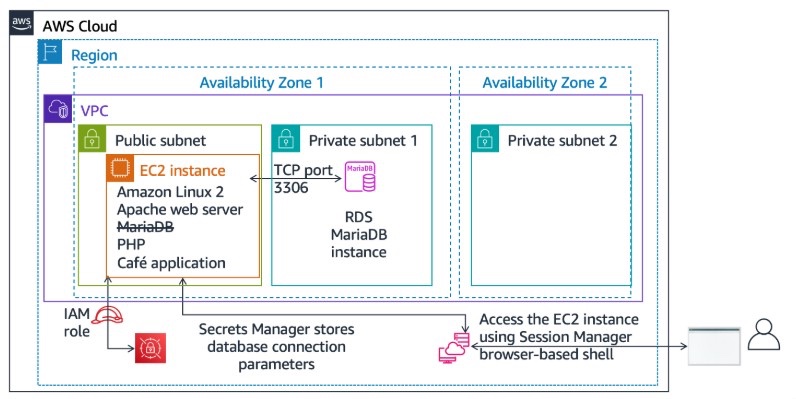
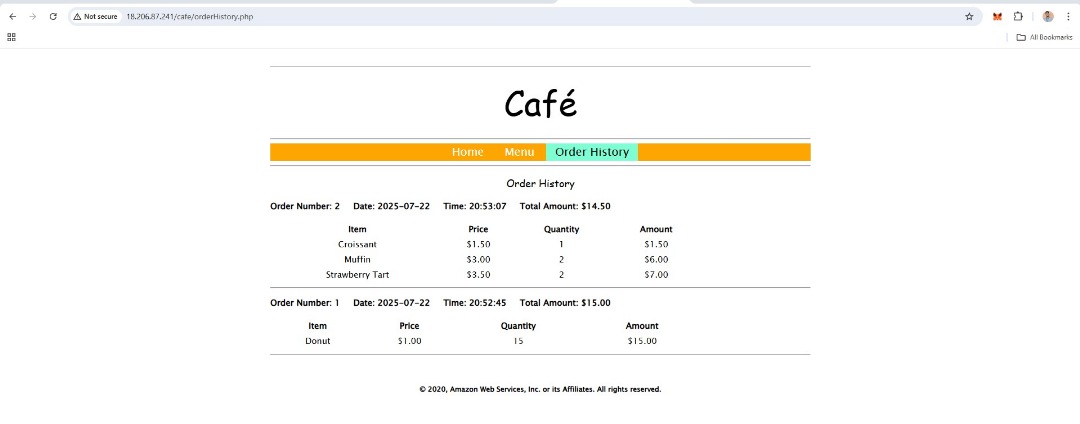
Now, orders flow from the app to the new RDS backend. Backups are automated. Security is handled. The café gets the data they need, when they need it. Martha gets her order history. Frank gets his tart trends. Sofia gets her weekends back.
My goal? Seamlessly move the café’s MariaDB to a secure, scalable Amazon RDS instance. That meant exporting the data with mysqldump, importing to RDS, reconfiguring the app, and turning off the old DB — all without downtime.
Frank’s Café started with one EC2 instance doing it all — website, app, and database. It worked… until it didn’t. Orders were growing. The team needed insights, backups, and breathing room. The local DB had to go.
Ever ordered a croissant online and wondered how it all gets tracked? Behind every order is a system quietly keeping everything together. In my latest cloud lab, I migrated a café’s local database to Amazon RDS — without losing a crumb.
#AWS#CloudComputing
This is just one lab in the AWS Academy journey I’m on.
Simple, powerful tools — once you know how to use them — can solve real-world problems.
On to the next lab.
Follow along.
#AWS#CloudComputing#RDS#DevOps#ALX#CloudArchitecting
The result:
• Fully functional inventory system
• Secure DB access
• No data loss even if the app fails
• Scalable infrastructure — ready to grow with demand
The architecture?
Public subnet for the app.
Private subnet for the database.
Only the app talks to the DB — no open internet exposure.
Secrets Manager handles credentials, not hard-coded values.
As part of my AWS Cloud Architecting training with ALX, I recently built just that:
• A MySQL database with RDS
• Connected to a web app running on EC2
• Secured across public/private subnets
• Passwords stored in Secrets Manager
The fix?
Use a fully managed cloud database that scales with you.
Enter Amazon RDS.
No manual setup, no patches, no panicked backups.
Just a database that works, even when your traffic spikes.