Accountant By Profession! Policy Analyst! Aviator! Commentator! Status Quo Disrupter! Social Activist! Proudly blocked for my firm views by @Delemomou & @reaFFK
UPDATE: Over seventy jets landed in Maiduguri International Airport from yesterday to today for GMD of NNPC children wedding others are asked to turn back due to shortage of space to land.
Source FAAN
Our problem with numbers never fails to puzzle me. Even when this first “broke”, I dismissed it as yet another proof of our uneasy relationship with basic arithmetic. ₦210 trillion is roughly four times the size of Nigeria’s current national budget, so it was astonishing to see such a figure being tossed around like a stale pancake.
My biggest takeaway from Bala Wunti’s explanation at this Senate committee hearing is the apparent lack of “closer engagement” among our public institutions, as he admitted himself. A discrepancy of this magnitude should have been resolved at the inter-agency level, with the relevant auditors and accounting officers sitting together to reconcile the figures before they found their way into the public domain.
One would have thought we had learnt from the Sanusi Lamido Sanusi episode, when he claimed that $20 billion had gone missing from NNPC’s coffers. Yet, when Senator Ahmed Makarfi pressed him during a Senate committee hearing, that specific claim could not ultimately be substantiated.
I suppose this is all part of the learning curve in strengthening public finance and institutional accountability. But if there is one lesson here, it is that accounting figures should be reconciled before they up entertaining a nation already battling with numbers problem.
Jensen Huang said it right:
“Greatness does not come out of intelligence, it comes from character. Character is not formed out of smart people, it is formed out of people who have suffered.”
"No gree for anybody o!"
"If I were a bandit, you wouldn't be standing here," she fired back.
A Hausa/Fulani woman stood up for her dignity after security operatives ordered everyone to come out for a search.
When one of the officers allegedly said, "That one is Yoruba, not Fulani. Don't search her," she perceived the remark as disrespectful and responded by defending both her dignity and that of her community.
4am hack
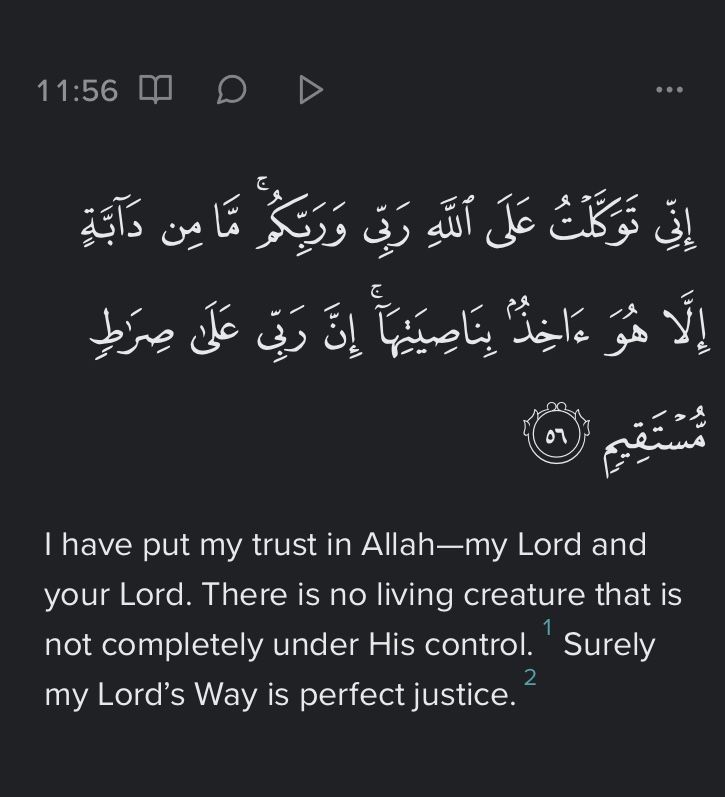
Wake up ans perform ablution.
1-Read the Quran for 15min
2- Nafil 2 rakaa for ten mins, shafa’i and witr 5 min.
3- Salatul Annabiy 15 min
4- istigfari 15 min
Then pray rakaatanil fajr and go to subhi.
Try this and watch your life change insha Allah.
Go to school. Learn a vocational trade. Try your hands on a micro or small business. Take advantage of every opportunity that comes to you. That's how to escape multidimensional poverty. It's not easy but it can be done!
Knowledge is having the right answers.
Intelligence is asking the right questions.
Wisdom is knowing when to ask the right questions.
—Professor Richard Feynman
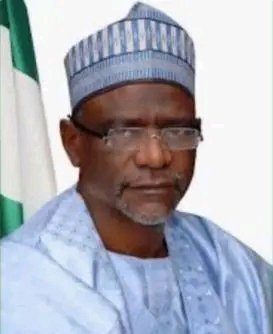
RICH IN FRIENDS, POOR IN RICHES: THE ADAMU ADAMU STORY
I once saw a former minister leave office without a personal car, waiting for a friend to pick him up after handing over. If I had not witnessed it myself, I probably would not have believed it. In a system where public office is often treated as a shortcut to wealth, the sight was both rare and striking.
Good leaders still exist, though they are few and far between. Mallam Adamu Adamu is one of them.
An accountant by training and a respected veteran journalist, Mallam Adamu entered public service with little more than his reputation and left in much the same condition. He never built another house for himself. Apart from the modest four-bedroom house he owned in Azare before becoming a minister, that remains all he has to his name. Today, he is alive and well, yet lives modestly—not out of misfortune, but by choice.
He saw money in office and refused to touch what was not his. Such restraint is rare. In Nigeria’s political culture, where access to public funds is too often mistaken for entitlement, Mallam Adamu’s conduct stands out because it reflects what public service ought to be: serving without helping oneself to the public treasury.
Generosity was another of his defining qualities. He was never afraid of being poor because he spent what little he had supporting those with even less. Students, widows, and young journalists who crossed his path can testify to his kindness. He may not possess material wealth, but he is rich in relationships—surrounded by friends, former colleagues, and loyal associates who remain loyal without expecting anything in return.
Our friendship dates back to his days at the New Nigerian Newspaper, where his reputation for discipline, honesty, and frankness was already well established. What I saw then remains unchanged today. At a time when corruption scandals are measured in trillions, Mallam Adamu Adamu’s life is a reminder that integrity in public service is still possible.
The apple does not fall far from the tree. Adamu Adamu belongs in the tradition of Sir Abubakar Tafawa Balewa, Nigeria’s first Prime Minister, and Sir Ahmadu Bello, the Sardauna of Sokoto—leaders who chose duty over personal gain and left behind legacies of honour and service.
He entered office poor. He left office poor. Yet in doing so, he preserved something far more enduring: his name.
Hon. Bello El-Rufai was asked whether his defection to ADC was ideological.
He replied that it wasn’t ideological, it was purely out of solidarity with his father.
I like the honesty. No kwana kwana