Following Cabinet’s approval of the draft State Finances law for 2026/2027, Minister @yusuf_murangwa will present the proposed National Budget to Parliament this Thursday. Focus: agriculture, industry, jobs & stability.
...
Nyuma y’aho Inama y’Abaminisitiri yemeje imbanzirizamushinga y’Itegeko rigena Imari ya Leta y’Umwaka wa 2026/2027, kuri uyu wa Kane Minisitiri @yusuf_murangwa azageza ku Nteko Ishinga Amategeko umushinga w’Ingengo y’Imari y’Igihugu. Hazibandwa ku ubuhinzi, inganda, guhanga imirimo no gukomeza ubukungu buhamye.
#RwandaBudget
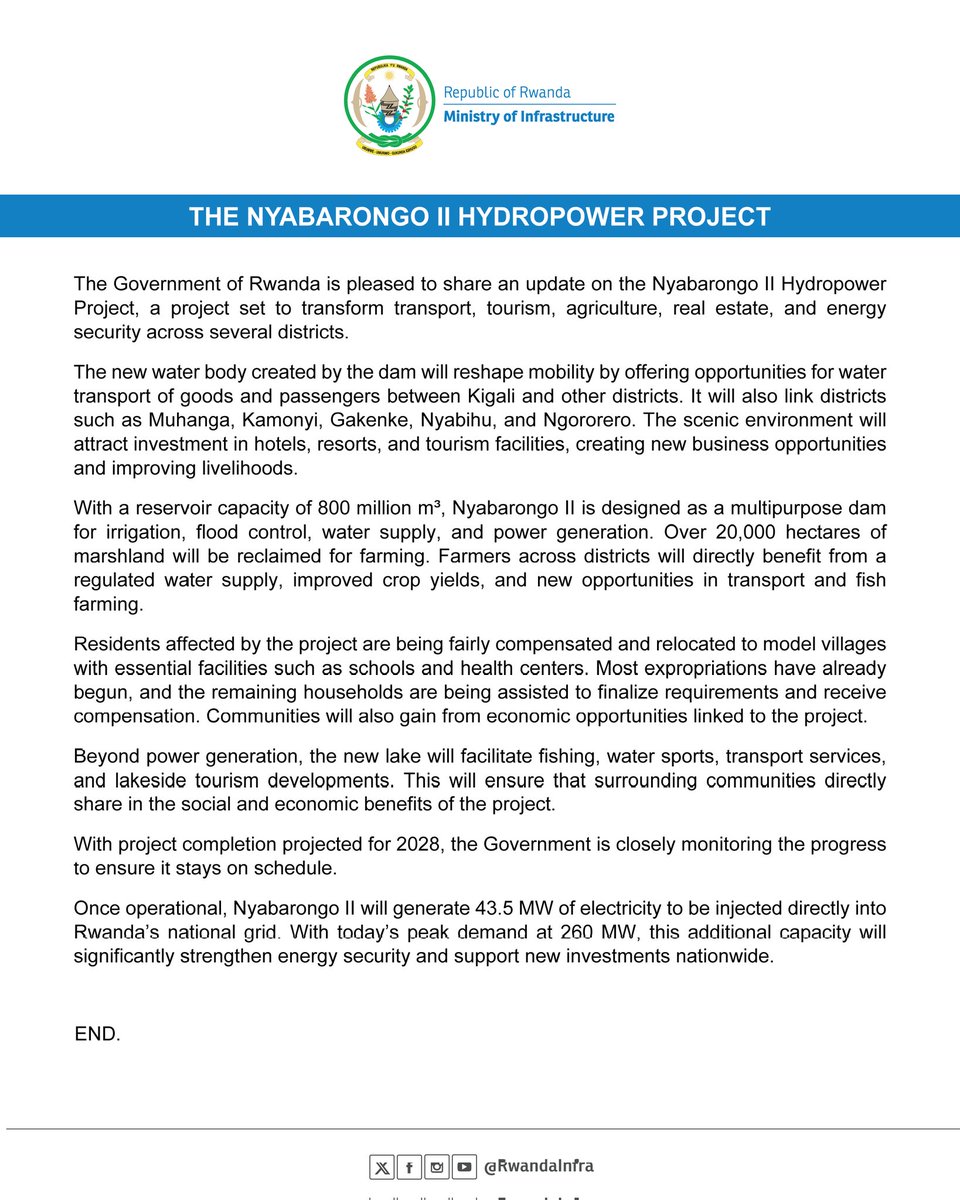
Discover more about the flagship Nyabarongo II Hydropower Project. In addition to generating electricity, the project will create a water reservoir that will make a significant contribution to the country’s economic development.
This week, we launched the nationwide distribution of the Citizen Budget Guide, a simple, user-friendly resource to help everyone understand how public funds are managed.
By breaking down key budget information in clear terms, the guide promotes transparency, accountability, and inclusive participation in the national budget process.
Download your copy here https://t.co/H8wzLdpp6K
#CitizenBudgetGuide2025 #PublicFinance #Transparency
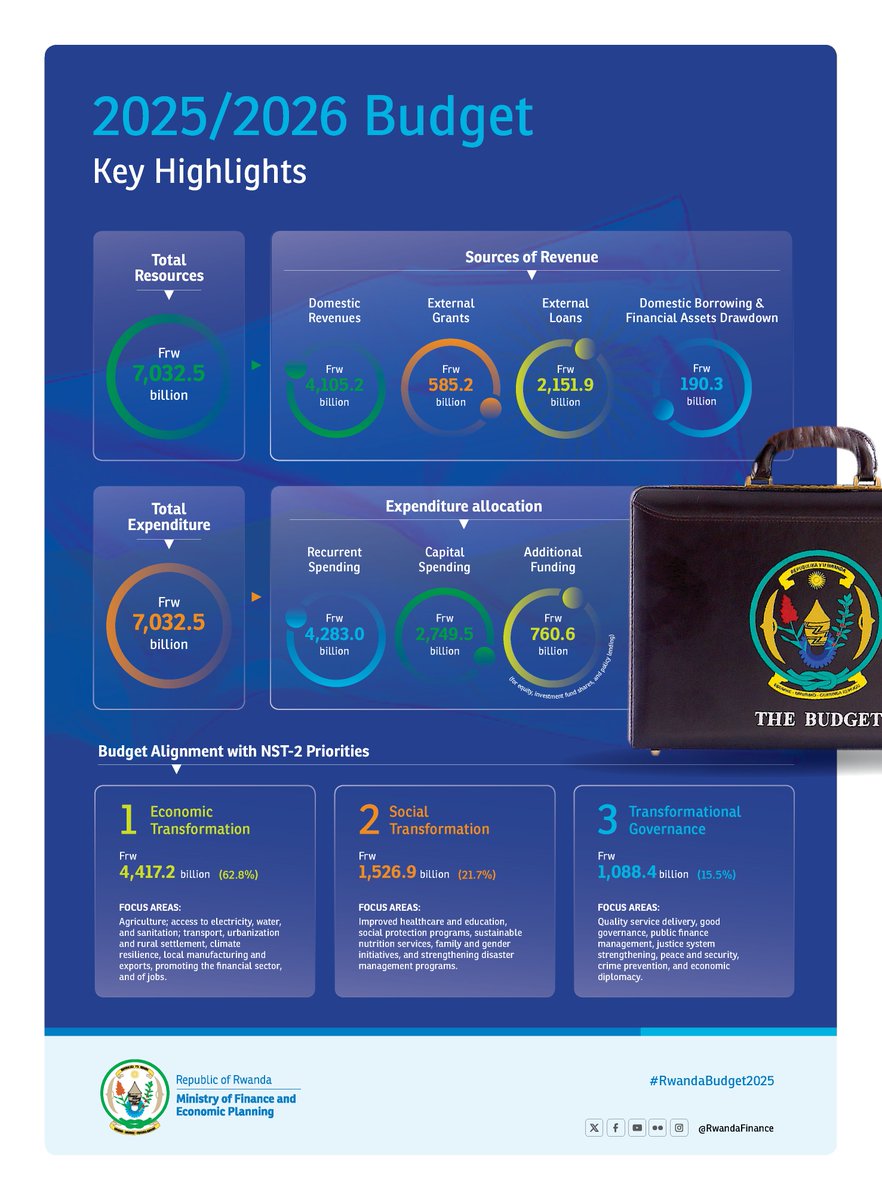
Waba waracikanywe n'isomwa ry’Ijambo ku mushinga w'Itegeko rigenga Ingengo y’Imari ya Leta y'umwaka wa 2025/2026? Nta kibazo! Dore iby'ingenzi wamenya.
#RwandaBudget2025
Did you miss the FY2025/2026 budget reading yesterday? No worries! 🚀 We've got you covered with the key highlights you need to stay in the know. Stay ahead, stay informed! 💡🇷🇼 #RwandaBudget2025
When President Félix Tshisekedi supported and armed the FDLR genocidal force, which he embedded in his own army, Belgium saw it but did nothing about it.
When President Tshisekedi publicly and repeatedly promised to overthrow the government of Rwanda and to bomb Kigali without setting boots on the ground, Belgium heard it loud and clear but remained silent.
When President Tshisekedi spent billions of dollars in heavy weaponry, including attack drones and fighter jets, to achieve his proclaimed goal, and when he put in place a military coalition made of local militias, FDLR genocidal force, Burundian and SAMIDRC forces, as well European mercenaries, for the same purpose, Brussels was fully aware but didn't act.
When the FARDC and its criminal militias persecute and kill, in broad daylight, the Congolese Tutsi in North Kivu, the Banyamulenge in South Kivu and the Hema in Ituri, Belgium is informed to the fullest but chose to look the other way.
And when the Belgian Foreign Minister claims that his country wants "a professional suspension process that preserves the gains of our longstanding cooperation for the benefit of the Rwandan people", this is not only pure neocolonial narrative, but also hypocrisy.
First, it's not the Kingdom of Belgium that takes care of the well-being of the Rwandan people but the Government of Rwanda itself.
Second, if Belgium was working for the "benefit of the Rwandan people", it would not be running around the world putting pressure on all our partners to end the development cooperation intended for that very "Rwandan people".
Third, Rwanda and History know too well how the Kingdom of Belgium usually behaves when it comes to defending the Rwandan people.
I rest my case.
I held two conversations this week with President Ramaphosa on the situation in Eastern DRC, including earlier today. What has been said about these conversations in the media by South African officials and President Ramaphosa himself contains a lot of distortion, deliberate attacks, and even lies. If words can change so much from a conversation to a public statement, it says a lot about how these very important issues are being managed.
A few important clarifications for the record:
1. The Rwanda Defence Force is an army, not a militia.
2. SAMIDRC is not a peacekeeping force, and it has no place in this situation. It was authorized by SADC as a belligerent force engaging in offensive combat operations to help the DRC Government fight against its own people, working alongside genocidal armed groups like FDLR which target Rwanda, while also threatening to take the war to Rwanda itself.
3. SAMIDRC displaced a true peacekeeping force, the East African Community Regional Force, and this contributed to the failure of the negotiation processes.
4. President Ramaphosa has never given a "warning" of any kind, unless it was delivered in his local language which I do not understand. He did ask for support to ensure the South African force has adequate electricity, food and water, which we shall help communicate.
5. President Ramaphosa confirmed to me that M23 did not kill the soldiers from South Africa, FARDC did.
6. If South Africa wants to contribute to peaceful solutions, that is well and good, but South Africa is in no position to take on the role of a peacemaker or mediator. And if South Africa prefers confrontation, Rwanda will deal with the matter in that context any day.
Minister @yusuf_murangwa welcomed @IMFnews Director of the Statistics Department Bert Kroese, for a courtesy call. They discussed collaborative strategies to enhance the role of statistics in informed decision-making and policy formulation. Mr. Kroese was in Kigali for the second edition of the Innovate Africa Symposium, hosted by @StatisticsRw last week.
Are you looking to expand your portfolio and make a significant impact in the agricultural sector? We invite interested private sector companies to submit proposals for the acquisition of Huye Feeds Limited. For more details on the bidding instructions, please follow this link https://t.co/9PNOfGxYQX
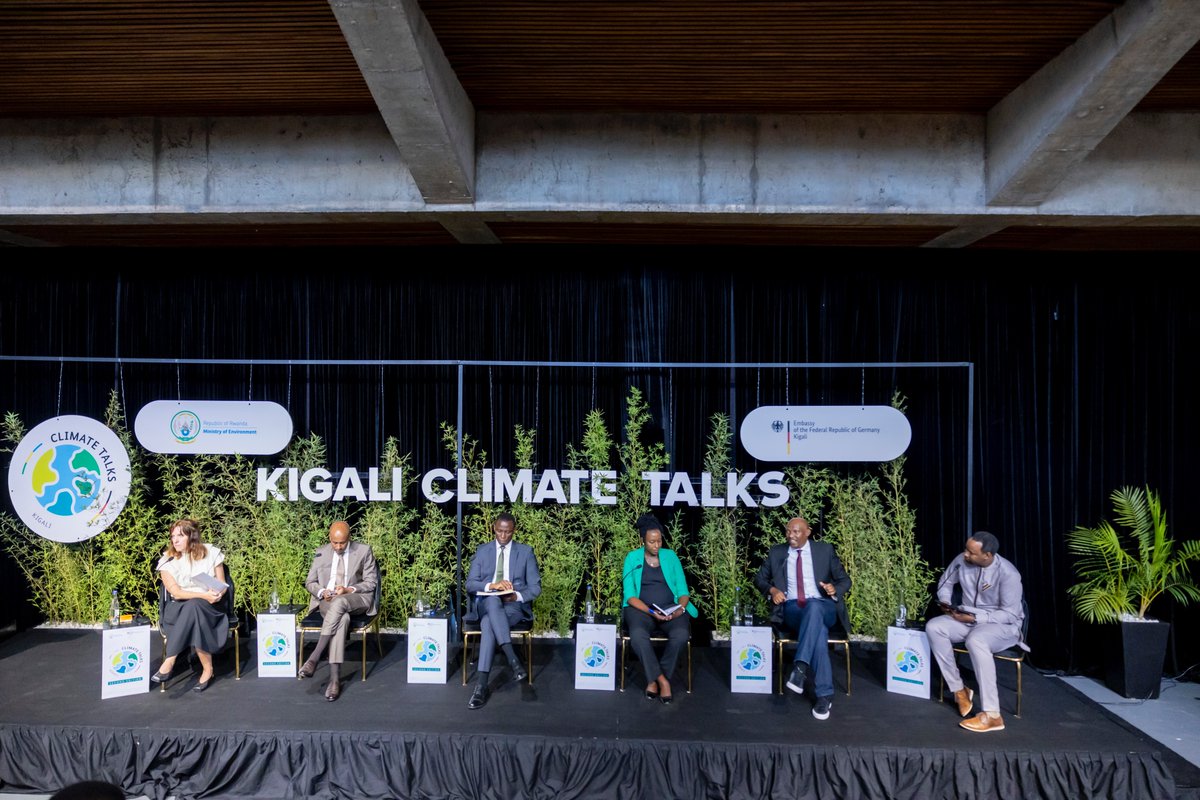
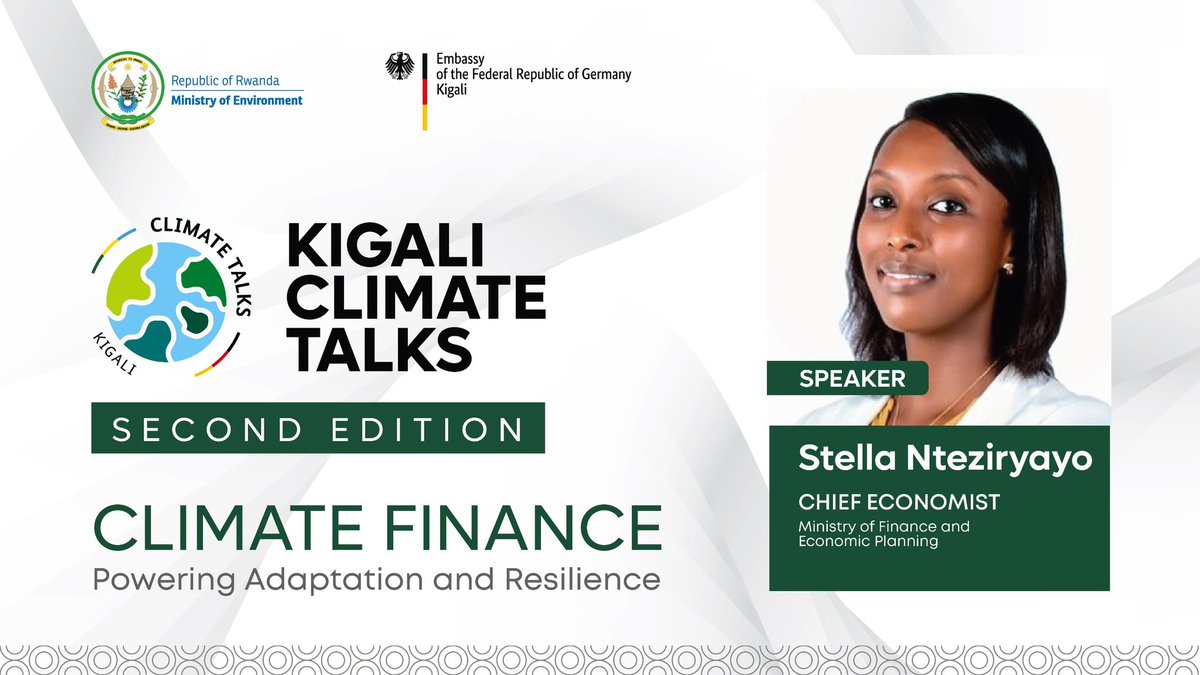
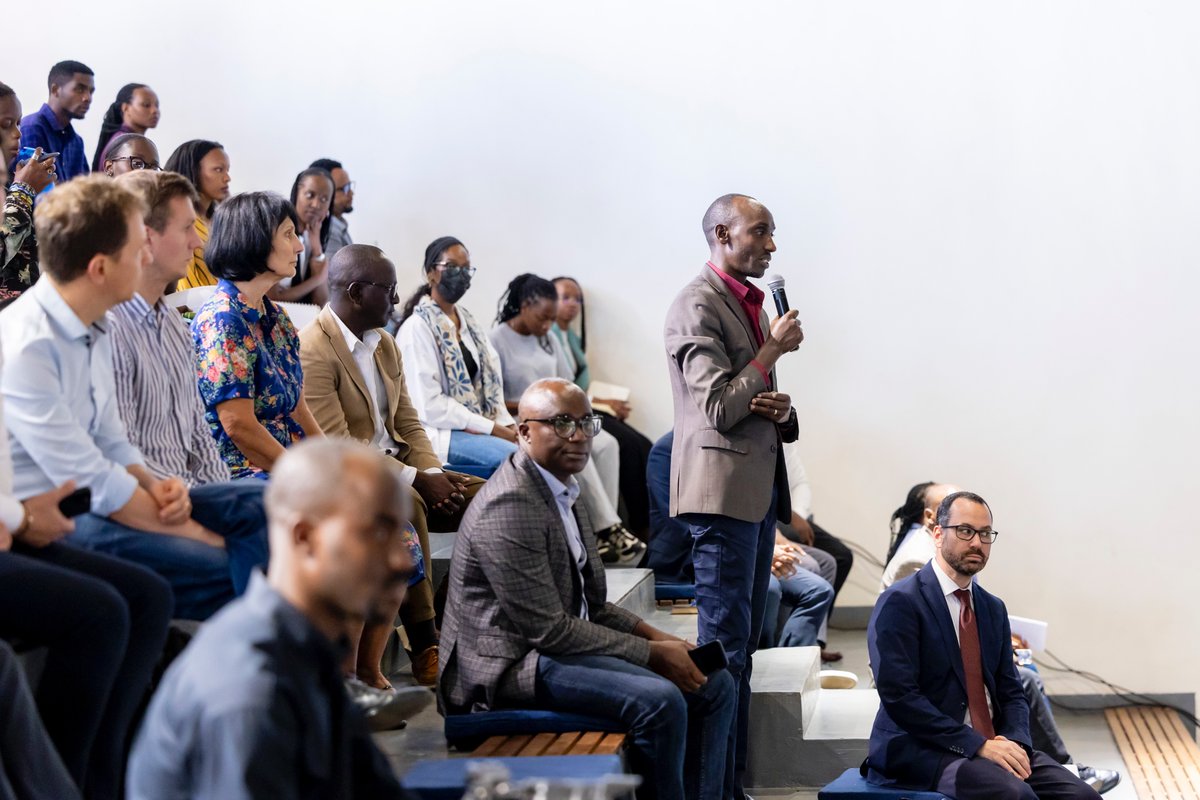
Discussing climate financig at the 2nd edition of #KigaliClimateTalks, our chief economist @stellarusine noted that the establishment of the National Climate Financing Strategy will allow Rwanda to raise sizable and sustainable financing to support adaptation and resilience.
The 2nd edition of Kigali Climate emphasized the vital role of finance in enhancing resilience to climate change in Rwanda. Some of the key takeaways include:
- Integrating climate finance into development plans
- Strengthening stakeholder collaboration
- Implementing innovative resource mobilization strategies
- Leveraging private sector participation
- Enhancing data-driven approaches for effective climate adaptation and resilience
#KigaliClimateTalks #RoadtoBaku2024
#Kwibuka30. In 1994 Christine Delley State Dept Spox shamelessly stated that what was happening were acts of genocide but not genocide.
Today in 2024 Sec #Blinken intentionally mixes up the victims of the genocide while being well aware that #Tutsis were targeted. SHAME
Genocide and the unlikely alliance against Kagame
The RPF has never been against Hutus. It has always been against the Hutu Power ideology. This is the ideology that suggests any country’s problems are caused by Tutsis, and solved by exterminating them.
The RPF is also against Tutsi exceptionalism. This is the ideology that there’s something innately special about Tutsis.
These ideologies were introduced by Belgian colonialists (political and missionary) through racist Hamitic theories which they used first to establish Tutsi rule under colonial oversight (late 1920s-early 1930s: the period of institutionalizing and consolidating of the colonial state) and exclude Hutus and later (late 1950s-early 1960s) to demonize Tutsis and undermine independence movements.
The aim was always to divide and conquer. Which is why the unity of Rwandans is the antidote to both ideologies.
This unity is around the shared identity of Banyarwanda (Hutus and Tutsis share the same culture, speak the same language, do not qualify per definition of tribe/ethnicity). By that definition, they belong to the same ethnicity - the Banyarwanda ethnicity.
Interestingly, the Banyarwanda identity (shared by Hutus and Tutsis) has a strong element of exceptionalism that Tutsi exceptionalists want to usurp and attach only onto themselves. Tutsi exceptionalism is built around the myth of historical greatness, which is also a colonial creation since this triumphalist historical greatness is actually a Banyarwanda (shared) mythology.
Hutu Power is a form of exceptionalism built around the myth of common suffering at the hands of Tutsis, which is a colonial creation since politicised social organisation in pre-colonial Rwanda was around clans (Hutus and Tutsis share the same clans).
President Kagame is hated by both groups, the purveyors of Hutu Power and those of Tutsi extremism. The former hate him because he defeated the Hutu Power government and outlawed political parties that subscribe to that ideology.
The latter hate him because they mistakenly believed that the war Kagame was involved in was to restore Tutsi exceptionalism and feel he denied them their spoils.
Kagame risked his life when he categorically told them that the aim was to liberate all Rwandans and to restore the shared identity of Banyarwanda. They tried to depose him but were also defeated and went to exile in Europe, Canada, and the United States, where the Hutu Power adherents also fled to after committing genocide in 1994.
Both groups - Hutu Power and Tutsi exceptionalists - have a shared cause to remove Kagame and fight each other for the vision of society they wish for Rwanda, however destructive it is. They view him as the greatest obstacle to this ambition. They are prepared to cause destruction and tragedy to the country, to sacrifice millions of lives of Rwandans, in order to achieve their narrow aims, with self-exile being the only sacrifice they are prepared to undertake.
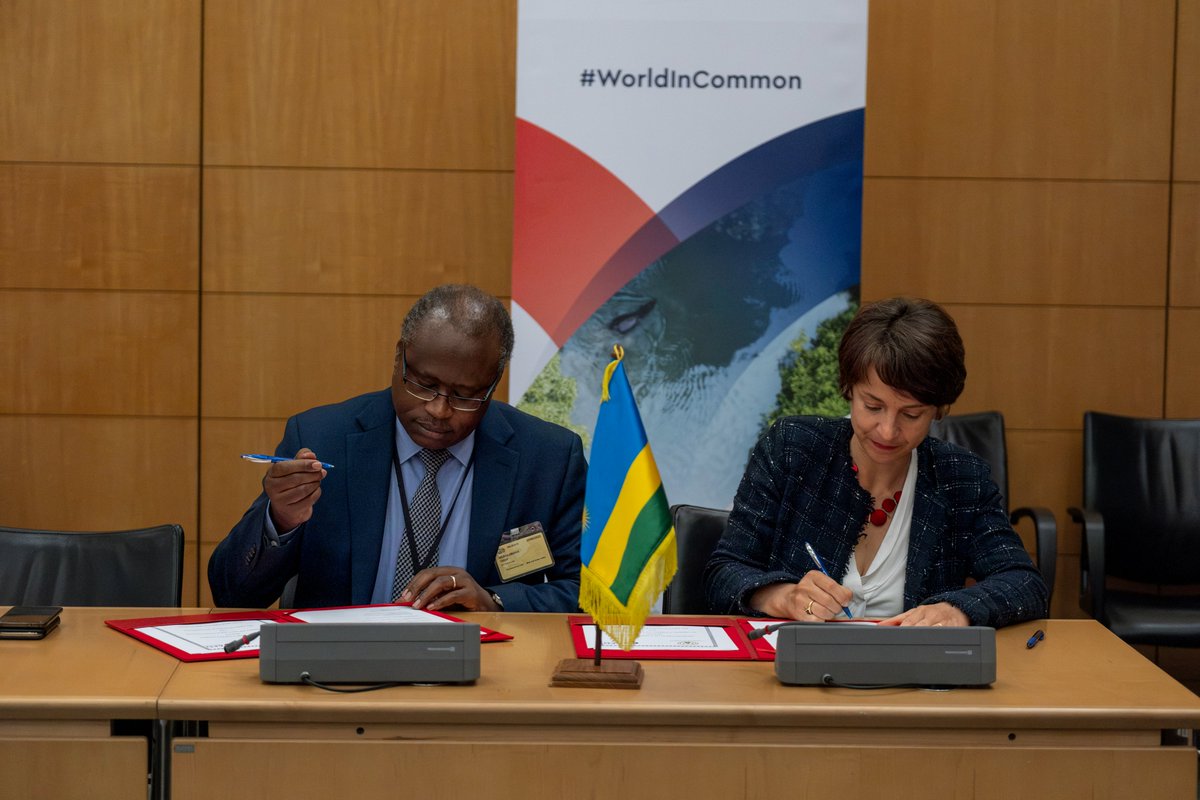
Today @RwandaGov, Team Europe and partners have announced the €300m Rwanda Climate Finance Partnership that will spur private investment and strengthen climate resilience by building on the @IMFNews Resilience and Sustainability Facility.
A thread🧵👇🏿
#GreenRwanda🇷🇼🌿