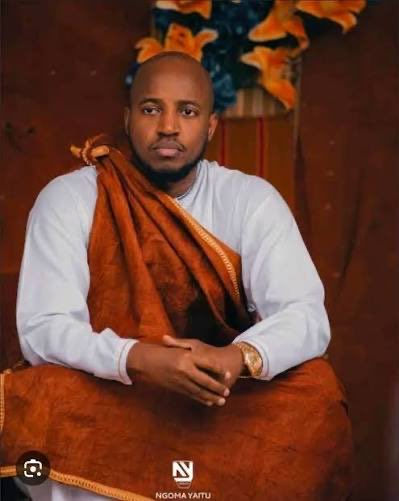
At Alere S. S. in Adjumani, as part of the Health club, there are boys that are doing a great job promoting menstrual knowledge and awareness against harmful cultural practices such as child marriage. I promised the boys that, to show my appreciation for their work, I will draw them and credit them publicly (make them famous) - to inspire more to such constructive work. The first I am sharing is Solomon Kuch. Share until it reaches him in the refugee camp in Adjumani.
This video has changed the way I answer questions and even how I approach things.
H.E. Paul Kagame is more than just a President. He is a mentor and a good man. I just pray to God to give him a long life as we continue to work together and learn from his wisdom.
On behalf of the Government and people of Barbados, I extend our heartfelt solidarity to President @JoseRaulMulino and the people of Panama following the powerful earthquake that has shaken their nation.
We are grateful for the initial reports that no lives have been lost or injuries sustained. But we know that even where lives are spared, the fear, uncertainty and disruption experienced by families and communities are very real.
At moments such as these, we are reminded that our shared humanity must always be greater than the borders that separate us.
Panama is our neighbour, and Barbados stands ready to assist in whatever way we can. To the families affected and the first responders working to protect communities, know that you are not alone.
Our thoughts and prayers are with you. Barbados stands with Panama.
Every human being has equal value. Every single one.
At the United Nations General Assembly, I challenged a world that still decides whose lives deserve protection and whose suffering can be ignored.
No race is superior. No people are disposable. Until we honour that truth, "everywhere is war" remains a warning we have failed to heed.
What the world needs now is love, with the courage to confront injustice and defend our shared humanity.
Love and a little kindness. For everyone.
But again.
Who btn the two was supposed to know about the child?
Omukopi oba Omulangira?
Katikiro aba mukopi, omusunga mulangira. Walulyo. Is in the bloodline of the king. Who was supposed to know about the child first?
Two.
Once a king gets a child, a boy in particular. That boy cease to be a child of the king or a grandson of a queen mother.
He becomes a king in waiting. So there's no way u can hide a king in waiting from cultural leaders in the kingdom.
Unless indeed he left no child and yr fugiting to put a child who will be in yr control.
Then it brings me a question, btn you and the musunga who is more greedy for power?
Looks like it's u who is greedy for power because the one who has been keeping u in power is gone now yr looking for a way to stay in power.
THE SLOW PLANE RETURNS TO US
Slowly, the plane takes its time.
The long hours of the flight are heavy.
Tick and then tock, tick and then tock…
Tick and then tock, tick and then tock…
This return leg of the trip is painfully slow.
It is as if a snail replaced the plane from
Dallas Fort Worth International Airport.
Well, the plane better be gentle this time.
It bears our beloved Omukama of Tooro.
Deep inside its belly is a long white box.
The white box is inscribed with blue letters:
“Handle with care, boojo!”
Inside the white box in the slow plane’s belly
Lies the royal Omuguta of our King Oyo.
“Handle with care, beitu!”
He silently returns to us, in the slow plane.
He sat upright on the trip’s departure leg.
He returns to us lying down peacefully.
Alas, Amooti is resting in the slow plane!
Slowly, even gently the plane returns to us.
Omukama atulize. Enkuba etutiire.
According to the debrief I got, Museveni in his address claimed that @kizzabesigye1 has been “refusing trial” for nearly two years since his abduction in November 2024 from Kenya, misusing the legal system, and that a “great democrat” should rush to court to prove his innocence.
What a distortion of facts! Presumption of innocence is not a colonial relic you can discard when it suits you. The burden is on the state to prove guilt beyond reasonable doubt, not for the accused to beg for a fair hearing in a captured judiciary.
The Politics of Desperation: Uganda’s Elites and the Scramble for Political Appointments
Uganda’s governance crisis is no longer sustained by force alone; it is increasingly lubricated by silence. That silence, however, is not accidental. It is the direct product of an intense scramble for political appointments that has turned large sections of the country’s elite into cautious spectators rather than principled voices.
Across academia, professional circles, and technocratic spaces, many elites have learned that speaking truth to power carries real costs. Criticism of corruption, constitutional abuse, poor service delivery, or elite impunity can instantly shut the door to political favor. In a system where appointments are personalized and discretionary, silence becomes a strategy. The result has been a steady degeneration of governance, not because problems are unknown, but because too many who understand them are afraid to speak.
This scramble has fundamentally altered elite behavior. Public commentary is carefully calibrated. Words are weighed not for their truth, but for their potential impact on one’s political prospects. Some individuals who privately express outrage at bad governance publicly adopt neutral or even defensive positions, hoping to remain “safe” for future consideration. Principle is postponed indefinitely, pending appointment.
At the heart of this crisis is the high commercialization of politics. Political office in Uganda has become extraordinarily lucrative; financially, socially, and symbolically. Access to allowances, vehicles, security, foreign travel, informal influence, and post-office opportunities has made even relatively junior political appointments more commercially rewarding than senior professional roles.
This distortion explains why, for some elites, a junior political appointment can now appear more attractive than a prestigious academic position such as a vice chancellorship. For someone like Dr. Muganga, the calculus reflects a wider structural problem: politics now promises faster financial security and elite relevance than decades of professional excellence. In such an environment, it is unsurprising that ambition gravitates toward politics, even at the cost of credibility.
It is within this context that the controversy surrounding citizenship has played out. Instead of soberly addressing the statutory and constitutional questions raised by dual citizenship, the public debate has been diverted into emotionally charged ancestral symbolism. References to parents’ graves, lineage, and cultural belonging have been elevated as proof of citizenship, as though constitutional law were settled by sentiment.
This desperation to prove belonging through ancestry rather than law exposes the anxiety that accompanies the scramble for appointments. The issue at hand is not emotional attachment to Uganda, nor cultural identity. It is whether the statutory requirements regarding dual citizenship have been complied with; whether any foreign allegiance exists and whether it has been lawfully renounced where required. These are legal questions, not symbolic ones.
Turning ancestral history into political theater does not resolve statutory challenges; it merely avoids them. Worse still, it signals to the wider elite that emotional performance can substitute for legal accountability if one is sufficiently connected or useful to power.
What is most troubling is the lack of understanding the distinction between cultural identity and legal citizenship. No amount of ancestral symbolism can substitute for accountability under the law.
Uganda’s governance crisis is therefore not only about those who rule, but about those who calculate. Until elites are willing to lose appointments in order to defend principle, the scramble will persist, and desperation will continue to masquerade as patriotism, legality, and loyalty.
In the end, no political appointment is worth the cost of integrity.
"I have been reliably informed that the 4 commissioners of Parliament received a 2nd service award of Ugx 400,000,000 each.
To avoid a paper trail, this money was received through the parliamentary SACCO."~@JoelSsenyonyi on Nov 4, 2025.
#UgandaParliamentExhibitionII
WATCH: Archbishop Stephen Kaziimba Mugalu responded to critics urging him to emulate Archbishop Janani Luwum’s bravery in condemning human rights violations, saying he can’t make an impact by getting killed. #NTVNews
📹 @jnalwooga
WATCH: Archbishop Stephen Kaziimba Mugalu responded to critics urging him to emulate Archbishop Janani Luwum’s bravery in condemning human rights violations, saying he can’t make an impact by getting killed. #NTVNews
📹 @jnalwooga
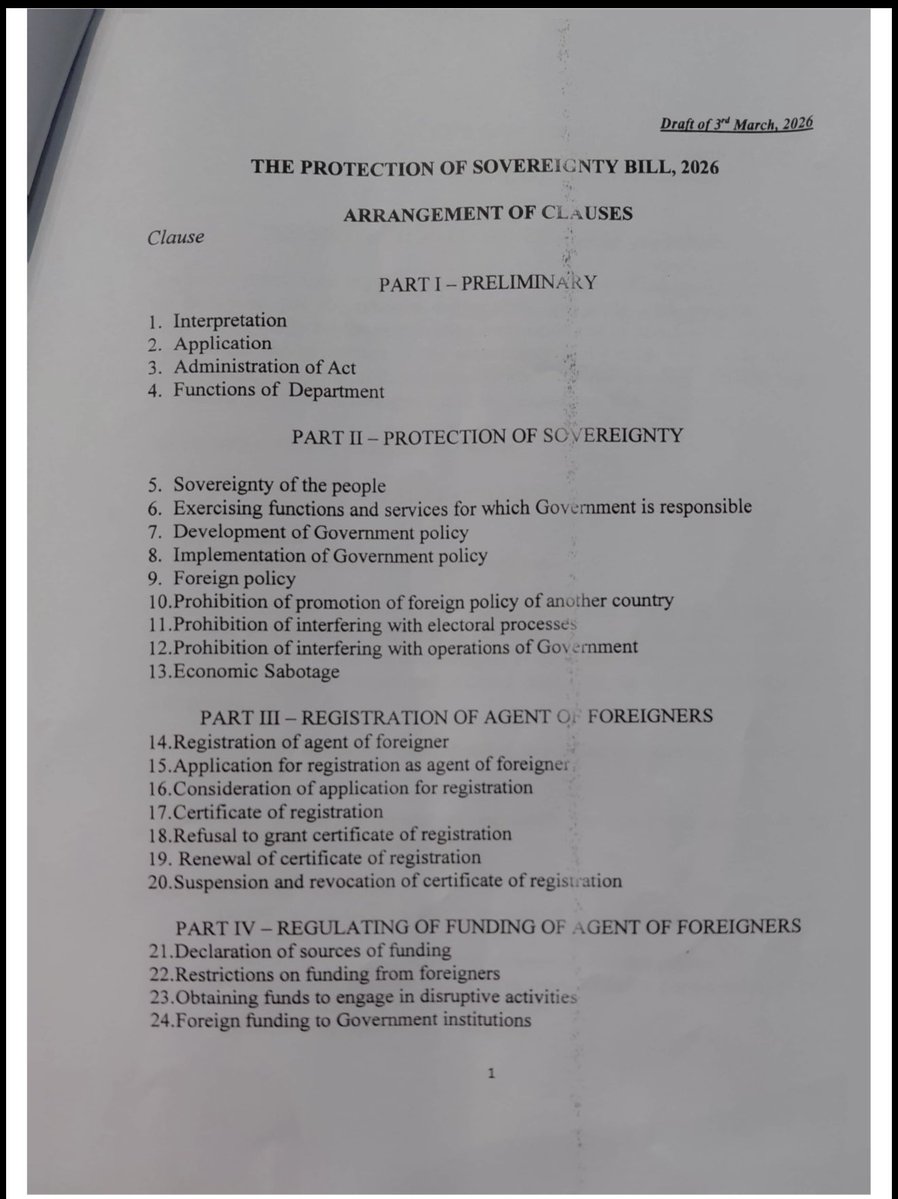
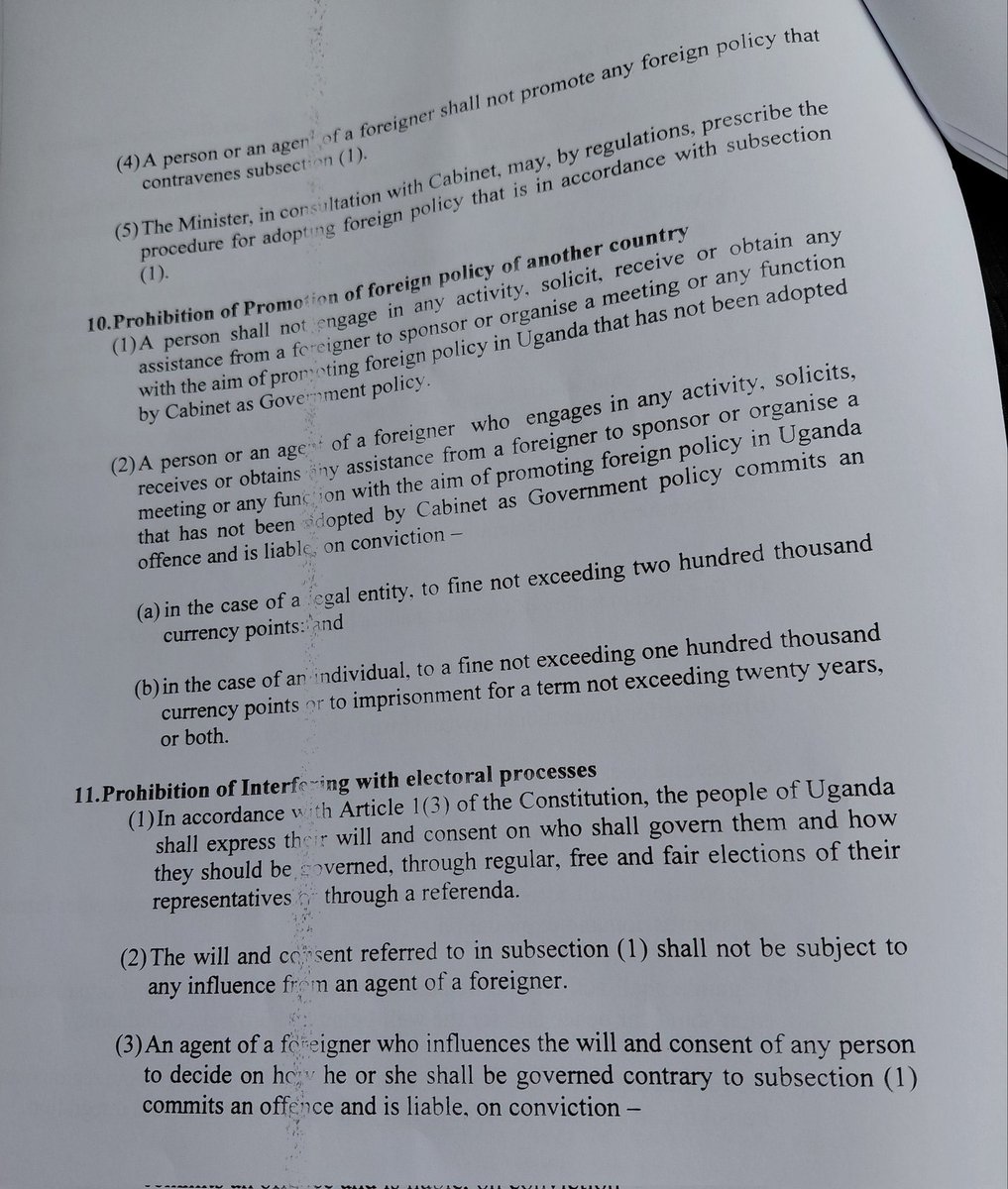
Reading the Protection of Sovereignty Bill, 2026 has sent me into uncontrollable laughter 😂😂😂
What kind of ghosts did @NRMOnline@KagutaMuseveni and team encounter on the campaign trail that has sent them into extremely paranoid schizophrenia? What kind of ghosts are they fighting? @HamsonObua@Thomas_Tayebwa@AnitahAmong@mofpedU@KiryowaKk
If our outgoing MPs approve this bill, let’s all collectively push for its enforcement to the letter and ensure the rope tightens properly on everyone’s neck #CivicSpaceUG