What does “private” mean in an AI chat? Four questions worth answering first: Does it show up in your history? Does the AI remember it later? Is it used for training? How long is it kept? The name of a setting isn’t the answer. At EQUS, our policy is: we don’t mine, train on, or resell your data. Free access to EQUS X through the end of the year at https://t.co/opU4DPBIbj.
@kalopsiatric That instinct is worth trusting. We think an assistant works best as one more voice in the room, and sometimes its answer is just the fastest way to find out what you actually wanted to do.
@YevMur A share link feels like it sends one message when it really opens the whole room. Scrolling the preview before sending is such a simple habit, and almost nobody does it. We treat shared chats like documents, something you reread before it leaves your hands.
@jayahos Honestly, we'd want it to remember the context we chose to give it, like the files for one project, and nothing it picked up on its own. Memory and privacy pull in opposite directions, and our sense is that remembering works best when you can see and take back what it holds.
@Goura_vk The detail that stays with us is that the messages were encrypted the whole way and still ended up readable on the screen. Encryption protects data in transit, and what an assistant may look at once it arrives is a separate decision that mostly gets made by default.
@dom51143825 Wanting your assistant to see your chats is fair, and so is the worry behind the block. For us the missing piece is choice. That's why we built EQUS X to see only the files you choose to share, and you can take that access back one file at a time.
Most people already answer this question without noticing. In our Personal AI Report, a survey of U.S. assistant users, 65% had shared information about someone else, including their partner for 33% and their own child for 19%. We think the difference in your setup is that the family's information stays somewhere the family controls.
Switching AI shouldn’t mean starting from scratch. In EQUS’ Personal AI Report, 45% of people have switched AI assistants, and a third of them started over. What you taught your last assistant took time, and you should get to decide what comes with you. In EQUS X, you can bring in what another assistant knows about you. Free access through the end of the year at https://t.co/opU4DPBIbj. Report in the reply.
You try a new AI assistant and spend the first week explaining yourself again. In EQUS’ Personal AI Report, a third of people who switched assistants started over from scratch. Free access to EQUS X through the end of the year: https://t.co/IDV1fSWQKP. https://t.co/pd1qBXYW2m
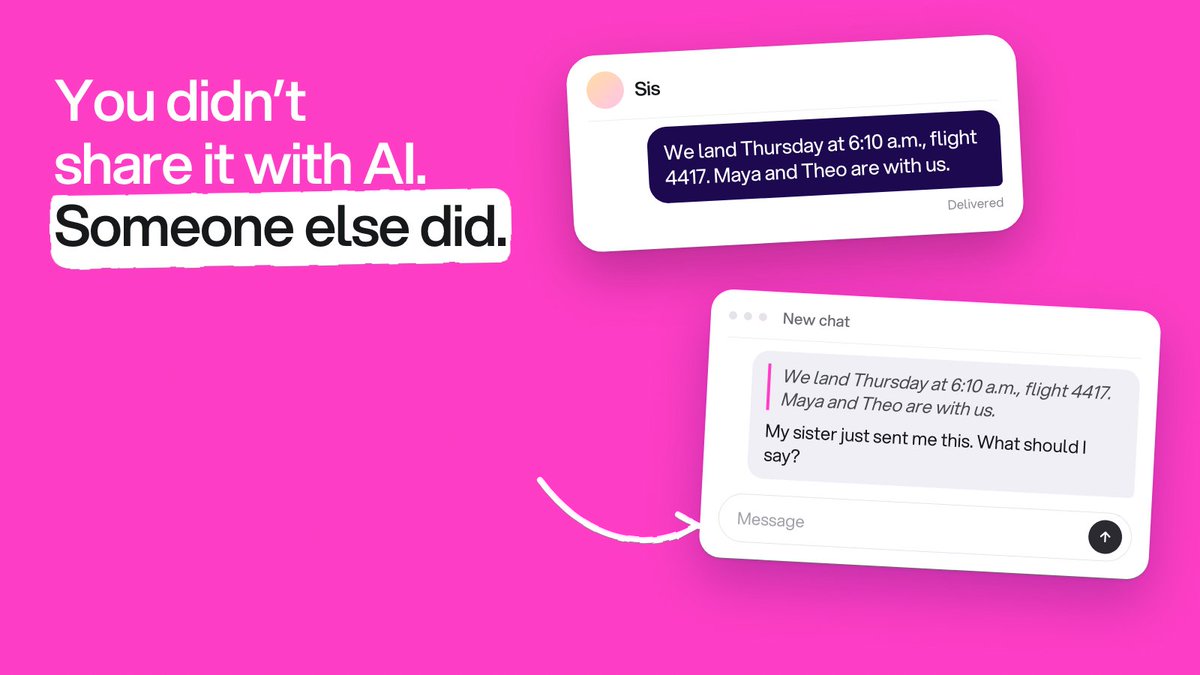
You didn’t share it with AI. Someone else did. We call this secondhand surveillance: details about you, your family, and your plans ending up in someone else’s AI chat, often without you knowing. In EQUS X, you decide what the AI can read, file by file, and switching a file off ends access. See how it works at https://t.co/opU4DPBIbj.
@morelifejoey A record like that gets more useful every year, and more personal too. With business, health, and private life in one place, we'd want to know where that file lives and who else can open it.
@colin__flaherty At this rate the notetakers will outnumber the people on the call. We do wonder who ends up holding all those copies of the same meeting though and how long for…
@Sabrina_Ramonov We were glad to see saved memories get their own step. Many people think of the chat as the whole record, and don't expect the assistant to keep separate notes about them. That’s why we’re so adamant on giving our users full control of when and how long our AI sees their data.
@AISystems_hq Keeping your own copy makes a lot of sense to us. Writing the file is also a good moment to decide what each new tool gets to see, because not every task calls for the client details.
Still want your AI to read that file? In EQUS X, you can stop the AI from reading a file and keep the file in your storage. Saving it and sharing it with the AI are two different choices, and you can change your mind any time. Free access through the end of the year at https://t.co/opU4DPBIbj.
In EQUS’ Personal AI Report, 62% of people who tried to delete what AI saved about them weren’t sure it worked or couldn’t work out how. Free access to EQUS X through the end of the year: https://t.co/IDV1fSWQKP. https://t.co/hSd9Z5GZvn
The Personal AI Report: https://t.co/vfdf37dpi5.
Survey conducted by Propeller Insights on behalf of EQUS: 1,034 U.S. adults 18+ who use an AI assistant for personal matters, Sept. 23 to Oct. 1, 2026. 62% is 206 of the 331 people who had tried to delete what an AI assistant saved about them.
What happens when you change your mind in EQUS X: https://t.co/CaIWIVobfW.
You deleted the chat. Did your AI forget? “Delete” can mean the conversation, a memory it saved, or a file you uploaded. In EQUS’ Personal AI Report, 62% of people who tried to delete what AI saved about them weren’t sure it worked or couldn’t work out how. Free access to EQUS X through the end of the year at https://t.co/opU4DPBIbj. Report in the reply.
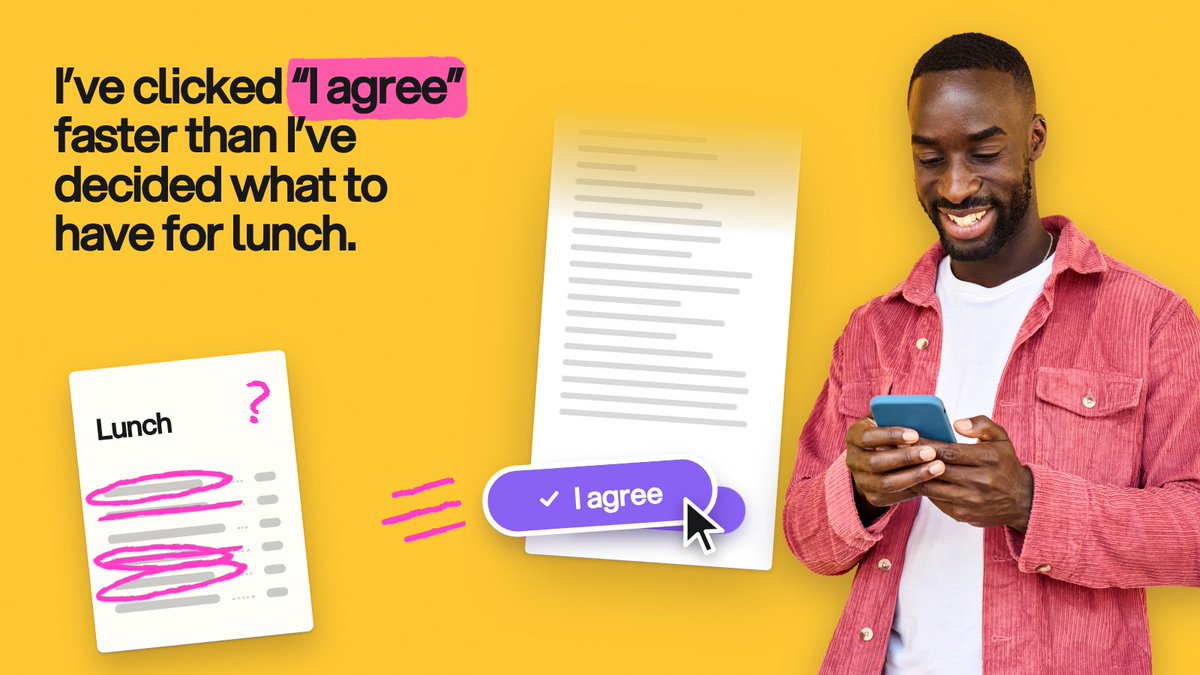
I’ve clicked "I agree" faster than I’ve decided what to have for lunch.
With EQUS X the answer fits in one line: no ads, and we don’t mine, train on, or resell your data. Free access through the end of the year at https://t.co/IDV1fSWQKP.
Some personalization is good for you. An app that remembers your destination saves you time. Other personalization works for the company, and you usually can’t see it, because a price just looks like a price. EQUS X has no ads, and our policy is that we don’t mine, train on, or resell your data. Free access through the end of the year at https://t.co/opU4DPBIbj.