Many assume all patients with high-risk DNA mutations — such as familial hyperchol mutations for heart attack — will develop disease
But some remain healthy
‘Polygenic background’ one important reason why
Press release: https://t.co/auJzWv0Xtu
Paper: https://t.co/qyS7Wd9KHl
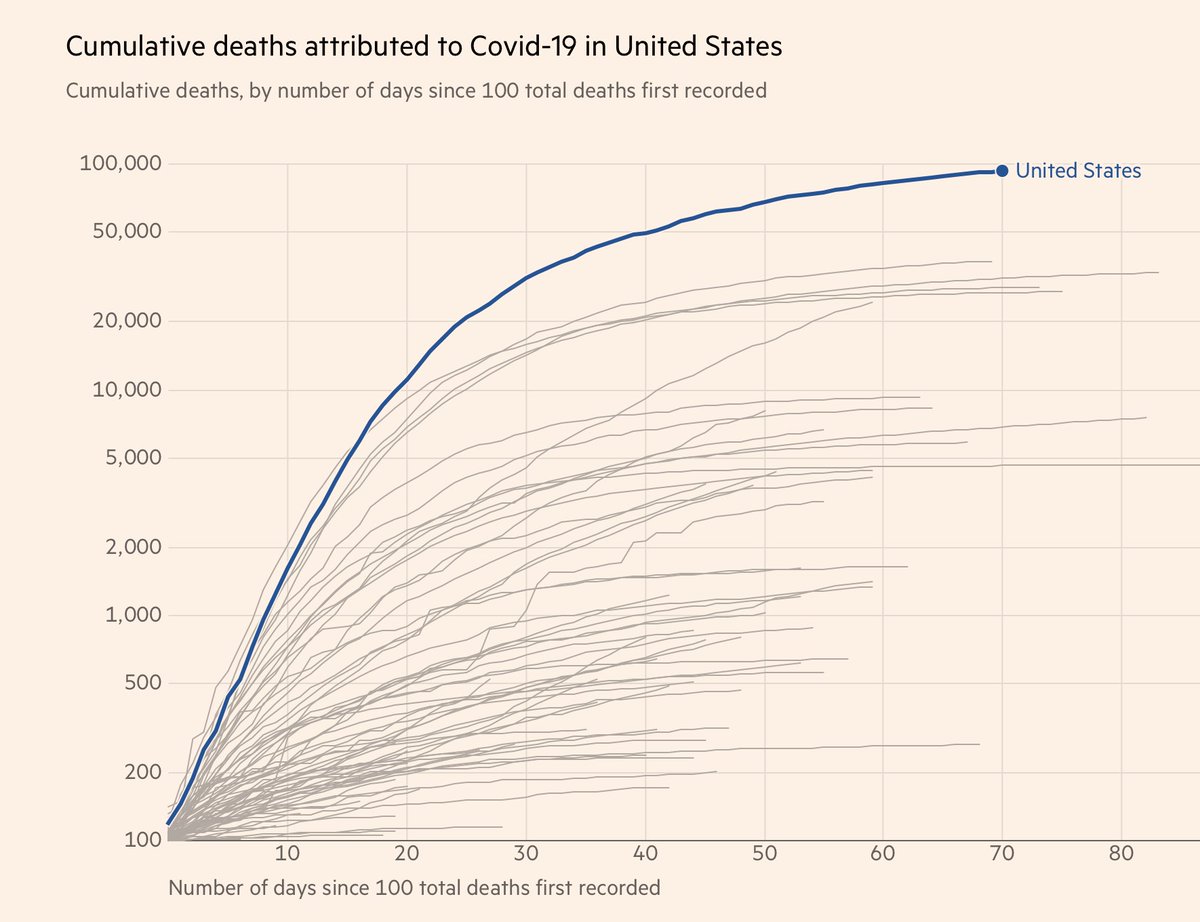
On the day that the United States reached the 100,000 death toll by @JHUSystems:
All in < 90 days. (February 28th was the 1st)
The country stands alone in the world —not just on this graph of loss of American lives—but also as the only country with no plan.
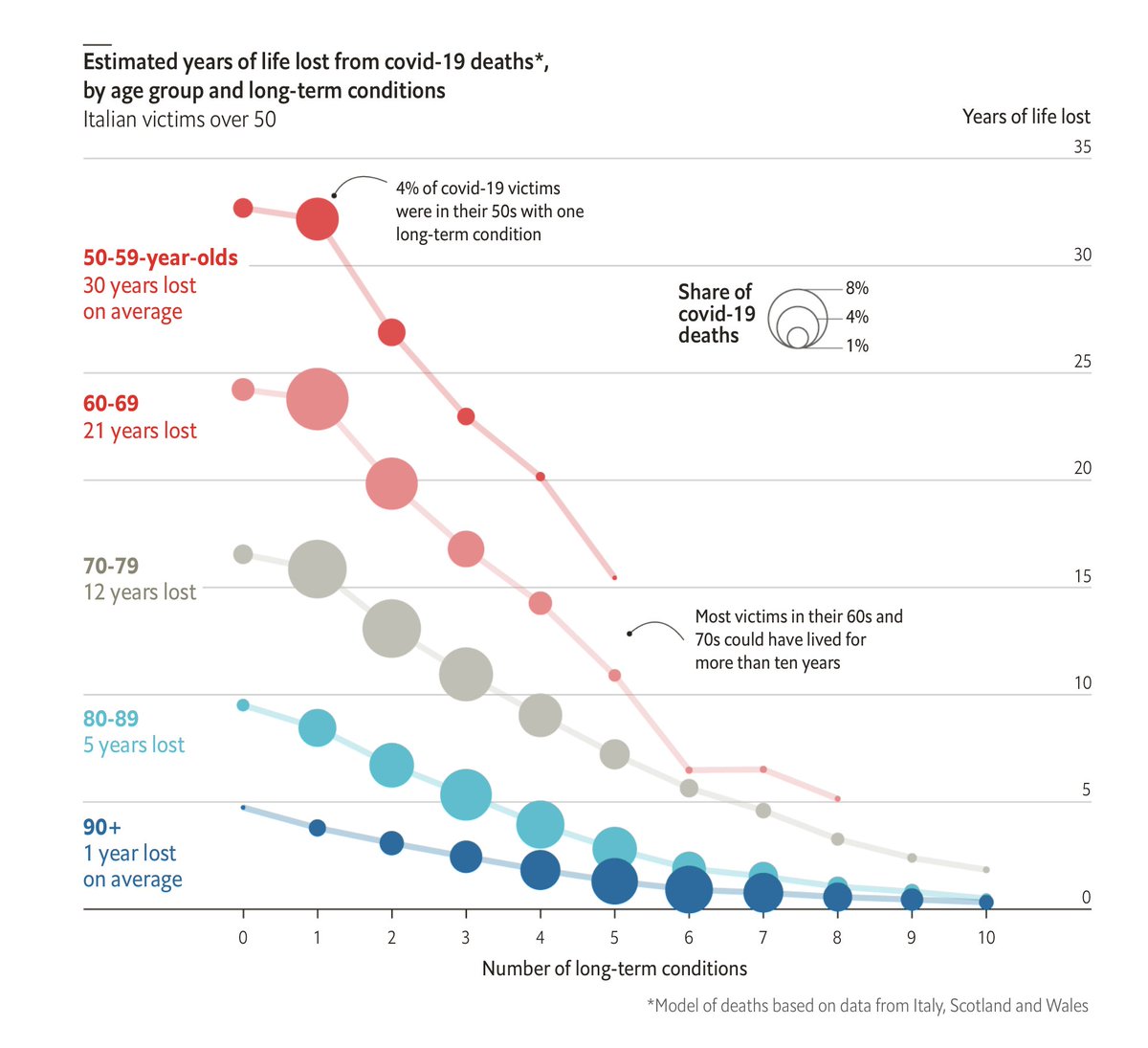
It's not just the loss of lives. It's the average 10-11 years that each of those dying have lost.
"The study shows ... people killed by #COVID19 had only slightly higher rates of underlying illness than everyone else their age."
https://t.co/pHGer2L5QD @ECONdailycharts
Nice highlight of our @MyGeneRank collaboration with @myDNAfeed to bring genetic counseling to polygenic risk prediction.
This is the model to scale reactive genetic testing to proactive population screening.
https://t.co/bDDfjDoEVc
New updates to the app brings the following to @android and iOS:
- Updated polygenic risk score
- Improved UI / UX
- Spanish language option
- Added option for genetic counseling
#AI identifies genes linked to heart failure https://t.co/voyf9zID3T
https://t.co/MW55No1OS1
"The genetic risk scores established from this study could be tested in future studies to create an integrated and personalised risk assessment tool for heart failure."
@JohnsHopkinsSPH Impressive paper on genomics of common medical conditions:
"For most complex traits, the genes & loci with
the most critical biological effects often differ from those with the strongest common-variant associations"
https://t.co/QU4uPqeUEp @AJHGNews by @Luke0connor & colleagues
"We show that polygenic risk scores have substantial
potential for risk stratification for relatively common cancers such as breast, prostate and colon." https://t.co/IIWoUUsccR Analysis of common genomic variants for 14 types of #cancer,
by Yan Zhang @JohnsHopkinsSPH et al
Why it is so hard to predict complex diseases and traits from DNA? Here is a collection of my go-to slides, a short story about the predictive ability of polygenic risk scores (PRS).