‘Uncharted territory’: more than 2m fungi species yet to be discovered, scientists say.
'All newly described species should be treated as being threatened unless it can be shown otherwise'. Important report by @KewScience
https://t.co/Dvq998z3AD
Imagine you are a bacterium and you are constantly confronted with huge, bacteria-eating worms, the nematodes. How would you defend yourself?
Researchers have discovered an amazing strategy: Bacteria release urea, a substance that attracts the fungus Arthrobotrys oligospora.
This shows us how complex and surprising the relationships in nature can be. Bacteria, often thought of as simple organisms, have actually developed sophisticated defence strategies to protect themselves. It is a wonderful example of how entangled life is on our planet.
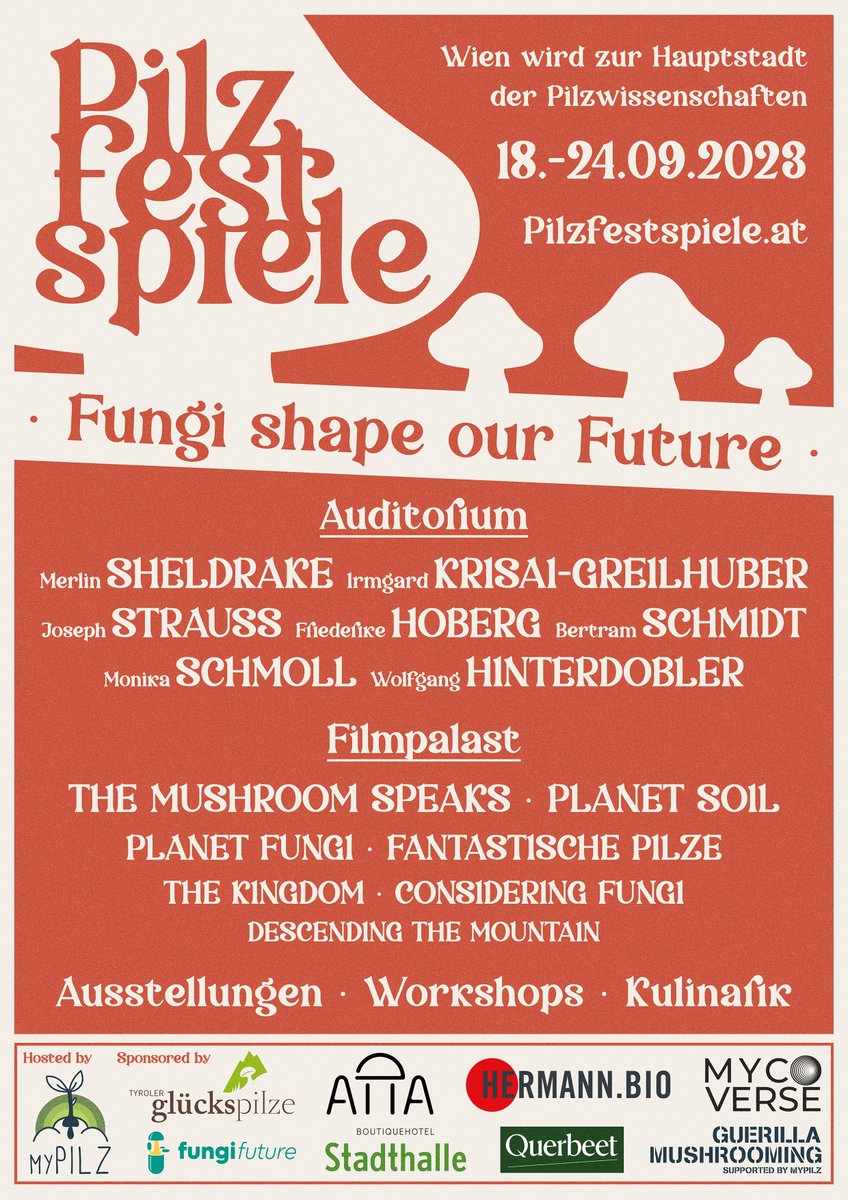
Welcome to Funga!
Join us as we embark on a journey to the secrets of fungi and learn how they influence and enrich our world.
🙂❤️🍄
https://t.co/G5NgVhEj1x
#pilzfestspiele#mypilz#FungiFriday#faunaflorafunga
Fungi served as plant root systems for ~50 million years until plants could evolve their own.
Watch the new animation about mycorrhizal fungi by May Kindred-Boothby @spununderground@fungifoundation narration @merlinsheldrake & music @cosmosheldrake
https://t.co/8JqgXQ3DnA
During the course "Rainforest Expedition and Laboratory", the students isolated the fungus from plant samples collected during their spring trip. In the journal Applied and Environmental Microbiology, Jonathan Russell and his colleagues described this unique talent of the fungus.
A group of Yale University students has discovered a remarkable fungus in the Ecuadorian rainforest. The fungus, called Pestalotiopsis microspora, has the extraordinary ability to feed on polyurethane - a plastic that often ends up in landfills.
In total shock from today's news that I am youngest scientist to EVER receive the Spinoza Prize @NWONieuws
This award is recognition of the radically brilliant teams I work w/ @ALIFE_VU@_amolf@MiCRop_research@spununderground
Fungi in the spotlight!
https://t.co/YFK9rCIE6x
Warum Pilze eine Wunderwaffe für den Klimaschutz sind – Sie machen Bäume gesünder, lassen sie schneller wachsen und mehr CO2 aufnehmen. Und man kann sie essen.
https://t.co/cdYSiGMfzf
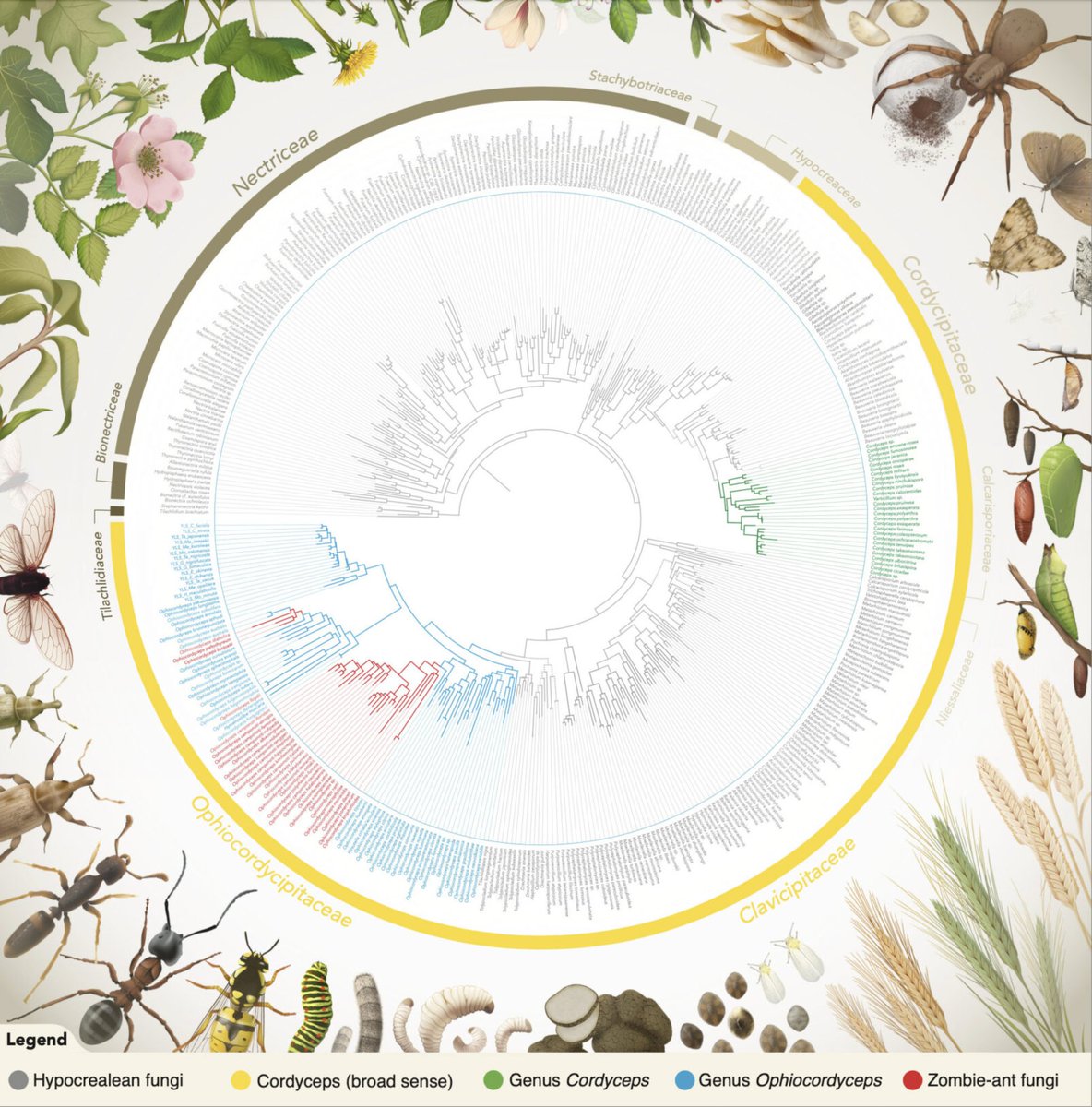
Cordyceps do not manipulate the host behavior, Ophiocordyceps do. The zombie fungi are a mega diverse group. They are found not only deep in the forest, but can be near you! Check these and other info about #TheLastOfUsHBO fungus on my last article @NYBG.
https://t.co/qPbp5r1LuU
"The #FungiFoundation collaborated with researchers at the University of Oxford to publish a paper outlining four key steps to bring fungi to the forefront of policy and society. (...) The paper aims to inspire a fungal revolution." https://t.co/5yTaO3f71v
In addition to enzymes for the degradation of lignin in the wood, these also produce valuable essential amino acids and vitamins. Some fungi are so closely associated with their beetles that they can no longer spread independently without these partners.
3/3
Fungi and their spores are an important part of the diet of many insects. In some bark beetle species, this goes so far that they have developed their own pockets for transporting spores and fungal mycelium.
1/3
#fungifacts#insects#fantasticfungi
These indentations in the insect’s body are called mykangia and secrete substances that feed the fungus during transport. The larvae of some beetle species are entirely dependent on the wood-degrading properties of the fungi for their nutrition.
2/3