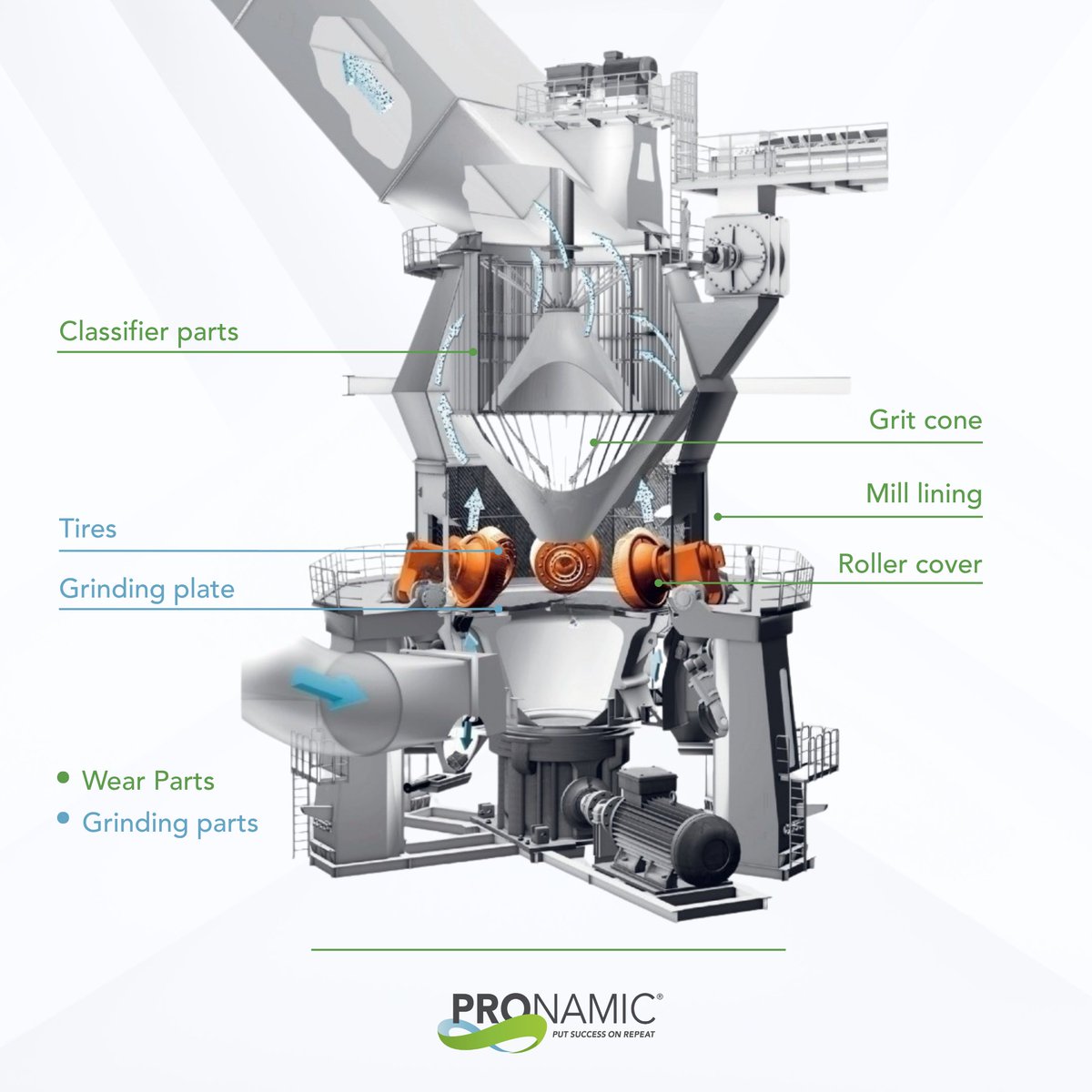
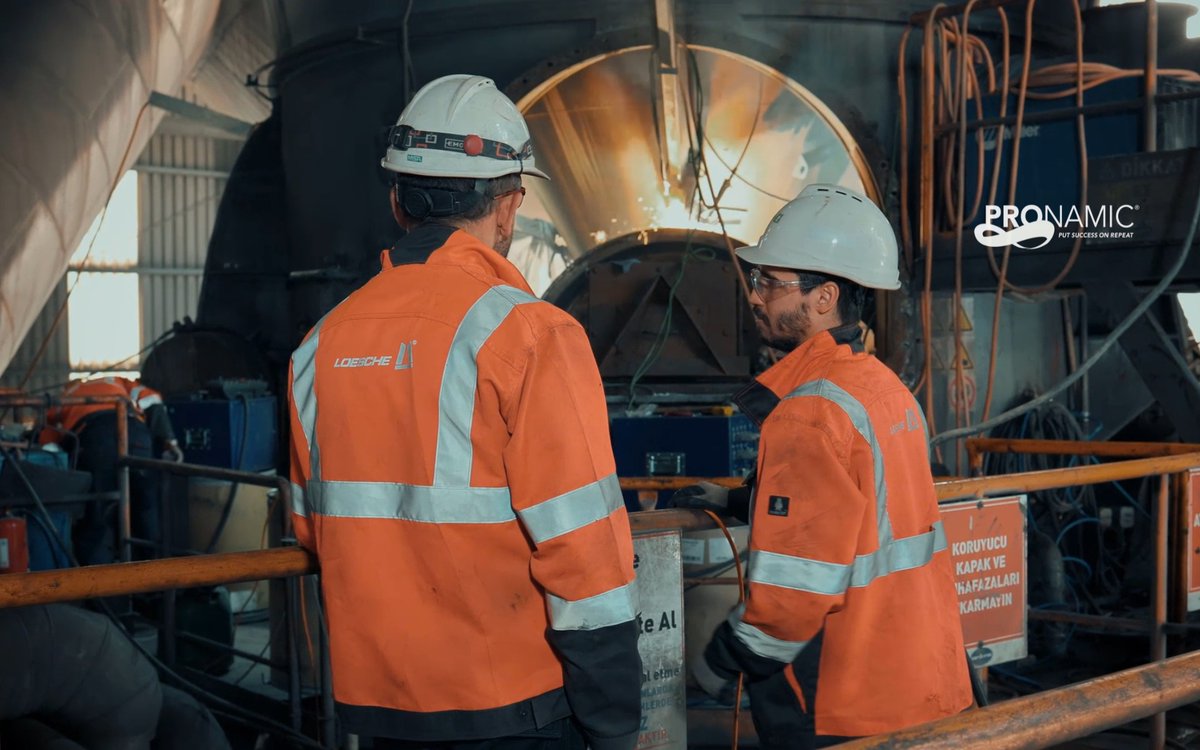
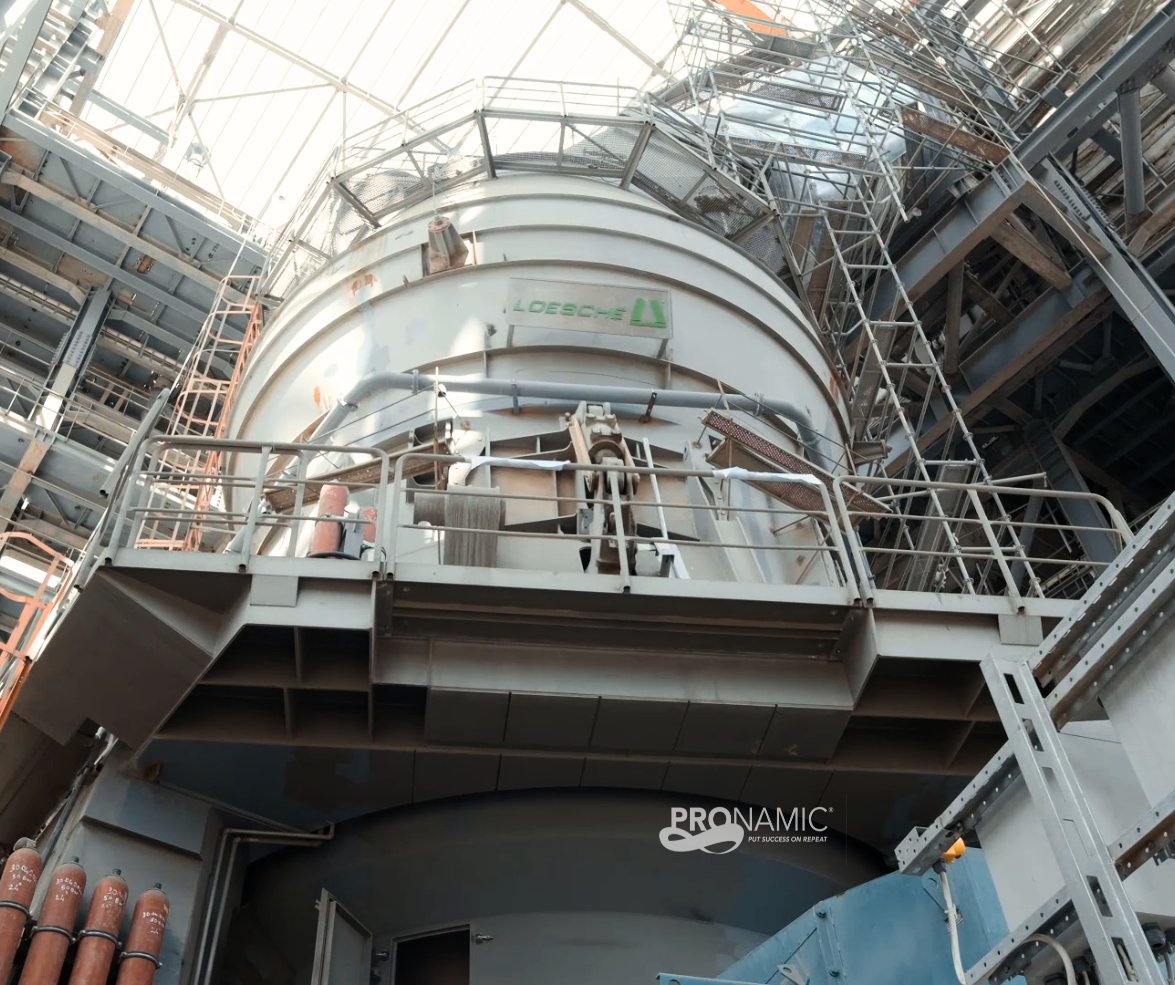
Field audits show how #VRM components perform under real operating conditions, turning wear, margins, and failure risk into better #maintenance planning and more stable mill operation.
#Quality stays strongest when every part follows the same standards.
https://t.co/s0CtTxUFku
#Maintenancerecords include measurements, inspections, and work completed, while operational observations are part of daily mill activities. Shutdown offers rare chances to inspect grinding components in their real operating state.
https://t.co/vpvTmCi986
#mechanicalaudit
Every #verticalrollermill leaves a paper trail, but the most accurate record of a plant’s history is etched directly into the #steel.
That’s why our teams spend time on site to observe how the system responds and where #stability can be restored.
https://t.co/8i0Mc53wrJ
No two #cementplants run under the same reality for long. Treating a #wearprofile as plant-specific data rather than just a mechanical consequence turns wear assessment into an optimization tool instead of a basic maintenance routine.
https://t.co/SGJkES3rmm
#wearassessment
By the time a #verticalrollermill stops due to wear, it has most likely been operating with worn parts for some time.
#Wearmanagement, #hardfacing, and component #refurbishment restore the roller and table profiles to the original design geometry.
https://t.co/FAi2elLyhf
A worn surface does not necessarily indicate a worn component. PRONAMIC® #grindingparts are designed for continuous refurbishment, preserving the impact-resistant base while rebuilding the abrasion-resistant layer through controlled #hardfacing.
https://t.co/YutHed9sUt
Traditional high-chromium #whiteiron is a landscape of brittle glass, prone to cracking and fracturing when subjected to mechanical or thermal stress. PRONAMIC® re-engineers this vulnerability by introducing the "check crack."
https://t.co/plRFNtDwU9
#verticalrollermill
#Urbanmining starts at the grinding surface.
Old #concrete is a bonded system where sand, gravel, and cement stone have been locked together for decades. Recovering these fractions requires a different mechanical procedure than standard #demolition.
https://t.co/6zjjZg1Nbp
Aligning the wear pattern with the process curve.
Wear develops along the grinding zone when material, pressure, and particle size interact over time. As the wear profile grows, its effects spread throughout the mill.
https://t.co/1gtaMt5OiH
#wearparts#spareparts
A clean #grindingtable is a canvas for potential. But once the mill starts, the countdown to wear begins.
We protect the mechanics of systems to reduce replacement frequency so plants can focus on throughput.
https://t.co/6dGZaaYAMR
#wearprotection#verticalrollermill
On-site #hardfacing makes it possible to refurbish #grindingcomponents without disassembling the mill. However, consistent performance after refurbishment also depends on how well the surface is prepared before the first weld.
https://t.co/dwcIVKebPR
#verticalrollermills
New #wiregenerations are being engineered based on observed wear patterns and operational process data, with a focus on stable wear progression and consistent operability in the most demanding zones. Our wire range follows these conditions
https://t.co/E1sA2Ka7vY
#wearparts
Wear components are typically evaluated based on visible signs. However, under load, temperature variation, and repeated impact, changes begin to occur within the material itself earlier than visible signs appear.
https://t.co/d3Yv4TVhs5
#wearparts#onsiteinspection
#Wear in grinding systems is inevitable, the way materials are used over time is not. In #verticalrollermills, for example, losing a wear layer doesn't mean a component's end of service life. PRONAMIC® components are designed with this in mind.
https://t.co/P53puRA5Uk
In high-throughput #grindingsystems, efficiency depends on the condition of the grinding elements and process stability. Over time, #wear evolves across the grinding surfaces, gradually altering the interaction between rollers, table, and material bed.
https://t.co/sOtMhpDOEH
Raw material abrasiveness, moisture, and operating parameters gradually influence how rollers and grinding tables interact. Each #plant produces its own wear distribution across grinding components, reflecting specific #millconditions.
https://t.co/rKQs9MBZvm
#cementindustry
The throughput, vibration, and power consumption of a #verticalrollermill are affected by wear of rollers and grinding tables. As wear progresses, maintenance strategies determine whether efficiency is restored or lost.
https://t.co/gRKkjRR6RF
#wearparts#circularity
Manufacturing and refurbishing large grinding components for #verticalrollermills is a single, connected process. We cast, machine, and hardface new rollers and grinding tables, expecting them to return for planned reconditioning during use.
https://t.co/w2xuGZEr18
#wearparts
⚙️ A vertical roller mill is built for decades of endurance. However, its true longevity is set by its internal operating conditions, specified before the first hour of production.
https://t.co/4fOvTlCSrp
#cementindustry#greensteel#predictivemaintenance
When a worn tire returns to the workshop, what comes back is the continuity of performance.
PRONAMIC® #WorkshopServices restore surfaces to their original specification, preserving the geometries that define #grinding behavior.
⟶ https://t.co/b0rDgUNHU4
#verticalrollermills