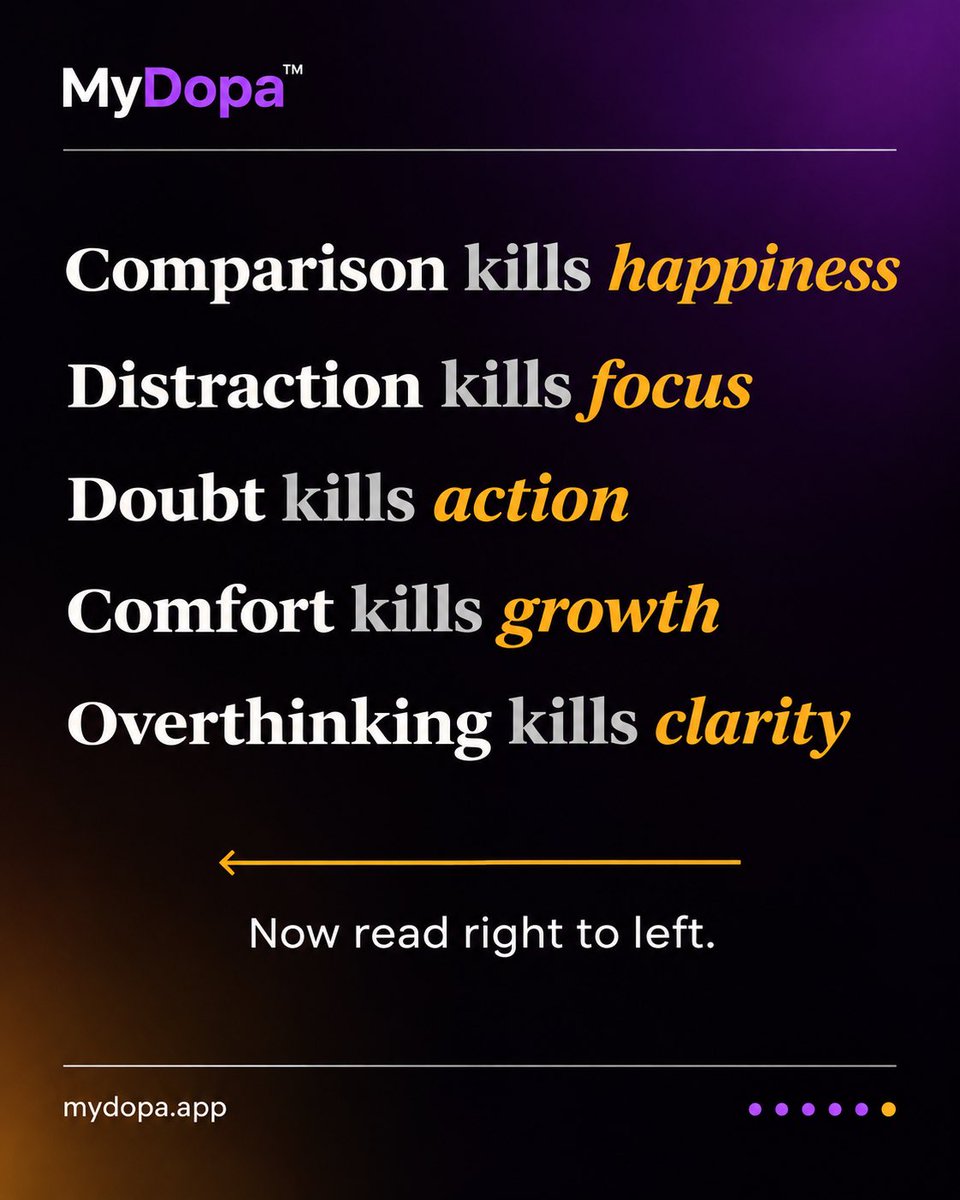
-I had a feeling that I did not have a word for…. You know that feeling of earned anticipation when you feel that you have earned what has not happened yet 😊.
-Like, for example, right before you step on the scale and you know the weight will have come down because you have earned it! I created a word for it: MyDopa, because I feel I created my own dopamine hit.
Try this after your next brain dump: mark each item T for task, N for neutral thought, F for fear. Then answer every F with one line of evidence from your own life. At week's end, the mix shows you which kind of racing you're living with. https://t.co/iwlwR9ugWS
#runners #mindset #athletes
Picture sending a friend a warm, long message and getting back two words: "Sounds good." By evening you've reread it a dozen times. Years of easy conversation sit off to the side. A racing mind gives the loudest thought the final word.
https://t.co/COMFbhkkAI
how to build confidence in yourself
1-learn something you can use today
2-put it into practice
3-notice when you handle something better
4-keep a record to build evidence of your progress
5-focus on consistency, one day at a time
You do not have a motivation problem.
You have an EVIDENCE problem.
Good things happen to all of us every day we just let them slip by, while negative ideas stick around. Its called negativity bias.
To keep the good things and build the evidence that will motivate you and give you the proof that you are making progress. This evidence will transform you. Give you Accuracy. Clarity and Self-confidence
#mindset #PersonalGrowth
Two minutes and a page can answer "I'm not enough." Write the verdict, the moment behind it, three specific things from your past month, and one sentence that holds both. https://t.co/Dube4qi9EA
Bad moments carry more weight than good ones of the same size. Roy Baumeister's 2001 review called it Bad Is Stronger Than Good. So the hard talk gets replayed all week while Tuesday's kindness drifts off. That's an evidence problem. https://t.co/Dube4qiHu8
Picture a tense talk with your partner on Sunday night. By Monday morning, a louder thought arrives: I'm bad at relationships. One moment just became a verdict on your whole self. Here's why that happens, and how to answer it. https://t.co/Dube4qi9EA
Picture eleven weeks of 6 a.m. gym sessions; then one glance in the mirror says nothing changed. The motivation gap opens right there: plenty of effort, too little evidence you can see. Here's why motivation fades when results feel invisible. https://t.co/MqEMIQKhOD
Picture a good week: three early mornings, a finished course module, a tense call handled well. Then one dinner, two friends' big news, and on the drive home the whole week feels thin. The only thing that changed was what you heard. https://t.co/e84MIPKCxa
Five minutes a day: write down everything your mind is holding. Then pick the loudest worry and write what actually happened, just the facts. That last line turns a list into evidence about your own life. https://t.co/W2G4sw0r1P
Most adults can keep about four chunks of information in mind at once (Cowan, 2001). Fill those spots with reminders, and your thinking gets squeezed. Your mind is for having ideas. Storage belongs to the page. https://t.co/W2G4sw0r1P
Picture this: you send a friend a long, warm message. She replies, "Sure." By bedtime, you've built a whole story about what it means. A crowded mind keeps the worry close and the facts far away. Here's how to give your head room to think. https://t.co/W2G4sw0YRn