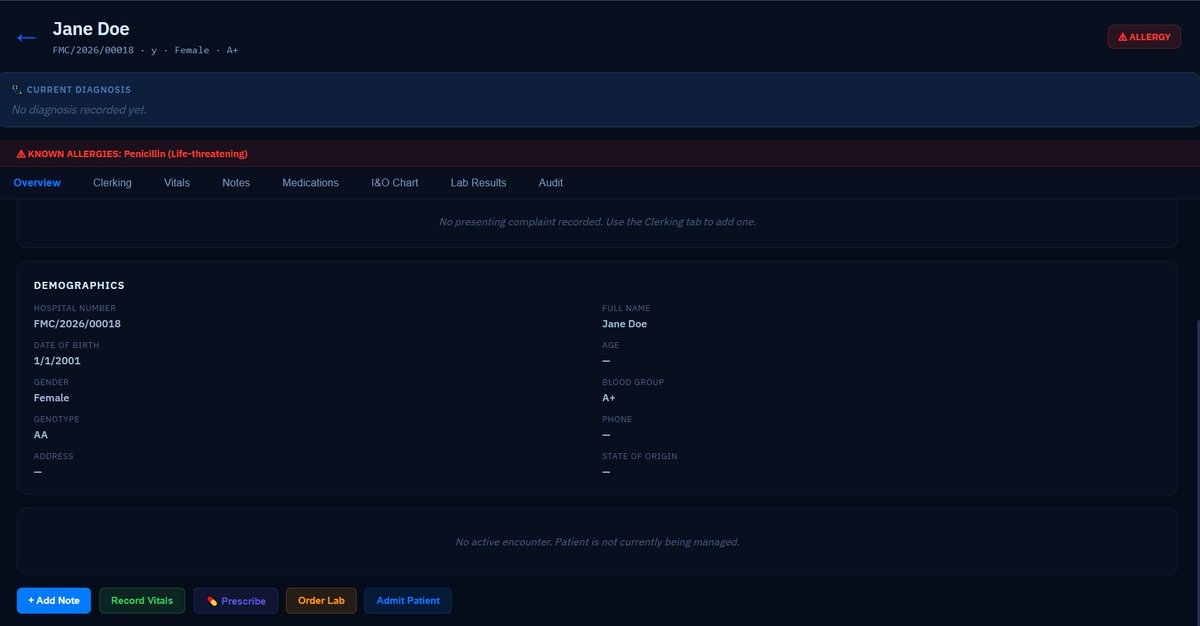
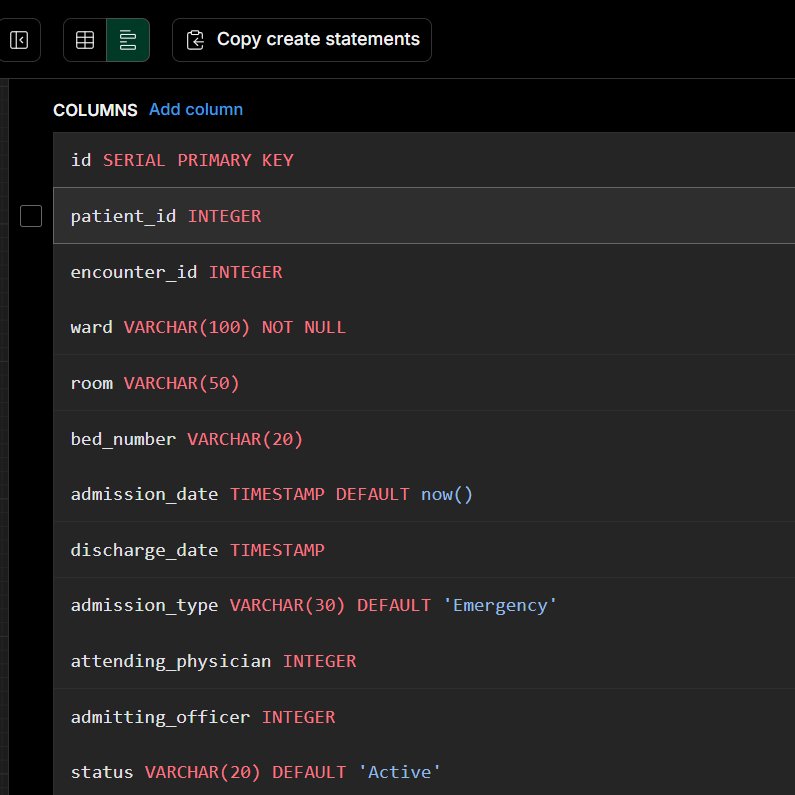
A while ago, I started building something called MedRecord.
I even ran a small beta test here on X and got healthcare professionals and other interested people to test the idea and give feedback.
I learned a lot from it.
But the project went quiet for a while.
Now I'm back.
...
How familiar are you with EHRs?
How many hospitals are actively making use of EHR?
How much of its benefits are you aware of
My name's mykel your favorite medical programmer and anticipate an evolution to Nigeria healthcare as we know it.
#healthcare#programming#EHR
@Niger_deltaQ@OurFavOnlineDoc Racism has little to do with the country you come from and a lot more to do with the colour of your skin.
What African do you think would have had it any better?
"apprehension towards outsiders" "natural"
Such nice, fancy words you use to cover up pure dislike, hatred and false sense of superiority based entirely on the difference of skin colour.
Just because you might have not have experienced it or because you participate in such doesn't make it natural or unreal.
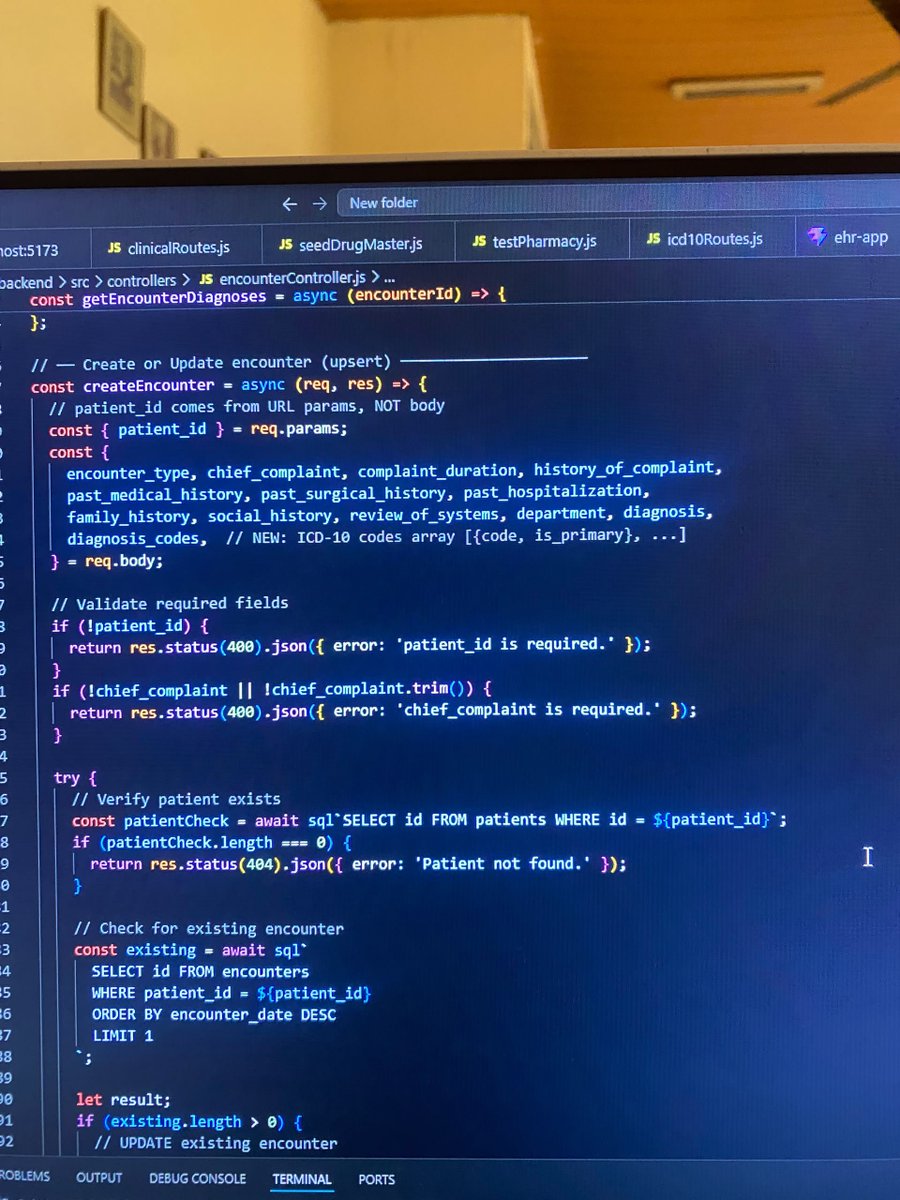
Somewhere between the database, the backend, and way too many tabs open, MedRecord is slowly becoming real.
Still building.
Still learning.
Still figuring out problems I didn't know existed.
But every feature started as an idea.
Now I'm turning those ideas into something that can actually work.
One line of code at a time.
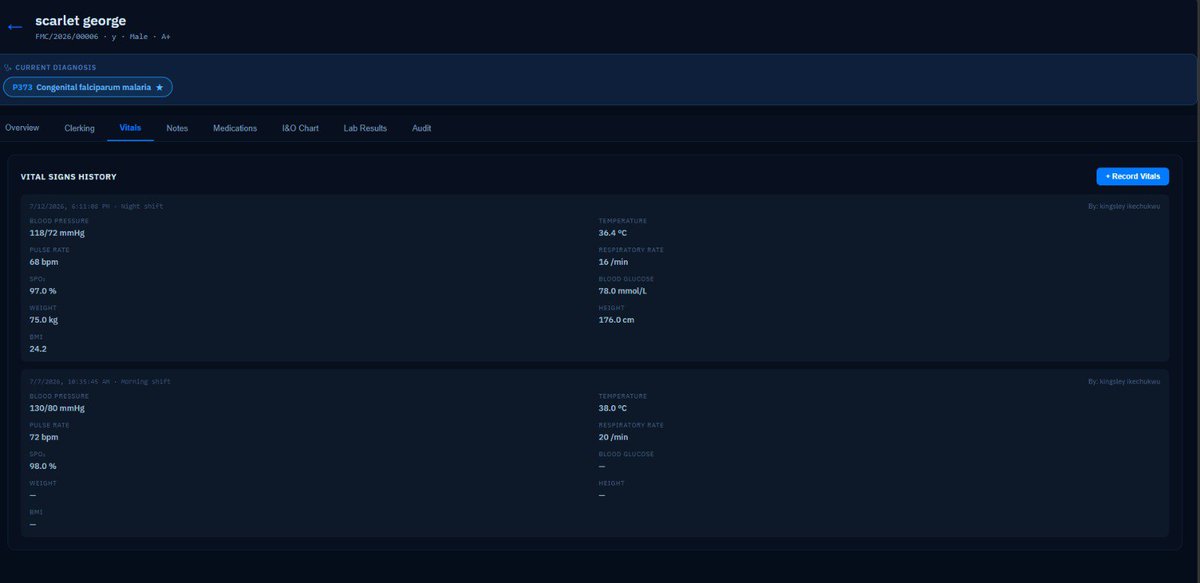
A patient's condition can change faster than you can document it.
That is why recording vitals shouldn't feel like a separate task from nursing care.
You check the BP.
Pulse.
Temperature.
SpO₂.
Record it. Move on.
But the next nurse should still be able to see what was recorded before, when it was recorded, and who recorded it.
Because those numbers become much more useful when you can see the change over time.
The goal isn't to make nurses document more.
It's to make documentation fast enough to keep up with nursing care.
Here's how we handle vitals in MedRecord.
The answer is encounters.
A patient shouldn't become a new patient every time they walk into the hospital.
Their identity stays the same.
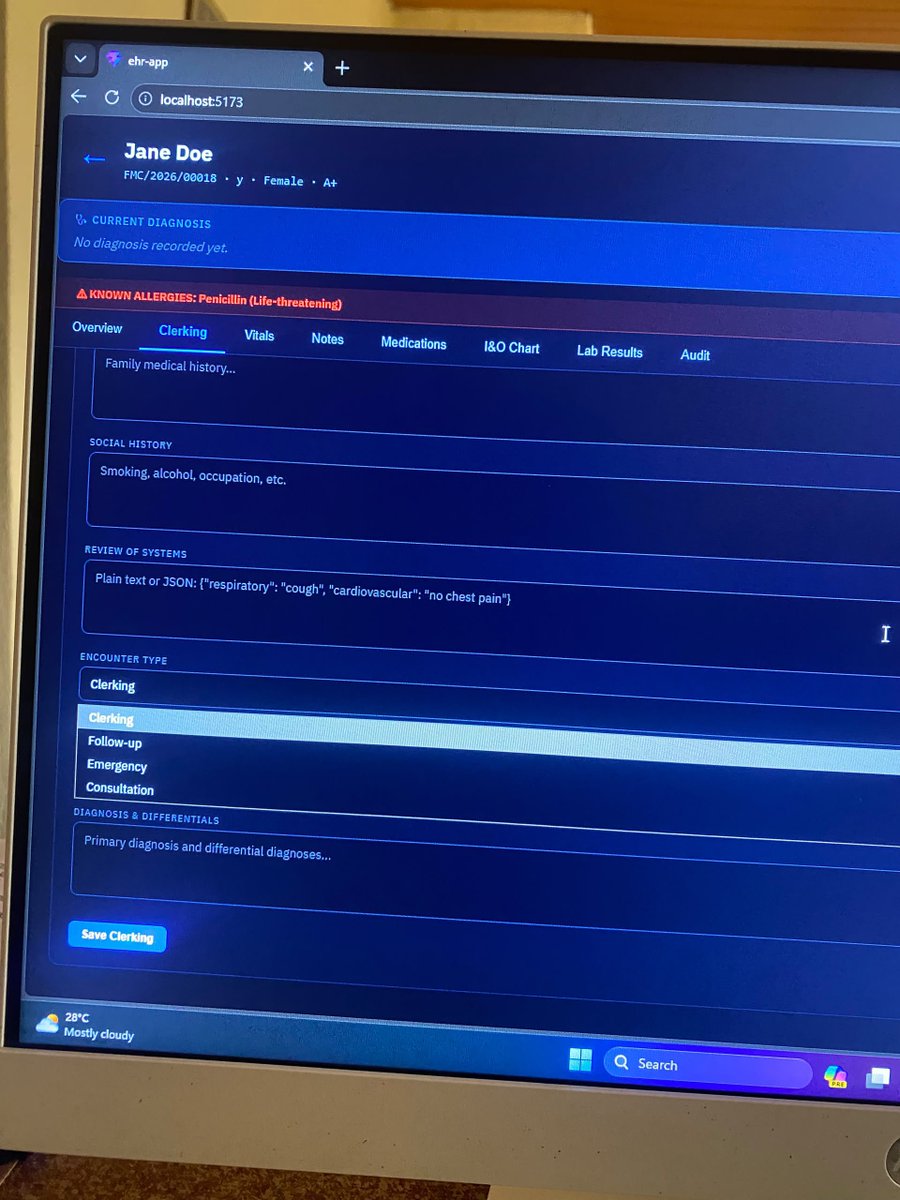
What changes is the encounter.
A consultation is an encounter.
A follow up is an encounter.
An emergency is an encounter.
Each encounter gets its own clinical information while remaining connected to the same patient record.
So instead of creating disconnected records for every visit, MedRecord keeps the patient's identity stable and lets their clinical story grow through encounters.
One patient. Multiple encounters. One continuous record.
This is the foundation we're building on.
We solved the question of who the patient is.
Now comes another question.
What happens when the same patient comes back?
A patient might visit a hospital today, return for a follow up next week, and be admitted months later.
They are still the same patient.
But those are different interactions with the hospital and the system.
So how should an EHR represent them?
That is the next problem I'm working through in MedRecord.
Discover bPay! A seamless way to engage and transact. Check it out today!
CA: 0xb13003bf44de426dd2a3aae3df9c3400de0a7777
My Code: BP-E387606E7C18
https://t.co/e0jx7H9cmK
This is one of the problems that keeps coming up for me too.
It's crazy how much patient information gets trapped in individual hospitals, paper files, referral notes, WhatsApp messages and people's memory.
Then the patient moves somewhere else and suddenly their history is fragmented again.
We talk a lot about digitising healthcare, but I think the harder question is whether we can make the patient's information actually move with them.
That's where a lot of the interesting work is.
This is the direction I'm taking with MedRecord too, but I'm finding that the harder problem isn't getting the record into the system. It's making sure the patient's story doesn't disappear between facilities.
A PHC refers a patient. The receiving facility gets a referral note with three lines of handwriting. Previous investigations are somewhere else. Medication history is incomplete. So the next clinician starts piecing the story together again.
That's not just a records problem. It's a continuity problem. It's also changing how I'm building MedRecord.
It can't just be an EMR that works inside one hospital. The record has to remain useful when the patient leaves that hospital.
That's the part I'm trying to solve.
Mine would be losing the patient's story between encounters. You've probably seen it.
A patient comes back and says, "I was treated here last month." The file can't be found. Or you find it, but half the handwriting is barely readable.
The patient remembers the drug they were given, but not the dose. The doctor wants to know what happened during the last visit, so someone starts searching, making calls, asking colleagues, or just asking the patient to tell the whole story again.
Then the patient gets referred somewhere else and the same thing happens again. Nothing really happened. The information just didn't follow the patient.
That's one of the problems that led me to start building MedRecord.
I'm trying to figure out what it would take to make a patient's clinical story remain accessible and continuous as they move through the healthcare system.
The more I build, the more I realise how much of healthcare involves recovering information that should never have been lost in the first place.
This is exactly why I started building MedRecord.
I’m a nurse and a tech builder, and the more time I spend around actual clinical workflows, the more convinced I am that the problem isn't simply that healthcare needs to be digitized.
We need to build around how clinicians actually work.
A doctor who has spent 5 hours in clinic, is waiting for a PC, fighting connectivity issues and still has a ward round ahead of them isn't going to care how sophisticated an EMR is. If writing on paper is faster, paper wins.
So I'm building MedRecord from the other direction.
Instead of asking clinicians to adapt to the software, I'm asking what the software needs to do to adapt to them.
I'm documenting and building that process in public.
We solved the question of who the patient is.
Now comes another question.
What happens when the same patient comes back?
A patient might visit a hospital today, return for a follow up next week, and be admitted months later.
They are still the same patient.
But those are different interactions with the hospital and the system.
So how should an EHR represent them?
That is the next problem I'm working through in MedRecord.
I found the answer to the patient identity problem.
The solution isn't to make one piece of information do everything.
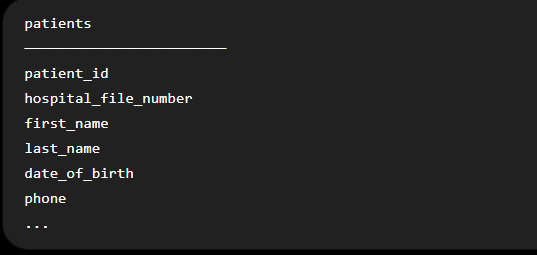
MedRecord gives every patient a unique internal ID.
The hospital number is the human-facing identifier used by the hospital.
And bed number?
That's not patient identity at all. It's location.
MedRecord has a patient location tracking system so every member of healthcare team is aware of the patient's location.
went for scan?, changed beds?, was moved from ward A to ward B?
A patient can have multiple encounters without becoming a different patient.
That distinction sounds simple.
But getting it right is part of what makes an EHR work
One of the first things I had to think about while building MedRecord:
What exactly identifies a patient?
It sounds simple until you consider that a hospital may have a file number, bed number, phone number, name, date of birth, and other identifiers.
Which of these should the system trust?
And what happens when two records accidentally belong to the same person?
This is why building an EHR isn't just about writing code.
You have to model reality.
#HealthcareInnovation #MedicalDevices #healthtech #nursing