You can watch the Mythic Videos on https://t.co/EAHNHQYqHQ
Listen the podcast on
Spotify:
https://t.co/HZu0towMKt
OR
Apple Podcasts:
https://t.co/0GFw5XlwfN
And follow Mythic Cosmos on Instagram or Facebook too:
MythicCosmos
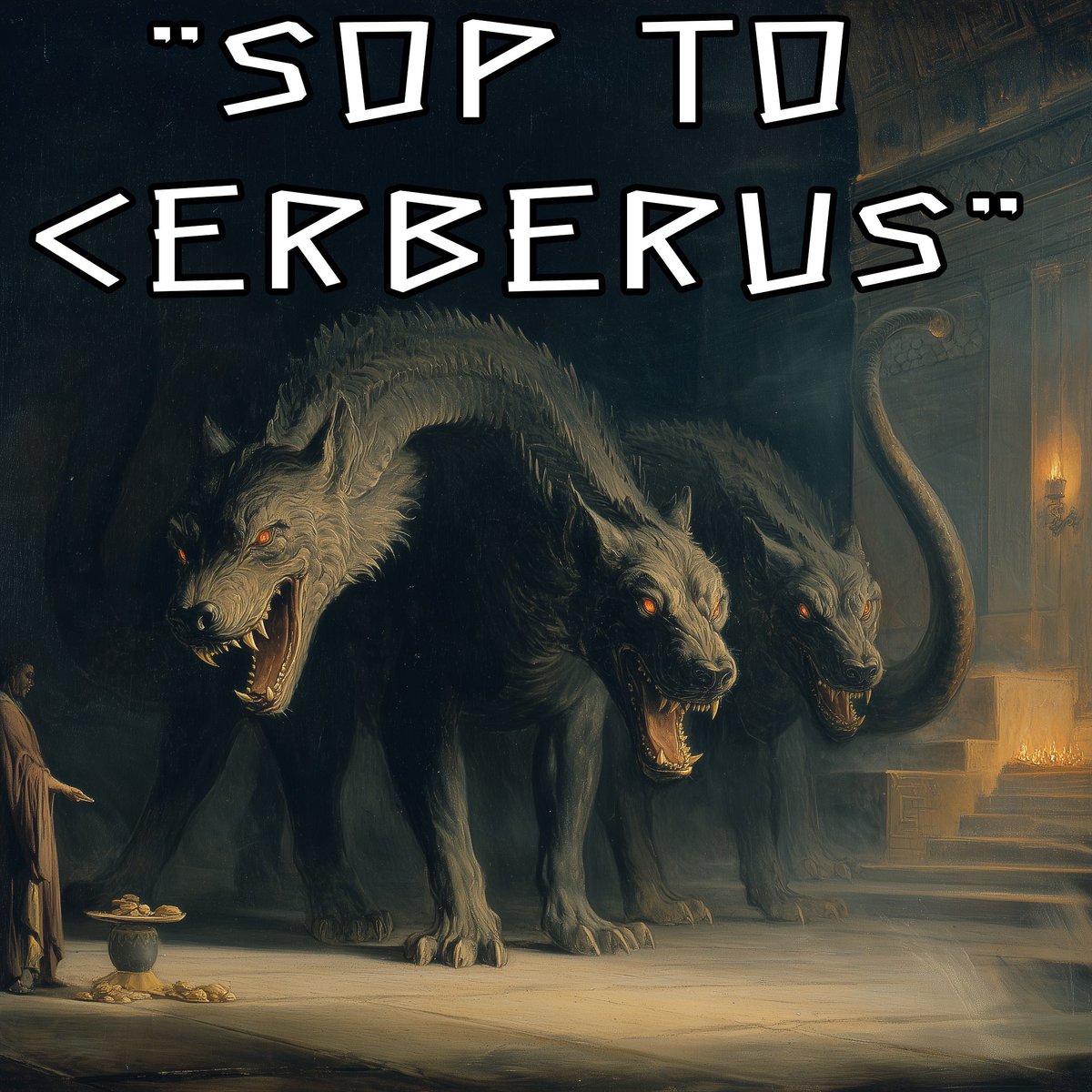
Cerberus, the offspring of Echidna and Typhon, was the three-headed, serpent-tailed dog guarding Hades. Visitors to the underworld would offer him honey-cakes—sops—to bypass him. Capturing Cerberus was Hercules’ twelfth and last labour.
As a name for a part of the known world, it was first used by the pre-Socratic philosopher Anaximander, and the historian and geographer Hecataeus in the sixth century BCE.
We use the word “Europe” to name one of the Earth’s continents—but its origin lies in mythology.
Europa was a beautiful Phoenician princess, seduced and abducted by Zeus in the form of a bull, and brought on the bull’s back to Crete. The European continent is named after her.
Halcyon days therefore are the fourteen days in winter in the Mediterranean when storms are made to abate by Aeolus, so that the birds can come on shore to build their nests and lay their eggs.
We use the phrase “halcyon days” to describe a peaceful, happy, or idyllic time.
Alcyone, daughter of Aeolus, and her husband, Ceyx, would often address each other as ‘Zeus’ and ‘Hera’ in their insouciance.
Ineluctably, such behaviour would attract Nemesis, the goddess of retribution and the downfall of the one indulging in hubris. Those punished for hubris included Arachne, Niobe and Icarus, who was given wings constructed of wax and feather by his father, Daedalus.
But there are some who declare that such creatures of two sexes are monstrosities, and coming rarely into the world as they do they have the quality of presaging the future, sometimes for evil and sometimes for good.”
We use the word “hermaphrodite” to describe a being with both male and female attributes—a term rooted in Greek mythology.
Hermaphroditus was the child of the union of Hermes and Aphrodite, and bore the sexual attributes of both deities. According to Diodorus Siculus:
“Hermaphroditus was born with a physical body which is a combination of that of a man and that of a woman, in that he has a body which is beautiful and delicate like that of a woman, but has the masculine quality and vigour of a man.
We use the word “ambrosial” to describe something exquisitely tasty or heavenly in scent—and its origin is truly divine.
Ambrosia was the food of the gods of Olympus, and bestowed immortality.
As a technical term, ‘hermeneía’ was introduced by Aristotle c. 360 BCE, in his “On Interpretation”, among the earliest Western philosophical texts on the relationship between language and logic.
‘Hermeneutics’ in its early usage belonged within the ambit of the sacred. Messages from the gods, in their ambiguity, posed an implicit quandary. Hermes delighted in the unease of the addressees of the messages he delivered.