The Rathores butchered Sisodia men, piling severed heads to build a wedding pavilion. They then forced abducted Sisodia women into marriage inside this wall of their kin's skulls.
Lacking any consent, let's call it what it was: systematic rape of Sisodia hoes by the Ratwhores.
It's March, 1816 , Vakil of Jagat Singh, Rajah of Jaipur, meets the Charles Metcalfe .
He says that the Rajah of Jaipur is ready to become the vassal of British at any terms they like whether it's tributes , territorial cessions or even the entire management of the country.
He is ready to give power to East india company to appoint the ministers, he is ready for complete obedience and subserviency of the royal Court in every way.
The question is what forced Rajah to settle for such such Humiliating terms to British, that he is literally ready to compromise his freedom, power and almost ready to handover the state to British East India company , we will learn it by this interesting thread 🧵 :-
@NigerianThakurs@rajput_mangral Dutch historian Jos Gommans has also explained this process of Rajputization very clearly and elegantly, but the Rajputs are 'Ajgut'; they are too thick-headed to understand it.
https://t.co/STFPFWt4JC
Rajput Narrative Exposed 🚨
"Jos J. L. Gommans, a Dutch historian, shows that the repeated rise of new Rajput groups, meaning “sons of kings,” shows a continuous process of “Rajputisation.” In this process, mobile, open, and exogamous warrior groups slowly became stable, closed, and endogamous castes, which mainly accepted lineage through one line, that is, the family line.
These warrior groups, especially in Rajasthan, developed into local clans. They appointed traditional storytellers like Bhat and Charan to create a new “Rajput tradition,” which included many exaggerated heroic stories and highly imaginative family genealogies.
The past of these new Rajput clans was probably not very different from those so-called artificial Rajput warrior groups, because both were earlier mobile and open to outsiders. But later, this past was made more ideal, formal, and glorified.
In many ways, this was similar to the process seen among Afghans and Mughals, who reshaped parts of their tribal past, for example by romanticizing their image as “ghazis,” meaning warriors of faith.
During the 16th and 17th centuries, the support of the Mughal Empire further strengthened the internal hierarchy of the Rajputs and helped in giving their history a more fixed and structured form."
@Jat_Ethnic नहीं राजस्थानी साहित्य जिसे हम सरल भाषा में चारण भाट की कविताएं भी कह सकते है, पूरी दुनिया सबसे निम्नतम और बेकार साहित्य गिना जाता है, जिसे विश्व और भारत की तो बात छोड़िए राजस्थान तक में मान्यता दिलाने के लिए कोर्ट के चक्कर लगाने पड़ रहे है।
इन चारण भाट की कविताओं को इतिहासकार अनिल चंद्र बनर्जी "Opium eater's tales" यानी "अफीम खाने वालों की कहानियां" बताते हैं।
What? Wait a minute! This High-AASI Dasyu just mentioned Amir Khan Pindari. Do you guys know that Amir Khan Pindari persecuted and devastated Rajput rulers so severely that one of them, Man Singh of Jodhpur, feigned madness until he was able to obtain British assistance?
Source: British India, Its Races and Its History Considered with Reference to the Mutinies of 1857: A Series of Lectures Addressed to the Students of the Working Men's College, by John Malcolm Forbes Ludlow (1821–1911).
What? Wait a minute! This High-AASI Dasyu just mentioned Amir Khan Pindari. Do you guys know that Amir Khan Pindari persecuted and devastated Rajput rulers so severely that one of them, Man Singh of Jodhpur, feigned madness until he was able to obtain British assistance?
Source: British India, Its Races and Its History Considered with Reference to the Mutinies of 1857: A Series of Lectures Addressed to the Students of the Working Men's College, by John Malcolm Forbes Ludlow (1821–1911).
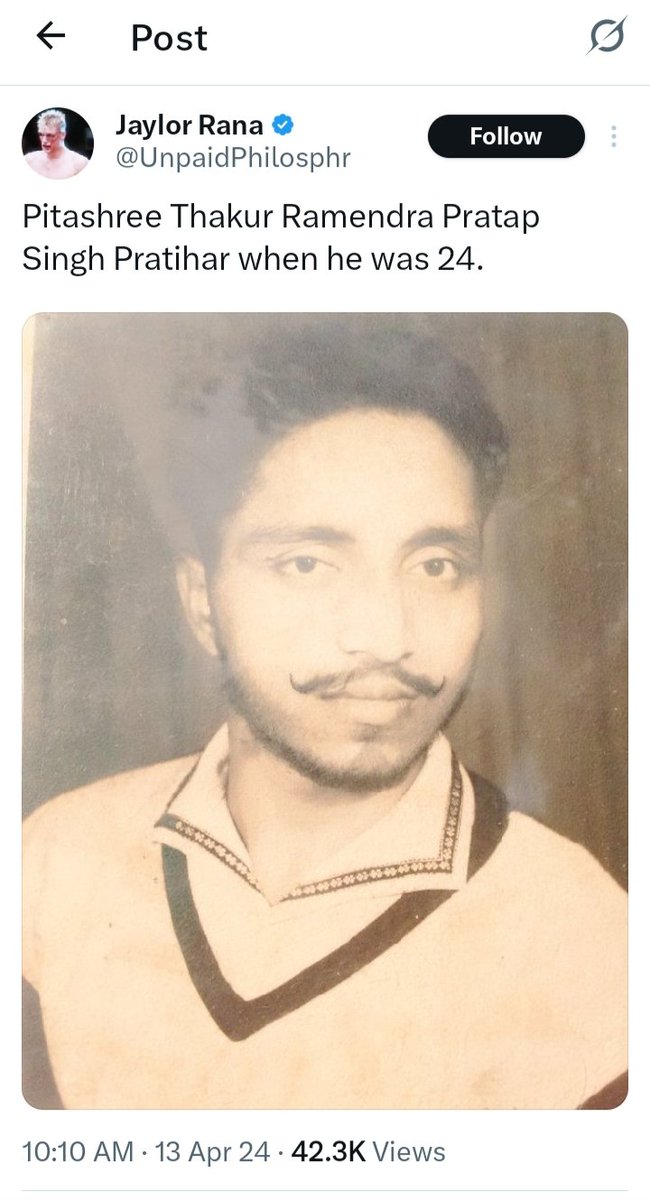
He is from the royal family of Tonk Rajasthan, a descendent of Amir Khan Pindari (Pashtun).
Safa, bandhgala, architecture etc influenced by local rajput culture/nobility… nothing to do with Punjab or Haryana or even Rajasthan peasants.
Even in a village near Saswad, Maharashtra, a Marathi Brahmin owned a Ranghar Rajput woman as a slave. Similarly, a Marathi Brahmin Peshwa owned a Rajput slave woman named Kashi.
Even in a village near Saswad, Maharashtra, a Marathi Brahmin owned a Ranghar Rajput woman as a slave. Similarly, a Marathi Brahmin Peshwa owned a Rajput slave woman named Kashi.
Do you know that in Kumaon and Garhwal, Brahmins and large landlords preferred to keep Rajput slaves? These Rajput slaves were bought and sold like animals.
These Rajput slaves remained within the same family for generations, or were transferred from one master to another through sale or other means, thus living in a condition of hereditary and permanent servitude.
These Rajput slaves were called “Kumara” or “Chokra,” and they performed tasks such as fetching water, cleaning utensils, and doing other household chores.
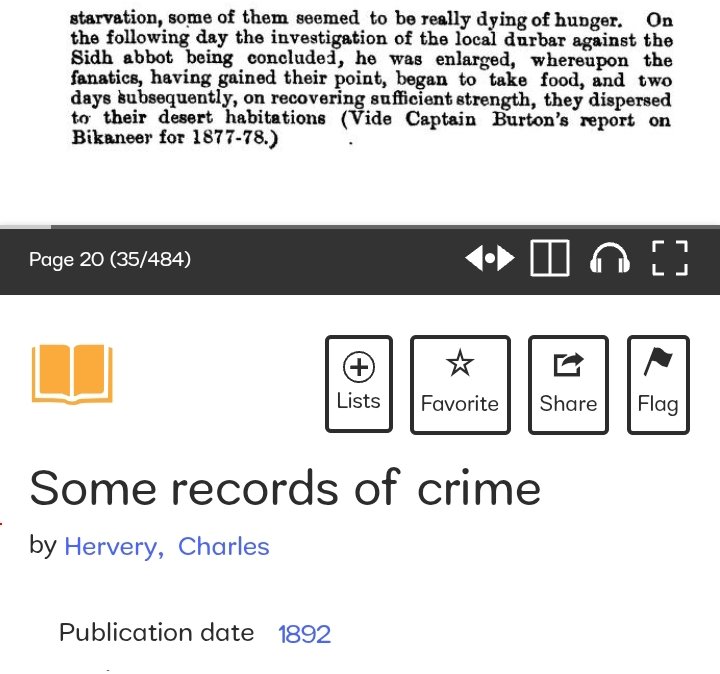
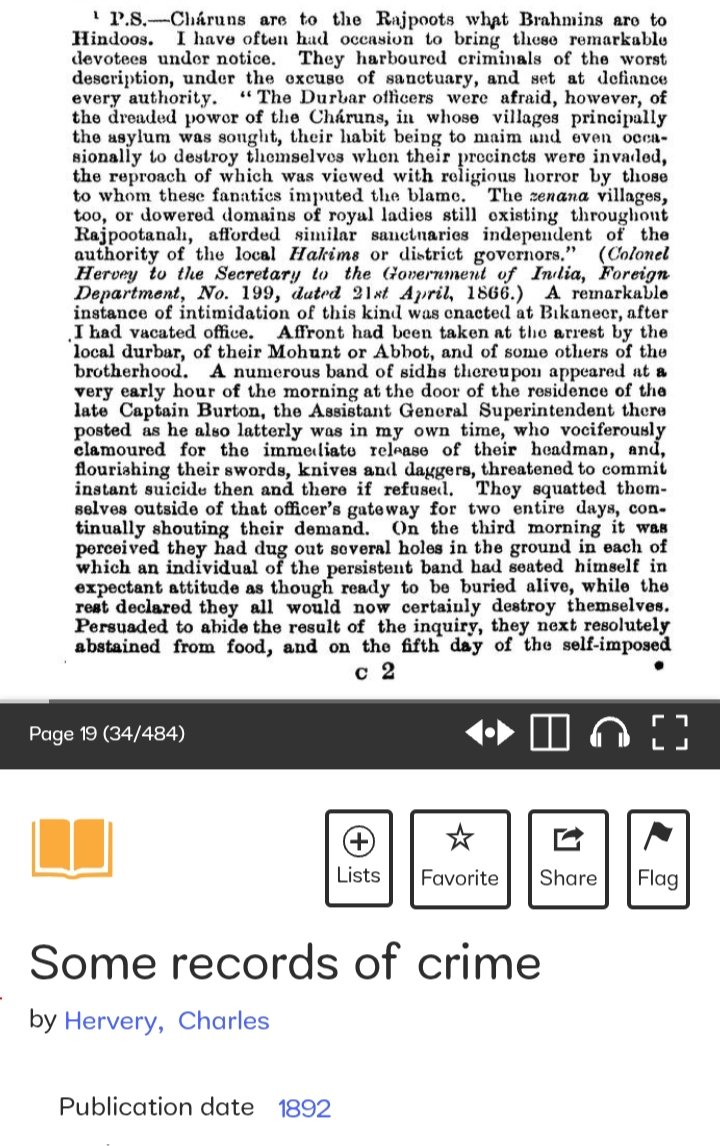
चारणों का स्थान राजपूतों के बीच वैसा ही था जैसा ब्राह्मणों का हिंदुओं में, अर्थात् उन्हें गहरा धार्मिक-सामाजिक प्रभाव प्राप्त था। इसी प्रभाव के कारण वे 'शरण' की परंपरा के नाम पर अपराधियों को संरक्षण देते थे और जब उनके अधिकार क्षेत्र में हस्तक्षेप होता, तो आत्म-क्षति या आत्महत्या की धमकी देकर राजपूत शासकों पर दबाव बनाते थे। इस धार्मिक भय और सामाजिक दबाव के कारण राजपूत शासक बेबस और मजबूर हो जाते थे।
चारणों की एक महत्वपूर्ण भूमिका फ़र्ज़ी वंशावलियाँ और मनगढ़ंत गाथाएँ रचने की भी थी। इन कथाओं में राजपूत शासकों को देवताओं या पौराणिक वंशों से जोड़कर प्रस्तुत किया जाता था। फिर भी, ऐसी वंशावलियाँ राजपूत राजाओं की प्रतिष्ठा और वैधता बढ़ाने का माध्यम बनती थीं, जिससे चारणों का प्रभाव और भी मजबूत होता गया।
बीकानेर की घटना यह दिखाती है कि कैसे संगठित दबाव, उपवास और आत्महत्या की धमकियों के जरिए वे अपनी मांगें मनवा लेते थे, जबकि राजपूत शासक परिस्थिति के आगे झुकने को विवश हो जाते थे।
Have you ever heard of Rawal Man Singh of Banswara, the son of Rawal Pratap Singh and Padma, a Bania woman?
He was so capable that the Rajput chiefs of Banswara placed him on the throne when Rawal Pratap Singh left no other son. His prestige was such that the Chauhan Rajputs sent him a ceremonial coconut with a clear message: “O Man Singh, you are as glorious and powerful as Akbar himself. Come and marry our daughter.”
But shortly after the marriage, Man Singh was killed in a conflict.
The real irony came later. The same Rajputs who had accepted him as ruler and given their daughter to him in marriage could not fully accept him in death. In several genealogies, Man Singh was quietly pushed aside, and Khana Dev was placed after Pratap Singh instead.
Have you ever heard of Rawal Man Singh of Banswara, the son of Rawal Pratap Singh and Padma, a Bania woman?
He was so capable that the Rajput chiefs of Banswara placed him on the throne when Rawal Pratap Singh left no other son. His prestige was such that the Chauhan Rajputs sent him a ceremonial coconut with a clear message: “O Man Singh, you are as glorious and powerful as Akbar himself. Come and marry our daughter.”
But shortly after the marriage, Man Singh was killed in a conflict.
The real irony came later. The same Rajputs who had accepted him as ruler and given their daughter to him in marriage could not fully accept him in death. In several genealogies, Man Singh was quietly pushed aside, and Khana Dev was placed after Pratap Singh instead.
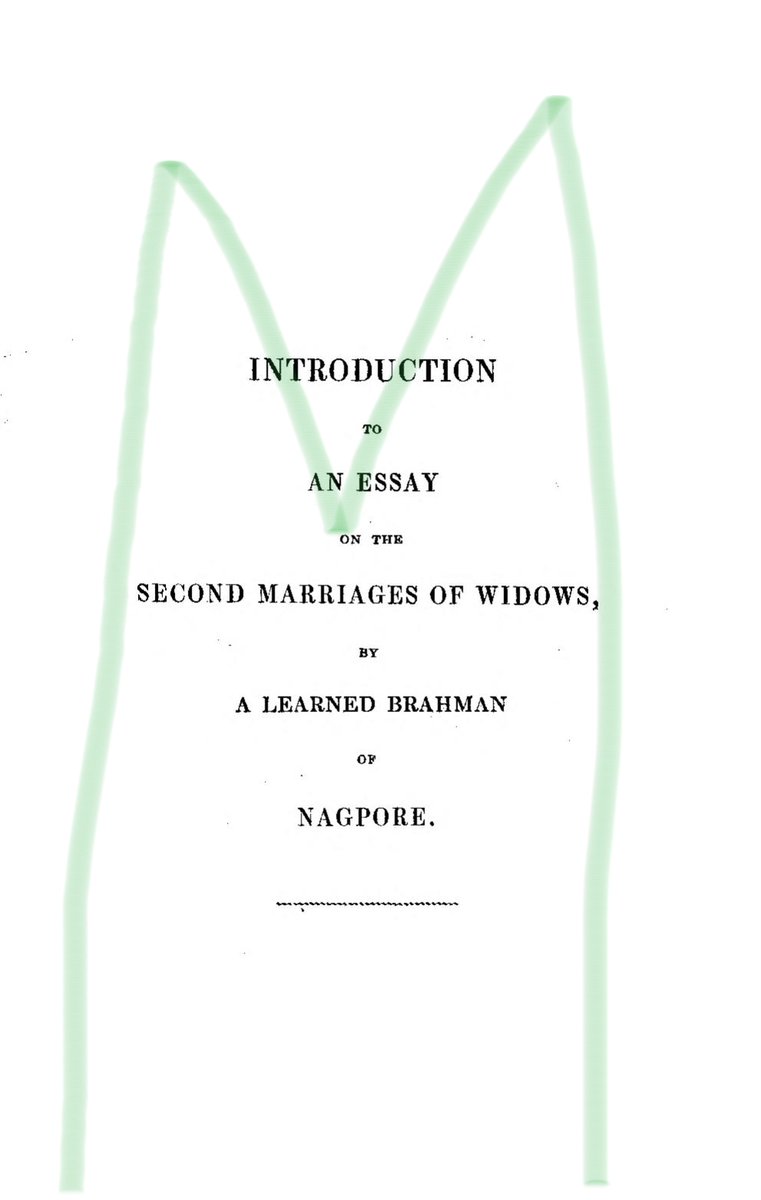
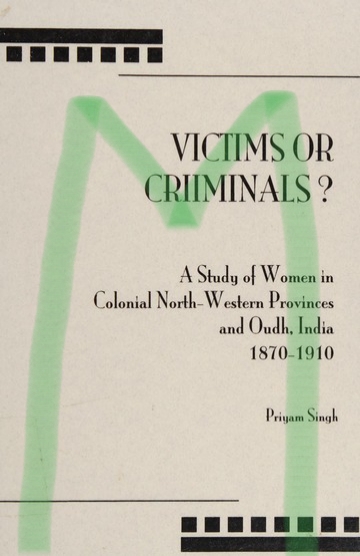
⚠️Read these cases and understand why Rajput widows should have been allowed to remarry.
Case 1:
A Rajput Thakur’s nephew had died, leaving behind a young widow. The widow became involved in an illicit affair, and her pregnancy made it obvious. Soon after, however, the pregnancy disappeared. As stories about the scandal spread, the Thakur, believing his family’s honor had been ruined, called the widow before him, drew his sword, and deleted her. Some people even believed that the Thakur himself was responsible for her pregnancy.
Case 2:
The widow of a Thakur of Toree in Nursingur was involved in illicit relations. She was deleted by her late husband’s brother.
Case 3:
The widowed daughter-in-law of the Solanki Thakur of Bhojapoora was seduced by, or had seduced, her deceased husband’s brother. Her pregnancy exposed the affair after the younger Thakur’s wife publicly revealed it out of jealousy and outrage. The young Thakur fled, while the elder Thakur wanted either to delete his daughter-in-law or expel her permanently from his house and village.
Case 4:
A widowed Thakurain suffocated her illegitimate infant and was sentenced to transportation for life.
Case 5:
A twenty-five-year-old widowed Thakurain deleted her illegitimate child a few days after birth, and was sentenced to ten years of transportation.
Case 6:
A widowed Thakurain deleted her illegitimate newborn immediately after birth and buried the body in a cotton field; she was sentenced to twelve months of rigorous imprisonment.
Rajputs love posting Kipling’s ‘Rajputana, as the cockpit of India’ line to glorify themselves, but never mention that the same passage describes Rajputana as a land of endless slaughter, pillage, revenge and chaos: ‘Chauhan with Rathore, brother against brother, son against father.’
The same Kipling described Rajput states as feud-ridden, politically unstable and incapable of unity or orderly governance without British control. He even called Jai Singh II a ‘traitor’ and an ‘accomplished murderer.’
Kipling’s trick was simple: wrap brutality, instability and centuries of internal conflict in poetic language so emotional Rajputs mistake it for praise. Strip away the dramatic wording, and what remains is a picture of a violent, divided and uncivilized Rajput community that, in his own view, needed British rule to function like a civilized society.
⚠️Read these cases and understand why Rajput widows should have been allowed to remarry.
Case 1:
A Rajput Thakur’s nephew had died, leaving behind a young widow. The widow became involved in an illicit affair, and her pregnancy made it obvious. Soon after, however, the pregnancy disappeared. As stories about the scandal spread, the Thakur, believing his family’s honor had been ruined, called the widow before him, drew his sword, and deleted her. Some people even believed that the Thakur himself was responsible for her pregnancy.
Case 2:
The widow of a Thakur of Toree in Nursingur was involved in illicit relations. She was deleted by her late husband’s brother.
Case 3:
The widowed daughter-in-law of the Solanki Thakur of Bhojapoora was seduced by, or had seduced, her deceased husband’s brother. Her pregnancy exposed the affair after the younger Thakur’s wife publicly revealed it out of jealousy and outrage. The young Thakur fled, while the elder Thakur wanted either to delete his daughter-in-law or expel her permanently from his house and village.
Case 4:
A widowed Thakurain suffocated her illegitimate infant and was sentenced to transportation for life.
Case 5:
A twenty-five-year-old widowed Thakurain deleted her illegitimate child a few days after birth, and was sentenced to ten years of transportation.
Case 6:
A widowed Thakurain deleted her illegitimate newborn immediately after birth and buried the body in a cotton field; she was sentenced to twelve months of rigorous imprisonment.