The future of security is about technology, information, and trust.
As the Balkans & Black Sea face AI, hybrid threats, and geopolitical competition, #BBS2026 brings together NATO, EU & regional leaders to shape democratic resilience.
Here on May 26👉https://t.co/t9hDRQ5nyR
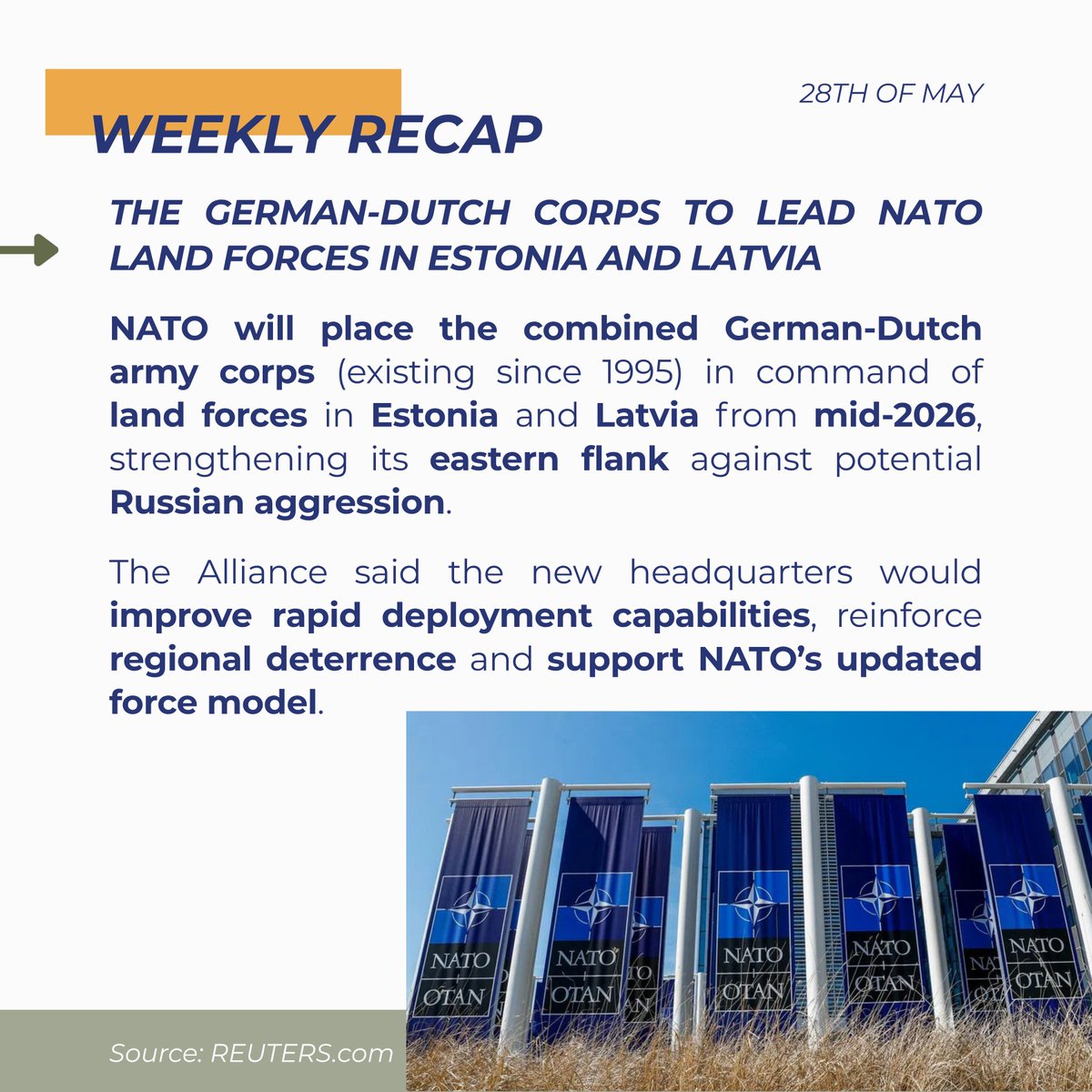
📰 This week in NATO:
🔷 NATO ready to defend ‘every inch’ of territory as Russian drone hits Romania
🔷 Bulgaria aims to raise defence spending to 5% of GDP, PM Radev says
🔷 The German-Dutch corps to lead NATO land forces in Estonia and Latvia
#WeAreNATO
to develop coordinated responses. Ultimately, strengthening systemic democratic resilience requires practical approaches to information, closer cooperation with civilian actors, and sustained efforts to ensure that informed citizens remain a central pillar of security." (4/4)
Public trust cannot be a secondary priority. Investing in media literacy and safeguarding open public discussion should be treated as long-term strategic objectives. A whole-of-society approach is also required, involving civil society, academia, and international partners (3/4)
No state can effectively address these challenges alone; long-term resilience depends on cooperation, collective preparedness, and mutual support during crises." (8/8)
#weareNATO#Balkans#BBS26
Here's a summary of Marco Criscuolo's (Director for Strategy and Policy for Cyber, Cyber and Digital Transformation Division, NATO Headquarters, Brussels) intervention! ⬇️ (1/8)
At the same time, technological progress alone is insufficient without investment in human capital and institutional capacity. A whole-of-society approach is necessary, combining governments, industries, and international partnerships. (7/8)
A stronger approach would be for these processes to advance together, particularly in the Western Balkans, a region of strategic importance for defense and security. At the same time, core EU principles must remain central, without the application of double standards." (2/2)
Elena Potitò, Junior Analyst, Balkans & Black Sea, NATO Defense College Foundation, Rome
"The EU enlargement process and NATO’s open-door policy have often progressed as parallel initiatives rather than as complementary parts of a shared strategy. (1/2)
Similarly, using more accessible and human-centered titles can improve engagement. Balancing technical accuracy with clear storytelling is also important, particularly when addressing criticism or avoiding overly cynical reactions." (3/3)
#weareNATO#BBS26
Stefan Janjić about fact checking:
"When working in fact checking is importanti to Avoid adopting a didactic or overly authoritative approach. It is important to recognize that no research can cover every source (1/3)
so audiences should be encouraged to conduct their own research while acknowledging the limitations of the analysis. This can make researchers appear more relatable and credible. (2/3)