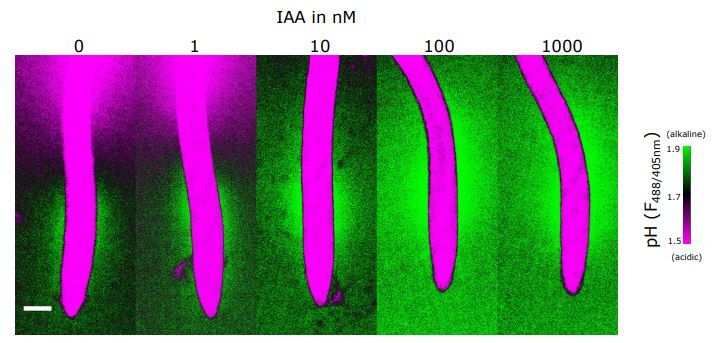
You may have seen the preprint here is the print! New one from @matesakf 's lab revealing a new dye for imaging the root surface pH. The method helped us shed some light on who and why this alkaline zone exist. Go read it! Thanks to everyone involved.
https://t.co/kjsXZYcns6
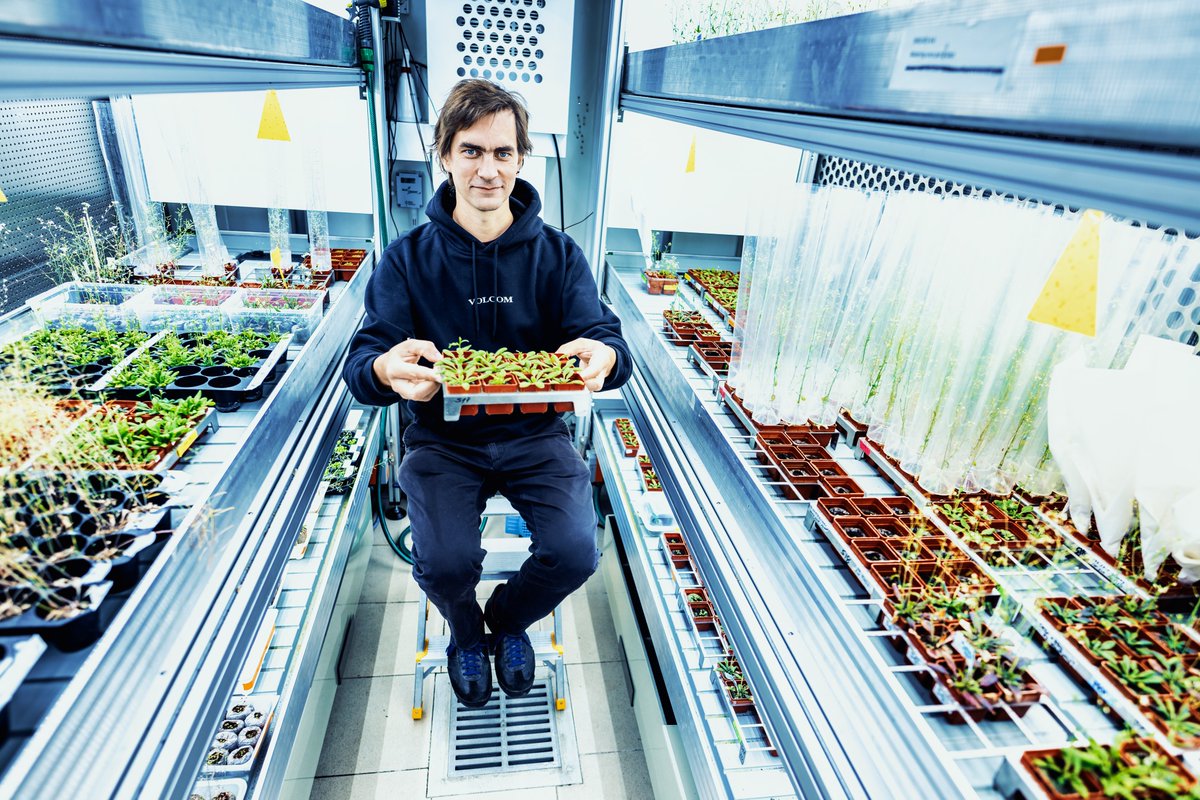
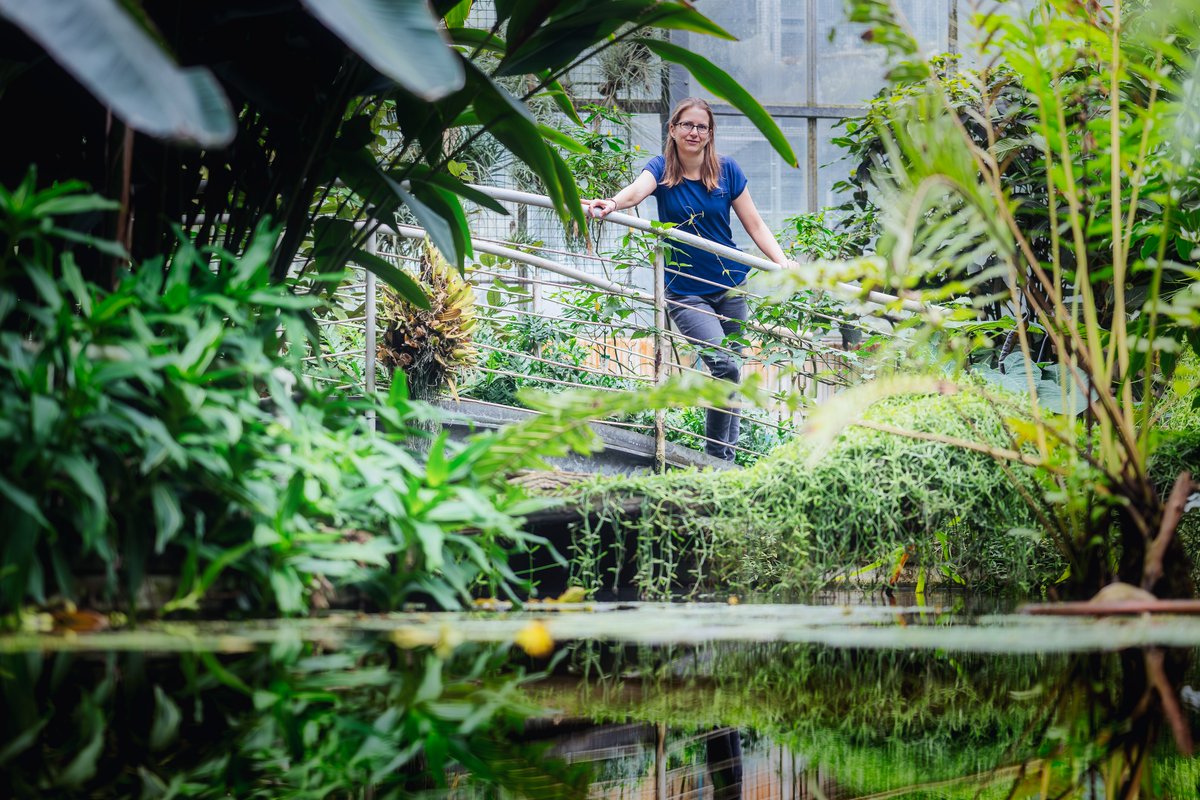
We are proud to announce two new @ERC_Research grants awarded to our scientists. M. Fendrych @matesakf will focus on the rapid auxin responses in plant morphogenesis. Z. Musilová @zuzmus will study the unique vision of the deep sea fishes.
#ERCCoG
https://t.co/UTUwAsIU4R
It 's out!
Zhao, C., Webster, P.D., De Angeli, A. et al. Mechanically-primed voltage-gated proton channels from angiosperm plants. Nat Commun 14, 7515 (2023). https://t.co/bVIXtUh7rM
Plant roots can rapidly change the acidity of their cell walls and the root-soil interface to efficiently navigate in the soil environment. https://t.co/lQzocOWc1T
In the frame of young researcher ANR, I am looking for a post-doc to study how cell mechanical properties and response to forces control the growth of Arabidopsis seeds! If anyone is interested to come to Lyon, please contact me!
Another one! we wrote a bio-protocol with @shivmani_d and @matesakf to relatively image root membrane potential. I would be happy that it would be transposed to other organs or species! Beautiful in biphoton!
https://t.co/ynB9iFEC1R describes the method in https://t.co/37H6AAd43b
@AbdurRaufAfrid@YvonJaillais Thanks for your reply, unfortunately FITC is used as a viable cell reporter in plants and other models. It get traps and shines in plants cytosol so it will stain the roots. But the fluorescent beads might be a good idea.
Having trouble with background fluo dye tracer to follow arrival of treatment in #microfluidics. Effects on pH and ultimately root elongation (when no buffer in medium). Does anyone recommends a specific dye with no tissue penetration? or tried 1µm sillica-fluorescent beads?
I am using fluorescein dextran these days. No trouble when media are buffered with MES and you put two different concentration in both control/treatment media.
Yeah … Our paper got accepted! We conducted years of research, spent countless hours to analyze, interpret, & write the manuscript. Editors & reviewers voluntarily spent their time ensuring its quality. Now, we need to pay $4,430 so that you can read it. Isn't that ridiculous?
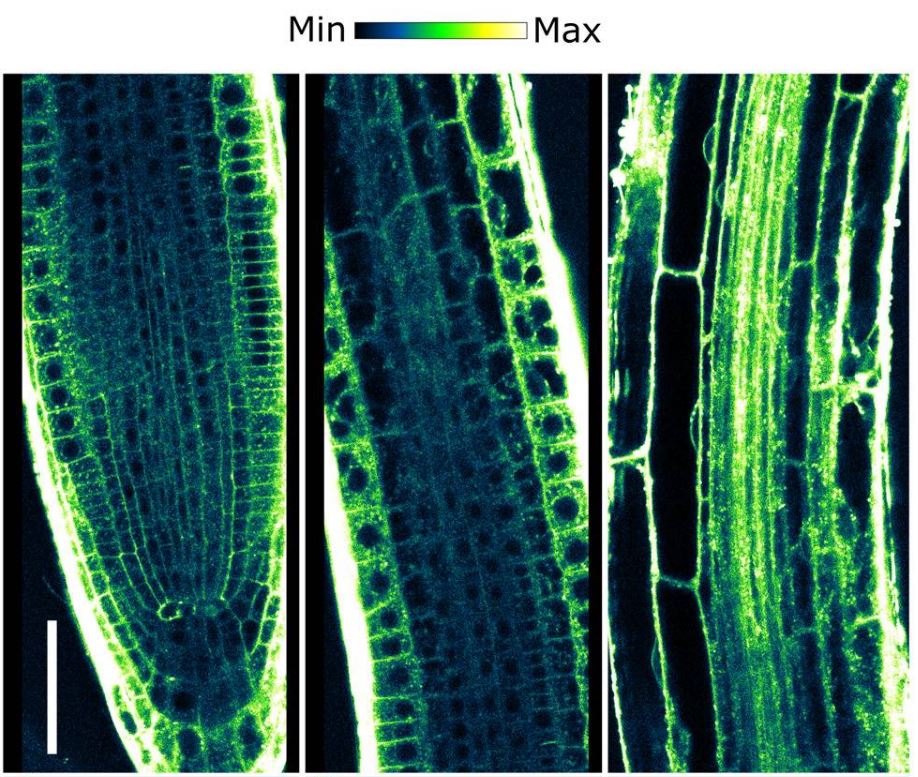
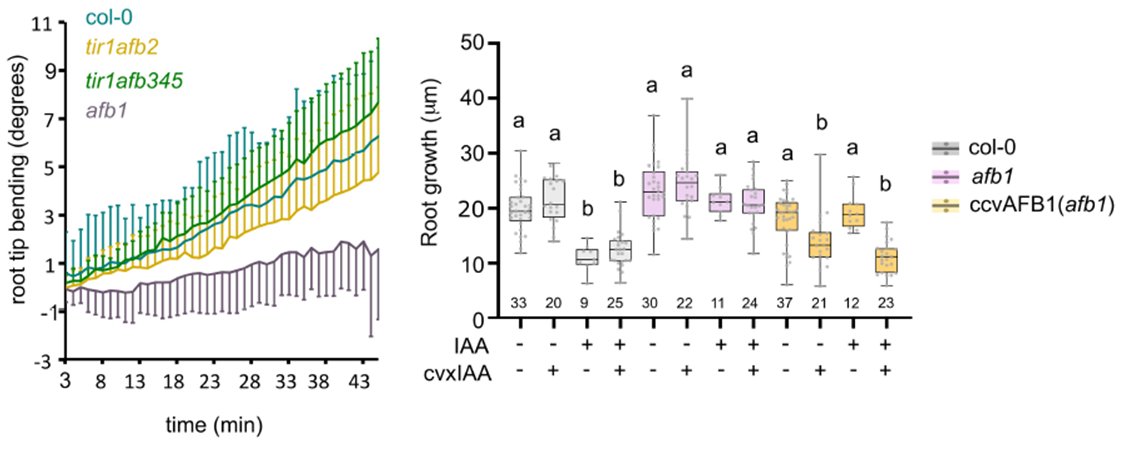
Our new preprint describing the canonical and non-canonical function of the AFB1 auxin receptor.https://t.co/YEicgurQQO.
Grateful for the wonderful collaboration with @mestelle lab. @matesakf
1/4) intracellular rapid auxin responses from the cytoplasm are triggered by the AFB1
#Microfluidics for microscopy imaging in plant #biology allows to observe, in situ, the biological response of plant roots to various stimuli at high temporal and spatial resolutions.
@NBCSerre @matesakf @YvonJaillais
👉 https://t.co/X5zcjfTvVI
Long in the making but worth it. Here is our preprint describing 1) a new technique to observe pH in medium and 2) how auxin rapid response actors are involved in controlling the root surface pH along the root!
https://t.co/8eMuQJY9Wl
Clerc et al. from @CharrierLab and @mng_ceb demonstrate the use of #microfluidic devices permitting detailed optical evaluations of #kelp#embryogenesis crucial to study complex oceanic ecosystems.
For the details, welcome to read the new paper:
https://t.co/qIGokcmL2F