https://t.co/g7sZ27aIIb
Sharing part of the NEF Labour Day address
Employer perspective:
• Skills gaps are a real constraint
• Businesses carry major training costs
• Education ≠ job readiness
• Skills development must be shared
• Systems & levies must deliver value
On the occasion of May Day, the Namibian Employers’ Federation extends its warm wishes to you and your employees.
This day highlights the value of work, mutual respect, and shared responsibility in building fair and productive workplaces.
Wishing you a meaningful & happy May Day.
Employment policies shape the long-term direction of labour market reforms.
For employers, understanding these policy discussions helps anticipate future changes in the employment landscape.
#shapingpolicy#employmentpolicy#sustainableemployment
Another policy discussion internationally is the role of unemployment insurance systems. These systems provide temporary income support to workers who lose jobs.
Policy design must balance social protection with employment creation.
#sustainableemployment#shapingpolicy
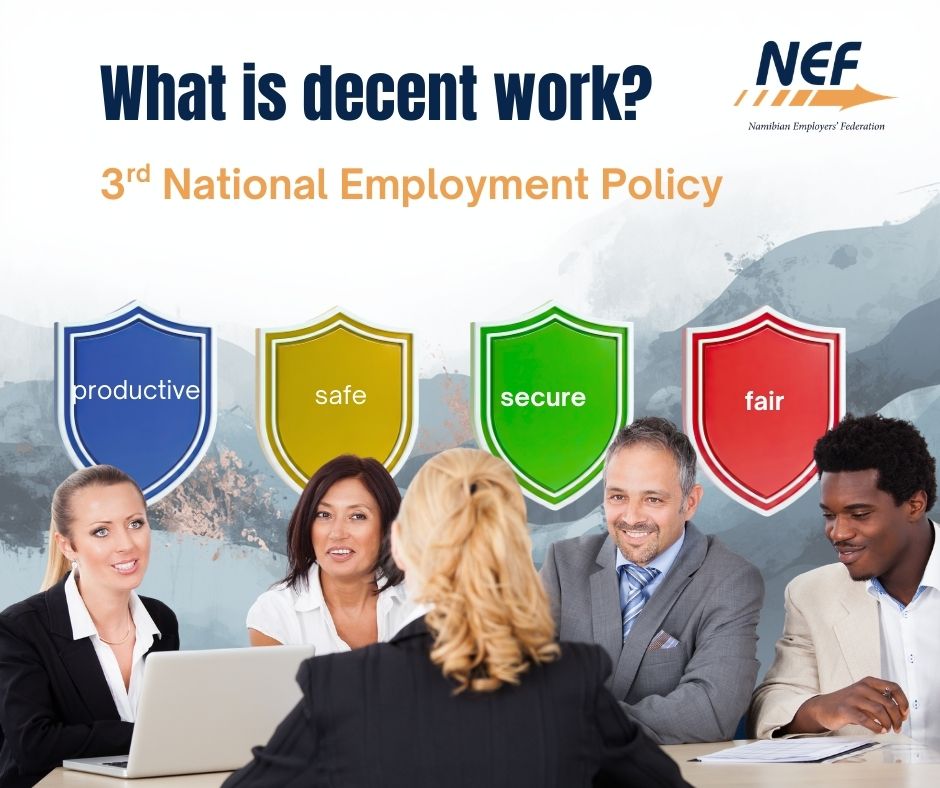
NEP3 is aligned with the ILO Decent Work Agenda.
The challenge for policymakers globally is balancing improved job quality with economic competitiveness and job creation.
#SustainableEmployment#shapingpolicy#employmentpolicy
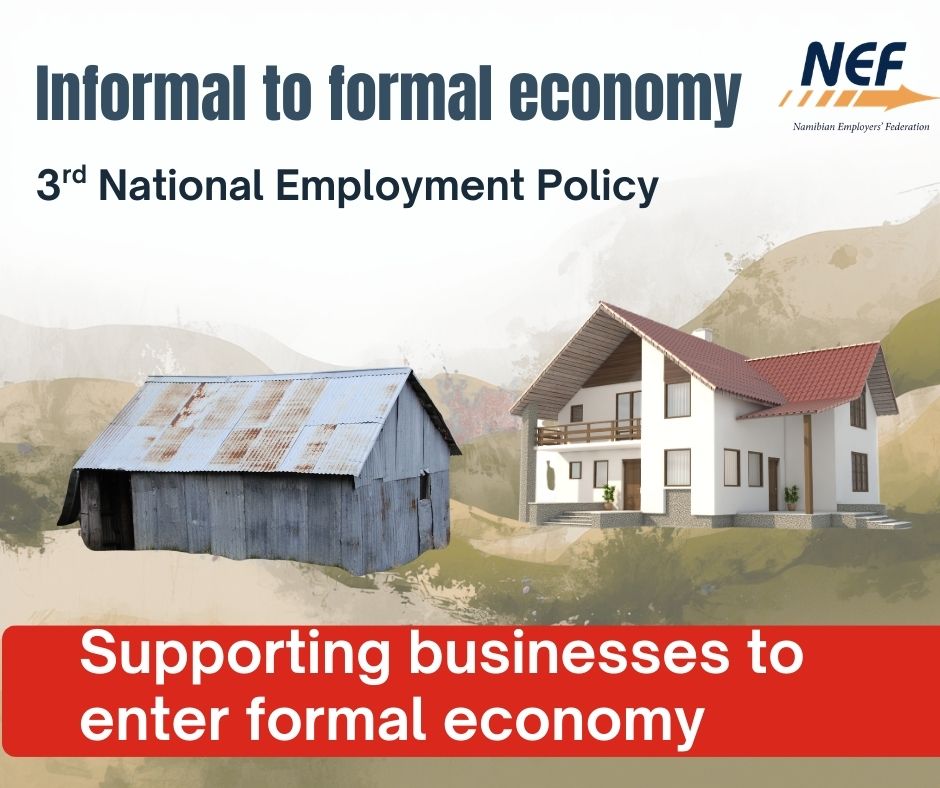
Like many developing economies, Namibia has a large informal sector. Employment policy often aims to formalise informal economic activity. Global experience shows that formalisation policies must balance supporting entrepreneurship with manageable regulatory requirements.
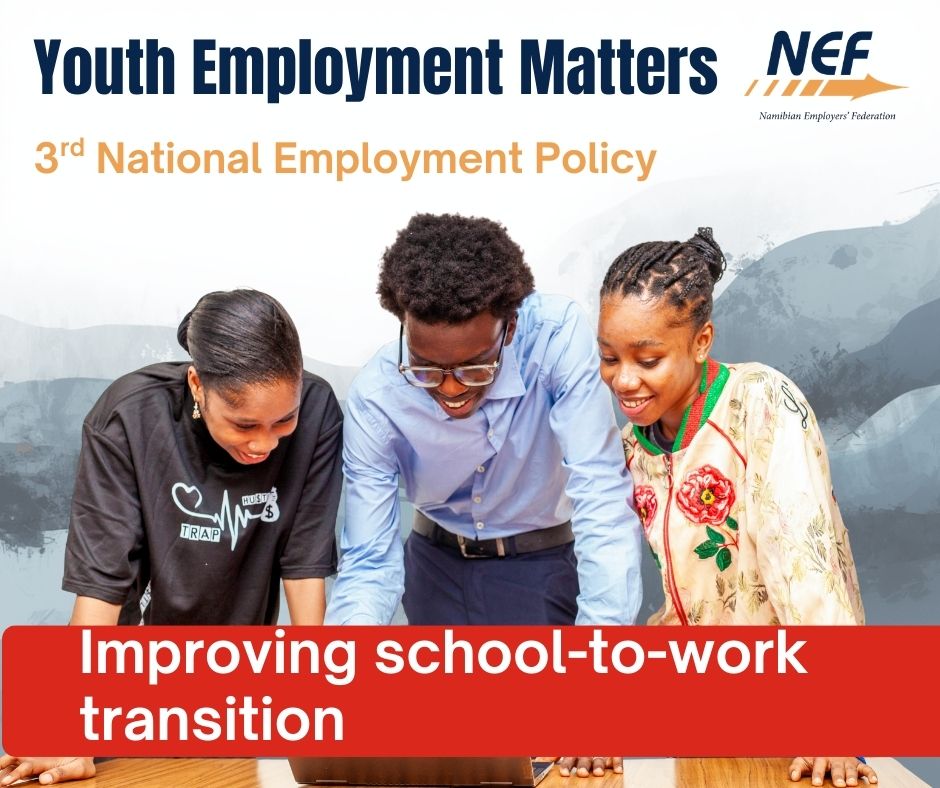
Youth unemployment is one of the most serious labour market challenges in Namibia.
Improving the school-to-work transition is therefore a major policy priority.
#shapingpolicy#employmentpolicy#SustainableEmployment
One challenge highlighted in NEP3 discussions is the skills mismatch between education systems & labour market needs.
Employers across sectors often report difficulties finding workers with the right technical or vocational skills. It is vital that curricula match market needs.
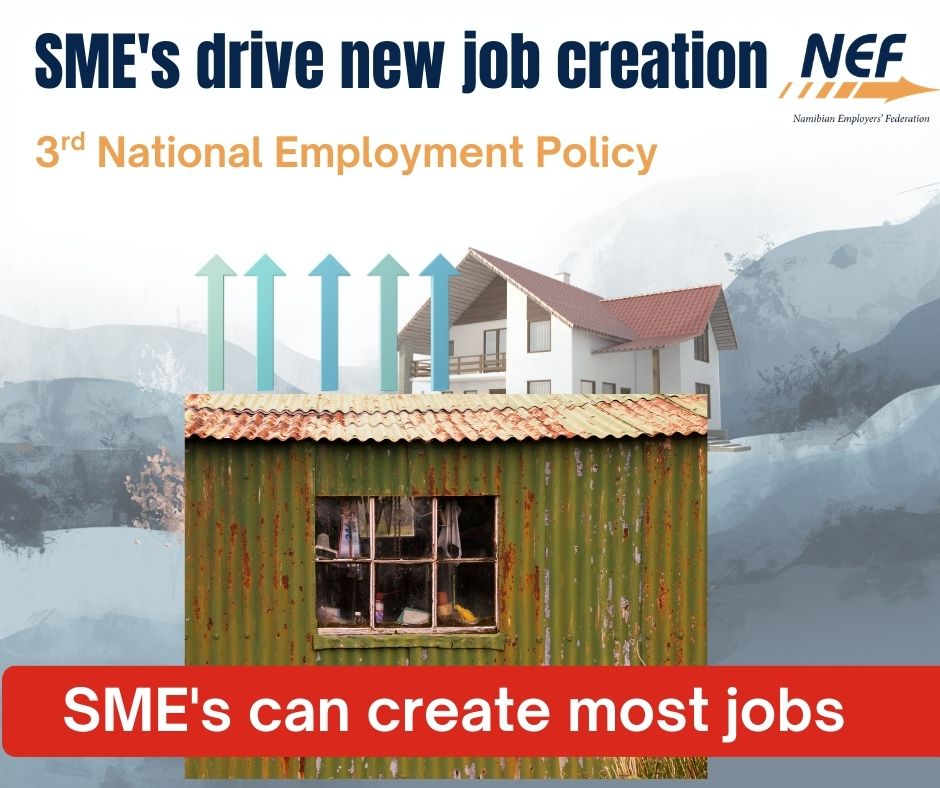
Employment creation ultimately depends on economic growth and business investment.
In most economies, the private sector creates the majority of jobs.
A strong partnership between government and the private sector is vital for sustainable job creation.
#sustainableemployment
Across the world, governments are adopting National Employment Policies to coordinate economic and labour market strategies.
Namibia’s NEP3 follows this global trend with the intention of coordinating employment creation across government institutions.
#sustainableemployment
Namibia faces a significant labour market challenge.
Current estimates indicate:
• unemployment around 36.9%
• youth unemployment close to 44%
For employers, this means employment policy debates are likely to remain high on the national agenda.
#SustainableEmployment
Namibia is developing its Third National Employment Policy (NEP3) — a strategic framework aimed at strengthening employment creation and addressing labour market challenges.
It is important that businesses help shape the policy.
#shapingpolicy#sustainableemployment
NEF President Elia Shikongo urges practical, job-supporting labour & economic policies for 2026 as rising costs persistent unemployment risk business viability.
Sustainable jobs depend on sustainable businesses — and structured, predictable policy engagement is key.
Employers continue to operate in a challenging environment. Practical regulation, predictable enforcement and meaningful dialogue remain critical to sustaining businesses and jobs. Employers need practical rules and fair enforcement.
#EmployerReality#EconomicRealism
January reinforces a consistent message: balanced labour policy, early dialogue and employer engagement are essential for sustainable employment in Namibia. Balanced policies help businesses and jobs grow.
#EmployerRepresentation#SustainableJobs#EconomicRealism
Sustainable jobs depend on sustainable businesses. Policy, compliance and competitiveness must align. Strong businesses support long-term jobs.
#SustainableJobs#EconomicRealism
Tripartism works when all parties recognise economic constraints and engage in good faith. Balance and realism are essential. Balanced dialogue leads to better solutions. Tripartism needs balance.
#Tripartism#SocialDialogue
Policies designed without employer input often fail in implementation. Practical experience improves outcomes. Employers’ voices matter.
#ShapingPolicy#EmployerVoice