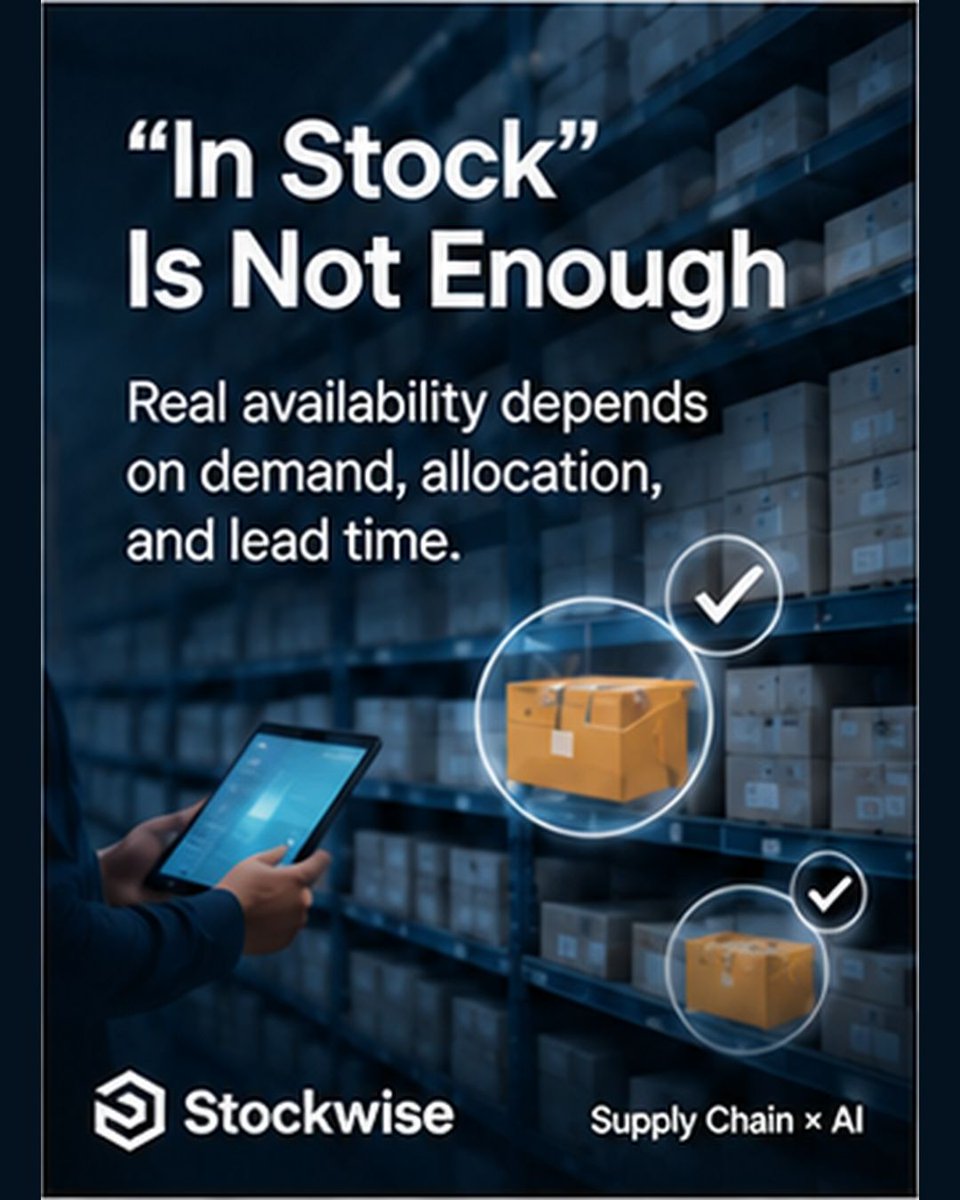
Before placing another purchase order, check three things: usable stock, confirmed inbound supply, and the date it's needed.
Better purchasing starts with clearer inventory data.
https://t.co/ysq8YA6Tgd
#AI#InventoryManagement#SupplyChain#Startup
“In stock” doesn’t always mean available.
Check allocated inventory, demand and lead time before placing the next order.
https://t.co/3Uw9DKcR2b
https://t.co/QBJaibwQAE
#AI#InventoryManagement#SupplyChain#Startup
If rush orders happen every week, they're not exceptions.
Review demand changes, supplier delays and inventory accuracy before the next order.
https://t.co/080n517n09
#AI#InventoryManagement#SupplyChain#Startup
Too much stock ties up cash. Too little creates shortages.
Stockwise helps teams review inventory needs and purchasing decisions in one place.
https://t.co/UpV4CcpaLP
#AI#InventoryManagement#SupplyChain#Startup
Safety stock isn't a substitute for supplier reliability.
Track the difference between promised and actual usable receipt dates. A repeated delay may call for a supplier or process fix, not just a larger buffer.
Three numbers to reconcile before an AI-generated order recommendation:
1. Unallocated stock
2. Confirmed inbound supply
3. Required-use date
Automation is only useful if the underlying data reflects reality. #AI
A stock adjustment answers: how many units are missing?
A root-cause investigation answers: why did the discrepancy occur?
Track UOM, item-master changes and transaction timing separately. The distinction matters for repeat errors.
A cheaper supplier can cost more in working capital.
A large MOQ or longer lead time may tie up cash that a smaller, faster order would preserve.
Compare total inventory cost, not just unit price. #Procurement
We’ve developed Stockwise, a new inventory planning web app.
Currently being tested by 100 companies.
Smarter inventory. Better purchasing decisions.
https://t.co/3Uw9DKcR2b
#AI#InventoryManagement#SupplyChain#Startup
AI in procurement: start with recommendations, not unattended purchase orders.
Show the assumptions, quantity, required date and supplier constraints. Let the planner validate exceptions before committing spend.
#AI#Procurement
A supplier quotes 14 days. Add 3 days for transit and 2 for inspection, if neither is included.
The planning lead time is 19 days—not 14.
Which lead-time component does your ERP actually capture?
Duplicate part numbers are not just a warehouse issue.
They can split demand history and distort reorder decisions. Before merging records, check open POs, stock balances, transaction history and approved substitutes.
AI can flag a shortage. It cannot make an incorrect item master accurate.
Before automating purchase decisions, validate part IDs, units and available stock. Better inputs matter as much as better models.
#AI#SupplyChain
@cpcongroup The master data team should own the final approval, while maintenance and purchasing validate technical specifications and sourcing requirements. Clear roles and a duplicate check before creation are key.
Why does the same SKU fail every cycle count?
Another recount may not fix it. Check receipts, transfers and picking adjustments for the transaction that keeps creating the gap.
#InventoryAccuracy
A forecast of 100 units per week means something different if demand comes from one customer instead of 20. Review customer concentration before setting stock targets.
A rising fill rate can hide a costly problem: too much inventory. Pair service level with inventory turns to see whether availability is improving efficiently. #InventoryManagement
A case holds 12 units, but the item master says 10. Receive 20 cases and the system records 200 instead of 240.
That 40-unit discrepancy may look like shrinkage in later reconciliations. Validate pack sizes before investigating physical loss.
Inventory accuracy starts before the count.
If the same part has two item codes, counting more often won't resolve the master-data issue. Check manufacturer part numbers and units before reconciling quantities.
#DataQuality
@cpcongroup Absolutely. Correcting the item master is essential, but preventing duplicate part numbers from being created in the first place is just as important. Clear ownership of master data can make a big difference.