The Nigeria Governors’ Forum (NGF) is a coalition of the elected Governors of the 36 States. News is presented for information and does not imply endorsement.
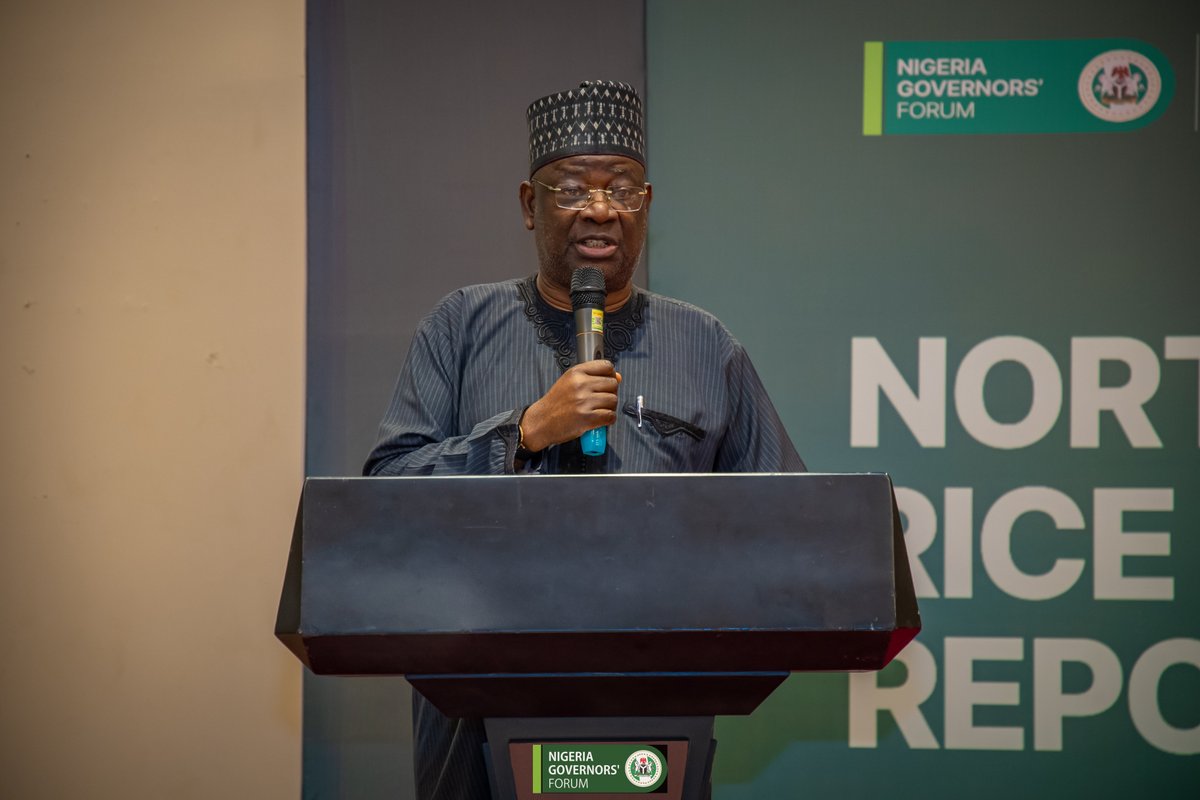
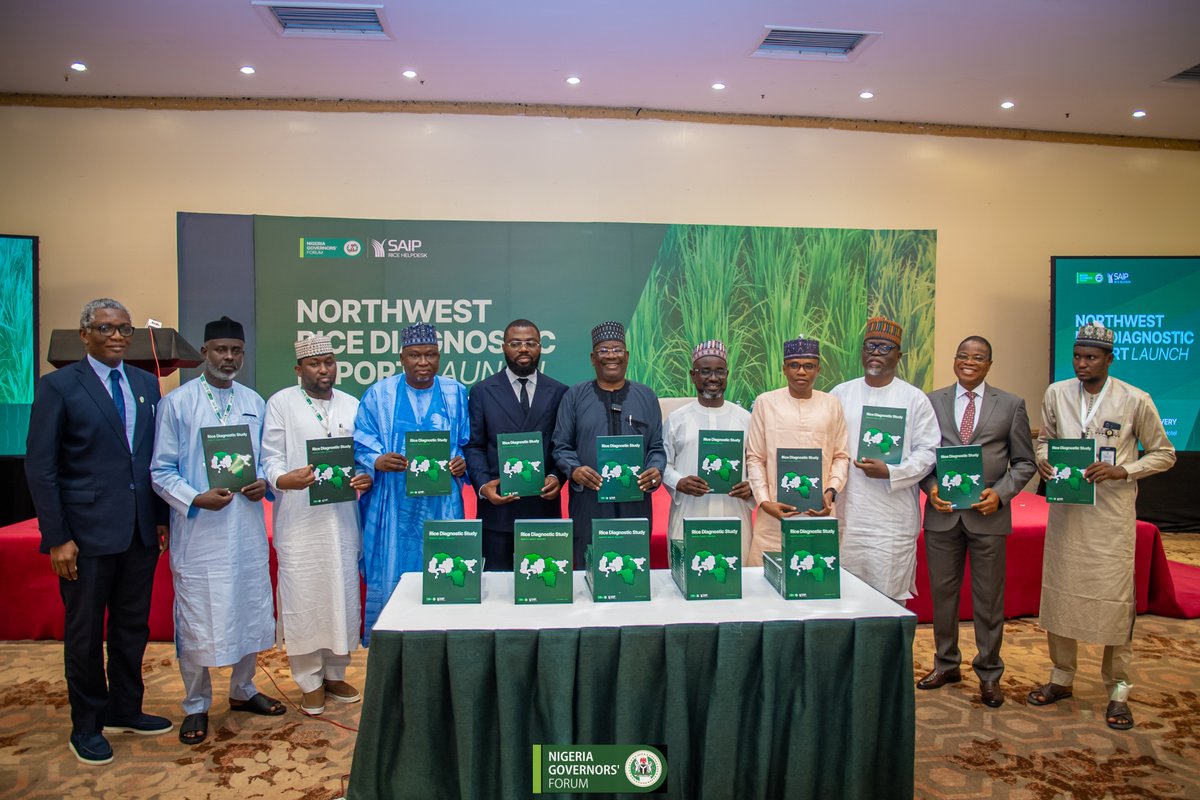
The NGF with support from @Gates_Nigeria, recently launched the SAIP Diagnostic Report, providing evidence-based insights and recommendations to strengthen state-level agribusiness development, improve the investment climate and boost Nigeria’s rice value chain.
What was envisioned at the Delta State Economic and Investment Summit in August is steadily taking shape. From investment commitments to projects now breaking ground, Delta is translating opportunities into tangible development. Under Governor Sheriff Oborevwori’s MORE Agenda, the focus remains on building a stronger, more diversified economy that creates jobs, attracts investments and expands opportunities for all Deltans.
As states advance their agricultural programmes, timely funding, coordinated implementation and effective delivery will be important in translating budget commitments into lasting value for farmers, markets and communities.
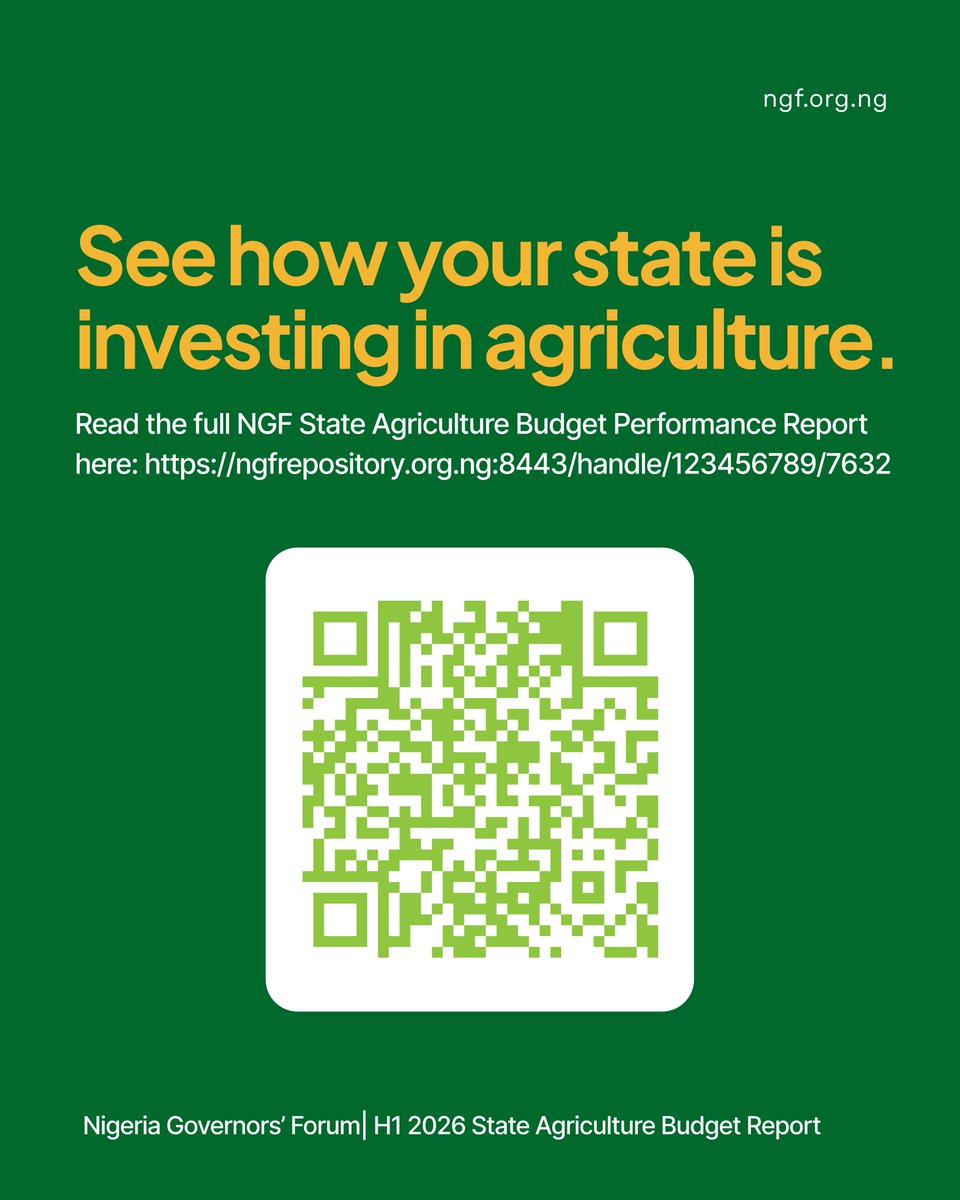
Explore the report for a deeper understanding of state agriculture investment, spending patterns and opportunities to strengthen delivery across Nigeria.
Click here: https://t.co/bMIBTb6jm7
3/3
Agricultural development depends on more than what happens on the farm. Access roads, irrigation, storage facilities, processing infrastructure and timely support for farmers all play a role in strengthening the agricultural value chain.
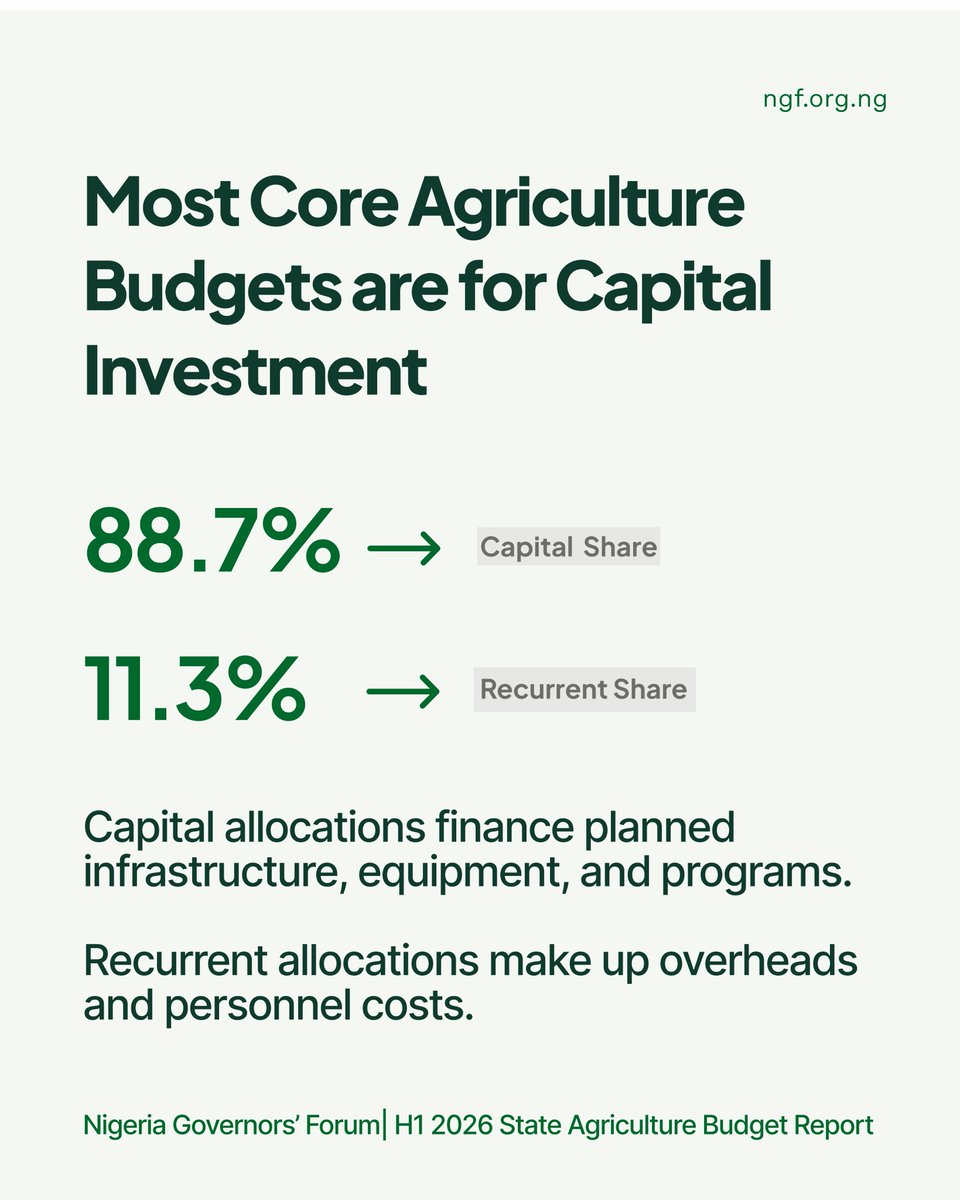
The NGF Secretariat’s State Agriculture Budget Performance Report, H1 2026 examines how state governments are directing public resources towards these priorities, providing insights into investment patterns, spending trends and opportunities to strengthen implementation.
1/3
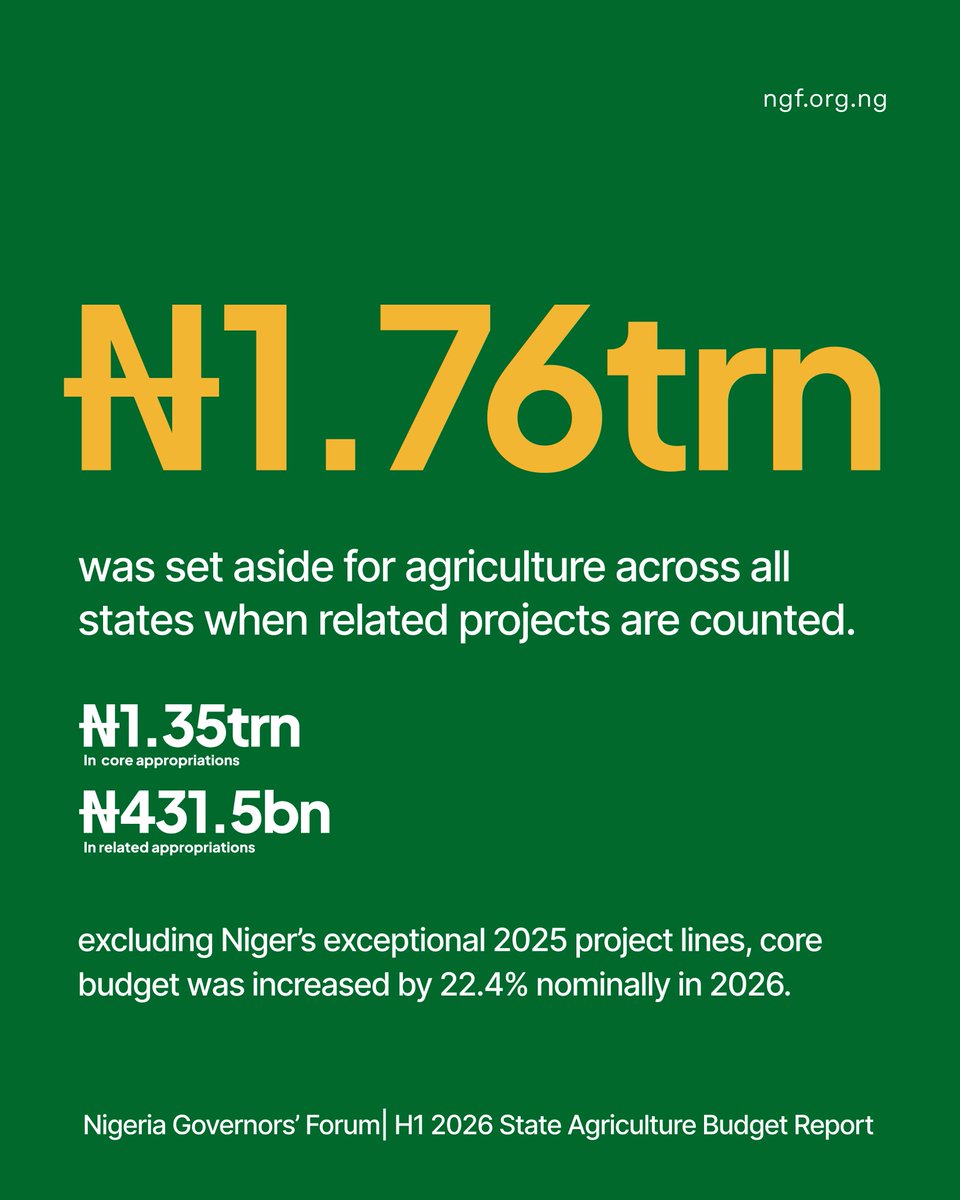
Across 34 reporting states, agriculture expenditure reached ₦221.3 billion in the first half of 2026, representing a 36.1% increase in real terms compared with the corresponding period in 2025. The report also identifies a wider ₦1.76 trillion envelope of budgeted agriculture-related investment, encompassing infrastructure and other investments recorded across government functions.
These findings offer a closer look at the priorities shaping state agricultural investment, from rural access roads and agro-industrial development to irrigation and livestock infrastructure.
2/3
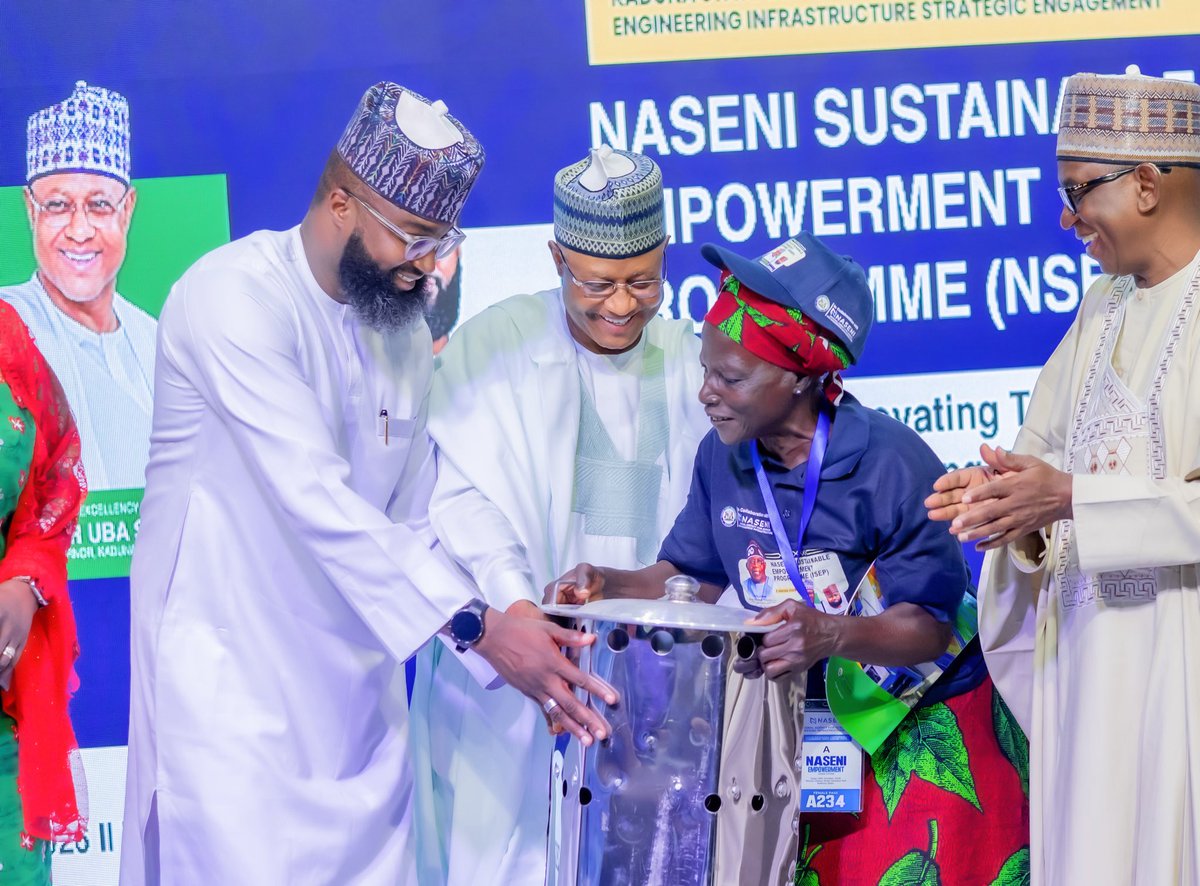
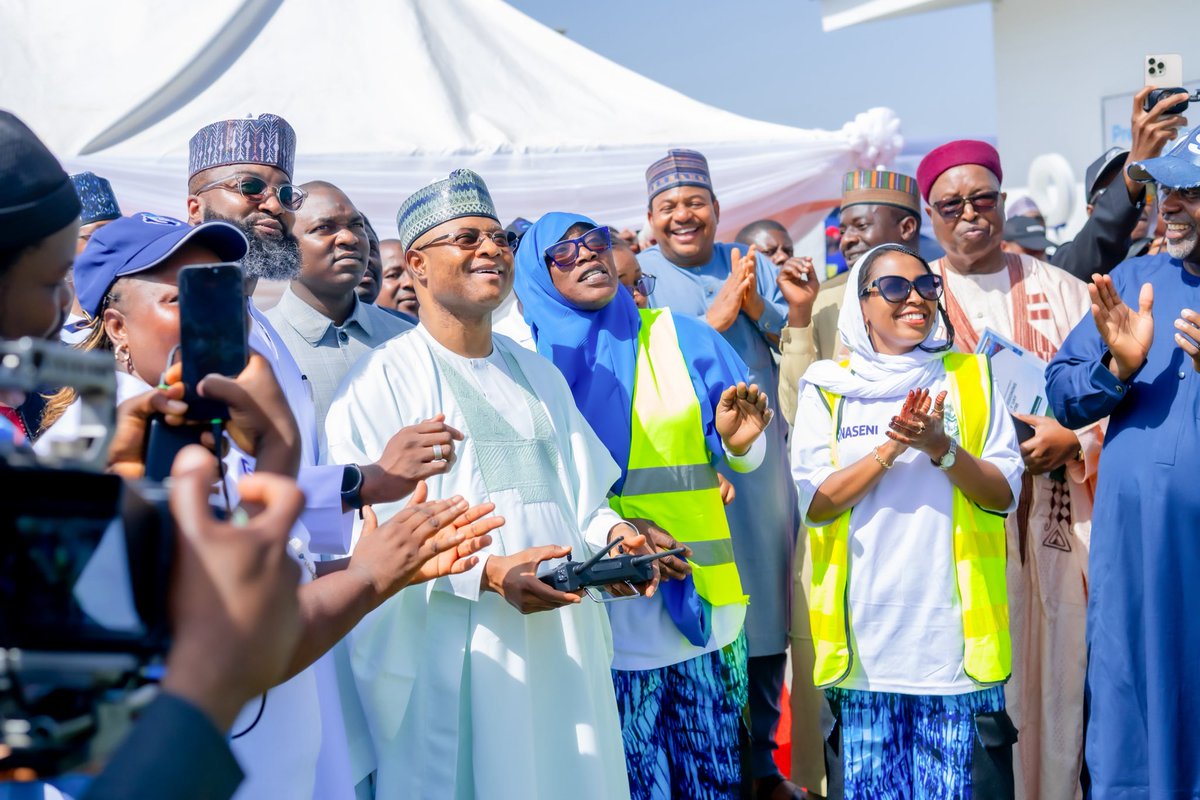
In a significant stride toward technological self-reliance and regional capacity building, Executive Governor of Kaduna State, Senator Uba Sani, officially commissioned the National Agency for Science and Engineering Infrastructure (NASENI) Drone Training Centre in Kaduna. The Governor also performed the ground-breaking ceremony for the construction of the NASENI Skill Development Centre (NSDC). Both facilities are strategically located within the Rigachikun-Igabi Local Government Area, marking a major milestone for local industrialization and workforce development.
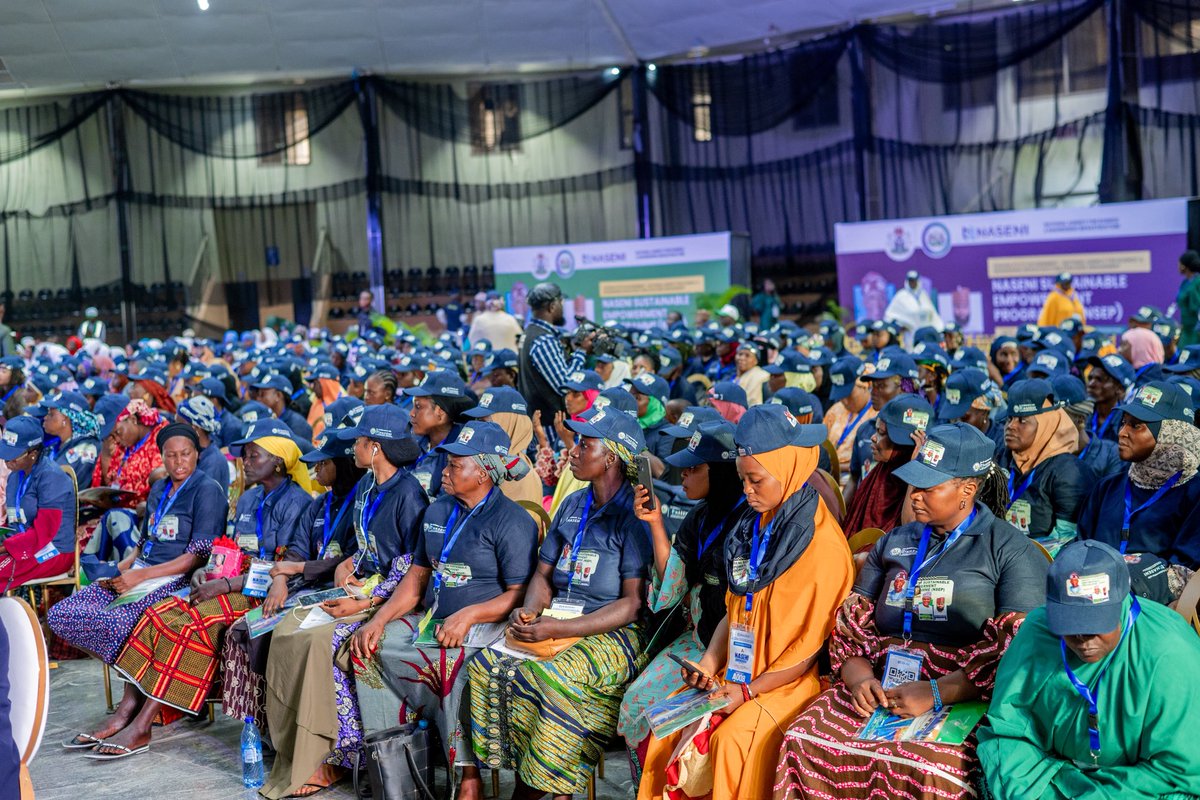
Alongside these infrastructure launches, @NASENIHQ extended direct community support to approximately 450 households across Kaduna State. Beneficiaries received home-grown technology packages, including NASENI Home Solar Solutions and clean cookstoves, paired with targeted financial support. This outreach reflects the Agency's broader mandate to ensure that locally engineered technologies serve practical, daily needs while advancing household energy access, environmental sustainability, and economic relief.
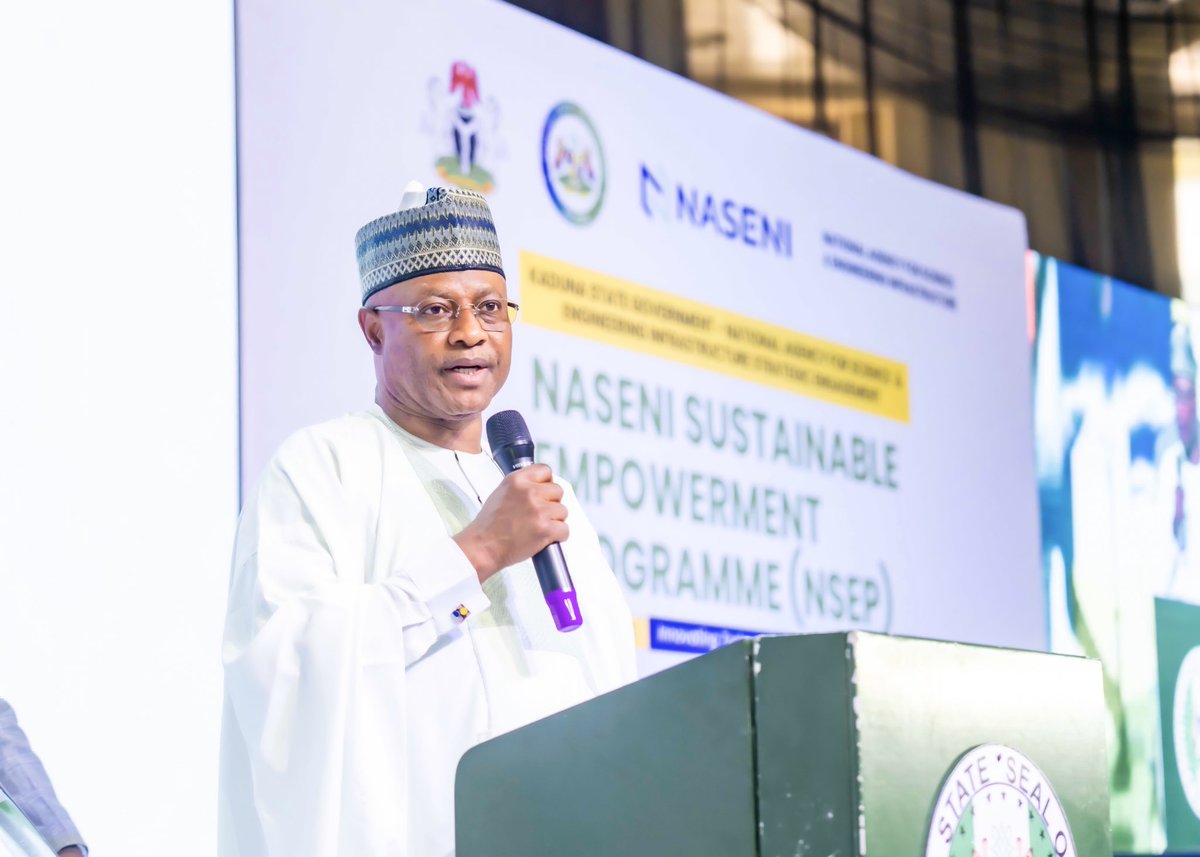
Governor Uba Sani expressed strong appreciation for the strategic alignment between NASENI and the Kaduna State Government, while commending President Bola Ahmed Tinubu, GCFR, for his continued support of the initiative. Governor Sani emphasized that the Drone Training Centre and the forthcoming Skill Development Centre will actively bridge the gap between youth aspirations and structural limitations by offering practical skills essential for modern economic advancement.
Today, I had the honour of chairing and serving as Special Guest of Honour at three engagements organised by the National Agency for Science and Engineering Infrastructure (NASENI), in collaboration with the Kaduna State Government: the groundbreaking of the NASENI Skill Development Centre, the launch of the NASENI Sustainable Empowerment Programme, and the commissioning of the NASCAV Unmanned Aerial Vehicle (UAV) Training Facility.
Together, these initiatives advance a central responsibility of government: equipping citizens with the skills, resources and opportunities to build secure livelihoods and contribute meaningfully to national development.
The Sustainable Empowerment Programme will provide 500 beneficiaries across our 23 local government areas with solar home systems, clean cookstoves and financial assistance, supporting household welfare and productive capacity. The Skill Development Centre will widen access to practical training, while the NASCAV UAV Training Facility will strengthen specialised technical education, research and innovation, including applications in agriculture and other critical sectors.
I sincerely appreciate His Excellency, President Bola Ahmed Tinubu, GCFR, for his commitment to science, technology, skills development and economic empowerment. His support demonstrates how the Renewed Hope Agenda can translate national priorities into opportunities within communities, giving more Nigerians the means to improve their circumstances.
PRESS STATEMENT
October 19, 2026
NGF MOURNS FORMER DELTA STATE GOVERNOR, DR EMMANUEL UDUAGHAN
The Chairman of the Nigeria Governors’ Forum (NGF), H.E AbdulRahman AbdulRazaq, has expressed deep sorrow over the passing of former Delta State Governor, Dr Emmanuel Uduaghan, who reportedly died at the age of 71 following a brief illness.
Dr Uduaghan served as Governor of Delta State from 2007 to 2015, a period during which he was involved in advancing the state’s development priorities and public administration. His years in office formed a significant chapter in Delta State’s governance history and contributed to the ongoing efforts to address the needs and aspirations of its people.
The Forum acknowledges his years of public service and the responsibilities he undertook in leading Delta State. His passing is a moment of grief for his loved ones, associates and the wider community, as the state reflects on his life and contributions to public service.
The NGF extends its heartfelt condolences to his family and loved ones, as well as all those who mourn his passing. The Forum stands in solidarity with the people of Delta State during this difficult period and hopes that the memories of his life and service will bring comfort to those affected by his loss.
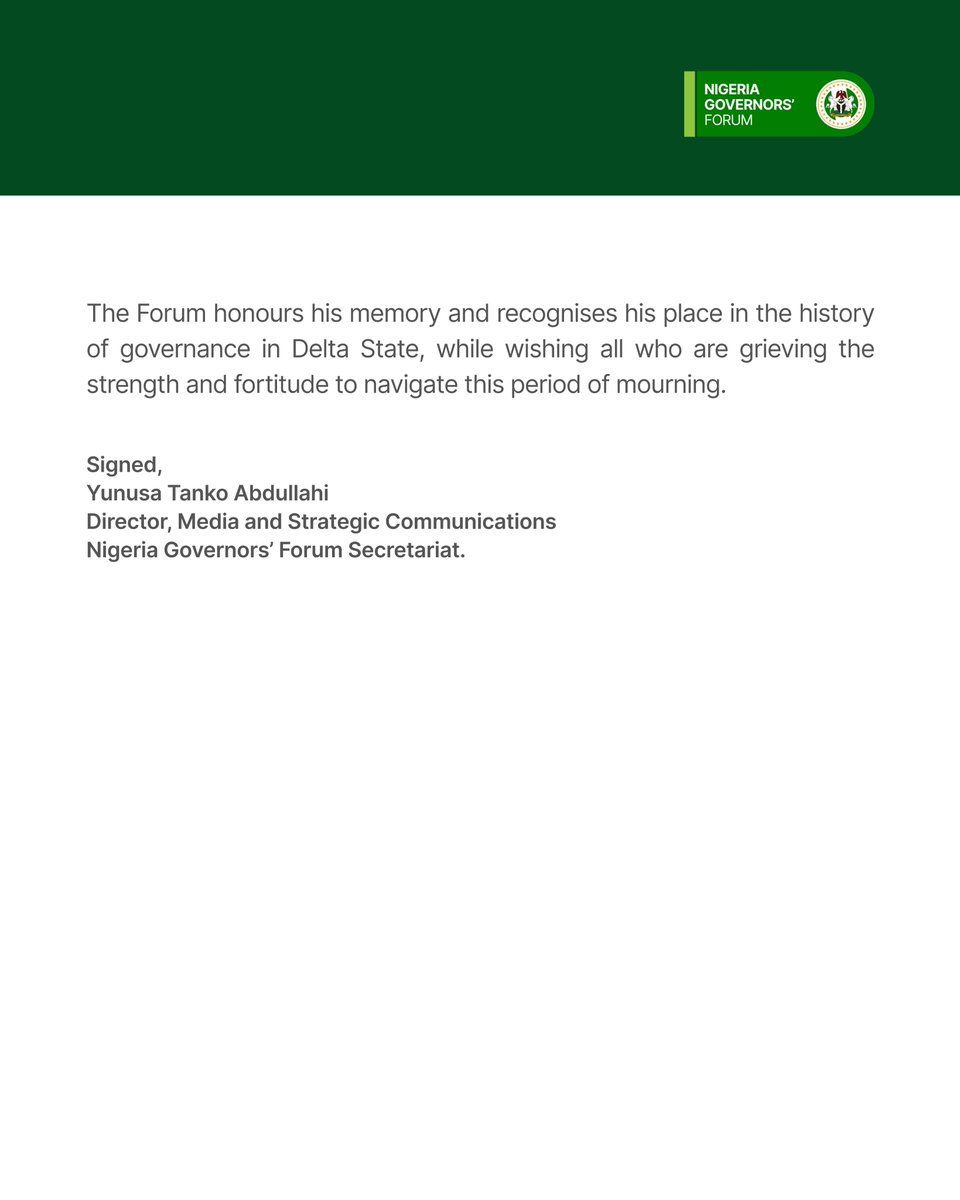
The Forum honours his memory and recognises his place in the history of governance in Delta State. We wish all who are grieving the strength and fortitude to navigate this period of mourning.
Signed,
Yunusa Tanko Abdullahi
Director, Media and Strategic Communications
Nigeria Governors’ Forum Secretariat.
@DSGovernment
3/3
As President, I have a duty to provide relief today without compromising our children’s future.
Every commitment must be sustainable and backed by a credible plan. That responsibility guides our decisions, including the difficult ones.
Anyone seeking to lead Nigeria should be prepared to explain what their promises will cost, how they will deliver them, and whether they can sustain them.
Promises are easy to make when the costs can be postponed, leaving Nigerians and future generations to pay the bill.
Blessing, Ada, Abigail and Kabir, your stories encourage me because they show what these investments mean in the daily lives of Nigerians.
Emmanuel, your request reminds me of the work still ahead. I know many more Nigerians like you are waiting for these services.
Our responsibility is to keep expanding access until affordable transportation becomes a reality for more communities across our country.
That is the work we will continue in collaboration with the States.
Bola Ahmed Tinubu, GCFR
President
@NGRPresident@NigeriaGov@PiCNG_EV
2/3
To Emmanuel, who asked for more buses: I heard you.
I know many Nigerians are still waiting for affordable transportation to reach their communities. We are working with state governments through the Nigeria Governors’ Forum @NGFSecretariat and private investors to expand these services under the National Affordable CNG Transportation Programme.
In the past few weeks, Ekiti has received 15 buses, Lagos 20, and Akwa Ibom has 50 ready for service. Katsina has introduced 30 CNG hybrid buses and 200 electric tricycles. Kano has also received 30 CNG buses and five electric buses, with another rollout scheduled for Edo.
Kaduna’s 100 CNG buses have carried over three million passengers to date.
Beyond the buses, more than 400 certified centres have converted over 120,000 vehicles to CNG. We are also expanding refuelling infrastructure so drivers can access CNG conveniently and more Nigerians can benefit from lower transport costs.
I also recognise the pressure rising petrol prices place on families and businesses.
To cushion the impact, we have waived over ₦3.3 trillion in fuel taxes and duties. NNPC Retail is foregoing its profit margin for 30 days, prioritising public transport operators, while we work towards a ₦1,350-per-litre ceiling on wholesale petrol supply costs to reduce price volatility.
These measures are intended to ease the immediate burden while we continue expanding affordable transportation alternatives.
1/3
Dear Blessing,
I watched your video and listened as you explained how your journey from Masaka to Berger in the FCT now costs ₦500 instead of ₦1,500. That is ₦1,000 saved every trip. I know what that means when you have a family to feed, bills to pay and other responsibilities waiting at home.
I was equally pleased to hear from Ada and Abigail, who now pay ₦1,600 instead of ₦4,000 to travel from Enugu to Nsukka, saving ₦2,400 on each journey.
I also listened to Kabir, a taxi driver who explained that ₦10,000 worth of CNG allows him to make three more return trips than his colleagues using petrol. He says he has no intention of going back to petrol.
I have also received encouraging feedback from Borno, where some commuters are now paying as little as ₦50 per trip on CNG and electric vehicles.
Your various experiences show what our investment in CNG transportation is intended to achieve. Lower operating costs for drivers should translate into more affordable fares for passengers, leaving families with more money for their everyday needs.
When we removed the petrol subsidy, I knew the decision would bring difficulties for many households. With that decision came a responsibility to provide practical alternatives that would ease transportation costs.
Your stories show this is already happening, and I want more Nigerians to experience these benefits.
The Governor of Katsina State, H.E Dikko Umaru Radda @dikko_radda, has reaffirmed the state government’s commitment to strengthening partnerships with development organisations to improve support for vulnerable communities and address humanitarian needs across the state.
Governor Radda made this known when he received a delegation from the European Civil Protection and Humanitarian Aid Operations (ECHO), led by its Team Lead, Mr Alexandre, at the Government House in Katsina.
The Governor acknowledged the contributions of ECHO and its implementing partners to interventions in nutrition, food security and humanitarian assistance across several Local Government Areas, noting that such partnerships complement government efforts in reaching communities with critical support.
He assured the delegation that the state government would continue to provide the funding and institutional backing required to sustain effective interventions, emphasising the importance of combining public resources with development partner support to achieve lasting impact.
Earlier, Mr Alexandre commended the state government for providing an enabling environment for development partners and demonstrating financial commitment to programmes through counterpart and matching funding.
He noted that the state’s contribution could help sustain interventions beyond the lifespan of individual donor-funded projects and strengthen local ownership of development programmes.
ECHO reaffirmed its commitment to supporting Katsina State in areas including nutrition, food security, humanitarian assistance, resilience and institutional capacity development.
The engagement was facilitated by the Katsina State Development Management Board as part of ECHO’s monitoring of humanitarian interventions being implemented by its partners across the state.
@KatsinaStateNg
Governor Agbu Kefas has approved N2.5 billion for social protection, youth development and recovery programmes targeting vulnerable households and communities affected by crises across Taraba State.
The Governor announced the intervention during his Independence Day broadcast in Jalingo, outlining measures aimed at strengthening targeted social support, expanding economic opportunities for young people and supporting recovery in crisis-affected communities.
Under the package, N500 million will be allocated to the Taraba CARES Social Investment and Poverty Relief Programme between October 2026 and March 2027. The programme will prioritise households facing severe hardship, including widows with dependants, older persons without reliable income and persons living with disabilities.
A further N1 billion has been allocated to the Taraba State Youth Development Agency to support skills development, livelihoods, enterprise development and other economic opportunities for young people.
The remaining N1 billion will support relief and recovery efforts in Karim Lamido and other crisis-affected areas, with interventions to be guided by verified needs and prioritisation of the most affected households and communities.
To strengthen transparency, Governor Kefas directed the Youth Development Agency to publicly disclose its programmes, eligibility criteria and application processes, as well as report on the skills, livelihoods and enterprises supported through the intervention.
He also directed that expenditure under the crisis recovery programme be publicly accounted for, reinforcing the need for clear beneficiary targeting, verifiable results and financial transparency in the implementation of the interventions.
The Governor further reaffirmed the state government’s commitment to meeting its pension obligations to retired public servants, alongside the broader social protection measures announced in the broadcast.
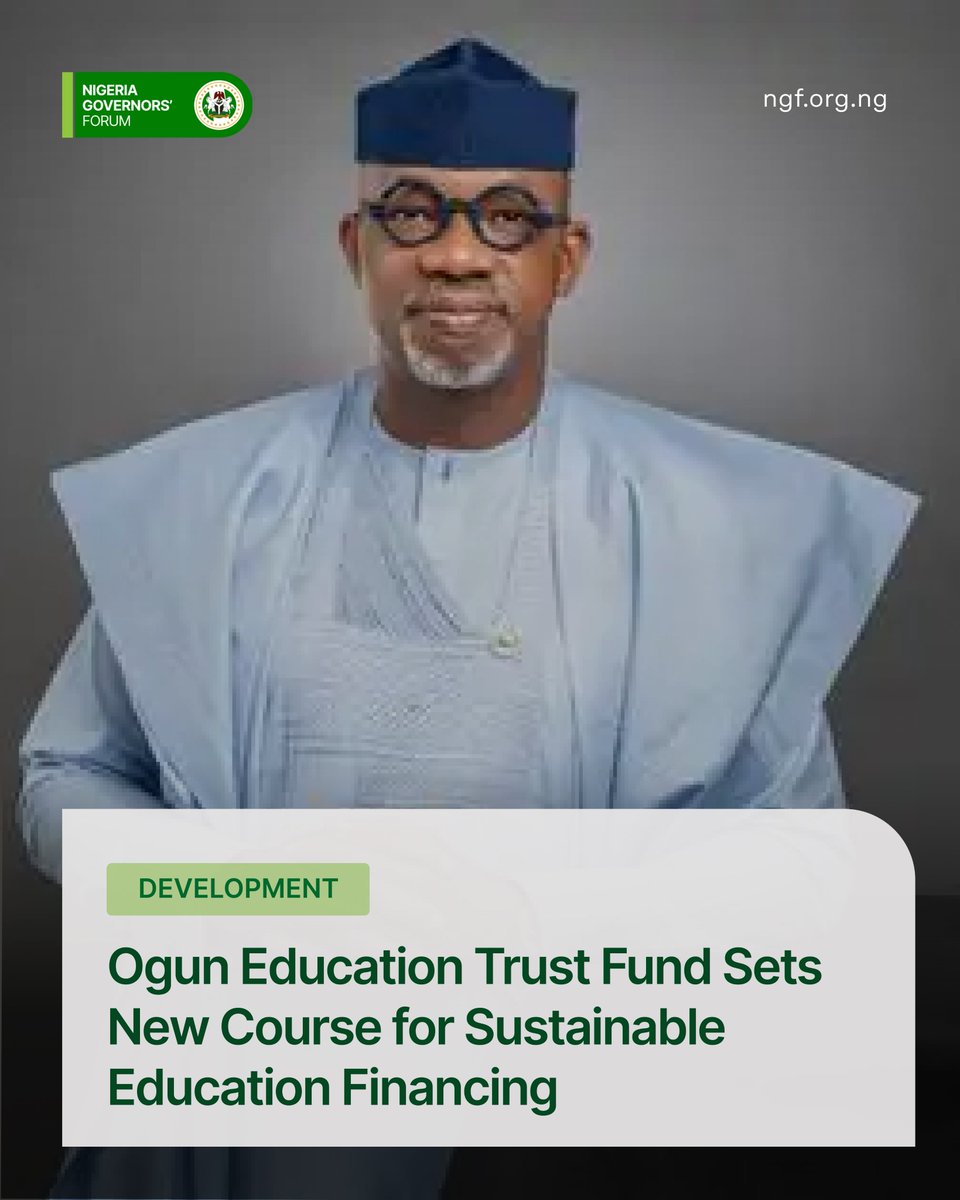
Governor Dapo Abiodun has assented to the Ogun State Education and Skills Trust Fund Bill, establishing a statutory framework to mobilise additional resources for education and skills development beyond the state’s annual budget cycle.
The Fund will support educational infrastructure and maintenance, bursaries, teacher development, vocational training and apprenticeship programmes, providing a structured mechanism for sustained investment in the sector.
The policy also seeks to strengthen the connection between education and the skills required by Ogun State’s industrial and commercial sectors. By aligning vocational training with labour market demand, the framework could improve pathways from education into employment and enterprise, particularly in areas such as technical trades, manufacturing and other skilled occupations.
The Fund provides further scope to strengthen apprenticeship through structured training, occupational standards, certification, improved equipment and enterprise management skills. This could build on existing informal pathways through which many young people acquire practical skills while providing greater structure and recognised standards.
The state has reported that more than 9,000 young people have benefited from its vocational training programmes. Future assessment of these interventions will be important in measuring outcomes beyond enrolment, including certification, employment, business creation and income generation.
The credibility and effectiveness of the Fund will depend on transparent allocation of resources, strong financial controls, regular reporting, oversight and measurable outcomes. Its ability to complement the state’s regular education budget will also be important to ensuring sustained investment.
The framework ultimately provides Ogun State with a mechanism for maintaining investment in education and skills development across successive administrations, while strengthening accountability for how public resources translate into improved learning, skills and employment outcomes.
HAPPY 66TH INDEPENDENCE DAY, NIGERIA
Today, we join every Nigerian in celebrating our nation’s journey of resilience, unity, and hope.
As Nigeria clocks 66, we are reminded of the sacrifices that shaped our sovereignty and the collective responsibility we share in building a stronger and more prosperous Nigeria.
As a Forum, we remain committed to working together across all 36 states to deepen democracy, strengthen governance, and deliver on the promise of development for every citizen.
Happy Independence Day, Nigeria!