Claude 3.7 on #delirium
"Reflect on the status of delirium as a medical condition in 2025"
(Explanatory mode)
Delirium in 2025: Current Status in Medical Practice and Research
Delirium continues to represent one of the most significant yet underappreciated challenges in contemporary medicine in 2025. As a syndrome characterized by an acute disturbance in attention, awareness, and cognition, delirium affects millions of patients worldwide each year, with particularly high prevalence in hospitalized older adults, intensive care settings, and perioperative contexts.
Current Understanding and Recognition
The medical community's understanding of delirium has evolved substantially over the past decade. We now recognize delirium not merely as a transient state of confusion but as a serious medical condition with profound implications for patient outcomes. Despite this improved understanding, recognition rates remain suboptimal in many clinical settings. Studies continue to show that without systematic screening, healthcare providers miss up to 75% of delirium cases, especially hypoactive presentations.
The use of validated screening tools has increased significantly. The 4AT, CAM, and 3D-CAM remain among the most widely implemented instruments, with integration into electronic health records becoming more common. However, implementation gaps persist, with substantial variation in screening practices across institutions and specialties.
Pathophysiology and Biomarkers
Our understanding of delirium's underlying pathophysiology has advanced, though remains incomplete. Current evidence continues to support multiple intersecting mechanisms including neuroinflammation, oxidative stress, neurotransmitter imbalances, and disruptions in cerebral metabolism and perfusion.
The search for reliable biomarkers has yielded promising candidates, including inflammatory markers (IL-6, IL-8), neuronal injury markers (S100B, NSE), and various neuroimaging findings. However, no single biomarker has demonstrated sufficient sensitivity and specificity to serve as a standalone diagnostic test. Instead, research has increasingly focused on biomarker panels and integrative multimodal approaches.
Recent advances in neuroimaging have improved our visualization of the functional and structural brain changes associated with delirium. Functional MRI and PET studies have demonstrated altered connectivity patterns, particularly involving the default mode network and attention networks.
Prevention and Management Approaches
The prevention of delirium has seen modest but meaningful advances. Multicomponent non-pharmacological interventions remain the gold standard for prevention, with programs based on the Hospital Elder Life Program (HELP) model showing consistent efficacy. These approaches typically include orientation protocols, early mobilization, sleep optimization, sensory aids, and hydration/nutrition management.
Pharmacological prevention remains controversial. Despite numerous trials, no medication has demonstrated consistent efficacy for primary prevention. Melatonin and ramelteon continue to show mixed results, while antipsychotics have not demonstrated clear preventive benefits. The hope for a "magic bullet" medication has largely given way to more nuanced approaches focusing on identifying high-risk subgroups who might benefit from targeted pharmacological interventions.
For established delirium, management approaches emphasize:
- Identifying and treating underlying causes
- Supportive care and prevention of complications
- Implementing non-pharmacological interventions
- Judicious use of pharmacological agents when necessary for patient safety
The use of antipsychotics for symptomatic management has become increasingly cautious following accumulating evidence of limited efficacy and potential harms, especially in older adults. Guidelines now typically reserve antipsychotics for patients with severe agitation posing safety risks, and emphasize using the lowest effective dose for the shortest duration.
Long-term Consequences and Post-Delirium Care
One of the most significant shifts in delirium understanding has been the recognition of its long-term consequences. We now understand delirium not as a temporary condition but as a potential watershed event with lasting implications. These include:
- Accelerated cognitive decline and increased dementia risk
- Functional impairment and loss of independence
- Psychological sequelae including post-traumatic stress symptoms
- Increased mortality extending months to years beyond the acute episode
This recognition has prompted increased attention to post-delirium care pathways and follow-up. Some centers have established post-delirium clinics analogous to post-ICU clinics, though these remain the exception rather than the standard of care. The concept of "post-delirium syndrome" has gained traction, emphasizing the need for monitoring and support after hospital discharge.
Delirium in Special Populations
Our approach to delirium has become increasingly nuanced across different patient populations:
Critically ill patients: ICU delirium continues to affect 30-80% of critically ill patients. The ABCDEF bundle (Assess, prevent, and manage pain; Both spontaneous awakening and breathing trials; Choice of analgesia and sedation; Delirium assessment, prevention, and management; Early mobility and exercise; Family engagement and empowerment) has become more widely implemented, though with variable adherence.
Older adults: With the aging population, delirium in older adults represents an increasingly prevalent challenge. Frailty has emerged as a particularly important risk factor, with growing evidence that delirium and frailty interact synergistically to worsen outcomes.
Patients with dementia: The overlap between delirium and dementia continues to present diagnostic and management challenges. The concept of "delirium superimposed on dementia" has gained increased recognition as a distinct clinical entity requiring specialized approaches.
Pediatric patients: Pediatric delirium remains underrecognized despite affecting up to 25% of critically ill children. Screening tools specific to pediatric populations have improved detection, though implementation lags behind adult settings.
Education and Systems of Care
Medical education around delirium has improved, with more medical schools and residency programs incorporating formal delirium education. However, significant knowledge gaps persist among healthcare providers across disciplines.
- System-level approaches have shown promise, including:
- Implementation of delirium care pathways
- Quality improvement initiatives targeting delirium outcomes
- Integration of delirium measures into quality metrics and reimbursement models
- Development of specialized geriatric and delirium consultation services
Research Landscape and Future Directions
The delirium research landscape has expanded substantially, with increasing recognition from funding bodies. Key research priorities include:
- Elucidating precise pathophysiological mechanisms
- Developing more effective prevention and treatment strategies
- Identifying reliable biomarkers for early detection and monitoring
- Understanding and mitigating long-term consequences
- Implementing and evaluating systems-level interventions
- Exploring the potential role of digital health technologies in delirium detection and monitoring
Digital innovations show particular promise for improving delirium care. Machine learning algorithms applied to EHR data have demonstrated ability to predict delirium risk with increasing accuracy. Wearable devices and passive monitoring technologies offer potential for continuous assessment of attention and arousal patterns relevant to delirium detection.
Conclusion
Delirium in 2025 remains a significant challenge in healthcare, characterized by high prevalence and substantial impact on patient outcomes. While our understanding has advanced considerably, significant gaps persist in detection, prevention, and management. The condition continues to impose a substantial burden on patients, families, healthcare systems, and society.
The evolution of delirium care reflects a growing recognition of its importance, but also highlights the challenges inherent in addressing a complex, multifactorial syndrome affecting vulnerable populations. Progress will require continued research, education, and systems-level changes to translate knowledge into practice improvements.
The field stands at a promising juncture, with increasing recognition, improved tools, and expanding research providing a foundation for meaningful advances in delirium care in the coming years.
Our sadness comes from what people with #Alzheimers or other forms of #dementia no longer can do, while their joy comes from what they still can do. However and whenever we are able, let’s embrace their abilities and their joys.
#happiness#quote
Recent study from @karolinskainst reveals that stress may weaken the benefits of cognitive reserve. Managing stress could thus be crucial for better cognitive health
#Alzheimer’s disease #AEScienceWatch
https://t.co/rFd9Z04rw8
A recent systematic review published in @TheLancetPH examined trends over time in the incidence and prevalence of dementia, as well as its risk factors.
Find out more!
https://t.co/NIb5qS3VA7
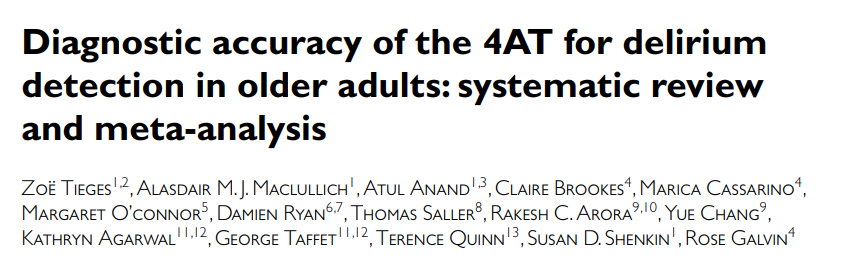
👁️ The 4AT has a comparable body of diagnostic test accuracy data to any other #delirium detection tool.
📗 Meta-analysis: 17 studies; 3702 observations
🔸 Sens = 88%
🔸 Spec = 88%
🔗 https://t.co/qwJGGjgSzb
Try offering extra space & time for conversations. Use silence to offer processing time. Match your facial expression to the person you’re listening to. Try offering the words they use back to them as a clear example of your active listening. #WithSLTuCan
Offering 1-1 mealtime assistance can be powerful & intimate. Set up the space by facing each other to ensure eye contact. Reduce background noise & distractions. Describe the meal, use smell as preparation. Watch carefully & follow their lead #WithSLTuCan
A great opportunity has come up to be the new Dementia Nurse Consultant in @NHS_Lothian. Having been the previous post holder I can vouch for what an amazing post this is. @patwynne70@almac1405 @gillian_mcauley @FionaIreland13@JulietMacArthur
https://t.co/lYXl3otCOo
Our heartfelt thanks to @alzscot for all your support over the last decade. In moving forward, we hope there will be many more opportunities for collaboration as we continue our work to improve the care experience for people living with dementia across Scotland.
It’s #International_Nursing_Day and I am privileged to have spent my career (and training!) working alongside some of the best of the bunch. Special shout out to the nurses at @AlzScotDNC and @AlzScotCPP and of course within @laura_dyane falls team!
Thanks to all teams who attended the final learning session for #Focusonhospitals yesterday.
Great to hear so many examples of teams improving person-centred care planning to reduce stress and distress for people with #dementia in hospital settings @stephenlithgow @AlzScotDNC