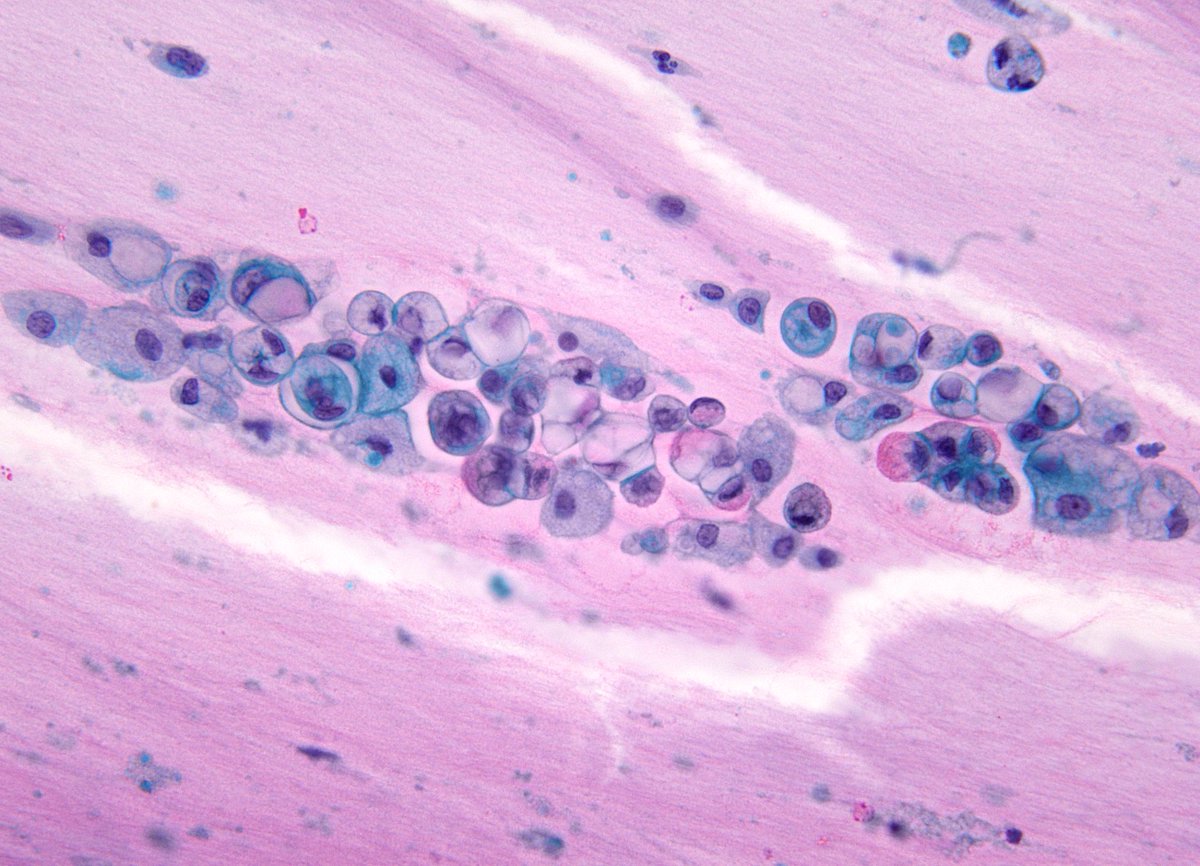
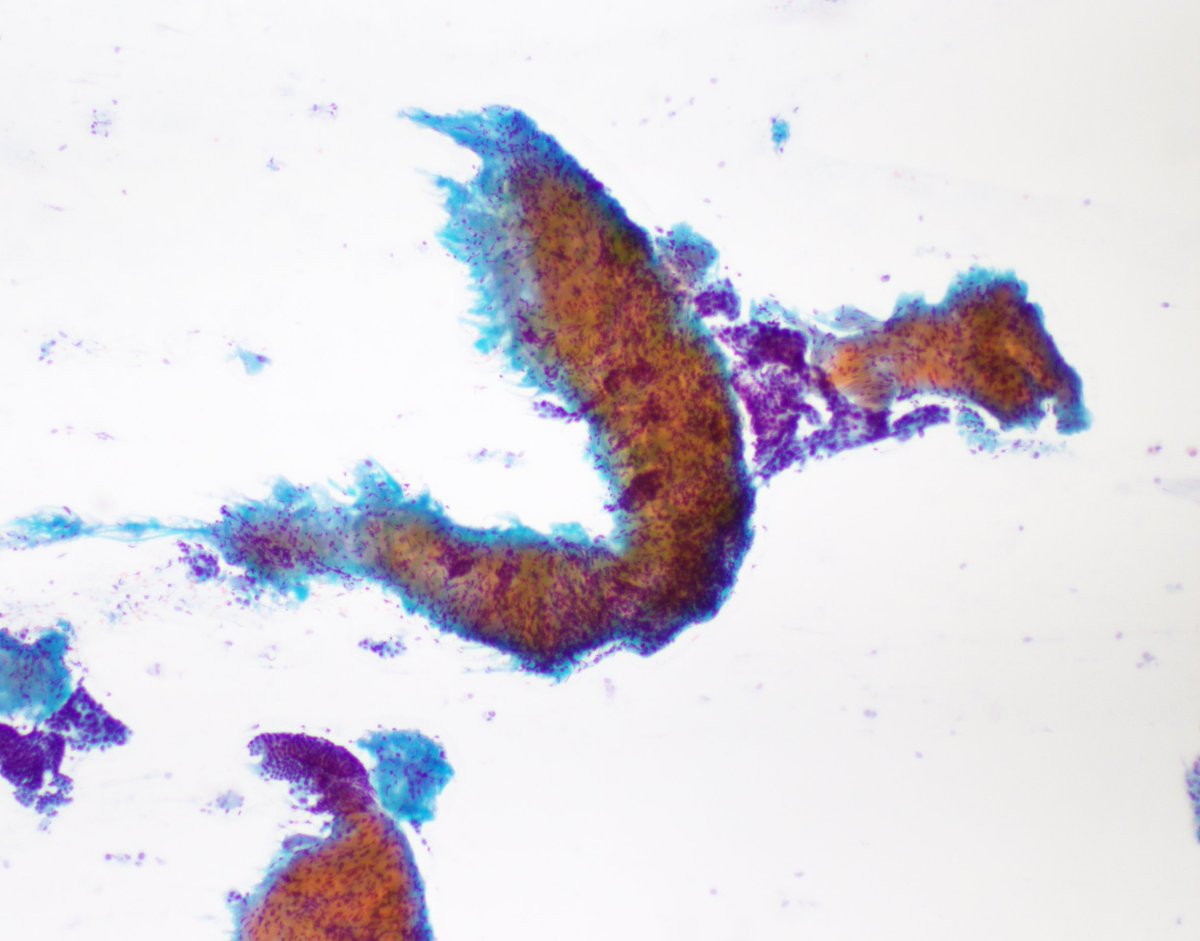
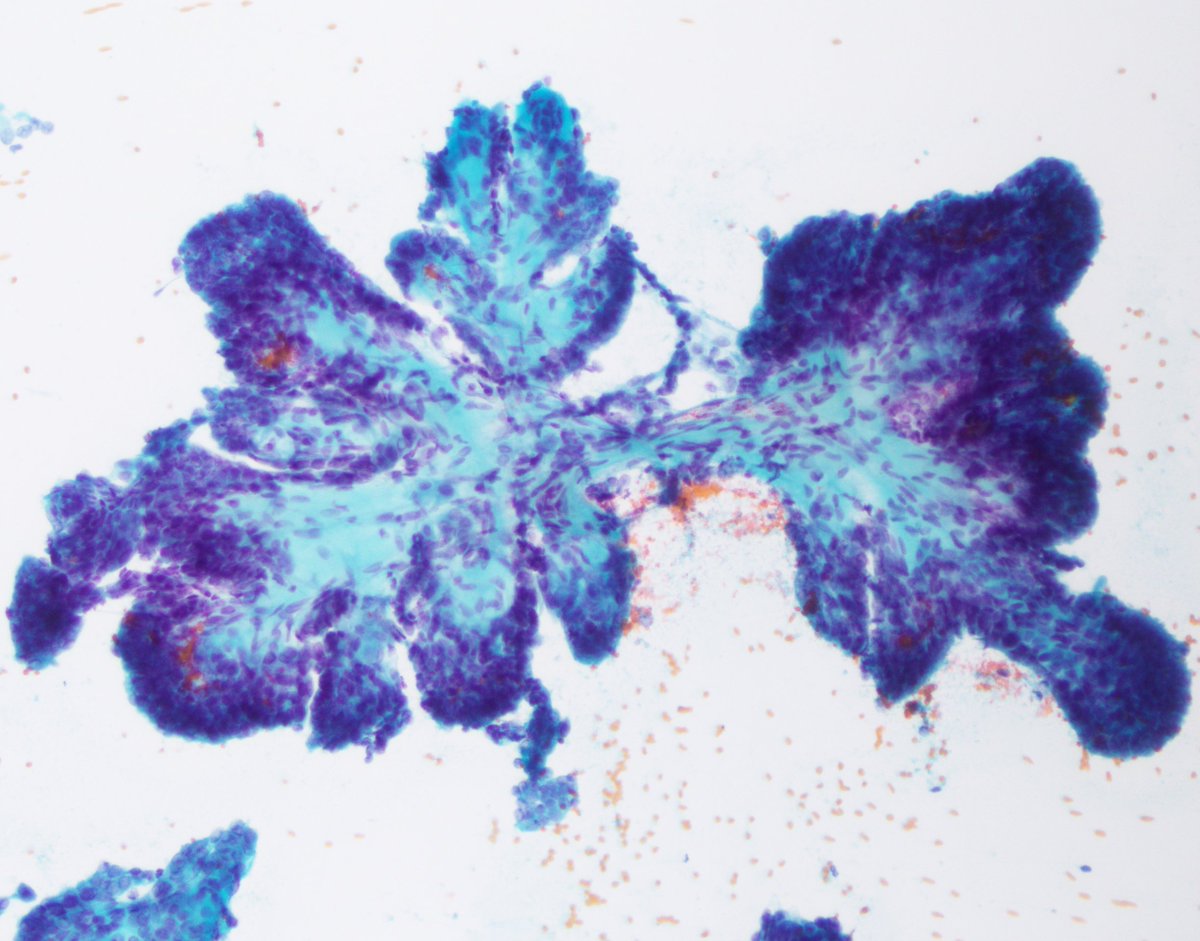
Without the intranuclear inclusions, these "oncocytoid" cells would have been a bit difficult to be called "Papillary Thyroid Carcinoma" on FNA. Follow-up, "PTC, Tall Cell Subtype".
Controversial but crucial: The new WHO Blue Books heavily rely on molecular diagnostics, tools inaccessible to up to 80% of the world’s population. Instead of addressing global inequality, they risk deepening it. Radical, inclusive change is urgently needed.
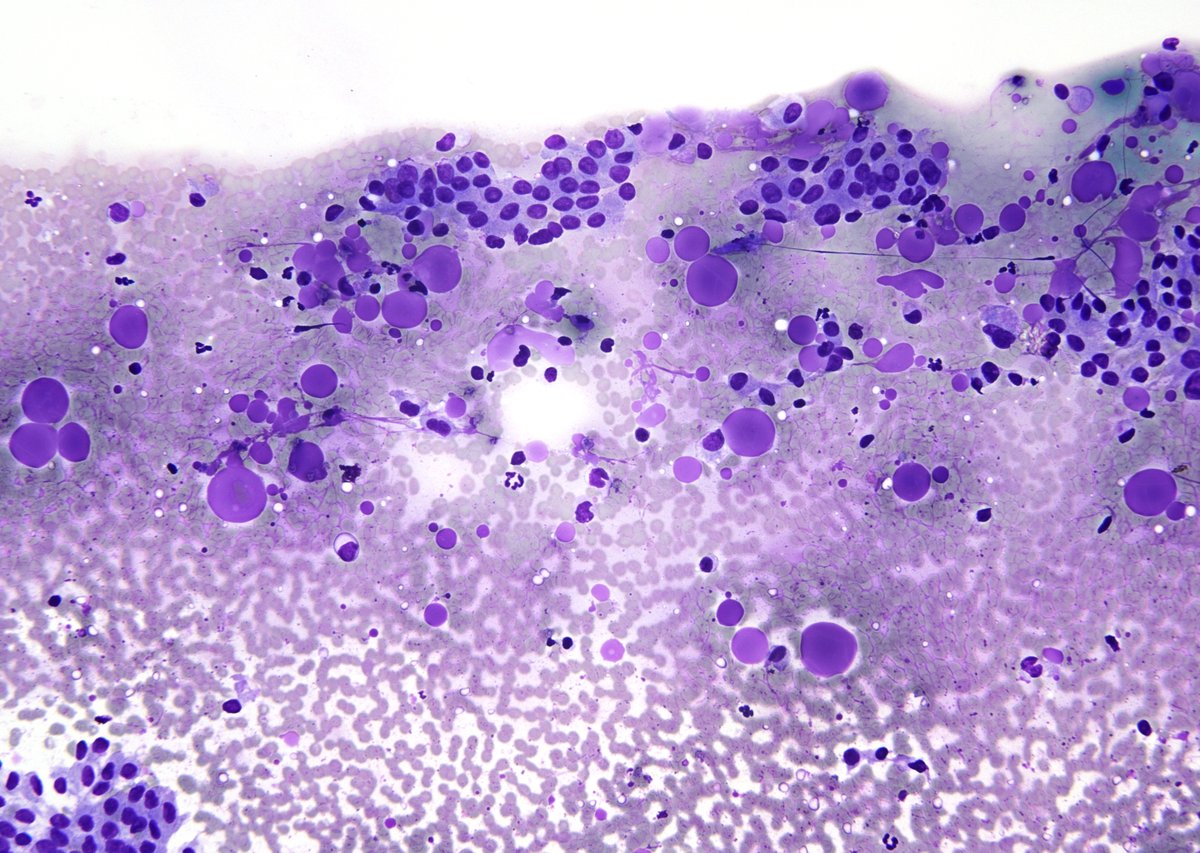
CC357. Long-standing hemopericardium. We talk a lot about molecular biology and very little about cell biology. One of those peculiar cytologic findings with no histological counterpart, so far @DrBMcGinn@kriyer68@kis_lorand@DrMarkOng
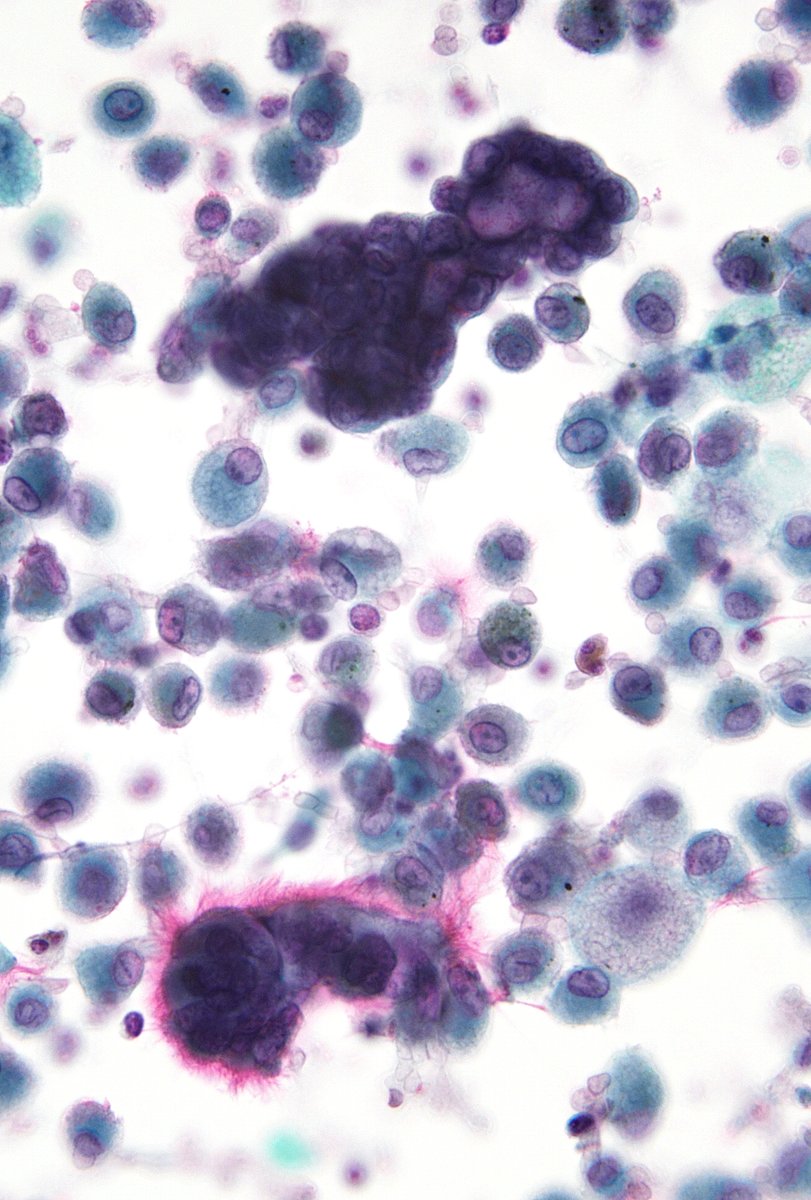
"Muciphages or mucinous epithelial cells?"
- that distinction is not always straightforward. The FNA diagnosis in this pancreatic cystic lesion was "Adenocarcinoma arising in an IPMN". Intact fragments (circle) help and are almost always consistent with an "epithelial" origin.
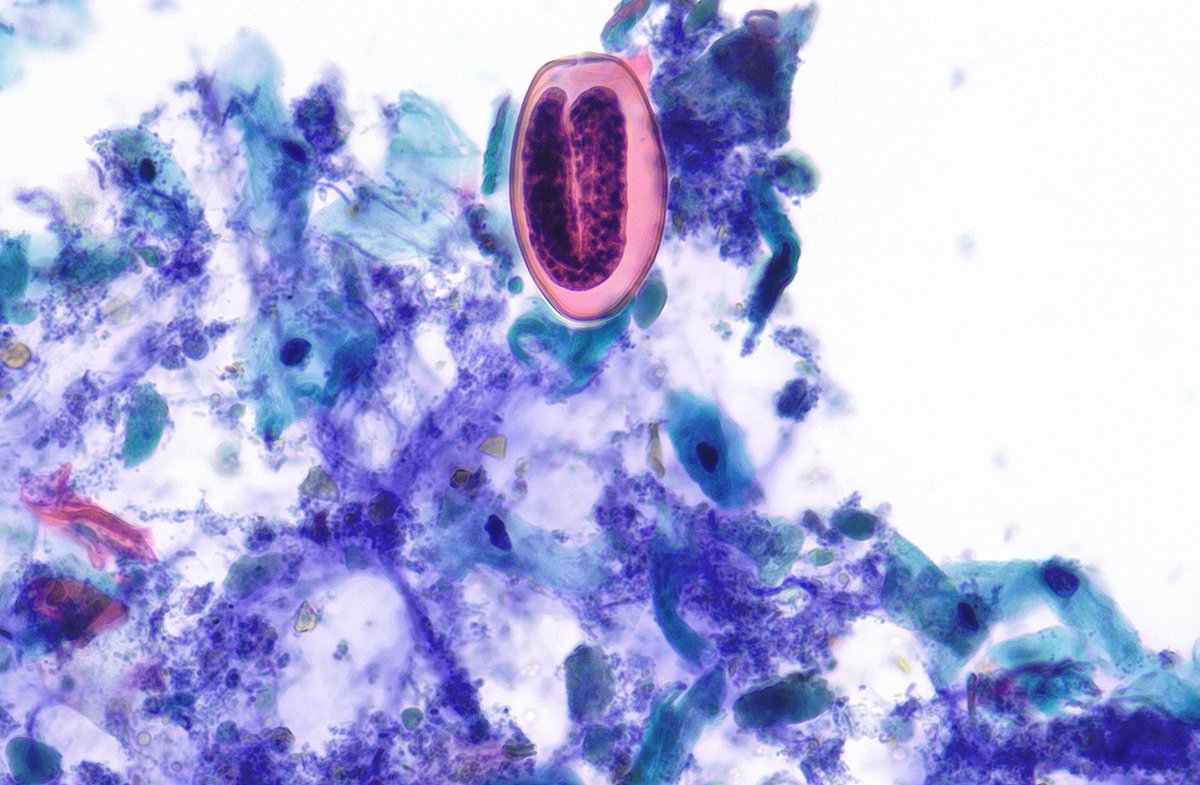
The #Parasite case 767 is now up: Objects found on anal Pap smear, measuring ~55 µm long. https://t.co/LqghkRJrpK. Answer later this week.
#mayopath#pathology#PathBugs
Non-keratinizing Squamous Cell Carcinoma in a PAP test can be harder to recognize as such. Extensive tumor diathesis (as seen here) is often the first clue. (SurePath LBP)
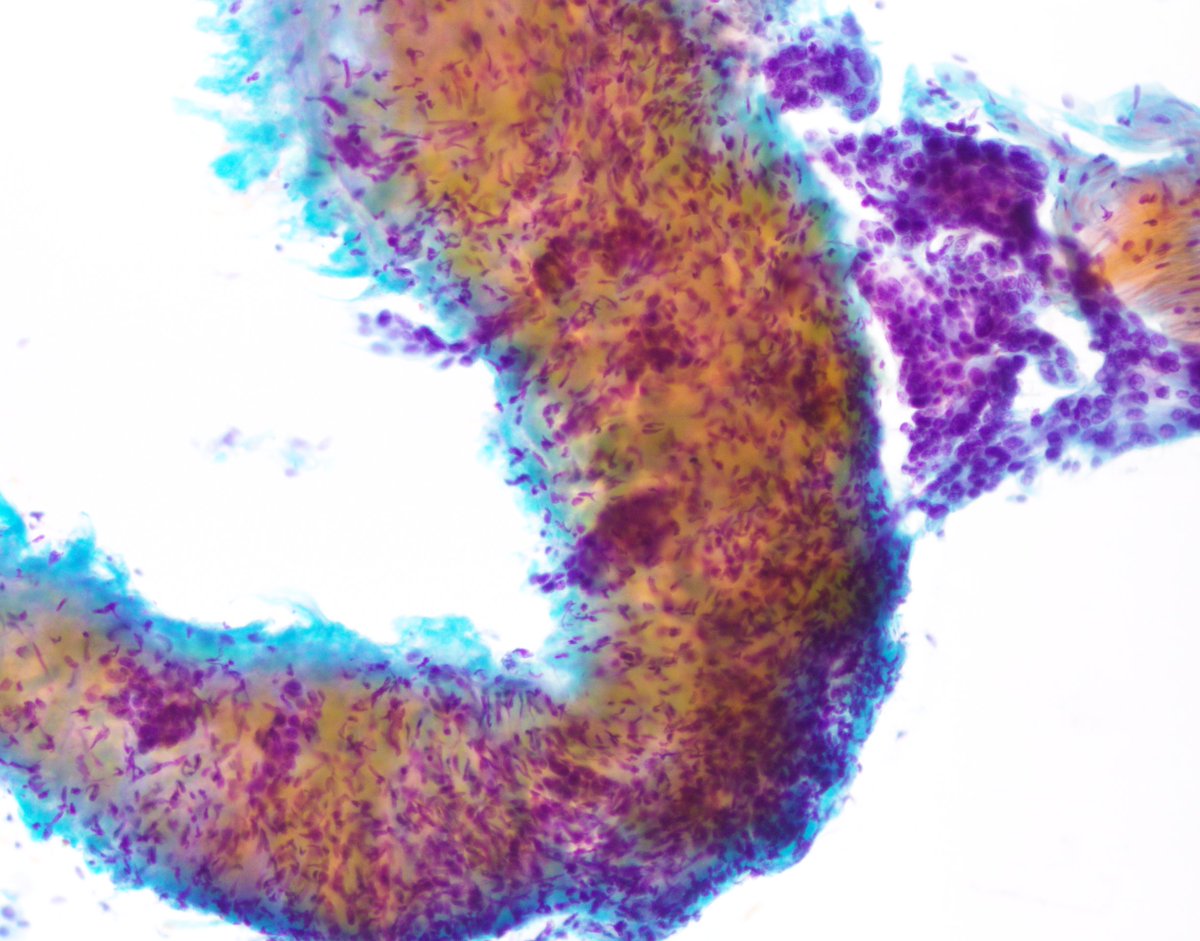
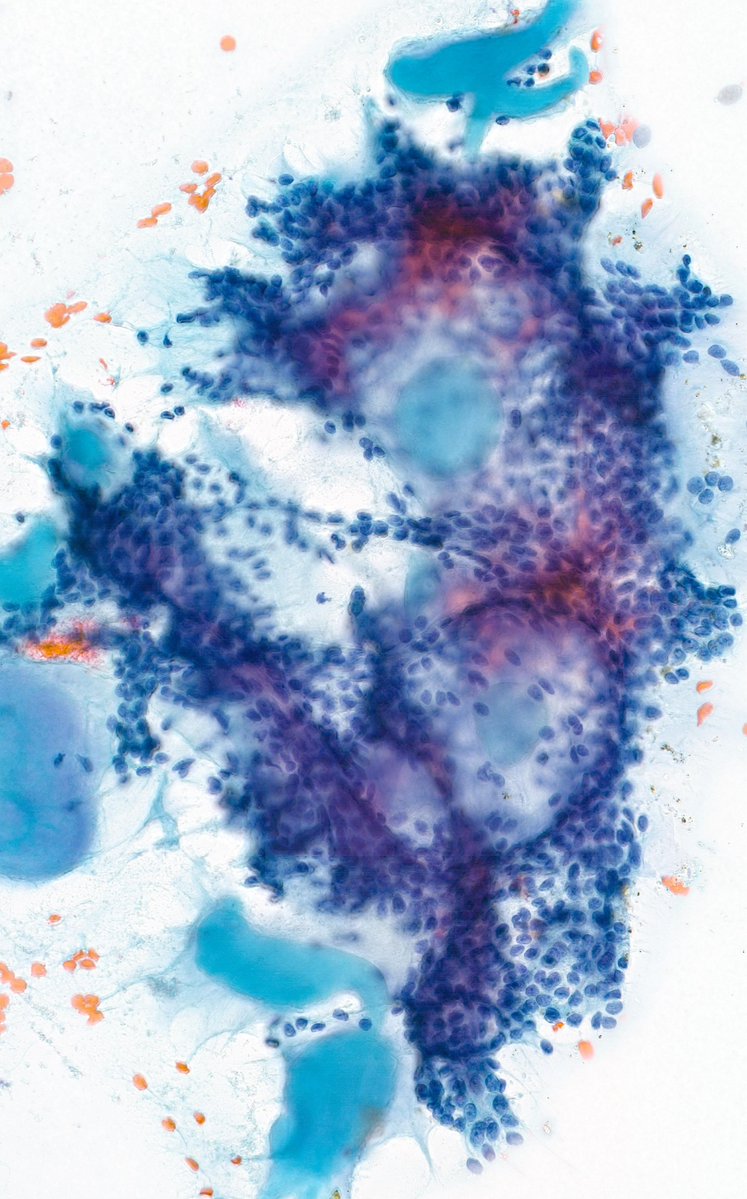
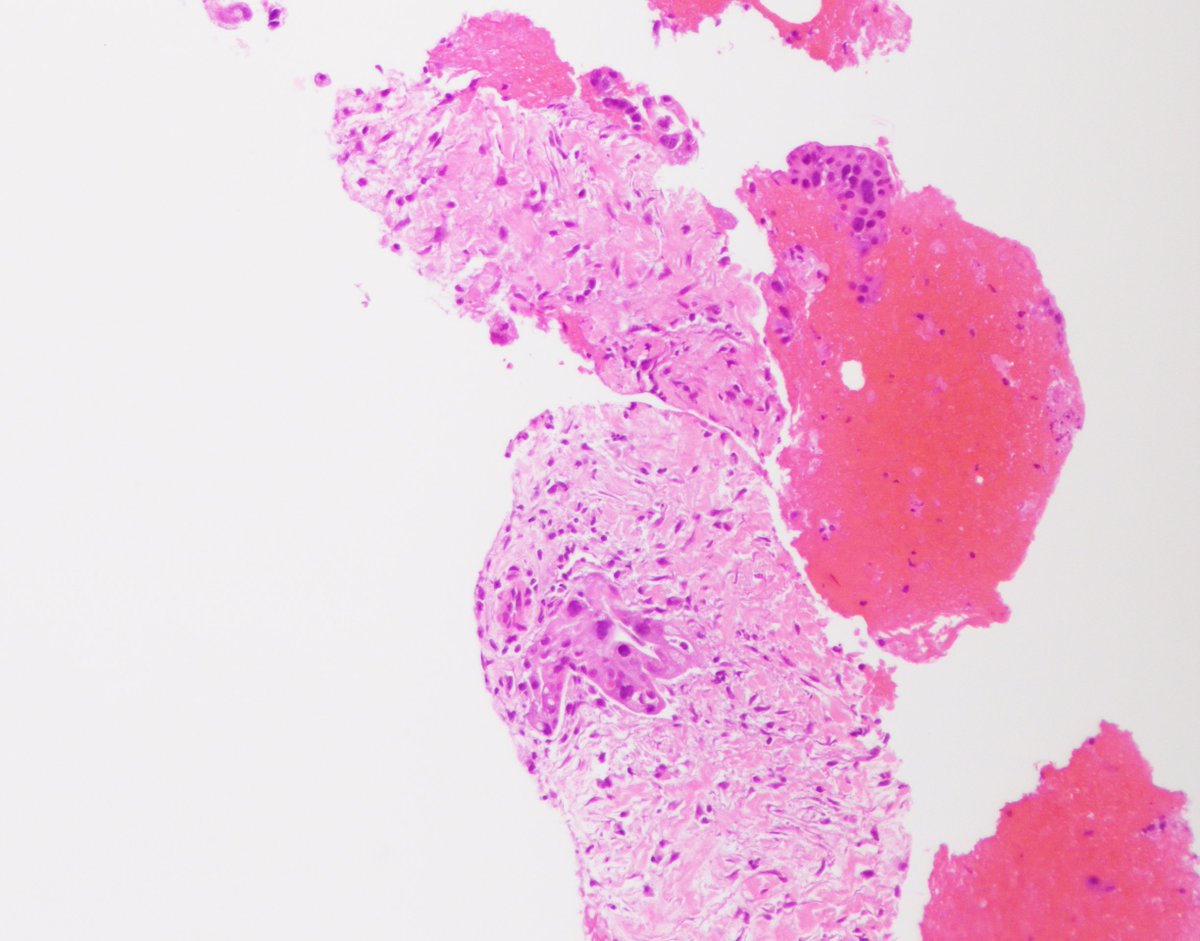
Here is a nice example of how on cyto preps of EUS directed fine-needle biopsies (EUS-FNB) you can see malignant glands coursing thru desmoplastic stroma and clinging at the edges. This is an advantage over traditional FNAs!
#CytoPath#PathTwitter
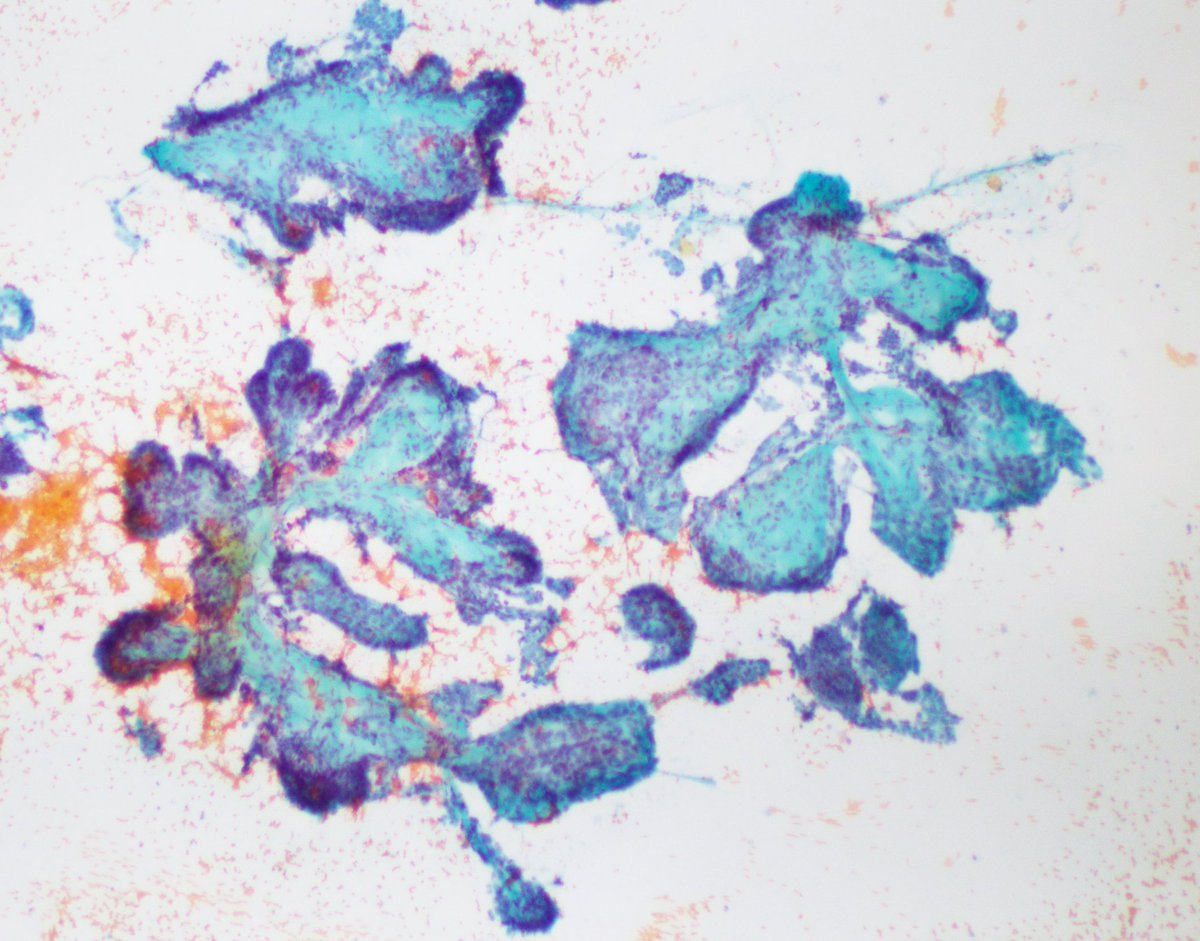
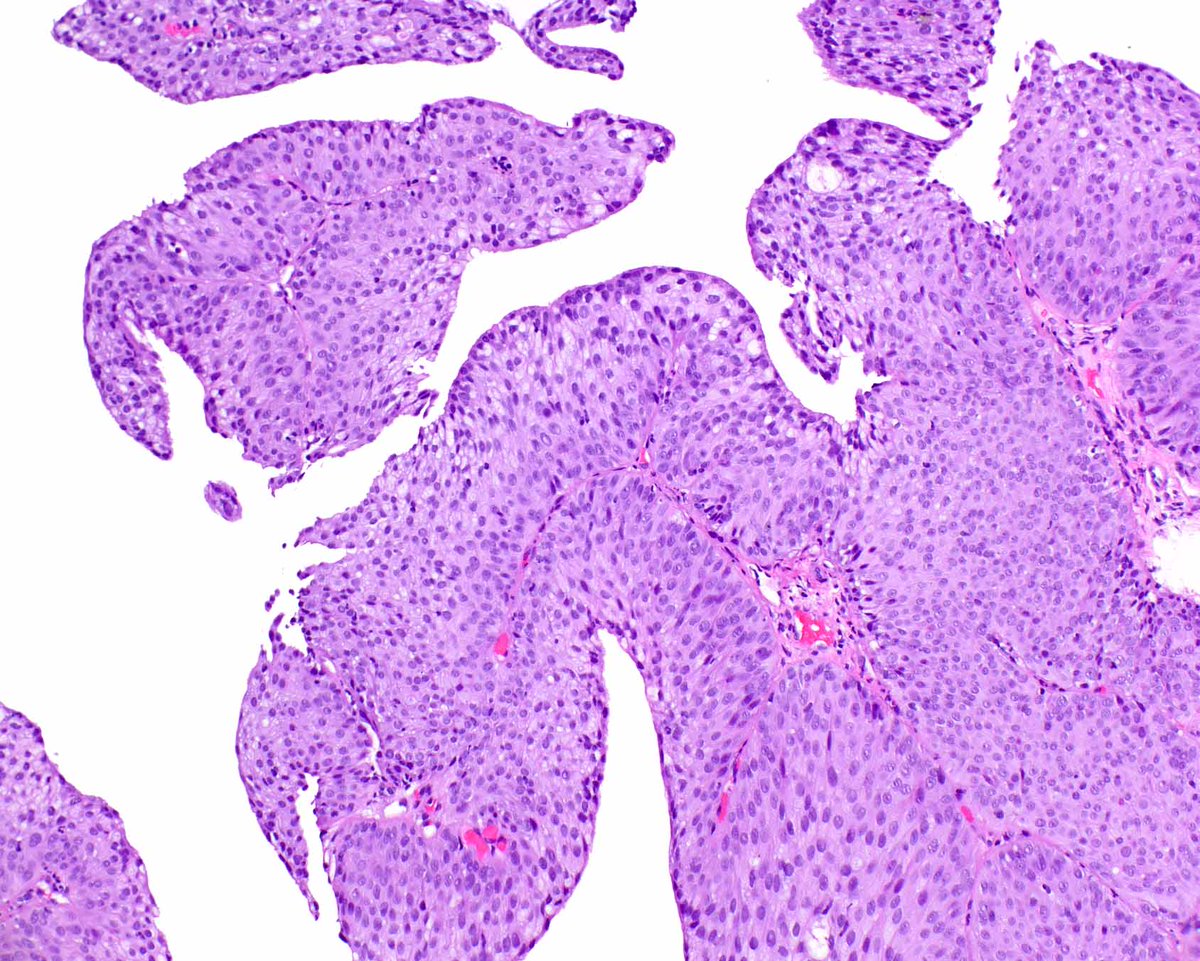
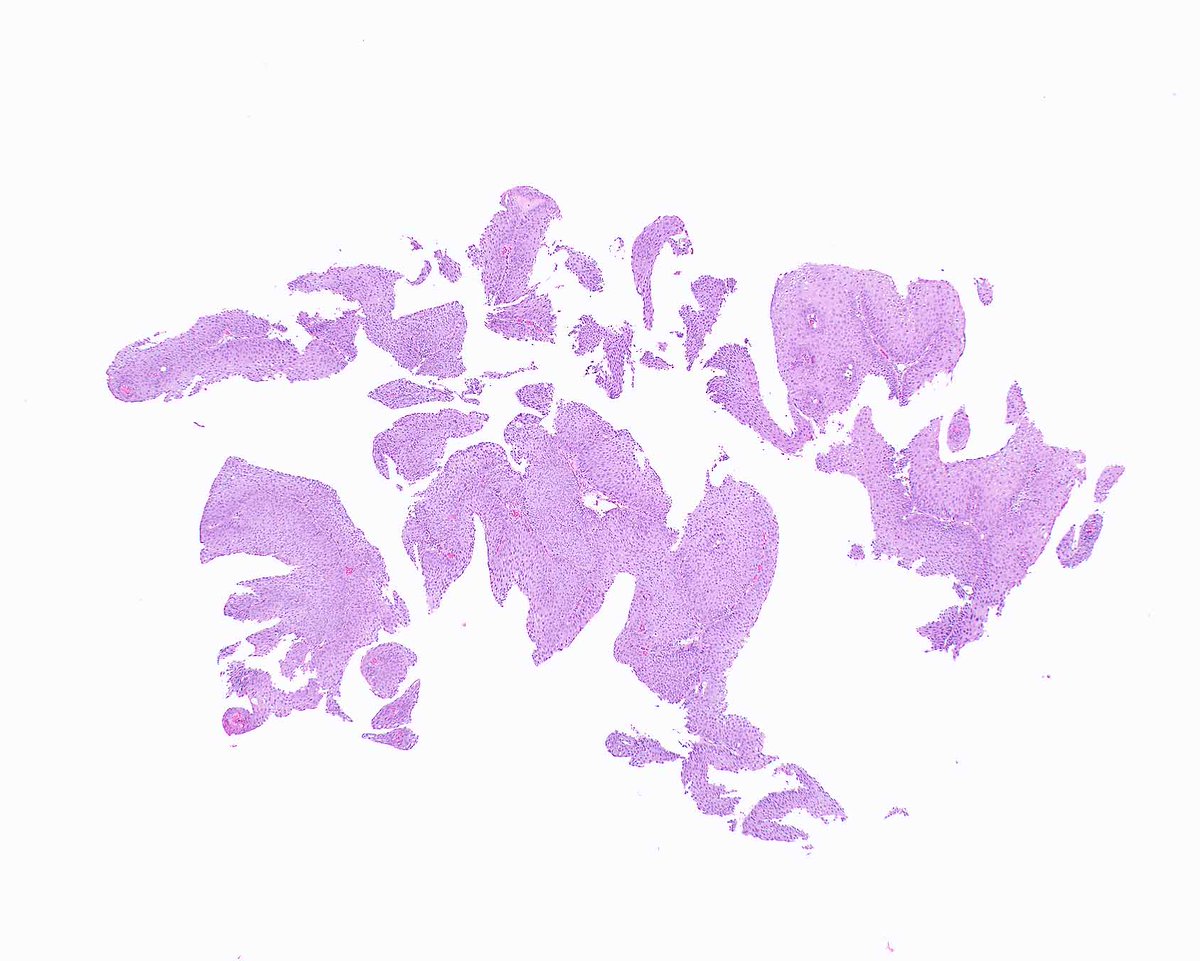
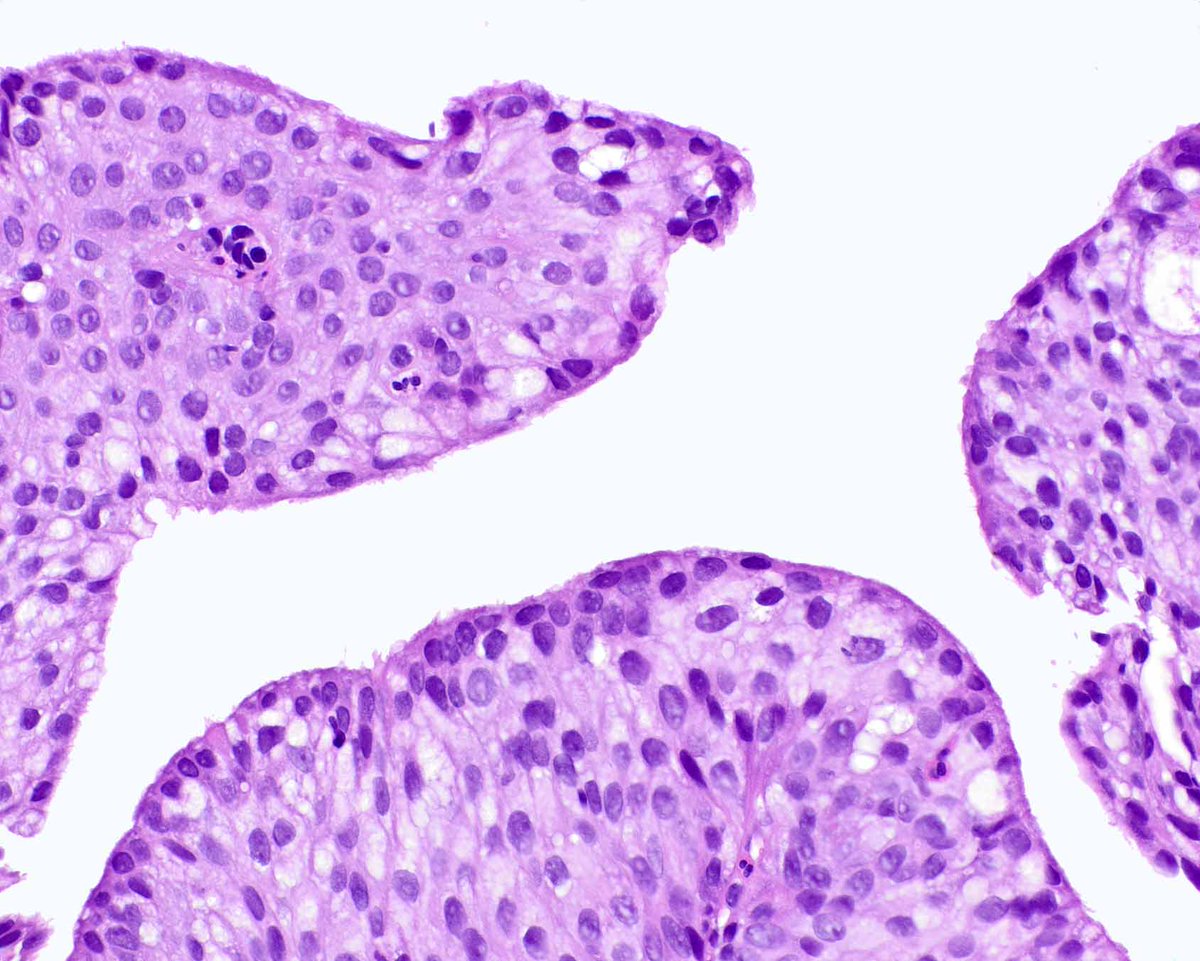
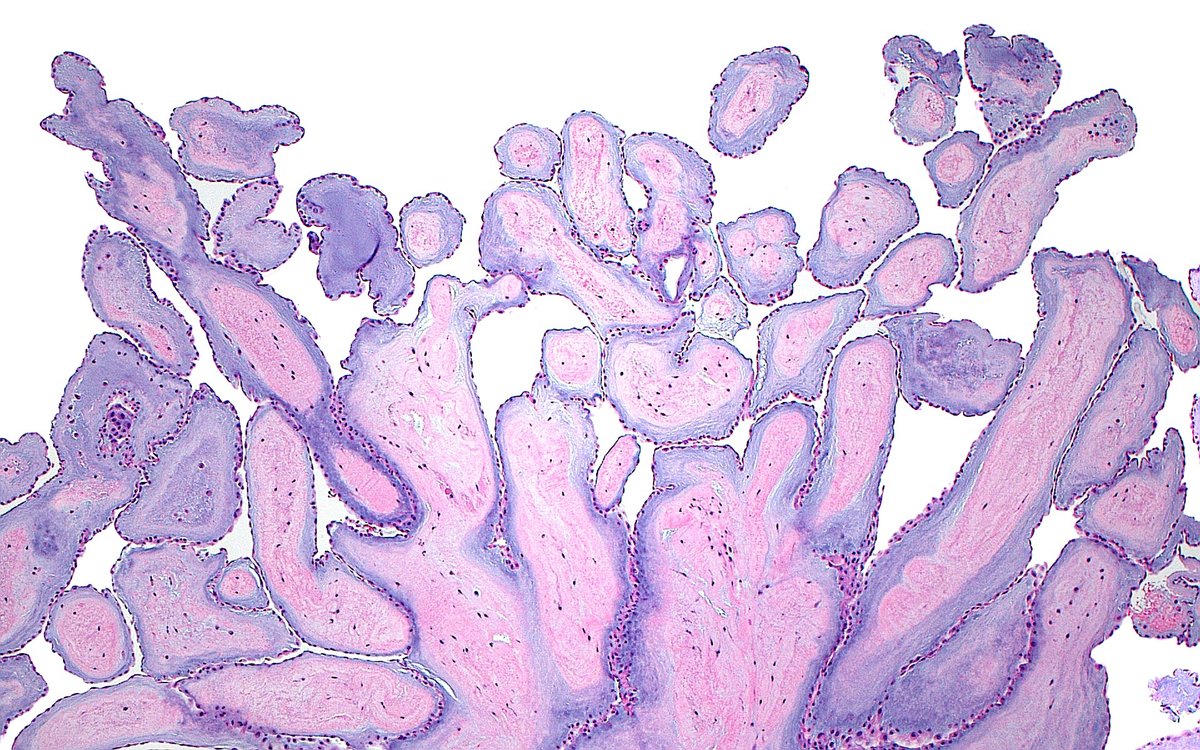
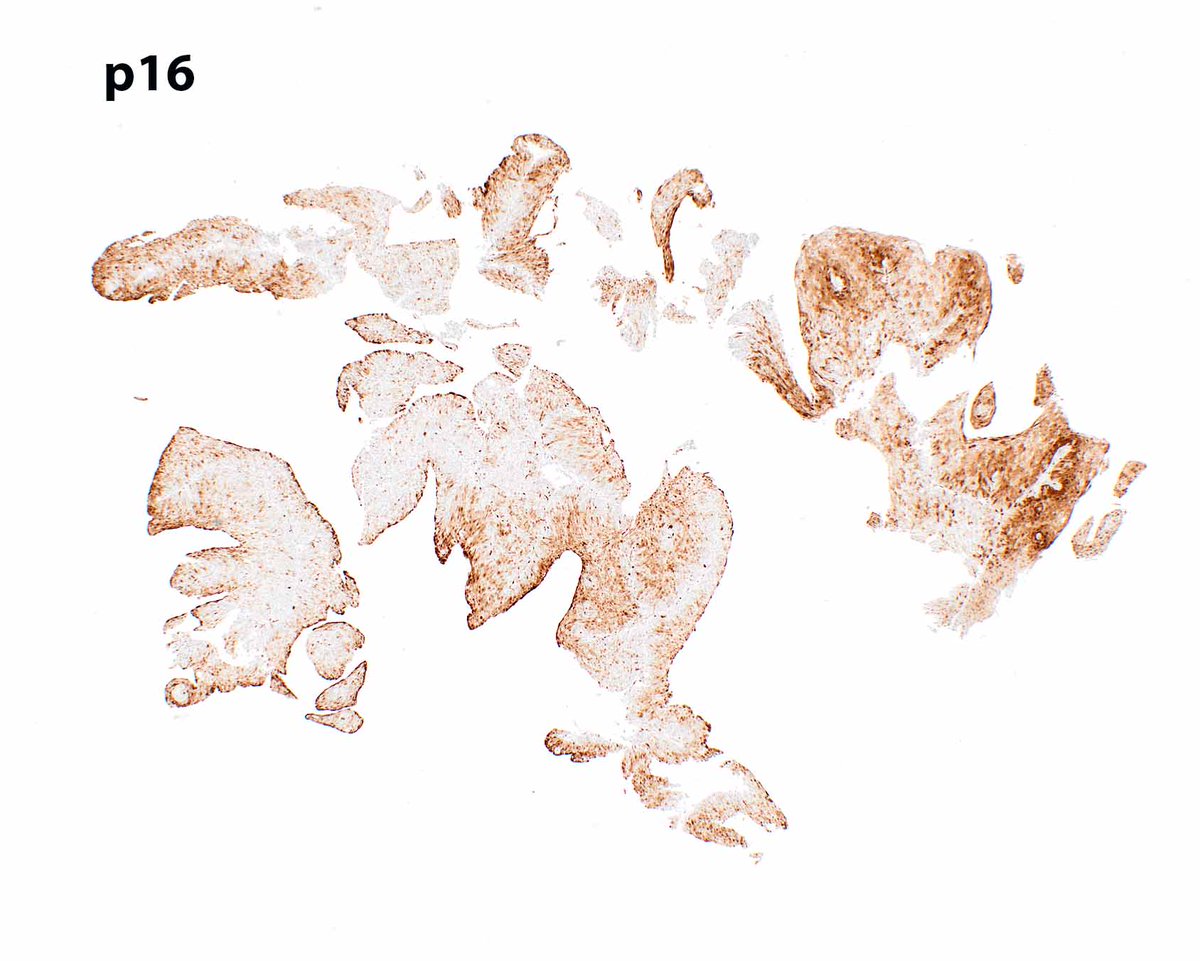
Papillary immature squamous metaplasia in anal transitional mucosa. It is essentially "AIN0.5"; it seems not to progress (although progression in AIN1/LSIL is rare) and is related low low-risk HPV. At low magnification it can mimic AIN2/HSIL. #UMiamiPath
PMID: 26551619.