@simon_ekpa@AloyEjimakor Playing a script from the criminal DSS playbook on dealing with IPOB is what I see here. @AloyEjimakor is the new victim in this plot. The Sit-at-Home shall continue & we take no such orders from the SSS purported to be #MNK's. @simon_ekpa is staying the course via this struggle
AFTER 2 WEEKS WITH BANDITS, SHE PREFERRED D£@TH TO RANSOMED FREEDOM
A 23-year-old girl—barely an adult, still full of dreams—was kidnapped by bandits. They demanded 50 million naira. Her family begged, pleaded, and cried for mercy. The bandits refused to reduce a single kobo.
For two weeks, her father fought like a lion. He borrowed, sold, and bled dry to raise every kobo. Finally, he had the 50 million. He called them, desperate to hear his daughter’s voice one more time before paying.
She came on the phone, instead of begging to be saved, she told her father: “Don’t pay. I will kill myself if they release me.”
Because for fourteen days—fourteen unthinkable, merciless days—those monsters had been raping life out of her over and over. Daily. Hourly. Destroying her soul while she was still alive.
When the bandits heard what she said, they put a bullet in her head. Then they sent her family the video and pictures of her final moment on earth.
She was murd£r£d—after being tortured in ways no human being should ever suffer.
This is not about politics anymore. This is about our humanity. This is about mothers who will never hold their daughters again. Fathers who gather ransom only to receive a corpse. Young girls who go to sleep terrified that tonight might be their turn.
May grief never leave the door of those that brought Nigeria to this point and may the pain they ignore today find them a million times over tomorrow.
(A heartbroken Nigerian)
What are you buying from me today?
Your Atrai, Hijet buses and shuttle trucks are available.
Super sparking clean..
Direct from Japan.
Offloaded yesterday..
Retweet my business bikonu...
During the genocide against the Ndigbo, I was 9 years old. The federal troops started killing my community Our parents started telling us to make sure we deny being Igbo wherever we go if we must stay alive. That was how we started to deny being Igbo.
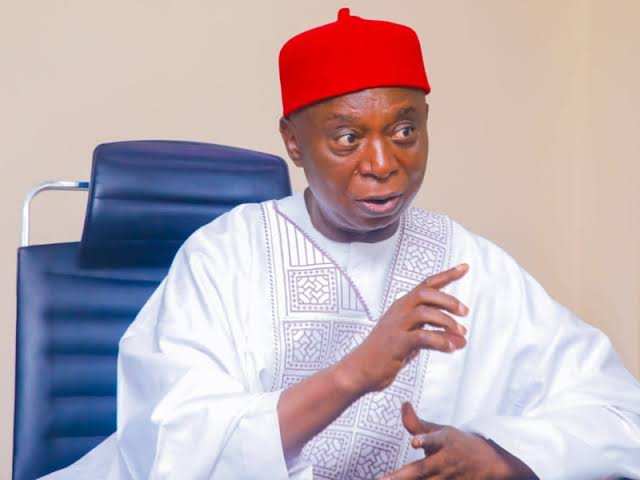
🗣️~ Senator Ned Nwoko cried out.
Here's our latest ministry update. Thank you to all our supporters -- we are making a difference and saving lives! Please help us do more.
https://t.co/rNy1K5nPtl
Lady reveals the condition of a Primary Health Centre in Ukala-Okwute, Oshimili North LGA, Delta State.
The project was awarded and paid for under Former Governor Ifeanyi Okowa. But this is where they left it at.✍️
The Sokoto Caliphate as the Largest Single-Entity Enslaver of Free Black Africans in Recorded History
A Brief for Skeptics
Summary of the Claim
Over the course of its 222-year operational history (1804–present), the Sokoto Caliphate has captured and enslaved more free Black Africans than any other entity in recorded history. Conservative cumulative estimate: approximately 10 million people. Higher-end estimates: 12-15 million. The institution remains operative in 2026 through its successor armed networks — Boko Haram, ISWAP, the Fulani militias, Lakurawa, Ansaru, and others operating under its theological and political framework.
A critical clarification at the outset: the trans-Atlantic slave trade was not an enslaver. It was a buyer's market. European ships at coastal forts in Lagos, Ouidah, Elmina, Bonny, and Calabar purchased people who had already been enslaved by African polities. The actual capturing of free Africans was always done by African enslaving entities. Among those — among the actual enslavers — the Sokoto Caliphate is the largest in recorded history.
This brief lays out the documentary basis for the claim, addresses common objections, and provides comparative context.
The Foundational Numbers
Peak enslaved population (snapshot, late 19th century): Approximately 2 million people, representing roughly 50 percent of the Caliphate's total population. The dominant scholarly authority on this figure is Paul E. Lovejoy, whose Transformations in Slavery: A History of Slavery in Africa (Cambridge University Press, 2nd ed. 2000; 3rd ed. 2011) remains the standard reference. Lovejoy ranks the Sokoto Caliphate as one of the largest slave societies in modern history by peak holding — comparable in scale to the American South.
The 50 percent proportion is itself a superlative. The American South at its peak (1860) held approximately 32 percent of its Deep South population in slavery. Brazil's peak proportion was lower. No major slave society in modern recorded history is documented to have held a higher proportion of its own population in chattel slavery than the Sokoto Caliphate.
From Snapshot to Cumulative Total
The 2 million peak figure is a holding at one moment. Cumulative slave-taking across the Caliphate's operational history is substantially larger, because:
Mortality. Plantation conditions in Sokoto's gandu and rinji estates produced documented high mortality rates. Lovejoy, Transformations, ch. 6, addresses this. Replacement captures were continuous.
Trans-Saharan export. Annual exports of 3,000 to 6,000 captives per year, sustained over approximately a century, yield 300,000 to 600,000 people exported north to North African, Ottoman, and Arabian markets. See Ralph A. Austen, African Economic History: Internal Development and External Dependency (Heinemann, 1987), and Austen, Trans-Saharan Africa in World History (Oxford, 2010).
Continuous raiding. The Caliphate's slave economy ran on annual raiding expeditions into surrounding non-Muslim communities. Each year of operation produced fresh captures to maintain plantation labor and export streams.
Operational duration. 99 years before British conquest (1804-1903), plus 123 years of operationally continuous successor activity through emirate structures, Boko Haram, ISWAP, Ansaru, the Fulani militias, Lakurawa, and other groups (1903-2026).
Applied across the full operational lifespan, the cumulative number of free Black Africans captured and enslaved by the Sokoto Caliphate and its operational descendants reaches approximately 10 million people as a conservative estimate. Higher-end estimates approach 12-15 million.
Sources: Lovejoy, Transformations in Slavery; Austen, Trans-Saharan Africa in World History; Robin Law, The Oyo Empire, c. 1600-c. 1836 (Oxford, 1977); Joseph C. Miller, Way of Death: Merchant Capitalism and the Angolan Slave Trade (University of Wisconsin Press, 1988); John Hunwick, Arab Views of Black Africans and Slavery (UCLA, 2000).
Anticipating Objections
Objection: "The Atlantic slave trade enslaved more people."
Response: This is a category error. The Atlantic slave trade did not enslave anyone. It was a buyer's market. European ships at coastal forts in Lagos, Ouidah, Elmina, Bonny, and Calabar purchased people who had already been enslaved by African polities. The actual capturing of free Africans was done by Dahomey, Oyo, Asante, Kongo, Lunda, the Aro Confederacy, the Sokoto Caliphate, and others — who marched captives to the coast and sold them. The 12.5 million figure commonly cited for the Atlantic trade is a transportation total, not an enslavement figure. Those 12.5 million people were already enslaved when they reached the ships. The Atlantic trade is therefore not a competing enslaver. Among the actual enslavers — the African polities that captured free people — the Sokoto Caliphate leads by every measure.
Objection: "Mali ran longer, so it must have enslaved more cumulatively."
Response: Mali operated for ~435 years, but the surviving documentation indicates that Mali's slave operations ran at substantially lower intensity per year than Sokoto's. The trans-Saharan trade volume was a fraction of what Sokoto sustained at its 19th-century peak. Even with the longer duration, Mali's cumulative total is estimated by Austen and Hunwick at 2-4 million, well below Sokoto's 10 million estimate.
Objection: "The 50 percent enslaved figure is an exaggeration."
Response: It is Lovejoy's own conservative estimate, based on direct demographic and economic documentation from the Caliphate's own administrative records. Lovejoy is the dean of this field. See Transformations in Slavery, 3rd ed., chapters 6-7.
Objection: "The Caliphate ended in 1903 when the British conquered it."
Response: The official political-military structure was conquered. The throne, the spiritual authority, the emirates, the religious framework, and the slave-taking practices were preserved by the British under the doctrine of indirect rule. The current Sultan, Muhammad Sa'ad Abubakar III, is a direct lineal descendant of the founder Usman dan Fodio through Muhammad Bello, the second caliph. The institution has been operationally continuous for 222 years. Modern slave-taking by Boko Haram, ISWAP, Ansaru, the Fulani militias, and Lakurawa operates within the same theological framework and geographic territory the original Caliphate established. The 2,000+ children kidnapped in mass school raids since 2014 (Amnesty International), the documented sexual slavery of captured women, and the modern slavery population of 1.6 million Nigerians (Walk Free Global Slavery Index 2023) are continuations of the same institution.
Objection: "You cannot count modern Boko Haram or ISWAP as 'the Sokoto Caliphate.'"
Response: They are not the Caliphate itself. They are its operational descendants, operating under its theological framework, in its geographic territory, and with its political authority structure (the Sultan, the emirs, the JNI, and the NSCIA) presiding in silence above them. The historical continuity is documented in: Murtala Ahmed Rufa'i, James Barnett, and Abdulaziz Abdulaziz, North Western Nigeria: A Jihadization of Banditry, or a 'Bandization' of Jihad? (Hudson Institute / Council on Foreign Relations, 2022); M. A. al-Hajj, The Thirteenth Century in Muslim Eschatology: Mahdist Expectations in the Sokoto Caliphate (University of Ibadan Research Bulletin, 1967); and ongoing reporting by the Combating Terrorism Center at West Point.
The Strongest Defensible Claim
>> Across its 222-year operational history, the Sokoto Caliphate and its operational successor networks have captured and enslaved more free Black Africans than any other entity in recorded history. Cumulative enslavement: approximately 10 million people. The institution remains operative today. <<
The European Atlantic trade was not an enslaver — it was a buyer of people enslaved by Africans. Among the actual enslavers, no other single entity comes close to Sokoto's totals, intensity, or operational duration. Every clause is defensible. Every figure is sourced. Sokoto sits at the top of the list of single-entity Black-African enslavers by every measurable axis: peak holding, proportional concentration of its own population, and cumulative captures across operational lifetime.
Primary Sources
Paul E. Lovejoy, Transformations in Slavery: A History of Slavery in Africa, 3rd edition (Cambridge University Press, 2011).
Paul E. Lovejoy, Slavery on the Frontiers of Islam (Markus Wiener, 2004).
Ralph A. Austen, African Economic History: Internal Development and External Dependency (Heinemann, 1987).
Ralph A. Austen, Trans-Saharan Africa in World History (Oxford University Press, 2010).
John O. Hunwick, Arab Views of Black Africans and Slavery (UCLA James S. Coleman African Studies Center, 2000).
Robin Law, The Oyo Empire, c. 1600-c. 1836: A West African Imperialism in the Era of the Atlantic Slave Trade (Oxford University Press, 1977).
M. A. al-Hajj, "The Thirteenth Century in Muslim Eschatology: Mahdist Expectations in the Sokoto Caliphate," Research Bulletin, Centre of Arabic Documentation, University of Ibadan, Vol. 3, No. 2 (July 1967), pp. 100-105.
Murtala Ahmed Rufa'i, James Barnett, and Abdulaziz Abdulaziz, North Western Nigeria: A Jihadization of Banditry, or a 'Bandization' of Jihad? (Hudson Institute, 2022).
Walk Free Foundation, Global Slavery Index 2023, country profile: Nigeria.
Amnesty International, Nigeria: Boko Haram Abductions and Forced Marriages, multiple reports 2014-2025.
U.S. Department of State, 2024 Trafficking in Persons Report, country narrative: Nigeria.
Prepared for editorial reference. All figures cited are conservative within the published scholarly range. Higher-end estimates approach 12-15 million cumulative.
#EarthShaker
For those wanting the full picture on the BBC doc “Surviving Biafra”:
I encourage everyone to watch this film. Not because it is perfect or encyclopedic, but because it raises awareness—in a sensitive, human way—of a massive injustice buried for decades.
My prior review noted it leaves much unsaid. In those gaps, you see the director’s inherited bias toward the federal side (grandson of a senior federal officer featured prominently). I don’t see it as propaganda or deliberate falsehoods, but a flawed push for “balance” where the truth is far more one-sided.
An honest viewer will finish with eyes opened, genuine horror, and questions. Here’s a guide to exploring those questions:
1. The Asaba Massacre (Oct 1967): Federal troops slaughtered hundreds of unarmed Igbo civilians (men/boys in white, pledging loyalty to “One Nigeria”). Early war atrocity that fueled secession fears. Why omitted?
2. The Aburi Accord betrayal (Jan 1967): Last chance for peaceful confederation/autonomy after northern pogroms. Gowon reneged. Biafra didn’t rush to exit—they tried negotiation first.
3. The Blockade & British Oil Calculus: Deliberate starvation policy (as many as millions of children via kwashiorkor). Britain backed Nigeria for Shell-BP oil interests. Not neutral—complicit in the famine.
4. The Same Drivers Today: This wasn’t isolated. Same jihad patterns, impunity, resource grabs, and genocidal intent continue in the Middle Belt—targeted Christian killings, church burnings, land seizures (Intersociety: ~185k dead, ~20k churches destroyed since 2009). Biafra’s Hidden Holocaust echoes now.
5. Religious Underpinnings: The violence wasn’t just political or ethnic. It fits classical Islamic jihad doctrine—conquest, subjugation of Christians (jizya while humbled, Dar al-Islam vs. Dar al-Harb), and Sokoto Caliphate continuity. Pogroms, blockade, and ongoing Middle Belt attacks reflect the same unreformed ideology.
6. Were the Biafrans “Rebels”? No. They were a persecuted people exercising self-defense and self-determination after northern massacres, failed accords, and existential threat. Labeling them “rebels” delegitimizes their response while whitewashing federal aggression.
7. Who Fired First? Federal Nigerian troops. The first shots of the war were fired on July 6, 1967, by federal forces (under Operation Unicord) at Gakem/Garkem in Biafran territory. Biafra declared independence on May 30 after years of pogroms and broken promises—this was invasion — a peaceful people, shackled to a blood thirsty caliphate against their will, who tried to negotiate coexistence, but were betrayed and slaughtered — not rebellion.
Watch it. Wrestle with it. Then join the real conversation.
#EarthShaker
https://t.co/Wl3CfBiR0c
Security guards and workers leak intel too. The meeting happened in Lagos at Tinubu’s residence and also had stipulations like introducing Sharia Law across the country. Tinubu strategically placed Osibanjo as Buhari’s VP due to his influence. Everything Buhari did, was under the advice and supervision of Tinubu. Buhari’s economy is also Tinubu’s economy. You can’t separate the two leaders. Till now their guards leak intel and even have spies working for other international intelligence agencies. Everyone has a file sheet.
UPDATE: On our way to Kuje to stand trial for daring to protest for the release of MAZI NNAMDI KANU in October last year. Today, they must SHOW ME THE LAW we violated. #UnfairTrial.