Most people first meet crypto through charts, prices and trading.
But a crypto card shows a different side of the market: everyday use.
With @binance Card, eligible users in supported markets can use supported balances for normal spending such as shopping, food, travel and online payments, subject to the applicable Card terms.
What matters to me is the payment flow.
Before using any crypto card, I would still check which asset is being spent, whether conversion applies, what fees may be charged, and whether the purchase is eligible for any available rewards.
That small check can matter more than the card itself.
Crypto utility becomes more meaningful when digital assets can move beyond an exchange screen and fit into real daily spending.
Availability, features and eligibility vary by region.
Educational only. DYOR.
#Binance #BinanceCard #LearnWithBinance
This is truly the kind of room you want to see around an RWA launch
Big institutions
Real capital
Real infrastructure coming together on @ZIGChain
And if that revenue keeps flowing back into $ZIG buybacks
Then the next cycle could get very interesting.
The part I’d watch in the Gate × CNPY campaign isn’t just the reward pool it’s the $BTC prediction side.
There are basically two ways to participate:
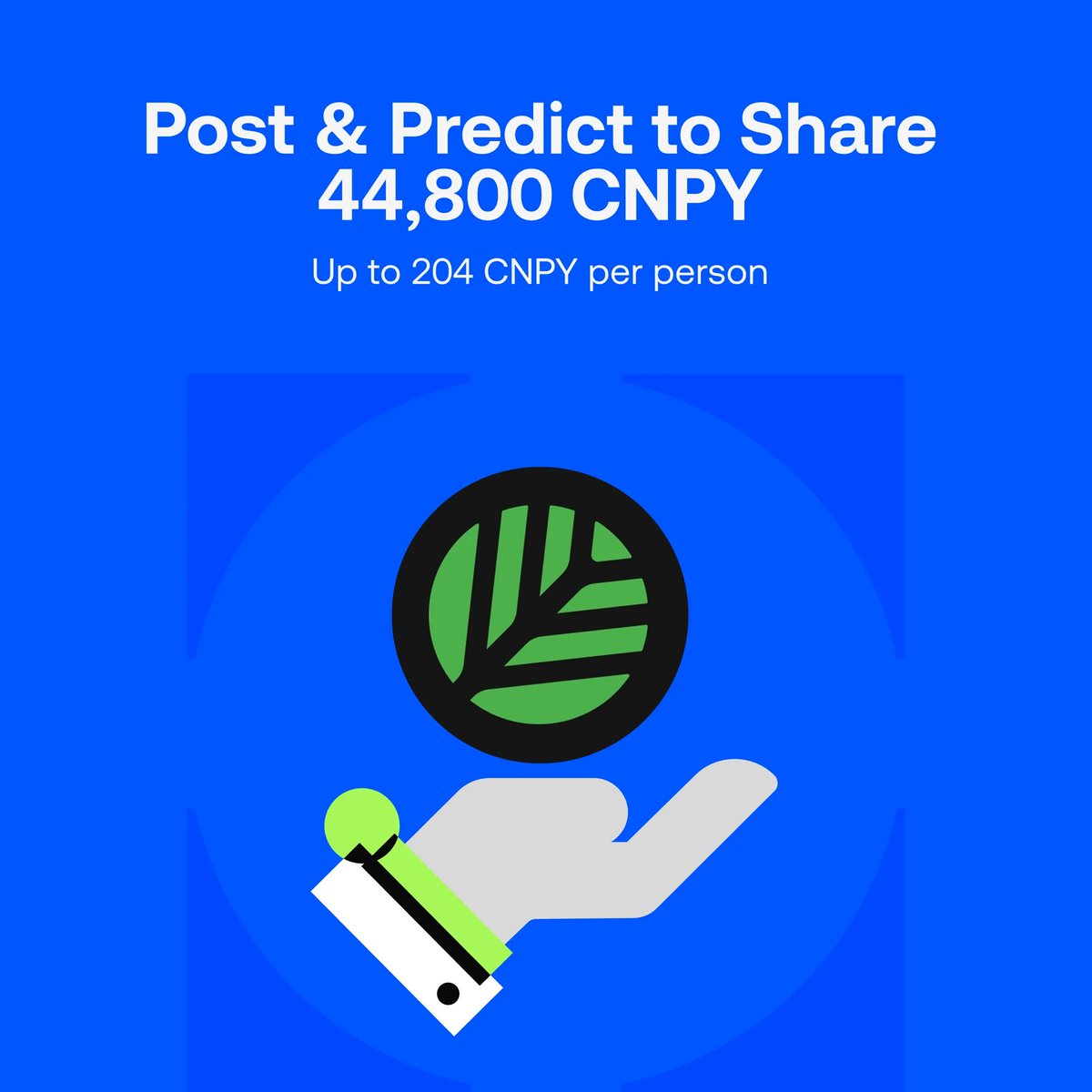
The CandyDrop content campaign has a 44,800 CNPY pool, with eligible posts able to earn 160 $CNPY under the campaign rules.
Then there’s the market call.
You submit your BTC price prediction for Sep 18 at 12:00 UTC, and the closest eligible predictions can compete for additional rewards.
My call: $BTC at $76,430
That makes this more interesting than a normal “post and earn” campaign because your market view actually becomes part of the participation.
If you’re joining, I’d check the eligibility, posting requirements and prediction rules carefully before submitting anything.
Campaign link:
https://t.co/UWmepr6U7D
#GateBooster #CandyDrop #CNPY
Gate × CNPY is running a CandyDrop + BTC Prediction campaign, and I like that there are two different ways to participate instead of just one task.
The posting side has a 44,800 CNPY reward pool, with eligible posts able to earn 160 CNPY based on the campaign requirements.
There’s also a BTC prediction element. You submit where you think BTC will be on Sep 18 at 12:00 UTC, and the closest eligible predictions can compete for extra rewards.
My BTC prediction: $78,910
For me, this makes the campaign more interesting because it mixes content with an actual market call rather than asking users to simply repost something.
Check the full campaign details and eligibility before participating:
https://t.co/cCcbibjeSg
#GateBooster #CandyDrop #CNPY
A lot of beginners look at @binance Simple Earn and immediately compare the APRs.
I think the better place to start is with time.
How long are you actually comfortable leaving that crypto there?
If the answer is “I may need it anytime,” then Simple Earn Flexible is built for that situation.
Supported assets can earn daily rewards, there is no minimum subscription amount, and you can redeem whenever you need access to the funds. Among these options, it is the more flexible and lower-risk approach because you are not committing to a fixed term.
Simple Earn Locked works differently.
You choose a fixed period, with available terms ranging from 7 to 120 days depending on the asset and product.
In return for committing your crypto for longer, Locked products can offer a higher rate than Flexible.
But that higher rate has a cost: less freedom.
If you redeem a Locked position early, you may forfeit the rewards earned on that position. So locking funds that you might need next week just because the displayed APR looks attractive can create an unnecessary problem.
That is why I see Flexible and Locked as two tools for two different time horizons.
Crypto I may need to move, trade or use soon → Flexible makes more sense.
Crypto I already plan to hold and genuinely do not need during the selected term → Locked may be worth considering.
Also remember that APRs are indicative and variable, not guaranteed, and available assets, terms and products can vary by region.
For me, the useful part of Binance Earn is not simply earning the highest possible rate.
It is being able to match the product with what I already planned to do with the asset.
https://t.co/R3pRE6cj8g
#Binance #BinanceAcademy #LearnWithBinance
Educational only. DYOR.
#BTC #ETH #Crypto #Stake
Your crypto doesn’t have to just sit in your wallet doing nothing.
But before putting it into an Earn product, there’s one simple question to ask:
Do you want flexibility, or are you comfortable locking your crypto for a fixed period?
That’s where @binance Simple Earn comes in.
With Binance Earn, you can put supported crypto to work and potentially earn rewards, while choosing between Flexible and Locked products based on how you plan to use your funds.
Here’s the simple breakdown 👇
Simple Earn Flexible is designed for people who want easy access to their crypto.
You deposit a supported asset, rewards accrue daily, and you can withdraw at any time.
There’s also no minimum deposit for Flexible, making it a straightforward starting point for beginners who don’t want to commit their funds for a fixed period.
Now compare that with Simple Earn Locked.
Locked products are for users who are comfortable committing their crypto for a specific term.
Depending on the product, terms can include 7, 14, 30, 60, 90 or 120 days.
The trade-off is simple:
Flexible = more access to your funds.
Locked = commit for longer, potentially receive a higher rate than Flexible.
But there’s something beginners often overlook.
Higher potential rewards usually come with less flexibility.
If you lock your crypto and later decide you need those funds, early redemption may mean forfeiting rewards earned. So don’t lock funds just because the displayed rate looks attractive.
Think about your actual situation first.
If you might need your crypto soon, Flexible may make more sense.
If you already know you won’t need those funds for a certain period, a Locked product could be worth considering.
Also, don’t assume the displayed APR is guaranteed.
APR can be indicative and variable, so always check the current rate and product terms before subscribing.
Binance Simple Earn supports a wide range of assets, including popular cryptocurrencies such as USDT, USDC, BNB, BTC, ETH and SOL, although available products and features can vary depending on your region and account eligibility.
Before you subscribe, I’d personally check 4 things:
Is the product Flexible or Locked?
How long are you committing your funds?
What happens if you redeem early?
Is the displayed APR variable or subject to change?
The biggest beginner mistake is chasing the highest number without understanding the conditions behind it.
Earning rewards is only one part of the decision.
Liquidity matters too.
Your crypto strategy should match your timeline, risk tolerance and need for access to your funds.
So, if you had some crypto sitting idle right now, would you choose Flexible access or lock it for a longer term?
#Binance #BinanceAcademy #LearnWithBinance #BTC #ETH #CRYPTO
Educational only. DYOR.
https://t.co/3nLYfAEUOY
One thing beginners often miss with Binance Earn is that earning more is not always the first priority.
Sometimes having access to your funds matters more.
That is where Binance Simple Earn Flexible becomes useful.
With Flexible products, you can subscribe supported crypto you already hold and earn rewards while keeping the ability to redeem your assets when needed.
Rewards generally accrue daily, while the displayed APR is indicative and variable, so it should never be treated as a fixed or guaranteed return.
The biggest advantage for a beginner is flexibility.
Your crypto is not committed to a fixed 7, 30, 60 or 90-day term. If you need access to the funds, you can redeem them rather than waiting for a locked period to finish.
Flexible products can also have no minimum subscription requirement, depending on the asset and product terms. That makes them a more accessible starting point for someone who wants to understand Binance Earn without committing a large amount.
I also look at it from a risk and liquidity perspective.
Flexible is generally the lower-commitment option compared with locking funds for a fixed term. You keep more control over when you redeem, which can matter in a fast-moving crypto market.
Locked products may offer a higher rate in exchange for committing your crypto for a specified period, but early redemption can affect the rewards you have earned.
So before subscribing, I would check three things inside Binance:
• Whether the asset is supported
• The current indicative APR and product terms
• Whether I might need those funds before choosing Flexible or Locked
A common beginner mistake is choosing purely because one APR looks higher.
The better choice depends on how long you are comfortable committing your funds and how much access you want to keep.
Takeaway: Simple Earn Flexible is designed for users who want daily rewards while keeping easier access to their crypto. Understand the terms first, then choose the option that fits how you actually use your funds.
Availability and product terms may vary by region.
Educational only. DYOR.
#Binance #BinanceAcademy #LearnWithBinance #BTC #Blockchain