Deep inner suffering inevitably arises when the human person is reduced to performance, consumption, or a statistical datum. Many young people today live under the yoke of expectations to perform, immersed in an exasperated competitiveness that generates anxiety, fear of not measuring up, and disorientation.
A secondary school going teenager has done a more profound and brilliant investigative work than the entire Indian national media, with facts and transparency so attention to detail - while the national media keeps licking boots and polish. The education system here is hounding.
This is an unbelievable piece of work by Sarthak and something that requires amplification.
Let me explain what he found, in simple terms.
Sarthak is a Class 12 student from the 2025-26 batch, one of the 17 lakh students whose answer sheets went through CBSE's new On-Screen Marking system.
He spent days reading through CBSE's evaluation tenders, scraped all 576 tenders CBSE has issued, and tracked how the rules changed across three versions of the same tender.
The core finding is that the company that won the contract to scan and grade 17 lakh students' answer sheets is Coempt Eduteck.
Coempt used to be called Globarena Technologies. Globarena was the company behind the 2019 Telangana intermediate exam disaster, where software failures led to 3.8 lakh students getting wrong or missing marks, and 23 students died by suicide.
A government committee found systemic failure and negligence. Six months later, Globarena rebranded to Coempt Eduteck.
So a company with that track record won a contract to handle 17 lakh CBSE students. Sarthak's investigation is about how the rules were rewritten to let that happen.
The tender was issued three times.
> First tender, February 2025. It existed, then disappeared from the public GeM portal. Sarthak scraped all 576 CBSE tenders and this one was missing from the archive entirely.
> Second tender, May 2025. Four companies applied including TCS and Coempt. All four failed the technical evaluation. Cancelled.
> Third tender, August 2025. Coempt won. Between the second and third tender, a series of rule changes happened, and every single one made it easier for Coempt to qualify.
Here is what changed, one by one.
01. The old rules disqualified any company with a history of abandoning work, failing to complete contracts, or financial weakness. The new rules deleted this clause entirely. Coempt's Telangana history stopped being a barrier.
02. The old rules disqualified any company that was "blacklisted earlier." The new rules changed this to "currently blacklisted." Because Globarena rebranded after Telangana, removing the word "earlier" effectively erased their past.
03. The rules required Rs 50 crore average turnover over three years. Coempt's exact average came to Rs 50.86 crore. They cleared the bar by less than 1%. Earlier, a smaller company had asked CBSE to lower the bar to Rs 30 crore for fairer competition. CBSE refused. So the bar was kept high enough to block small players, but sat exactly low enough for Coempt to scrape through.
04. Software maturity is measured on the CMMI scale, 1 to 5. The old rules required Level 5. The new rules dropped it to Level 3. Coempt is a Level 3 company.
05. The cooling-off period for engaging retired CBSE officials was cut from two years to one. This makes it easier to use recently retired insiders to influence the process.
06. The old rules required experience with large projects of at least 5 lakh students each. The new rules removed the student count and counted cumulative answer-book volume across small projects instead. Coempt has many small fragmented university contracts. This helped Coempt and hurt TCS.
07. The old rules required bidders to own their own data centre and disaster recovery centre on Indian soil. The new rules allowed third-party MeitY-empanelled cloud hosting. Coempt runs on AWS and Azure. This helped Coempt and hurt TCS, which owns its own data centres. It also means student data is no longer on sovereign, Indian infrastructure.
08. The old rules required the bidder to own or control the complete source code of its software. The new rules deleted this. Coempt's platform runs on Microsoft's proprietary IIS, which they don't own.
09. A last-minute corrigendum, issued right before bid submission, removed CBSE's own power to blacklist the firm if its software failed catastrophically. So even a Telangana-scale failure couldn't get Coempt banned from future government tenders.
10. The penalty structure shifted from punishing mistakes to punishing delays. The old rules fined the vendor for wrong scanning, merged pages, and unscanned books. The new rules dropped those and instead levied Rs 50,000 per day for delays. This incentivises rushed scanning over accurate scanning.
11. The old rules had a hard accuracy threshold, error rate not to exceed 0.5%. The new rules removed this number entirely.
12. The old rules specified proper book and robotics scanners. The new rules just say "sufficient scanners." The definition was vague enough that, as Sarthak notes, the scanning could be done with a phone on a stand.
13. On the security side, the contract required a VAPT (vulnerability and penetration test) certified by CERT-In before go-live, and a restricted beta phase before launch. The system clearly wasn't restricted, because the other researcher, Nisarga, was able to access it and find vulnerabilities four days before go-live. So the mandatory security audit appears to have been bypassed.
These are more than a dozen rule changes, all between the failed tender and the winning tender, all pushing in the same direction, all benefiting the one company with the worst track record in the field.
The security holes Nisarga found last week now have an explanation. The system was built by a vendor that was specifically allowed to skip the security certification, the source code ownership, the data sovereignty, and the quality thresholds the original rules demanded.
Following things need to happen immediately;
1. An immediate CAG audit of the tender process.
2. A parliamentary debate on the topic.
3. An independent investigation into
> Why the first tender vanished?
> Why the disqualification clauses were deleted?
> Why the turnover bar was held exactly where it was?
> Why the security level was dropped?
> Why the blacklisting power was removed at the last moment?
Sarthak, this is genuinely exceptional investigative work. Far better than most journalists with full resources ever manage. Take a bow. :)
Proud to share that, like every year, NLSIR hosted its annual symposium, this time for Volume 36(2), a special issue on free speech, democracy, and press freedom.
Across three sessions and eight papers, we had conversations on free speech, caste, privacy, political deepfakes, protest regulation, and press freedom that pushed us to think harder and ask better questions.
Grateful to all our authors, moderators, and everyone who joined us and engaged so thoughtfully. Volume 36(2) will be finalised by June/July, and we are excited to share it soon.
#NLSIR #FreeSpeech #LawReview #NLSIU #ConstitutionalLaw
The National Law School of India Review is pleased to announce its online symposium for Volume 36(2), themed Free Speech, Democracy, and Press Freedom, to be held on 16 May 2026.
The symposium brings together scholars, practitioners, and researchers to reflect on some of the most pressing questions surrounding free speech in contemporary India;
from caste and humiliation, to colonial speech regulation, political deepfakes, obscenity law, protest, journalism, and privacy jurisprudence.
The symposium will feature three thematic sessions:
i. The Social Life of Free Speech
With Dr. Anurag Bhaskar and Dr. Ashna Singh
Moderated by Dr. Chandrabhan Yadav
ii. Colonial Histories and Contemporary Contexts of Free Speech
With Akriti Gaur, Dr. Anushka Singh, Abhinav Ravi, and Aravind Sundar
Moderated by Dr. Siddharth Narrain
iii. Free Speech and Democratic Rights
With Manish, Aishwarya Ravikumar, and Vrinda Bhandari
Moderated by Vijetha Ravi
📅 Date: 16 May 2026
💻 Mode: Online
The symposium is open to students, faculty members, researchers, advocates, journalists, and all interested participants.
📌 RSVP here: [https://t.co/RAZeiBxmui](https://t.co/RAZeiBxmui)
The registration form will remain open till Friday, 5 PM. The meeting link will be shared with registered participants.
We look forward to your participation and to a meaningful set of conversations on free speech and democratic life!
The National Law School of India Review is pleased to announce its online symposium for Volume 36(2), themed Free Speech, Democracy, and Press Freedom, to be held on 16 May 2026.
The symposium brings together scholars, practitioners, and researchers to reflect on some of the most pressing questions surrounding free speech in contemporary India;
from caste and humiliation, to colonial speech regulation, political deepfakes, obscenity law, protest, journalism, and privacy jurisprudence.
The symposium will feature three thematic sessions:
i. The Social Life of Free Speech
With Dr. Anurag Bhaskar and Dr. Ashna Singh
Moderated by Dr. Chandrabhan Yadav
ii. Colonial Histories and Contemporary Contexts of Free Speech
With Akriti Gaur, Dr. Anushka Singh, Abhinav Ravi, and Aravind Sundar
Moderated by Dr. Siddharth Narrain
iii. Free Speech and Democratic Rights
With Manish, Aishwarya Ravikumar, and Vrinda Bhandari
Moderated by Vijetha Ravi
📅 Date: 16 May 2026
💻 Mode: Online
The symposium is open to students, faculty members, researchers, advocates, journalists, and all interested participants.
📌 RSVP here: [https://t.co/RAZeiBxmui](https://t.co/RAZeiBxmui)
The registration form will remain open till Friday, 5 PM. The meeting link will be shared with registered participants.
We look forward to your participation and to a meaningful set of conversations on free speech and democratic life!
In the sixth article of our Special Issue, Abhinav Ravi and Aravind Sundar offer a Case Comment on one of the most consequential free speech rulings of recent years.
In 'The Constitutional Case Against State-Controlled Fact-Checking: A Case Comment on Kunal Kamra v. Union of India', the authors analyse the Bombay High Court's decision striking down the IT Amendment Rules of 2023, which had established a centralised government fact-checking unit empowered to order the removal of social media content flagged as "fake or false or misleading."
The authors argue, grounding their analysis in a political justification of free speech as constitutive of democratic governance, that a centralised state fact-checking mechanism is not merely constitutionally suspect but per se an illegitimate state function. The concepts of 'truth' and 'falsity', they contend, are intrinsically value-laden and interpretive, making state control over their determination fundamentally incompatible with free speech values enshrined in the Indian Constitution.
Read the full Case Comment at the link in bio.
The full issue is available open-access at the link in bio.
#NLSIR #KunalKamra #FactChecking #ITRules #FreeSpeech #ConstitutionalLaw #DigitalRights #BombayHighCourt #OpenAccess
In the fifth article of our Special Issue, Ashna Singh (National Law School of India University) turns to the Scheduled Castes and Scheduled Tribes (Prevention of Atrocities) Act, 1989 — the only Indian law that explicitly recognises caste-based hate speech as an offence.
In 'Lowering of the Lowered: The "Spectacular" Construction of "Humiliation" in the Indian Prevention of Atrocities Act 1989', Singh examines how courts have interpreted the Act's 'public view' requirement under Section 3(1)(r). Drawing on socio-political scholarship on humiliation, she argues that judicial interpretation has created an extra-legislative requirement of 'spectacularity' , reading caste-based harm only through the lens of visible, overt, and collective atrocity, while obscuring more covert and intimate forms of caste injury.
This approach, Singh argues, fails the very people the Act was designed to protect: the harm of humiliating speech lies not only in public degradation, but in being made to feel diminished in one's own eyes.
Read the full article at the link in bio.
#NLSIR #SCSTAct #CasteDiscrimination #HateSpeech #Humiliation #ConstitutionalLaw #CasteAndLaw #IndianLaw #HumanRights
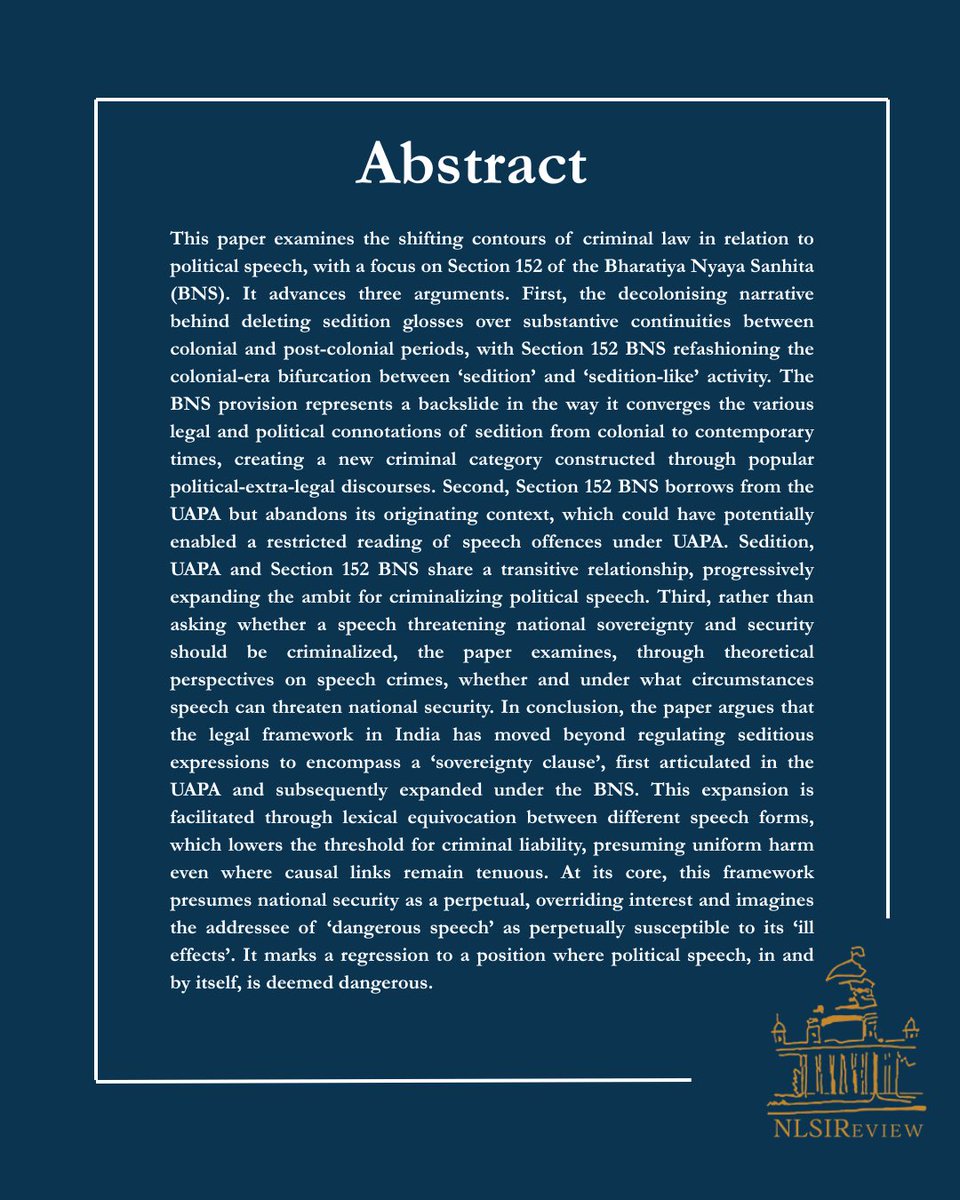
In the fourth of our Special Issue, Anushka Singh (Dr. B.R. Ambedkar University, Delhi) scrutinises India's newly enacted Bharatiya Nyaya Sanhita and its implications for political speech.
In 'Regression Dressed as Reform: Bharatiya Nyaya Sanhita and the Shifting Contours of Political Speech', Singh advances three arguments. First, the decolonising narrative behind the deletion of the sedition provision obscures substantive continuities with colonial-era law, Section 152 BNS refashions rather than removes those structures. Second, the new provision borrows heavily from the UAPA while abandoning the contextual limits that might have enabled a narrower reading of speech offences. Third, through a theoretical examination of speech crimes, Singh argues that the new framework lowers the threshold for criminal liability by presuming uniform harm from political expression — even where causal links to actual harm remain tenuous.
The article concludes that India's legal framework has moved toward a 'sovereignty clause' that treats political speech as inherently dangerous, a regression, not a reform.
Read the full article at the link in bio.
#NLSIR #BNS #Sedition #PoliticalSpeech #UAPA #ConstitutionalLaw #CriminalLaw #FreeSpeech #IndiaLaw
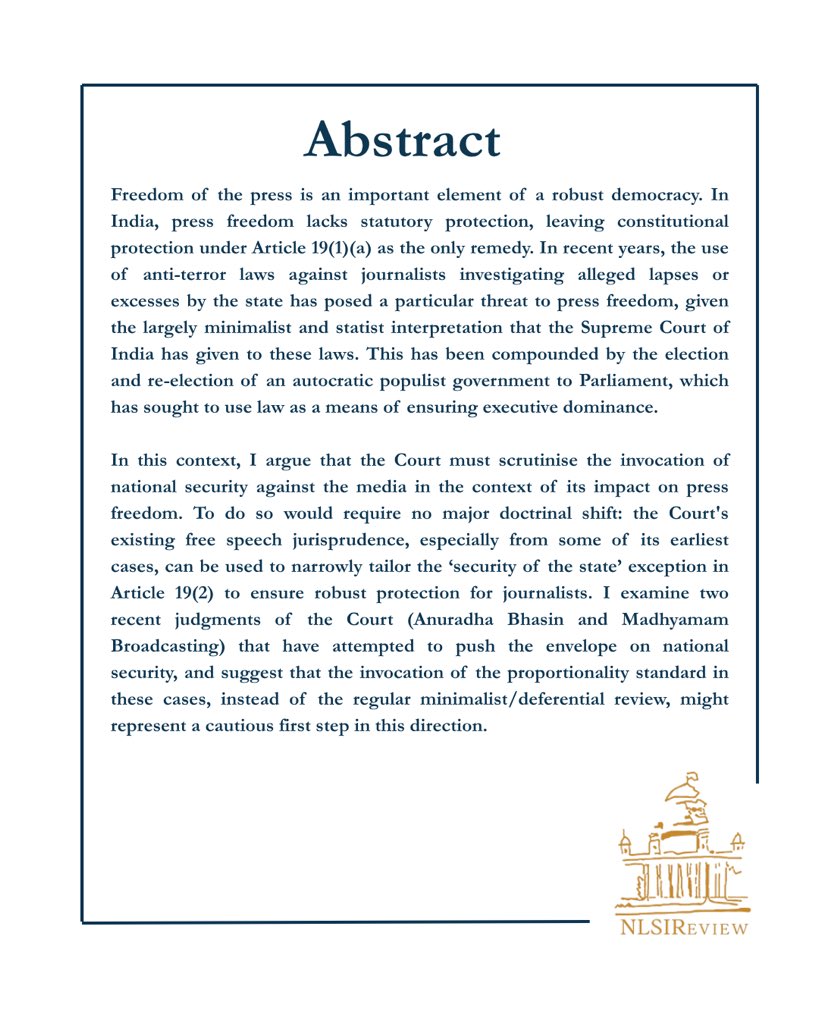
In the third article of our Special Issue, Manish examines the growing threat that national security law poses to press freedom in India.
In 'Protecting Journalism from National Security in Contemporary India', Manish argues that in the absence of statutory protection for the press, the deployment of anti-terror laws against journalists investigating alleged state lapses has become a key instrument of executive dominance, compounded by the Supreme Court's historically minimalist deference to national security claims.
The article makes the case that no major doctrinal shift is needed: the Court's own early free speech jurisprudence can be used to narrowly tailor the 'security of the state' exception under Article 19(2) to ensure robust protection for journalists. Manish reads recent decisions such as Anuradha Bhasin and Madhyamam Broadcasting as cautious but meaningful steps toward a proportionality-based review of national security invocations against the media.
Read the full article at the link in bio.
#NLSIR #PressFreedom #Journalism #NationalSecurity #Article19 #IndianConstitution #FreePress #ConstitutionalLaw
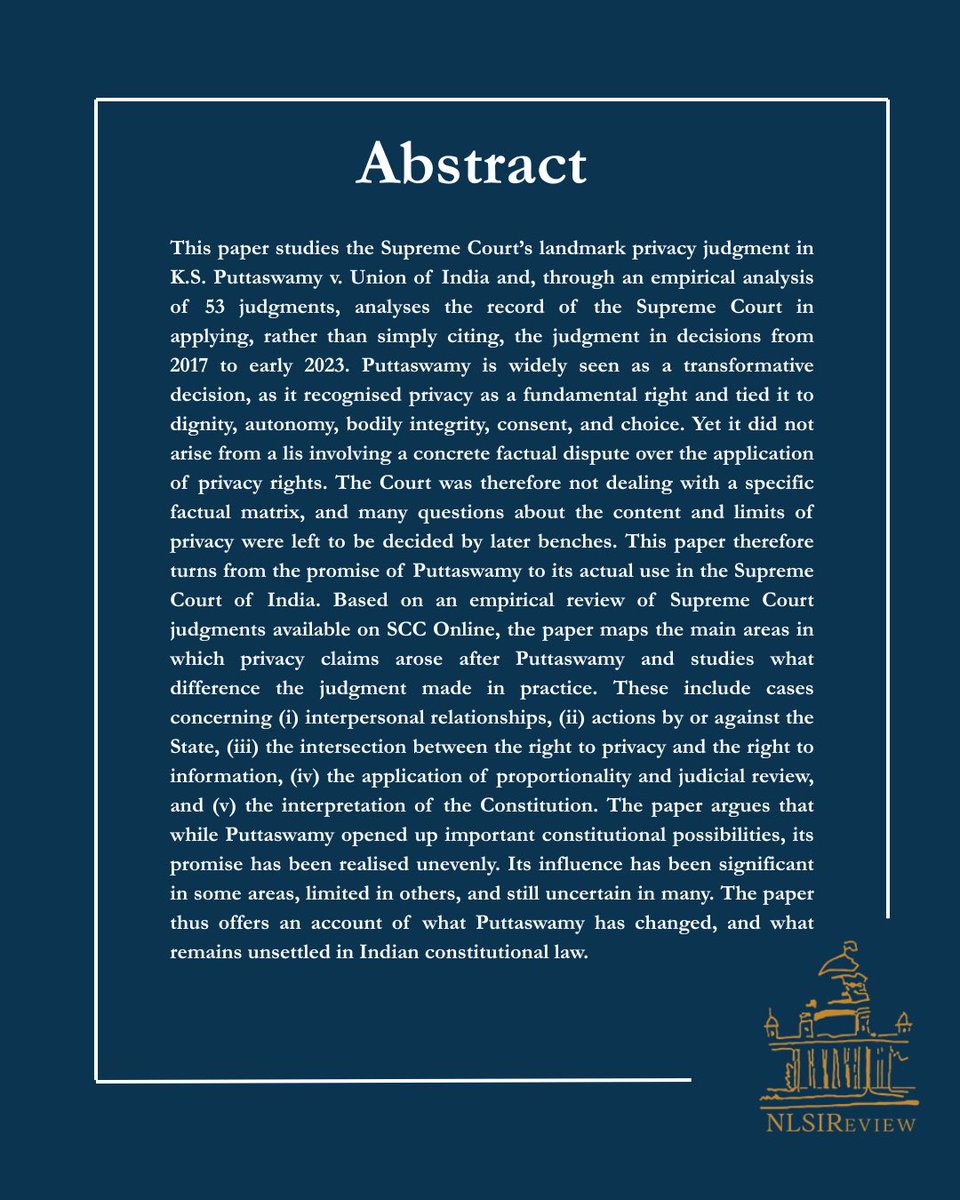
In the second article of our Special Issue, Vrinda Bhandari and Rishab Bailey offer a rigorous empirical assessment of the Supreme Court's landmark privacy judgment, seven years on.
In 'Evolution of Privacy Jurisprudence in the Supreme Court of India: Evaluating the Impact of Puttaswamy', the authors examine 53 Supreme Court judgments decided between 2017 and early 2023 to assess how K.S. Puttaswamy v. Union of India has actually been applied, not merely cited, in subsequent decisions. While Puttaswamy is widely regarded as transformative in recognising privacy as a fundamental right linked to dignity, autonomy, and bodily integrity, the authors find that its constitutional promise has been realised unevenly: significant in some domains, limited in others, and still deeply uncertain in many.
Their analysis covers privacy claims in interpersonal relationships, state action, the interface between privacy and the right to information, proportionality review, and constitutional interpretation mapping both what Puttaswamy has changed and what remains unresolved in Indian constitutional law.
Read the full article at the link in bio.
#NLSIR #Puttaswamy #PrivacyLaw #SupremeCourt #ConstitutionalLaw #FundamentalRights #EmpiricalLegalStudies #IndianLaw
In the first article of our Special Issue, Anurag Bhaskar (Jindal Global Law School) advances an anti-caste perspective on freedom of speech and expression under Article 19(1)(a) of the Indian Constitution.
In 'The Social Life of Free Speech: Who Gets to Speak and Express?', Bhaskar argues that free speech cannot be understood as a purely individual right against the State, it is a socially embedded phenomenon shaped by historical inequalities and prevailing power structures. The article maps four categories of barriers that prevent oppressed-caste communities from freely exercising their speech: social policing and stigmatisation; physical violence and social boycotts; legal restrictions that suppress anti-caste voices; and epistemic barriers reinforced by academia and media.
Drawing on anti-caste literature, art, and social movements, Bhaskar calls for a paradigm shift in Indian constitutional law, one that locates free speech within the broader struggle for liberty, equality, fraternity, dignity, and democratic inclusion.
Read the full article at the link in bio.
#NLSIR #FreeSpeech #Article19 #ConstitutionalLaw #IndianConstitution #CasteAndLaw #LegalScholarship
We are pleased to announce the release of NLSIR Volume 36, Issue 2 (2025) — a Special Issue on Democracy, Free Expression, and Press Censorship.
At a moment when the boundaries of permissible speech are being contested across courtrooms, legislatures, and public squares, this issue brings together five articles and a case comment that interrogate the foundations, limits, and lived realities of free expression in India. From caste and the right to speak, to national security and the press, to the criminalisation of political dissent and the architecture of fact-checking, our contributors engage with some of the most urgent constitutional questions of our time.
We are grateful to our authors, editorial board, and reviewers for making this issue possible. Read, engage, and share widely.
Link in bio.
#NLSIR #FreeExpression #PressFreedom #ConstitutionalLaw #Democracy #IndianConstitution #LawReview #NLSBengaluru #LegalScholarship #OpenAccess
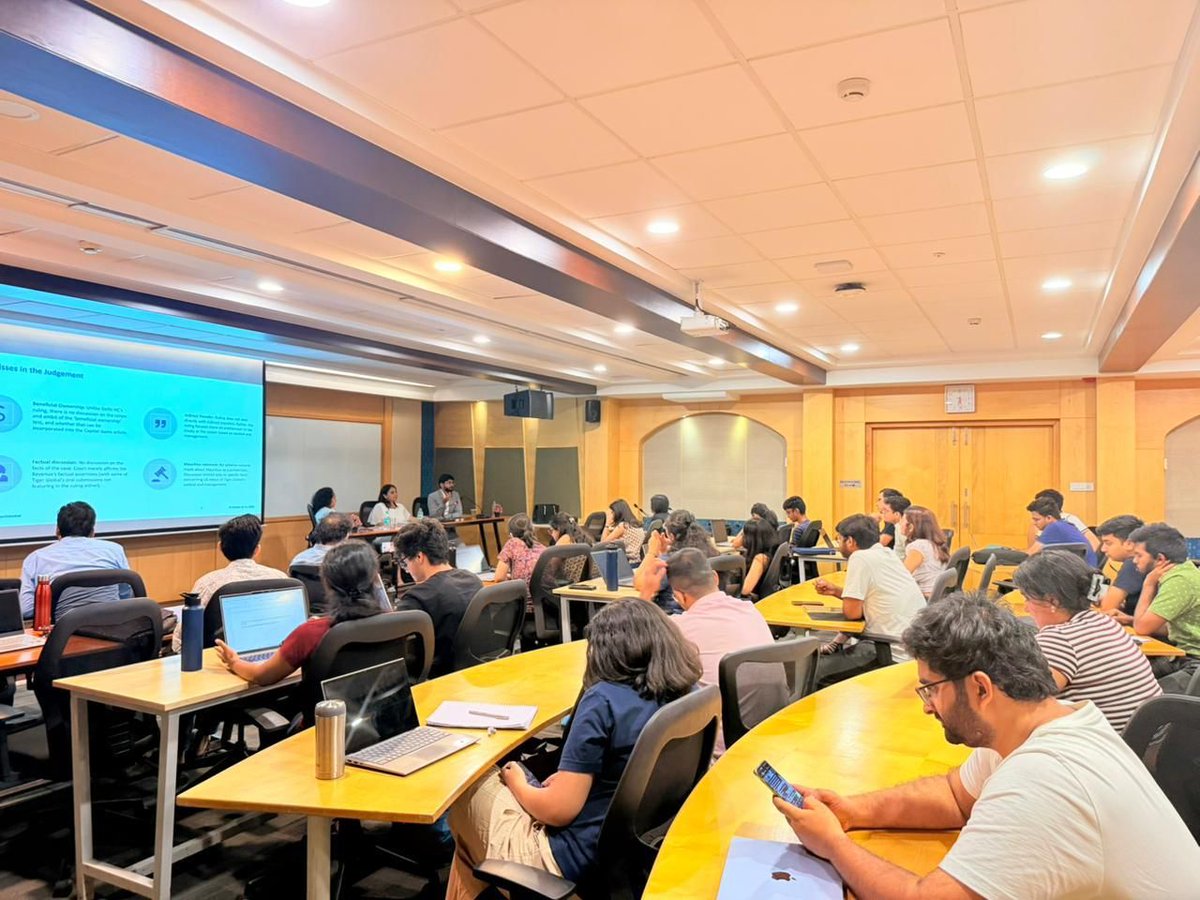
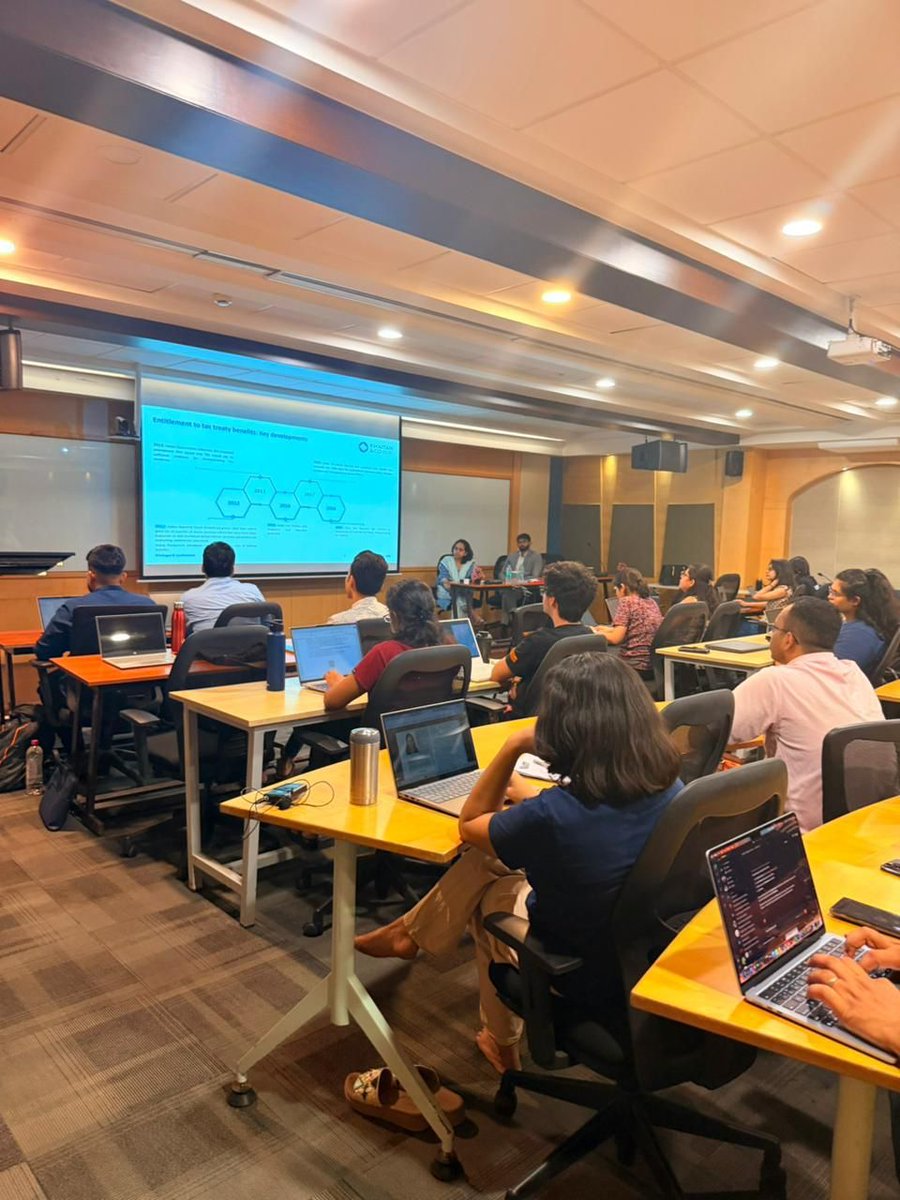
NLSIR is delighted to have hosted a Panel Discussion on 13 April 2026 on the Supreme Court's landmark judgment in Tiger Global which has fundamentally reshaped the landscape of international tax law in India.
The discussion brought together a distinguished panel to unpack the tensions at the heart of the judgment: from the conclusiveness of Tax Residency Certificates and the conditions under which treaty benefits can be claimed, to the scope of GAAR, the parallel operation of judicial anti-avoidance rules, and the contentious observations on indirect transfer provisions and unilateral override of DTAAs.
The conversation was led by Ms. Bijal Ajinkya (Partner, Khaitan & Co) and Mr. Anuraag Bukkapatnam (Associate, Khaitan & Co ), and was moderated by Dr. Ashrita Prasad Kotha (Associate Professor of Law, National Law School of India University).
We are grateful to our speakers for a rich and nuanced discussion on one of the most consequential tax rulings of recent years.
@KhaitanCo
#NLSIR #TigerGlobal #TaxLaw #InternationalTax #SupremeCourt #GAAR #DTAA #NLS #PanelDiscussion #KhaitanAndCo
Deepika MG’s article, latest in the Beyond the Gig Special Series, argues that India’s gig economy exhibits clear features of market failure—such as information asymmetry, monopsony power, and lack of social protection—leading to inefficient and inequitable outcomes for workers. It critiques existing regulatory frameworks, especially labour codes, for treating gig workers as part of the unorganised sector and limiting protections largely to welfare schemes.
Read the piece through the link in our bio!
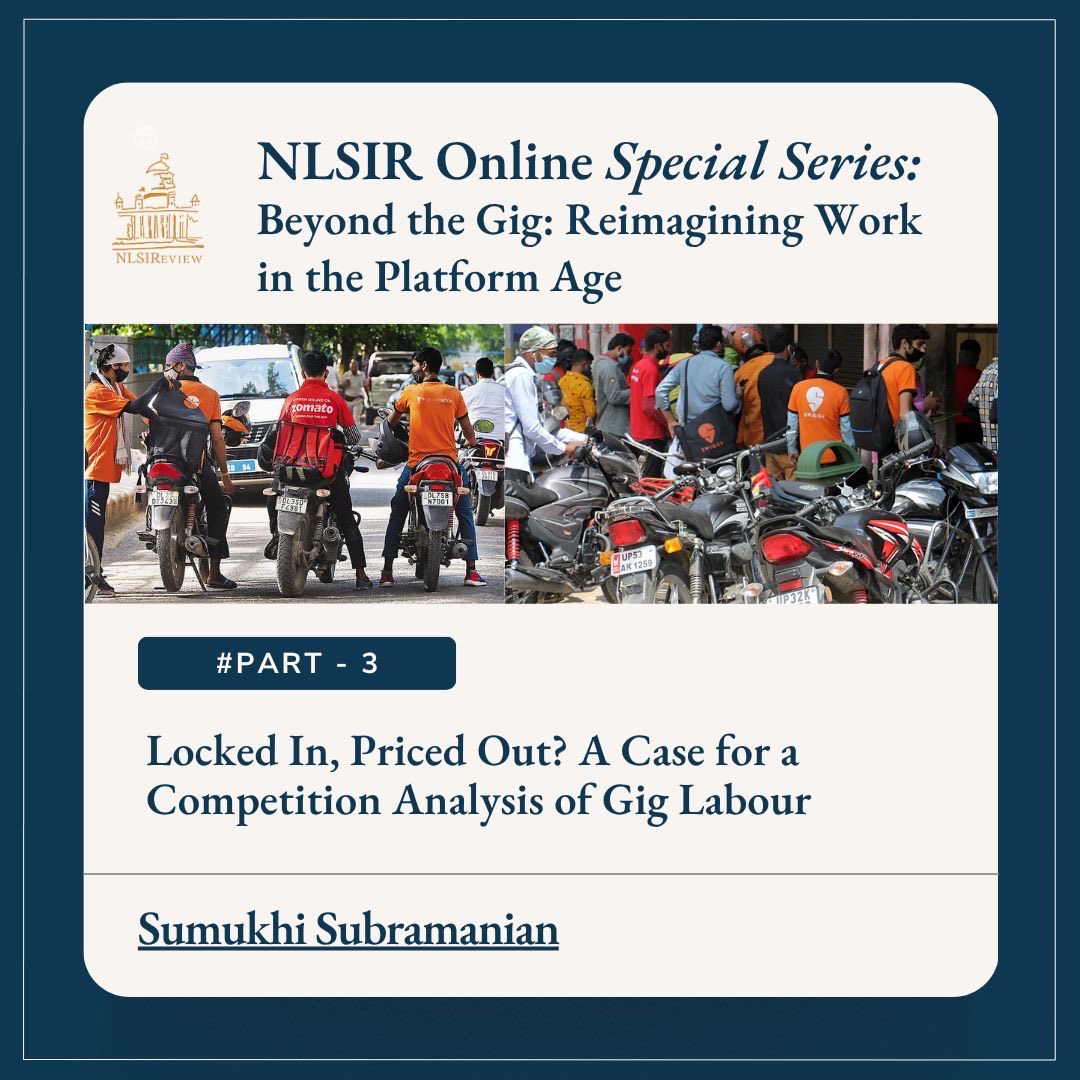
In the latest #BeyondTheGig piece for NLSIR, Sumukhi Subramanian explores how gig platforms in India leverage "algorithmic lock-in" to dominate labor markets. From oligopsonistic power to the gaps in the Draft Digital Competition Bill, this is a must-read on why our current laws might be missing the bigger picture of worker mobility. Read the piece through the link in our bio!
The gig economy promises flexibility, but reproduces inequality.
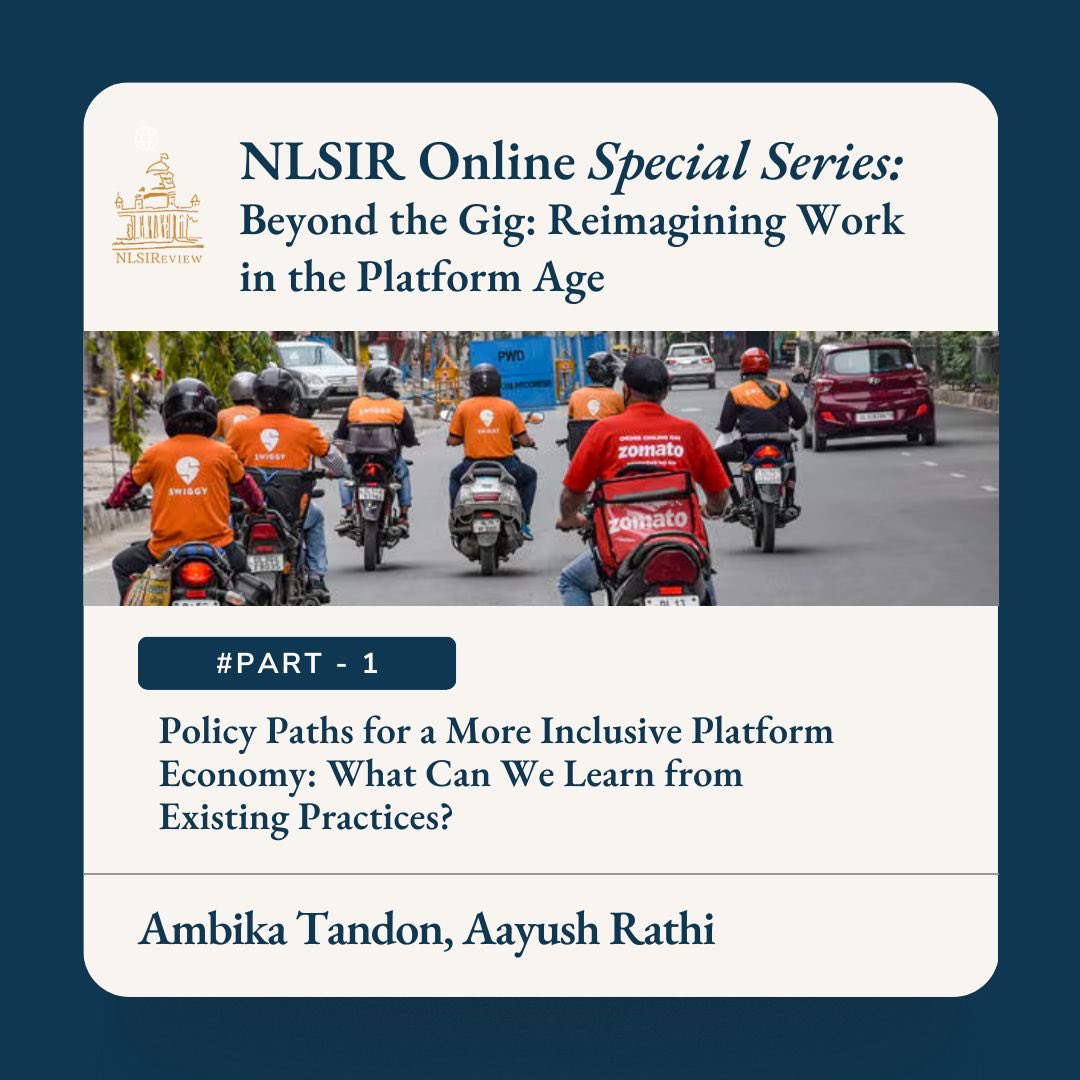
In the first piece of 'Beyond the Gig,' Ambika Tandon and Aayush Rathi map the critical gender gaps in platform work and chart a policy path forward.
Read now via the link in bio!
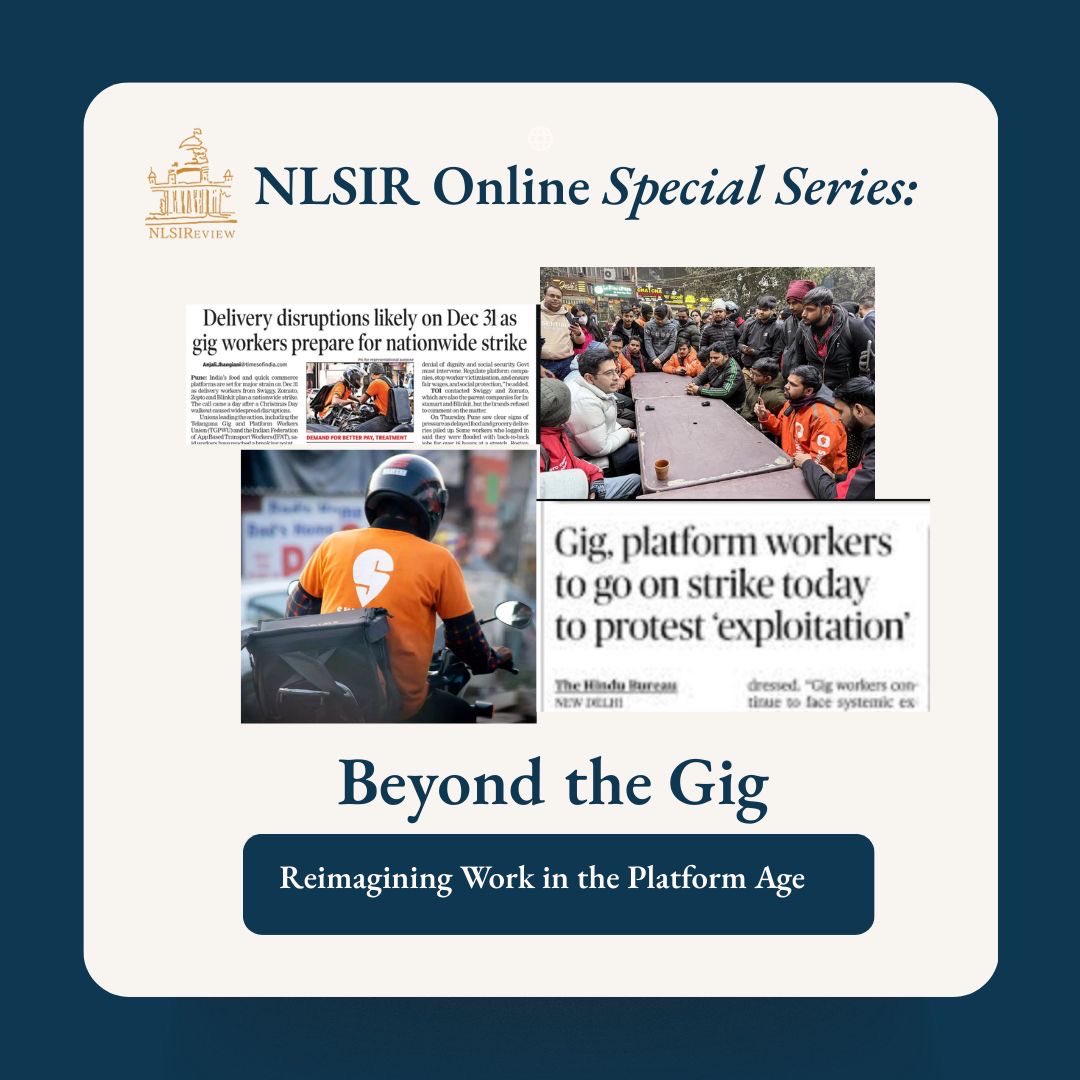
Gig workers keep India moving, but the law is still catching up.
With 4 new labour codes now in force, NLSIR Online launches 'Beyond the Gig: Reimagining Work in the Platform Age' - interrogating the gaps, the failures, and the way forward.
Stay tuned.
(Image credits - Frontline, The Times of India, and The Hindu)








The registration form will remain open till Friday, 5 PM. The meeting link will be shared with registered participants.
We look forward to your participation and to a meaningful set of conversations on free speech and democratic life!](https://pbs.twimg.com/media/HIIKgGYbQAATQos.jpg)