OpenAI just built its own chip, and it's beating Nvidia's best on performance per watt.
That's a compute-efficiency race. It still has nothing to do with where the training data comes from.
Perceptron sits in the part of the stack that race doesn't touch.
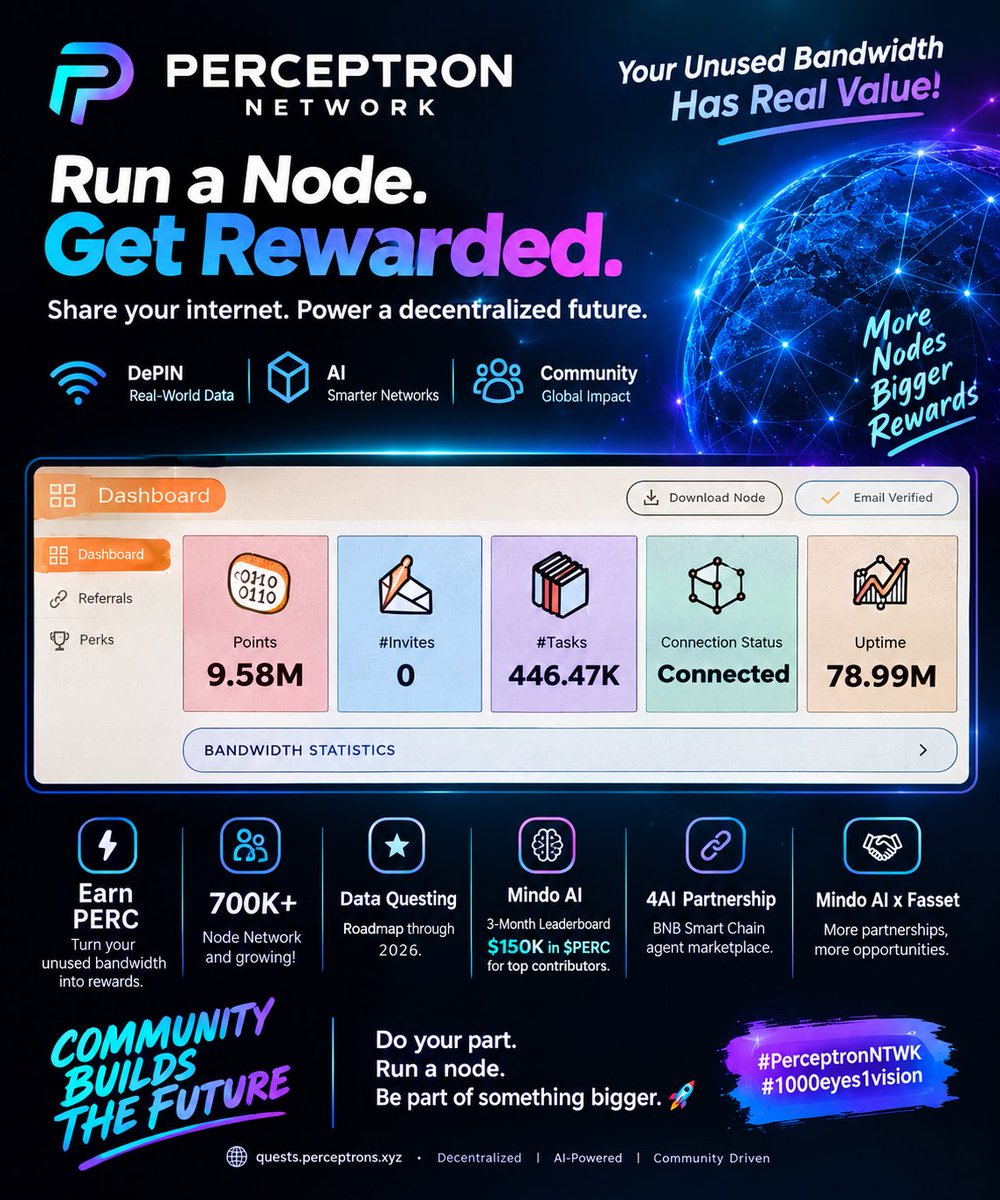
9.58M points. 446K+ tasks. 78.99M uptime. 👀🔥
Perceptron is turning unused bandwidth into real network power.
Run a node. Earn rewards. Build the future. 🚀
@PerceptronNTWK#NodeAndProud
Data center power demand is projected to jump 27% this year, and grid capacity is now the real constraint on AI buildout, ahead of capital spend.
Perceptron's distributed model scales through participation, so that particular bottleneck never applies to it.
Since 2024, DAWN has raised $40M to date to tokenize AI and connectivity infrastructure.
This has been led by @DragonflyVC, @polychain, @vaneck_us, and more amazing investors.
We’ve spent that time building. Here’s what’s ahead 👇
There is a once in a generation demand for new infrastructure.
Nearly $7T will be invested into AI infrastructure and data centers by 2030, and the people building it can't get financed fast enough.
DAWN tokenizes AI infrastructure so institutions and retail can access its cash flows as on-chain yield.
Read More Here 👇
Bots now generate more than 57% of web traffic, per Cloudflare.
If you're running a platform, you can no longer reliably tell a real visitor from an automated one.
Perceptron's contributors are verified, individual people in a web where that's becoming rare.
NVIDIA put $2B into Nebius. Michael Burry is now shorting the same stock.
If you're watching that trade, both bets are about compute. Neither is about where your data comes from.
Perceptron operates one layer down, collecting the kinds of data both sides are ignoring.
Everyone assumes better AI data means a bigger vendor contract.
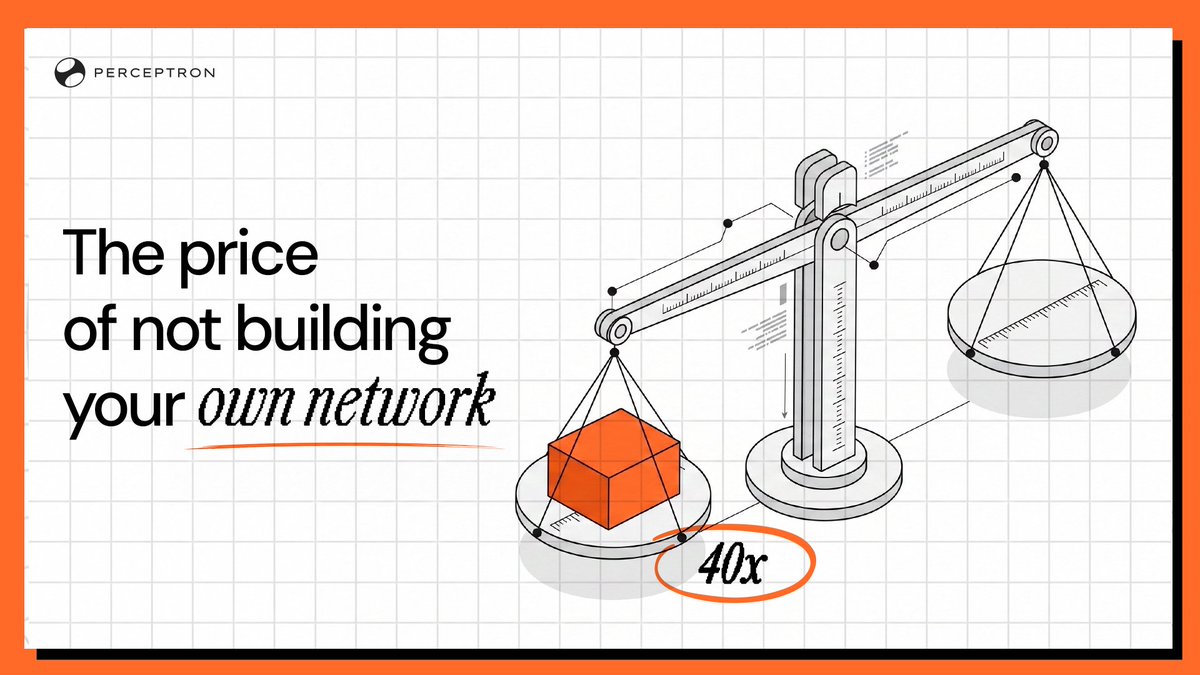
Specialized datasets can cost up to 40x more through centralized providers.
Perceptron's distributed model was built to collect that same signal directly, without paying the markup.
.@OpenAI just signed a $250M, five-year deal with News Corp for licensed text data.
That's the price of one publisher's archive, once.
Perceptron's node network generates live data every day, without an expiring contract.
The world's stock of high-quality public text sits at roughly 300 trillion tokens.
Stanford's 2026 AI Index says models could exhaust it by 2032.
Perceptron's 800K+ nodes generate fresh real-world data daily, a supply that keeps replenishing itself.
AI still gets it wrong when the answer depends on what changed an hour ago.
Perceptron's contributors can fix that: real people, on real devices, feeding the network what's happening right now.
That's the correction layer AI needs to stay current.
Reddit sold its data access to Google and OpenAI for over $200M.
Perceptron's 800K+ nodes collect that same demand daily, from any browser or phone.
The AI training data market is projected to hit $52.4B by 2035. A network beats a single seller.
Most networks separate the people who build them from the people who profit from them.
Perceptron's nodes collect data, the network provides it to AI companies and DeAI ecosystems, and rewards flow back to contributors.
The incentive model is built into the infrastructure, not an afterthought.