NOAA Research provides the research foundation for understanding our planet through tech innovation & scientific advances. This is an official @NOAA account.
A powerful nor’easter impacted the East Coast of the U.S. in the days leading up to this #TimeLapseTuesday. This water vapor imagery captured by @NOAA’s #GOESEast (#GOES19) 🛰️ from September 25 to 28 shows moisture concentrated near the coast during the event, with drier air over interior regions.
It may be fall, but it's still important to be prepared for high temperatures! 🍂☀️ Visit https://t.co/nNtdwGS1j6 to learn heat safety tips, view heat forecasts and outlooks, and learn the signs of heat-related illness.
#NIHHIS#HeatSafety
🥇The Gold Standard: How MRMS Powers Better Weather Decisions
🌩️ MRMS provides forecasters a single-picture of the atmosphere and serves as a cornerstone of weather, commerce and public safety.
FULL VIDEO 🎥: https://t.co/OMgJWUuS33
Spooky season is right around the corner!
Get in the spirit with this faceless cusk eel filmed by @oceanexplorer during their 2026 Cook Islands ROV exploration cruise:
Faceless cusk eels lack visible eyes and tend to find their way with their noses instead. Not a bad strategy in the total darkness of the deep sea! This cusk eel was found during Dive 06 of the 2026 Cook Islands ROV Exploration cruise: https://t.co/tfcd6G8N3U
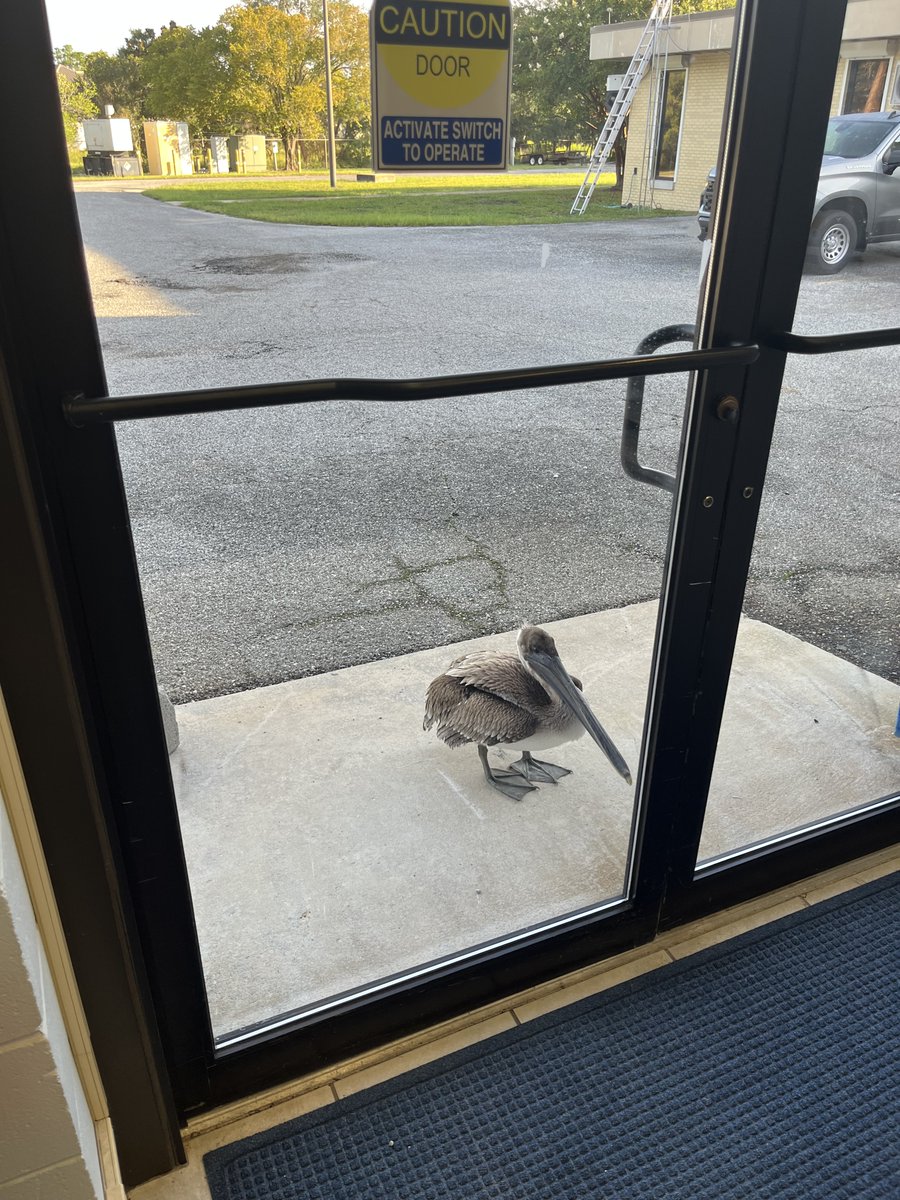
When this pelican needed a rescue, it knew right where to go: our office in Panama City. The bird was entangled in heavy-duty fishing line. Our staff removed the hook, and unspooled monofilament line wrapped around its wing—and the bird flew free! https://t.co/JeLp5nMkJP
🌀 100 years ago, South Florida had little warning for the Great Miami Hurricane. Today, advanced satellites and models give us days to prepare.
NHC’s Heather Nepaul & Dr. George (@MuseumofMiami) explore a century of forecasting progress. More info: https://t.co/7Wfai7oSMy @NWS
ENSO is a naturally occurring phenomenon with variations in sea surface temps, ocean currents, and atmospheric winds in the equatorial Pacific.
Dive deeper at the NOAA PSL El Niño Index Dashboard to compare current El Niño conditions to past events: https://t.co/YACsnLaC7v
In July, maritime archaeologists & engineers tested new technology & techniques for exploring shipwrecks in Wisconsin Shipwreck Coast National Marine Sanctuary. Using a hybrid AUV/ROV they finished documenting the wreck of the steamer Senator.
Learn more: https://t.co/hBrm1QOH1f
Category 5 Hurricane Lowell! 🌀✈️
This past week, AOML completed research and operational flights in collaboration with AOC, CIMAS, NCAR, ONR, NESDIS, NWS, and other partners.
Ocean and air data allows for further understanding of of hurricanes and advance forecasting!
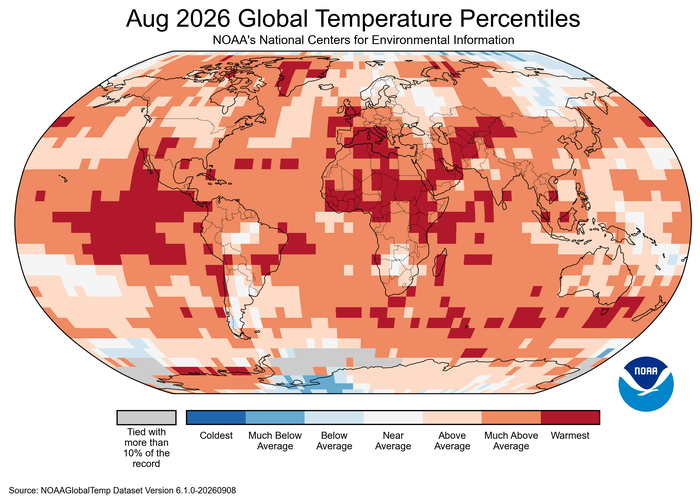
🌎 Earth experienced its warmest August on record! Our latest global report for August 2026 is now available. In honor of Swap Ideas Day, tell us about your record warm August and read the full report here: https://t.co/FSWGuupTE3
As deep-sea exploration technologies have advanced and we’ve learned more about the abyssal ocean, researchers have discovered that abyssal plains are far more interesting than they first seemed. Learn about this otherworldly environment: https://t.co/szEXyiGopl
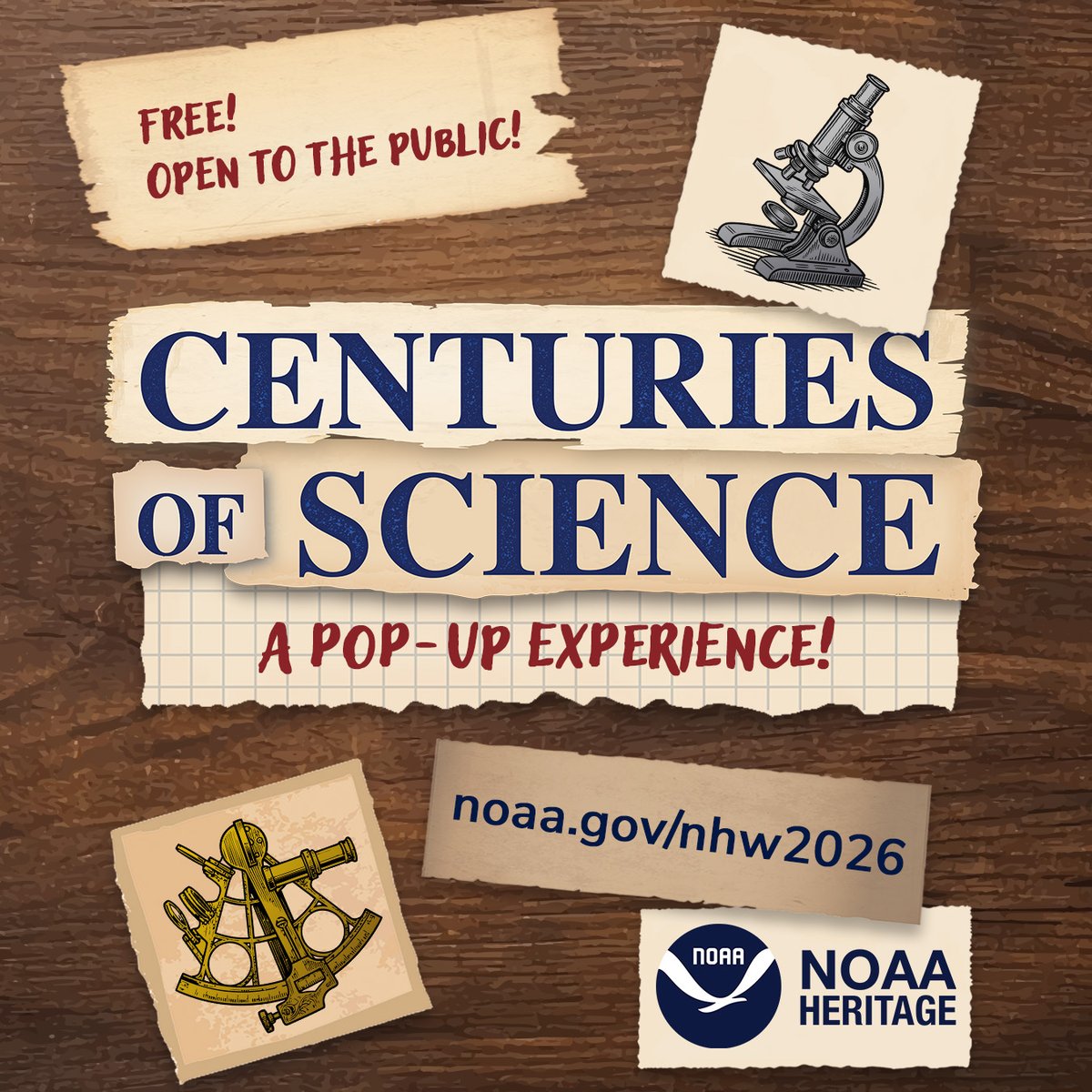
Will you be in the D.C. area on Saturday 9/26?
Come to NOAA: Centuries of Science— A Pop-Up Experience!
See some of NOAA’s most impressive artifacts, participate in hands-on activities, and more!
Learn more and register at https://t.co/958ru7YoAK!
#NOAAHeritageWeek
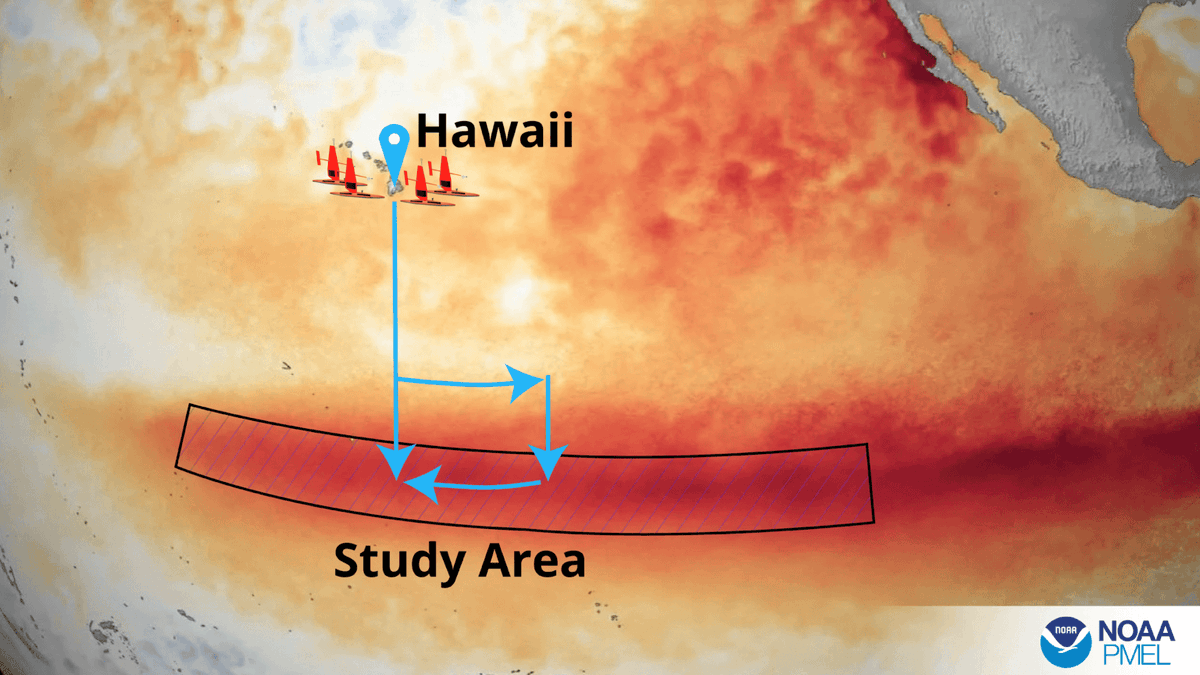
NOAA has dispatched Saildrones into the strengthening El Niño in the eastern Pacific Ocean.
The data they collect allows scientists to map out the boundaries or fronts between the warm tropical water and normally cool water.
Learn more: https://t.co/e4zxKdHwjP #ElNiño
We're getting back in the water! Join us for today’s #Okeanos dive as we explore a seamount starting at 2,560 m (1.6 mi). Seafloor ETA: 10:00 a.m. SST / 5:00 p.m. EDT.
Watch LIVE: https://t.co/2nkP2gZZis
[Video of a sea cucumber from Dive 03 of the expedition!]
A NOAA study reveals the Gulf Stream underwent a rapid intensification from 2014 to 2023. Fast current speed can lead to enhanced heat transport to higher latitudes, warming the upper ocean & increasing heat released to the atmosphere: https://t.co/5RgCvN5Co5
Animation: NASA
During #Okeanos 2026 Cook Islands cruise, @oceanexplorer collected a fossilized whale jaw from 3,600 m (2.2 mi) depth. It is believed to be the deepest whale beak ever recovered in the Pacific! Learn about this whale of a find: https://t.co/iCeW3NcYkG
NOAA and collaborators reached a significant milestone with the publication of two global ocean carbon data products which will substantially improve our capacity to monitor and measure global biogeochemical cycles and improve predictions of ocean change.
https://t.co/1Bjn0UeIob
New month, new desktop wallpaper calendar. Enjoy September with this ink-redibly adorable bobtail squid. (Don’t be fooled by its name, bobtail squids are cephalopods, but they aren’t actually squids!)
Download it today!
https://t.co/gTSEflzJwA
Next week looks relatively wet for much of the US w/ greatest chances above normal in the Northwest and AK. Normal precip chances: S. Plains to the Southeast.
Temps: Cooler air moves into the Far West + AK. Rest of US stays warmer than normal. https://t.co/6MGFhBWj6I @NOAA@NWS