Sixteen percent of first-time aspiring entrepreneurs owned a business one to two years later, while more than 70% had stopped pursuing ownership, according to new data from NORC’s 2026 Entrepreneurship in the Population survey.
Find out more: https://t.co/Hagir4y1y7
NORC is a Gold Sponsor of MAPOR 2026 in Chicago this weekend, presenting research that reflects the importance of keeping public opinion research both responsive and representative. #MAPOR2026
Visit our booth on the second floor, South Atrium and explore our sessions: https://t.co/wheU9Upd4K
What drove the 2026 midterm results? On November 10, NORC hosted a conversation moderated by Politico’s @DashaBurns at the National Press Club to explore that question using data from our Civic Health & Elections Project.
Watch the full panel on @CSPAN: https://t.co/1HRwD80JcA
This week, NORC is at the 2026 APIAHF VOICES Conference in Washington, D.C. Our experts will share our latest health projects and initiatives, including the Community Engaged Research Framework and Amplify AAPI panel.
Connect with us at booth #8 and find out more: https://t.co/LwkrJwS2yw
Building Veteran expertise into research leads to stronger evidence, more relevant findings, and better-informed decisions, according to Marine Corps Veteran and NORC senior research director Roxanne Wallace.
This #VeteransDay, her Expert View shares five lessons for researchers: https://t.co/8G7GIEDfip
Thanks to @NORCNews for having me moderate today’s Civic Health & Elections Project event.
We discussed the results of last week’s elections, including the shifts among young voters, redistricting’s impact, rural voters and why some voters didn’t turn out this year.
You can watch the panel on @CSPAN and learn more about their project here: https://t.co/7e7ZEOKvA8
NORC is hiring part-time field data collectors in more than 10 locations across the U.S. Meet one-on-one with older adults and collect key health and cognitive measures to help support national research on aging, health, and memory.
Apply now: https://t.co/g4obVxDlf6
What makes older adults feel connected to their community? A new interactive map from NORC and the Mather Institute scores all 77 Chicago neighborhoods on walkability, green space, gathering places, safety, and community ties.
Find out more: https://t.co/wcJ5IksBJN
New this month: NORC’s Research Science newsletter looks at how surveys are adapting, from synthetic respondents and mixed-mode designs to sample design innovation and measuring survey bias.
Read the full issue: https://t.co/Rv1E2J6YYD
NORC researchers will be at the AMIA 2026 Annual Symposium in Dallas, presenting a workshop and two posters on designing and implementing digital health tools, data infrastructure, and health IT approaches. #AMIA2026
Explore NORC at AMIA: https://t.co/pAYh4iK3rx
NORC senior fellow Tom W. Smith has received WAPOR’s Helen Dinerman Award for more than 35 years leading the General Social Survey, one of the most widely cited sources of data on American society.
View the announcement: https://t.co/ekWQEiUbrX
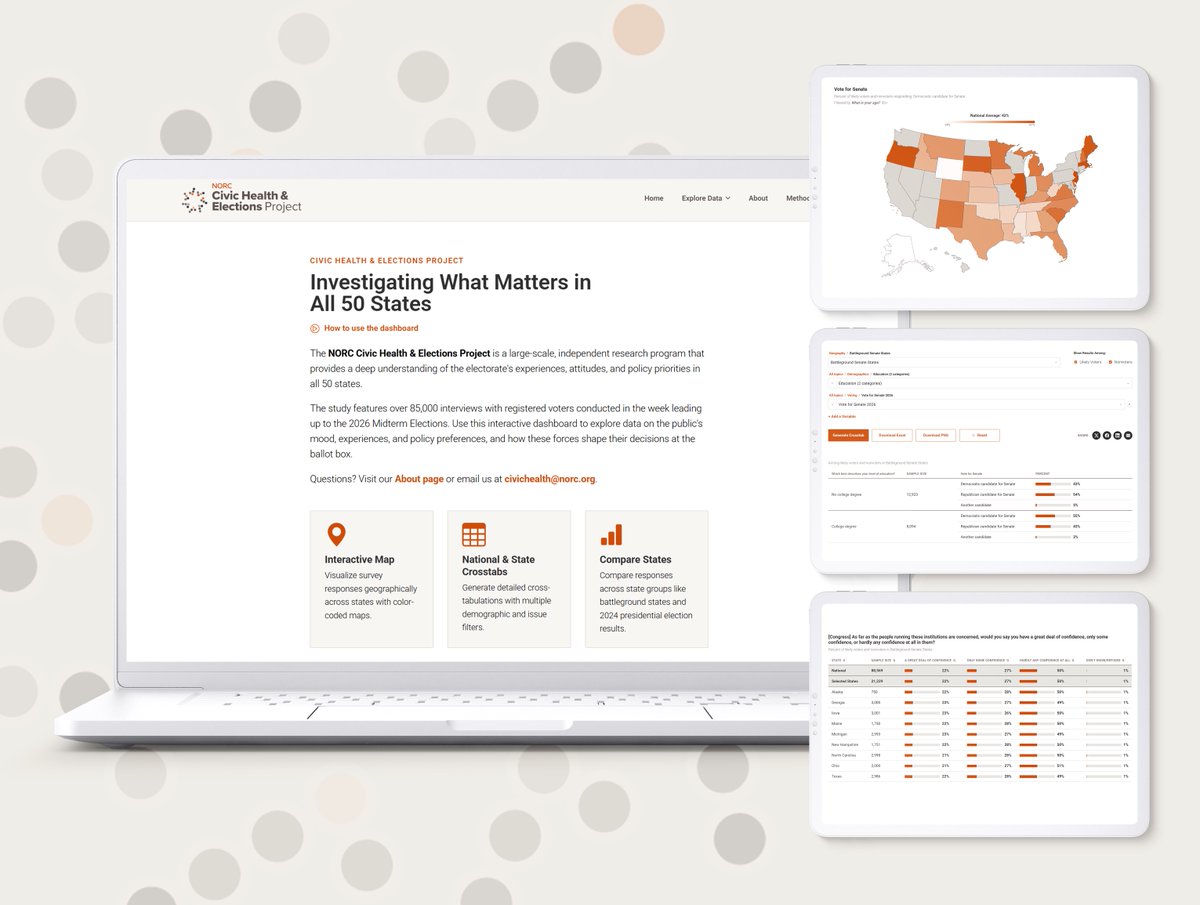
We know how they voted, but why? NORC’s Civic Health & Elections Project dashboard lets you dig into the experiences, attitudes, and policy priorities of registered voters in all 50 states, including those who decided not to vote.
Explore the dashboard: https://t.co/TpJiPEr7cu
NORC is at Gerontological Society of America (GSA) 2026 Annual Scientific Meeting this week, presenting research on AI in health communication, caregiving, social connection, elder financial exploitation, and more. #GSA2026
Visit us at booth #509 and explore our presentations: https://t.co/iCWiQKL0Ls
Social connection research rests on a simple idea: we need each other to survive and thrive. In Chicago, NORC and the Mather Institute found older adults’ social wellness was higher where neighbors reported more trust and support.
Explore why: https://t.co/PaUxbTza79
NORC is in San Antonio next week for the American Public Health Association’s 154th Annual Meeting & Expo (APHA 2026), presenting research on public health infrastructure, emergency preparedness, substance use, mental well-being, and community-based interventions.
Visit us at booth #622 and explore our sessions: https://t.co/jfKquggAmM
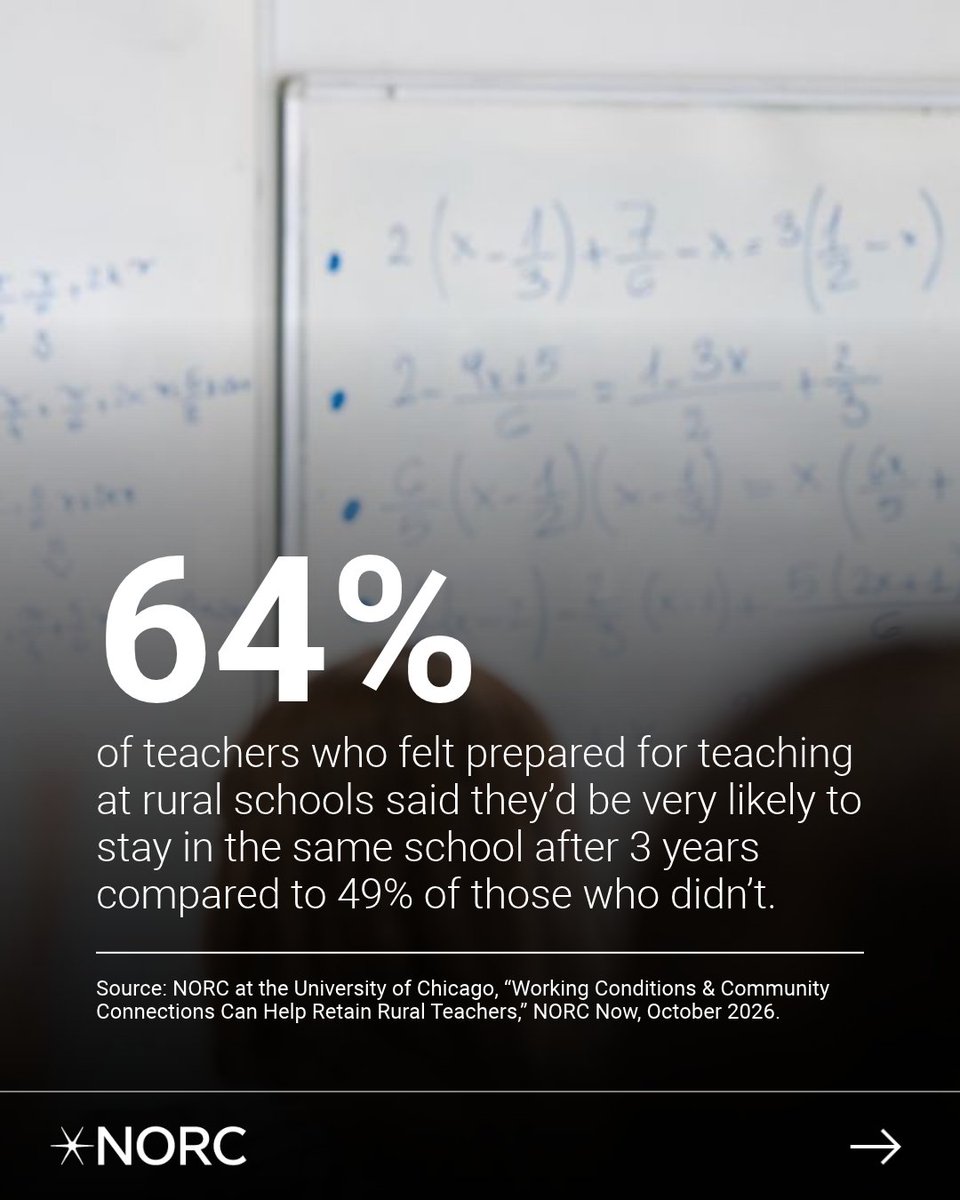
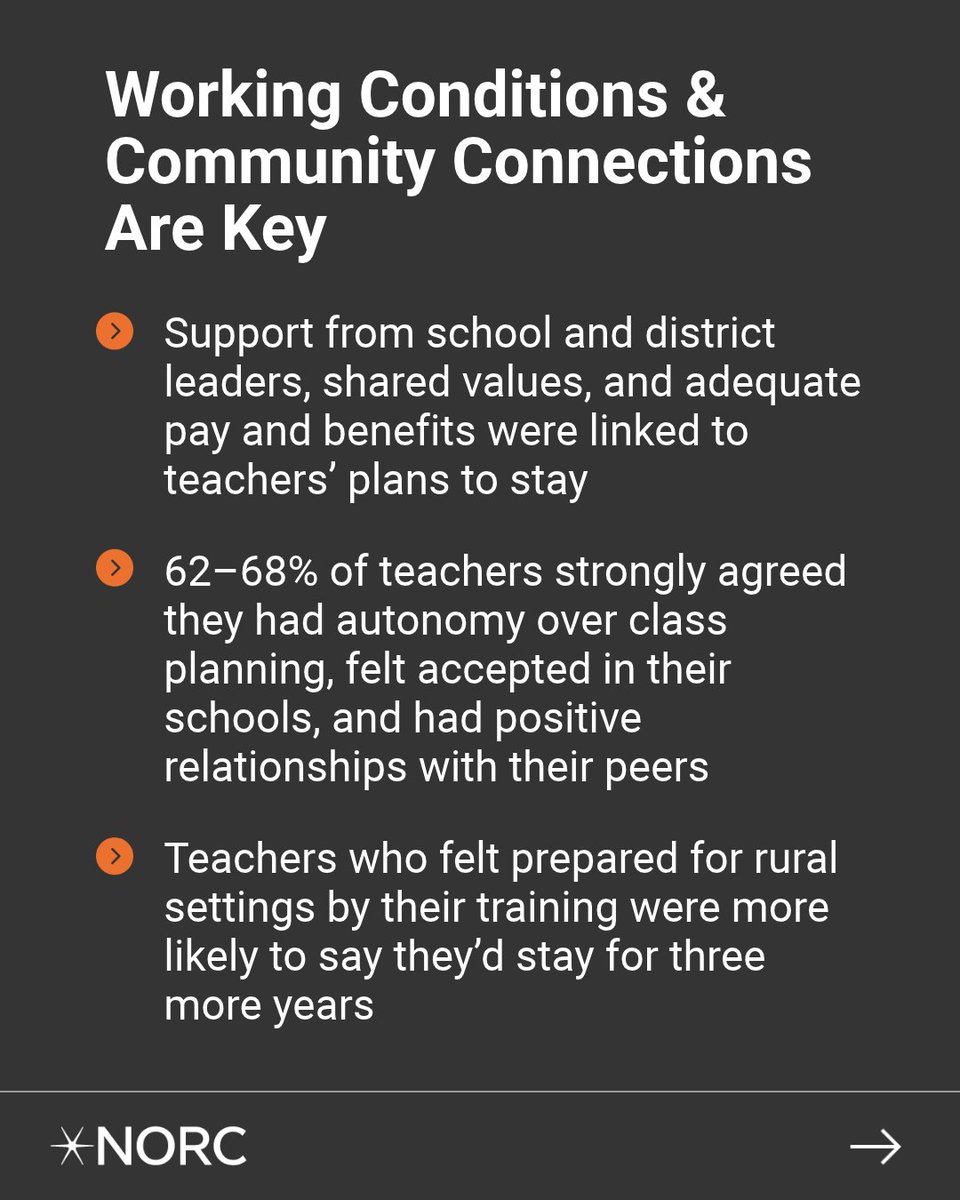
Most teacher retention studies ask why teachers leave. NORC and IWERC asked rural Illinois science and math teachers why they stay. Support from leadership, shared values, and adequate pay and benefits were linked to plans to stay.
Explore the findings: https://t.co/5QStO5RF5u
Election results show how Americans voted, not why. In Poynter, NORC’s Jennifer Benz and Tom Rosenstiel explain how the Civic Health & Elections Project, a survey of 85,000+ registered voters in all 50 states, can help journalists fill that gap.
Read the full article: https://t.co/xJVwQ55nYK
Is AI a threat to traditional survey methods, or does the real risk lie in how it’s used? NORC’s Ting Yan outlines a framework for responsible AI where methodologists, not AI capabilities, decide when and how AI gets used.
Explore her approach: https://t.co/fJWew6QJsQ
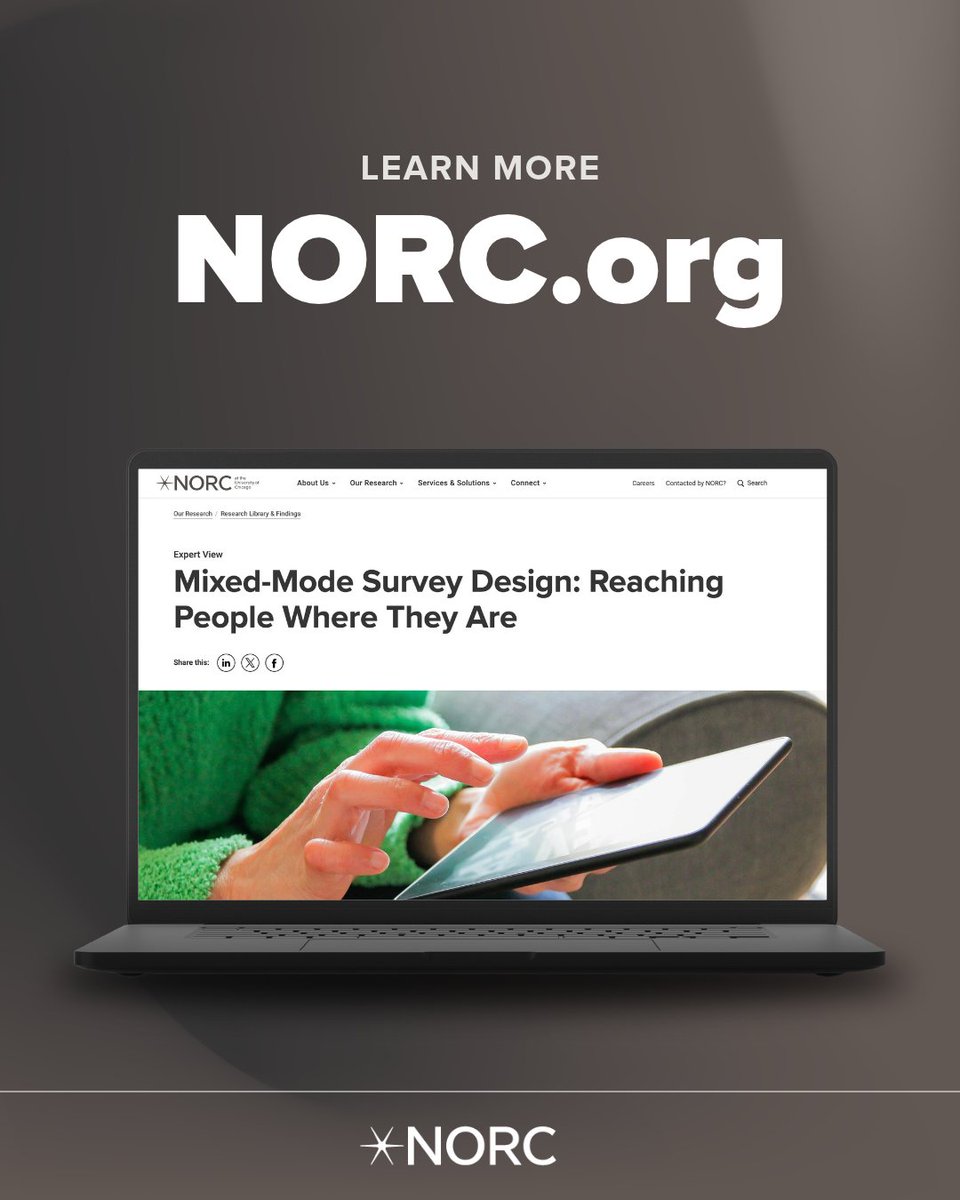
No single survey mode reliably reaches most target populations anymore. Ipek Bilgen explains how mixed-mode design makes participation more convenient, which is often the difference between a sample that represents the population and one that doesn’t.
Read the full Expert View: https://t.co/DnI5ZM5HjP