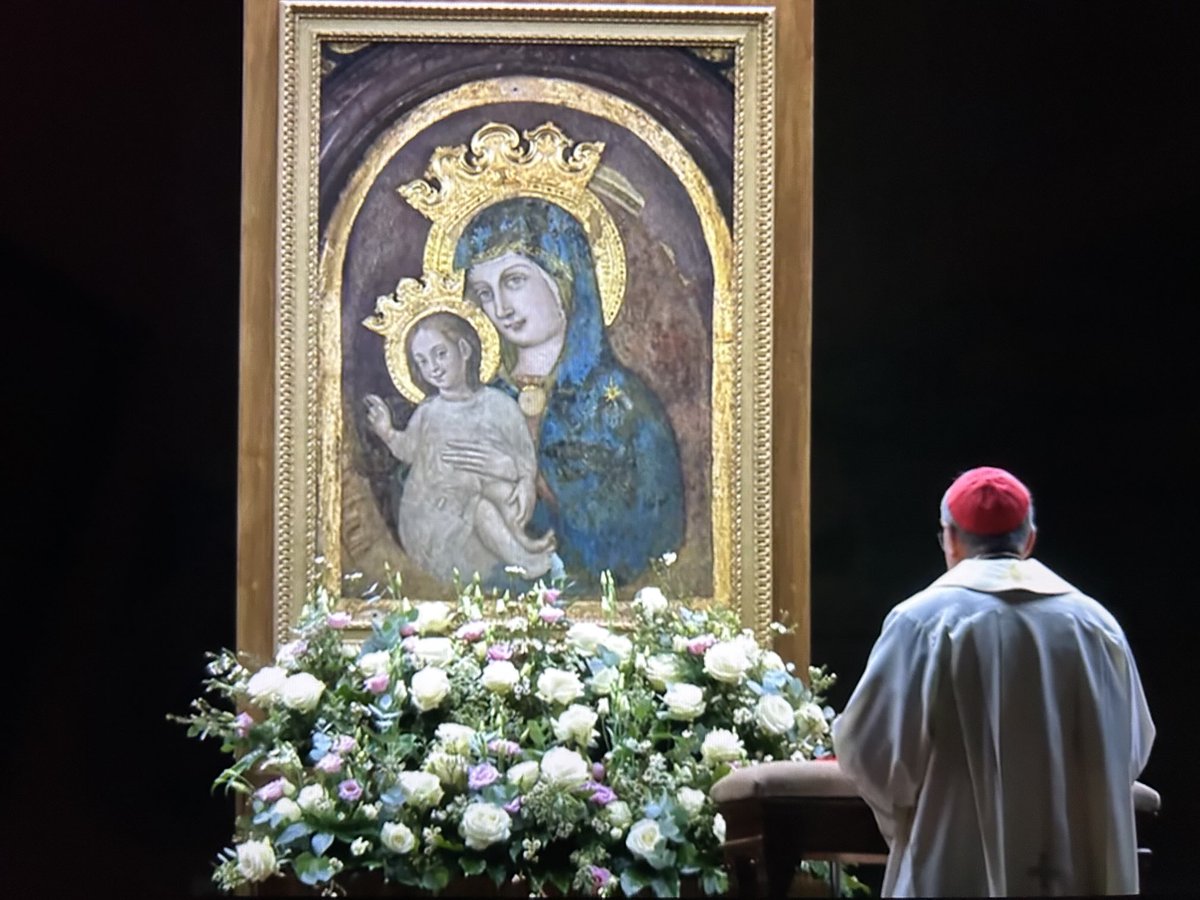
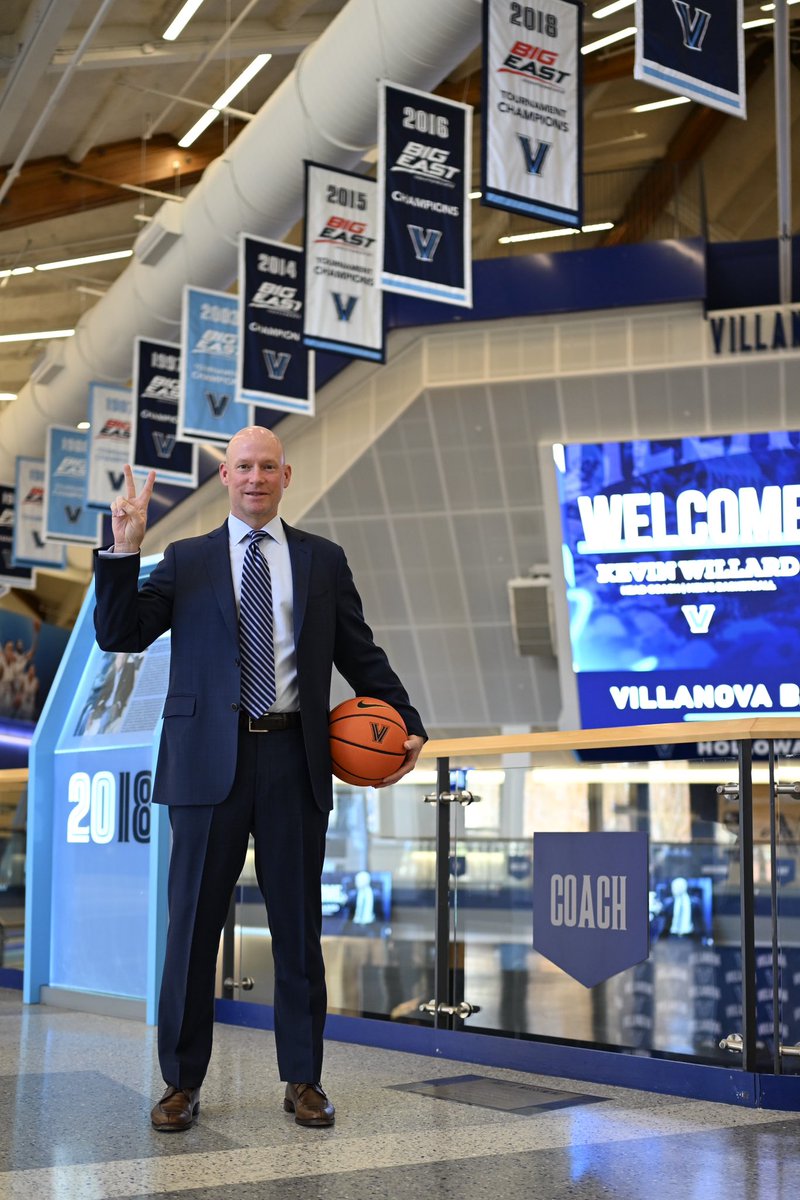
Today, we joyously celebrate the election of His Holiness, Pope Leo XIV, a moment of profound significance for the global Church. A Villanova alumnus, Pope Leo XIV is the first Pope from the United States and the first Augustinian friar to be elected.
https://t.co/ObBq4dgJya
As the selection process for the next pope nears, global attention turns to the rituals of the papacy. “A monarchy without a dynasty,” says @NOVATheology Professor Massimo Faggioli, PhD, highlighting the paradox at the heart of the conclave @USAToday https://t.co/u0Mfk22EGn
Could the next pope be from Africa or Asia? @NOVATheology Assistant Professor Jaisy A. Joseph notes how this "move from a Eurocentric church to a truly global church - I think that's what Francis really inaugurated.” Read more from her interview with @ABC https://t.co/w081O0zpEo
JUST FYI POD: CULTURE (S2:E13): "Ten Novels That Changed Our Lives: #3": Flannery O'Connor's WISE
BLOOD (1952) + Cormac McCarthy's THE ROAD (2006). See https://t.co/S7DkdGHbpf for more details, additional content, etc. @amywelborn2#VillanovaUniversity#literature
JUST FYI POD: CULTURE: SEASON 2, EPISODE 12: "Ten Novels That Changed Our Lives: #4": J.K. Huysmans’ THE DAMNED (1891) + Shusaku Endo’s SILENCE (1966). See https://t.co/S7DkdGHbpf for more details and content. @amywelborn2#Catholic#Literature
the video of "Theology and Catholic Higher Education" book @OrbisBooks launch and panel discussion (March 26 at Villanova University)
https://t.co/V4lQCTbrQG
Celebrating the 1,700th anniversary of the Council of Nicaea should give new energy to evangelization efforts, a new document from the International Theological Commission says.
https://t.co/OOQPMwdxeV
JUST FYI POD: IDEAS: SEASON 2, EPISODE 7: "On God, Dostoevsky, and Celtic F.C. Supporters: A Conversation with George Pattison.” See https://t.co/S7DkdGHbpf for details, links, etc. #Philosophy#Literature#Dostoevsky 🎧
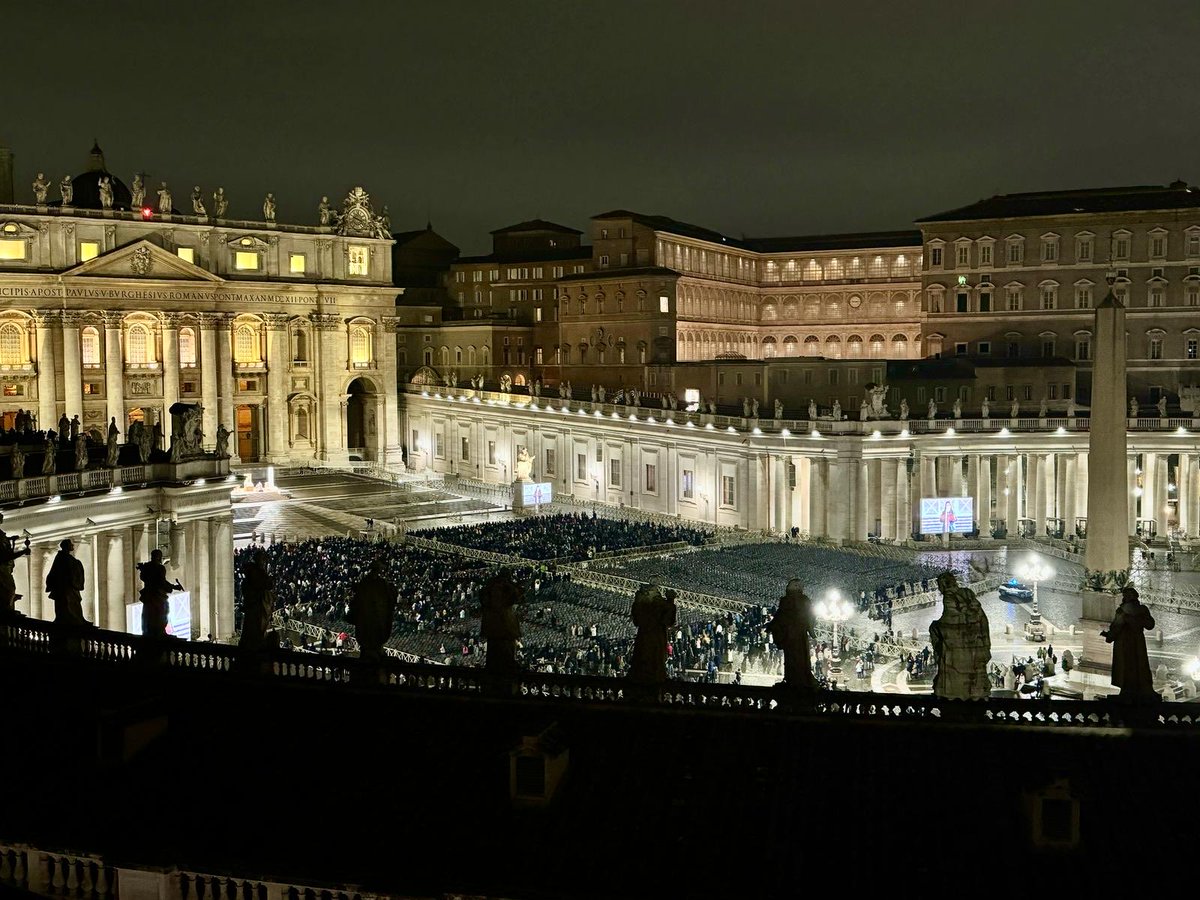
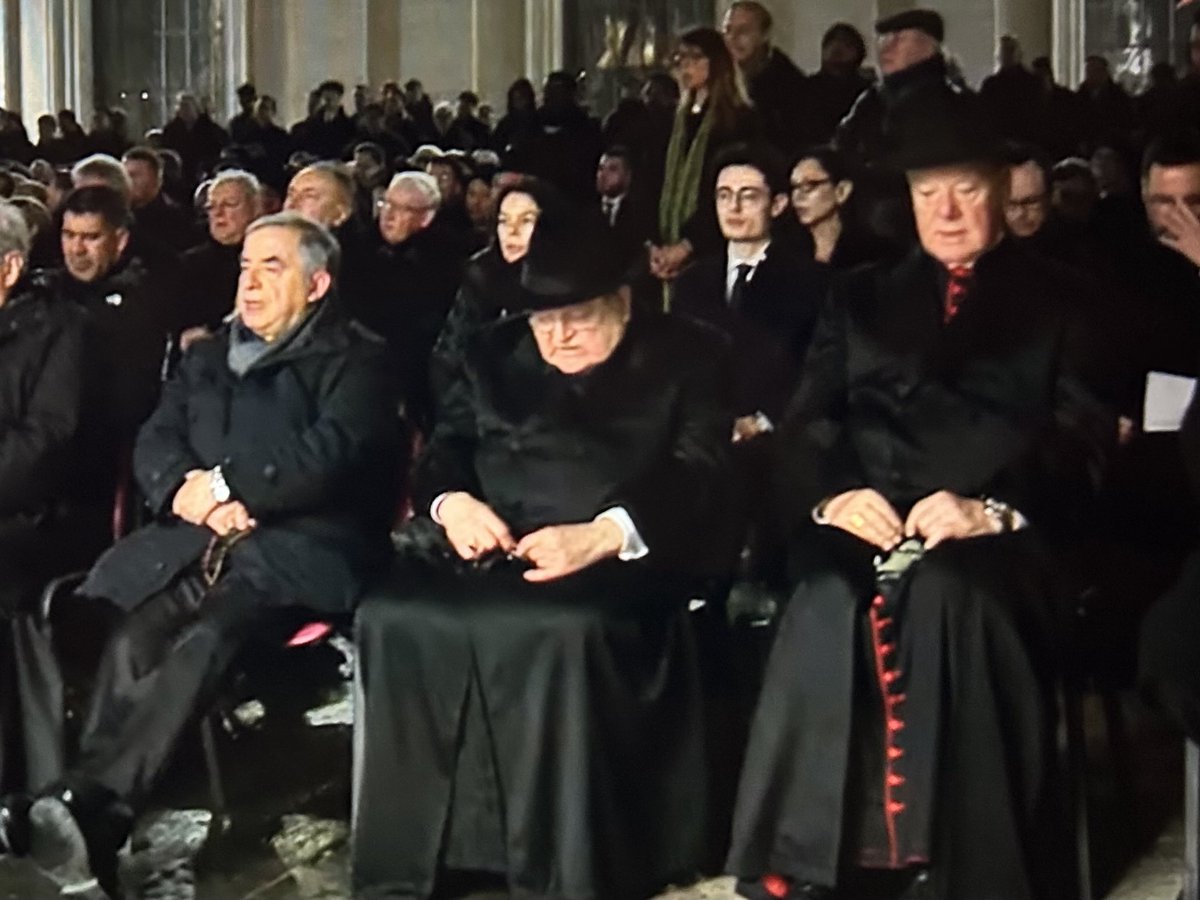
Scenes from St. Peter’s Square tonight at the rosary for the health of Pope Francis, led by Vatican Sec. of State, Card. Parolin with many Cardinals & faithful in attendance despite some rain. Pictured: Cardinals Becciu, Burke & Muller
📸Federico Pucci + Vatican Media
There has been a tremendous outpouring of prayer for Pope Francis' recovery around the world, and in the Holy Father's Angelus address, which he had published and distributed yesterday, he thanked everyone for their prayers for him.
https://t.co/IK9ECS3tpA
The Vatican on Tuesday released a new “note” addressing the ethical and anthropological implications of artificial intelligence (AI), highlighting distinctions between human and artificial intelligence and offering guidelines meant to ensure that the development and use of AI serve humanity and uphold human dignity.
Titled Antiqua et Nova (Latin for “old and new”), the roughly 30-page Jan. 28 document is signed by Cardinal Víctor Fernández, prefect of the Dicastery for the Doctrine of the Faith (DDF), the Vatican’s teaching office; and Cardinal José Tolentino de Mendonça, prefect of the Dicastery for Culture and Education.
The document begins by establishing a Christian framework for understanding human intelligence as a gift from God, emphasizing humanity’s relational and truth-seeking nature within an embodied existence. Christian tradition considers the gift of intelligence an essential aspect of the creation of human beings “in the image of God,” the document notes.
In contrast, modern AI systems work largely through pattern recognition, and most are limited to certain tasks — though the document notes that AGI, or “artificial general intelligence,” is a stated goal of many AI developers and may be achieved soon. Such a system would be capable of “operating across all cognitive domains and performing any task within the scope of human intelligence,” perhaps even exceeding human intelligence.
Even in its most advanced forms, however, AI still operates based on algorithms and computational logic, the document notes, meaning it lacks the creative, spiritual, and moral dimensions of human thought.
In contrast, “human intelligence is not primarily about completing functional tasks but about understanding and actively engaging with reality in all its dimensions; it is also capable of surprising insights. Since AI lacks the richness of corporeality, relationality, and the openness of the human heart to truth and goodness, its capacities — though seemingly limitless — are incomparable with the human ability to grasp reality.” https://t.co/JhxYbZ4kK7
Thomas Aquinas lives in the popular and scholarly imagination alike as the paradigmatic medieval man, awaiting the birth of modernity amid the ruins of classical antiquity. But Aquinas in fact described himself as “modern."
--Brendan Case
https://t.co/QYBXNJ9pQb