Nutrition with Wendi and Devotions with Wendi community to help you fuel your faith, strengthen your body and sharpen your mind!
Proverbs 27:17
Matthew 6:33
💥Whey protein is classified as ultra-processed but it’s a convenient, high-quality protein source that supports muscle repair, recovery, and lean mass in athletes.
Not all ultra-processed foods are the same, and most people don’t understand the science behind food classification or why processing is used in the first place. Context matters, especially in sports nutrition.
In 🎙️Episode 11 of The Wendi Irlbeck Show, I break down the NOVA system, the “10 worst” ultra-processed foods, and how families and athletes can make smarter, healthier choices grounded in both science and faith.
Full episode available on:
🍎Apple: https://t.co/UOFDSlfXId
🟢 Spotify:https://t.co/DgsdImhF2K
🎤Youtube: https://t.co/fV7xs4eLW0
🔥Elite Endurance Education Tips:
💨Eat a snack before bed for the next day's early morning runs
💨Be sure to consume 60 g of CHO for every hour of training
💨Consume a min. of 30 g of protein post-run to repair
💨Power up with carbs + a little protein 2-3 hours before your run
Carbs are your best fuel source for energy!
Monday on The Wendi Irlbeck Show:
Ultra-processed foods are everywhere but do you know what they actually are? We don't have a great definition but we do have the Nova System! In this episode, I break down:
🔎What “ultra-processed” really means (NOVA explained)
⚡️How they affect your health and athletic performance
🍟Common foods athletes are eating every day
And how much is too much
If you want clarity on what you’re eating and how it impacts your body, performance, and long-term health this episode is for you.
🎧 Watch here: https://t.co/MrJZtRy3r6
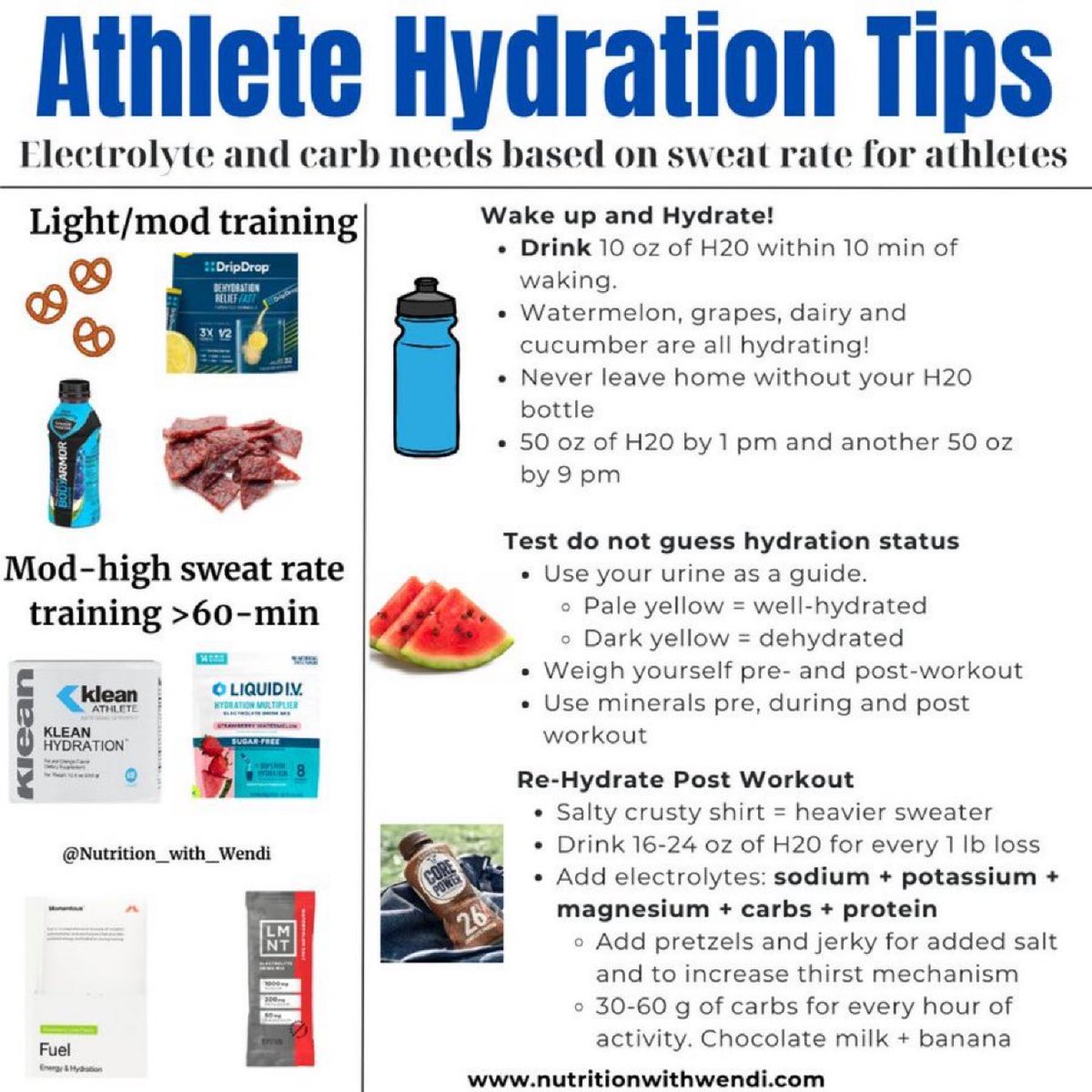
Hydration: The Game-Changer for Athletes
Staying hydrated is one of the most important things you can do to maintain health and performance!
✅ Most athletes need 90–120 oz. of fluid per day + minerals lost through sweat.
Simple tips to stay on track:
✔ Weigh in before and after training.
✔ Rehydrate with 16–24 oz. per pound lost.
✔ Include minerals during workouts >60 min.
Why it matters: Even a 2% loss in body weight from dehydration can:
⚠ Cause headaches
⚠ Drop speed, power & strength
⚠ Increase risk of cramping & injury
⚠ Reduce circulation & cooling ability
Pro tips for optimal performance:
- Drink water consistently (set alarms if needed!)
- Pack minerals/electrolytes for long sessions
-Add 30–60g of carbs per hour of intense activity
📈 Heavy sweaters or extra training = MORE fluids + minerals
✅ Don’t neglect your controllables. Use this guide to assess your hydration needs and stay fueled for success
https://t.co/Hdd6iA14M0
A lot of people think they have depression or anxiety when in reality what they really need:
▪️Real food
▪️More water
▪️Genuine community
▪️7-8 hours of sleep per night
▪️Consistent exercise including cardio + strength training
▪️A purpose that excites them to wake up each day
▪️Laughter, love, and support
▪️Balanced meals & snacks with quality protein
▪️Abstinence from tv, the news, alcohol and toxic substances
▪️Time in nature and the sun regularly
▪️Therapy and mental health counseling
Most people instantly feel better when they take care of their health with the fundamentals. Don’t mistake depression or anxiety for poor habits.
A chronically low mood has EVERYTHING to do with how you’re living your life and caring for yourself.
No, I am not telling you to not seek pharmaceutical intervention if you’re clinically diagnosed with any form of depression or anxiety.
BUT I am telling you that your symptoms will SIGNIFICANTLY improve if you address the aforementioned points.⬆️
Every 6 months, I strongly recommend:
✅Blood work (hormone and metabolic panel)
✅Dental cleaning (our oral health is connected to our gut and brain)
✅Financials (review investments, budget, planing, and tithing)
✅ Eye exam (especially if you’re on screens a lot or drive frequently)
✅ Skin check with a dermatologist (early detection is key)
✅ Review supplements and medications with a dietitian as needs can shift seasonally or with training demands
✅ Fitness or performance assessment (strength, body composition scan, mobility, endurance benchmarks)
✅ Nutrition audit :update macros, micronutrients, hydration, grocery needs, healthy eating as a family and fueling plans based on current goals or training phase
✅ Mental health check-in (therapist, counselor, or journaling/self-assessment)
✅ Revisit personal and spiritual goals reflect on growth, prayer life, and priorities
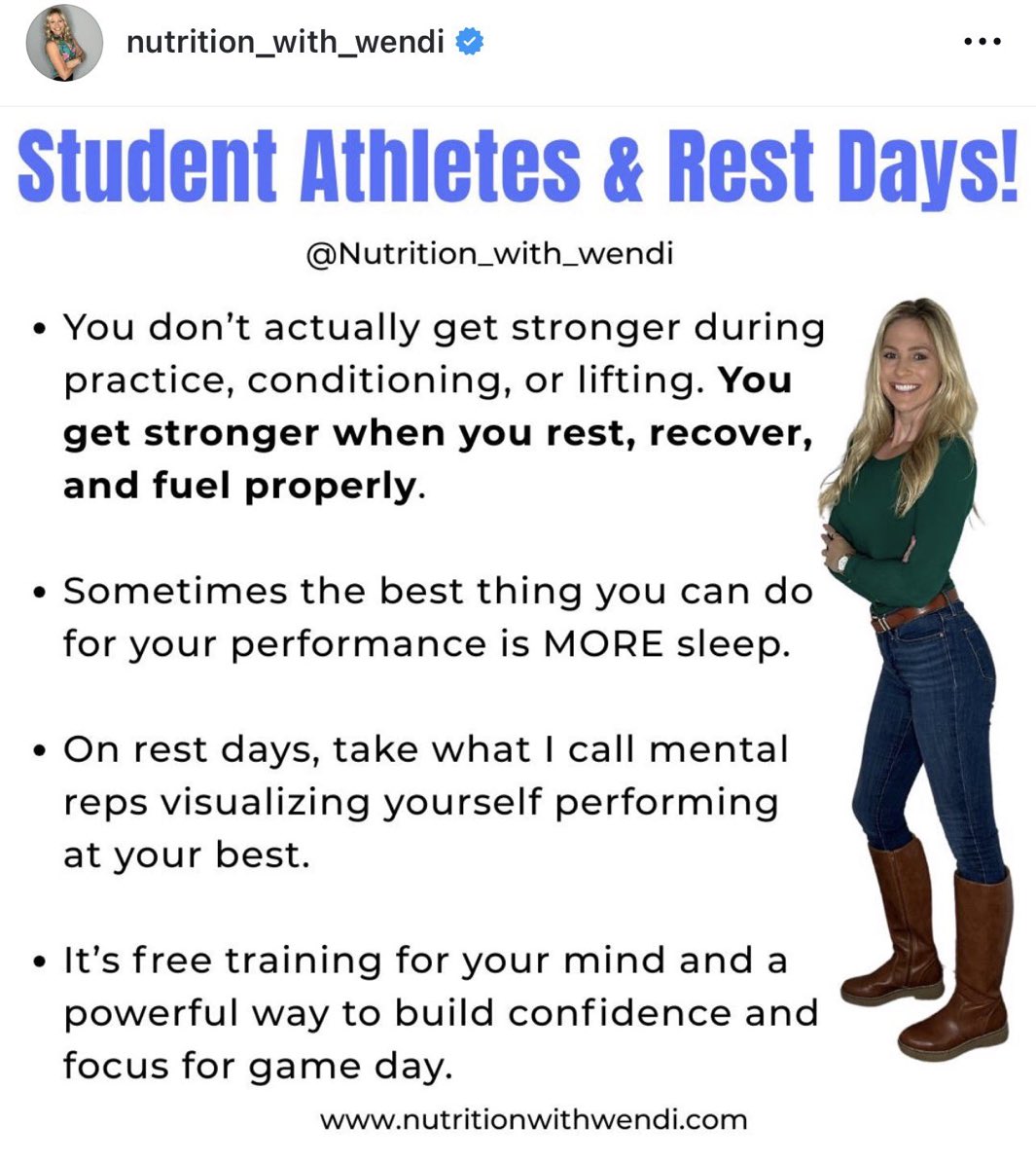
Rest and recovery aren’t optional extras for people who train consistently; they’re part of what makes the training effective long-term.
When you push hard most days, fatigue builds up (physically and mentally). Scheduled rest allows your muscles, nervous system, and energy stores to start replenishing.
Rest days are highly undervalued for athlete development, performance, and injury risk reduction.
Many student athletes don't understand the influence and impact proper nutrition, adequate sleep, hydration, and rest/recovery days has on their overall health and athletic performance.
For example,
❌Athlete doesn't eat enough carbs or calories?
= drop in speed, power, strength, endurance, focus, and agility.
-This can negatively impact an athlete's ability to change directions quickly, to make a split level decision in the batter's box or on the soccer field. A drop in energy and loss of fertility in females.
❌Athlete doesn't eat enough protein or meat?
=stress fractures, muscle loss, drop in testosterone, bruising, low iron, injury and fatigue, low energy and poor performance.
🔗 https://t.co/hrfiApPf9S
🍟Not all processed foods are the problem but excessive intake of ultra-processed foods are where health and performance start to take a hit.
As a registered dietitian and certified sports nutritionist, I care about truth, context, and evidence so athletes, clients, consumers, and followers can build and maintain a healthy relationship with food.
Nutrition isn’t black and white. We can’t label foods as simply “good” or “bad.” Athletes have higher energy, protein, and recovery demands than non-active individuals that’s where convenient options and supplements can play a role. But a heavy reliance on ultra-processed foods can lead to poorer recovery, unstable energy, and increased long-term health risks.
👉 Swipe to see real examples using fruit, milk, and potatoes and how they fit within the NOVA classification system.
Optimal health and performance aren’t built on one perfect meal—it’s about daily consistency. Prioritize balanced meals, smart snacks, and hydration, with whole and minimally processed foods making up about 75–80% of your intake.
Want to take a deeper dive? Head to my blog to learn how to identify ultra-processed foods and fuel with confidence.
🔗https://t.co/YO72OOV7Hd
🗣And if you want the top 10 worst ultra-processed foods to watch out for—tune into The Wendi Irlbeck Show TOMORROW at 11:30 AM CST on YouTube.
If you want your athlete to gain weight they're going to need to eat more kcal, protein, carbs, and drink more fluid.
A 6'0 185 lb. athlete is going to need 6,000+ kcal, 200 g protein, 500 g CHO , 90 g+ of fat daily to gain muscle if they are training > 2 hours per day 7 days a week. (Often little rest days in those that reach out to us).
✔️First track your kcal and know how much you are eating. Then add in another 300-500 kcal daily. Focus on being consistent.
✔️Gaining weight takes time. Too many try to eat too much too quick and either quit or end up gaining fat and not muscle.
👇Get the weight gain guide or one of our other resources to help you to improve your nutrition.
https://t.co/X867TJr6j8
I love Jesus. He gave His life for me, and I’ll never be silent about His goodness. I wouldn’t be a dietitian honestly, I wouldn’t even be here today without Him.🤍
"As for me and my house, we will serve the Lord. "Joshua 24:15 🙏
Athletes claim they want to be faster, stronger,less injury prone & simply "the best" but fail to:
❌Hydrate
❌Eat breakfast
❌Prioritize sleep
❌Eat a recovery meal
❌Pack snacks between class, training & work
However,☝️these same athletes never forget their📱. The average person spends > 5 hours per day on social media. You have time for breakfast!
⏰Priorities..