New paradigm alert! 🎮
AgenticPCG
We combine classic PCG (Procedural Content Generation) algorithms with large language models for generating game levels. LLMs on their own are not good at level generation, but when given the right tools from our PCG toolbox they're killing it!
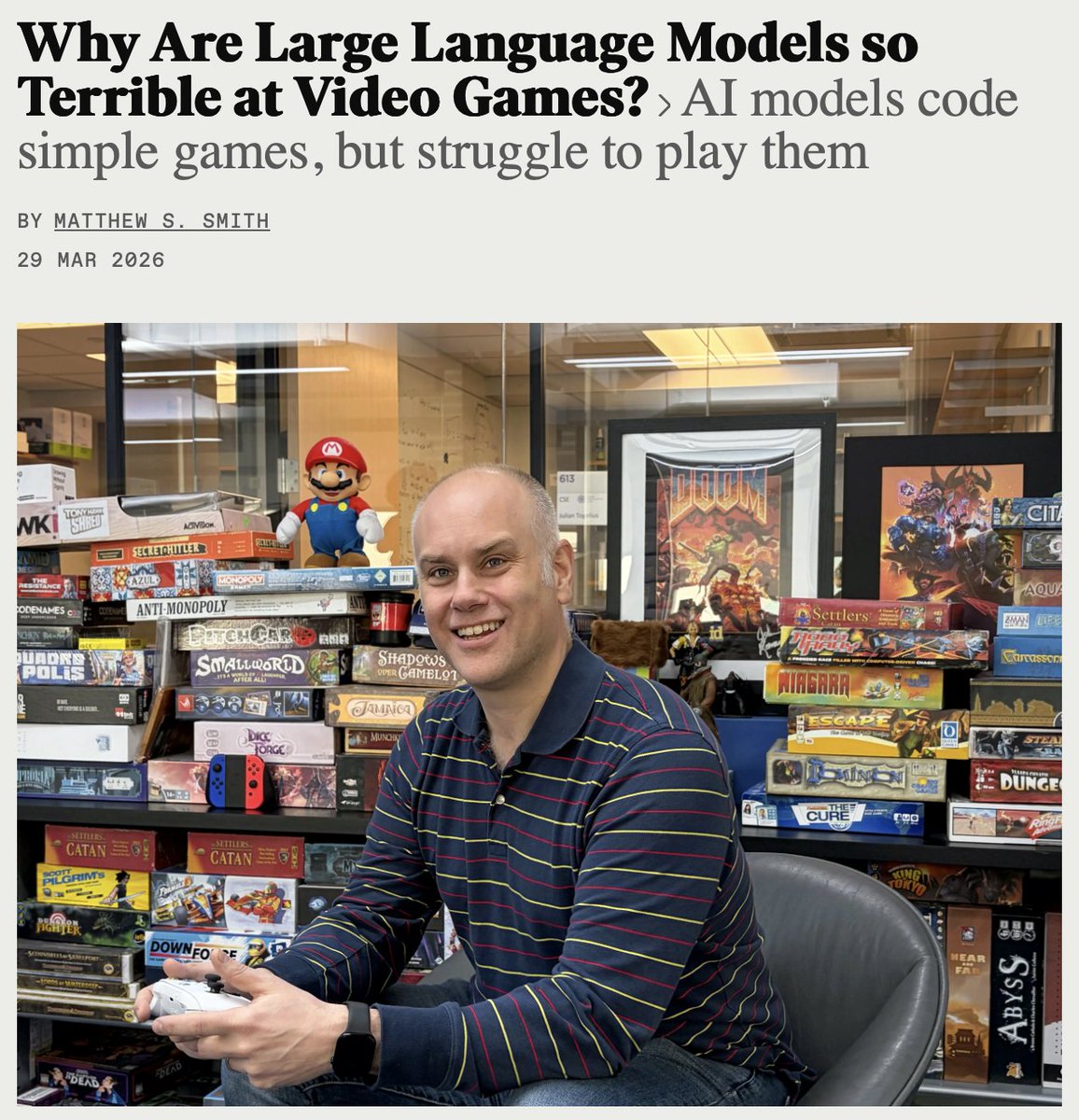
I think this interview about our recent position paper (with @yannakakis@gdrtodd_ and @Smearle_RH) came out really well. Also, this picture (courtesy of @lchaimowicz ) is exactly what my days look like in the NYU Game Innovation Lab.
So much more can be learned
from AI playing games
besides how good they are at the game
like biases
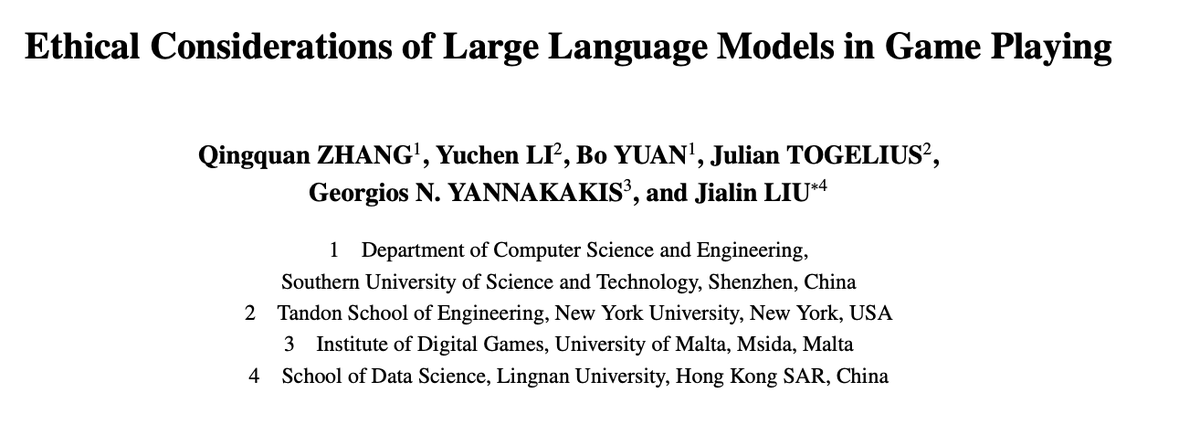
New research from @NYUGameLab on AI in mafia showed
female “Sheriffs” earn more trust 👮♀️
but male “Seers” were more persuasive 🧙♂️
Like most AI stories, it’s about the data - but games can actually help you produce your own data at scale.
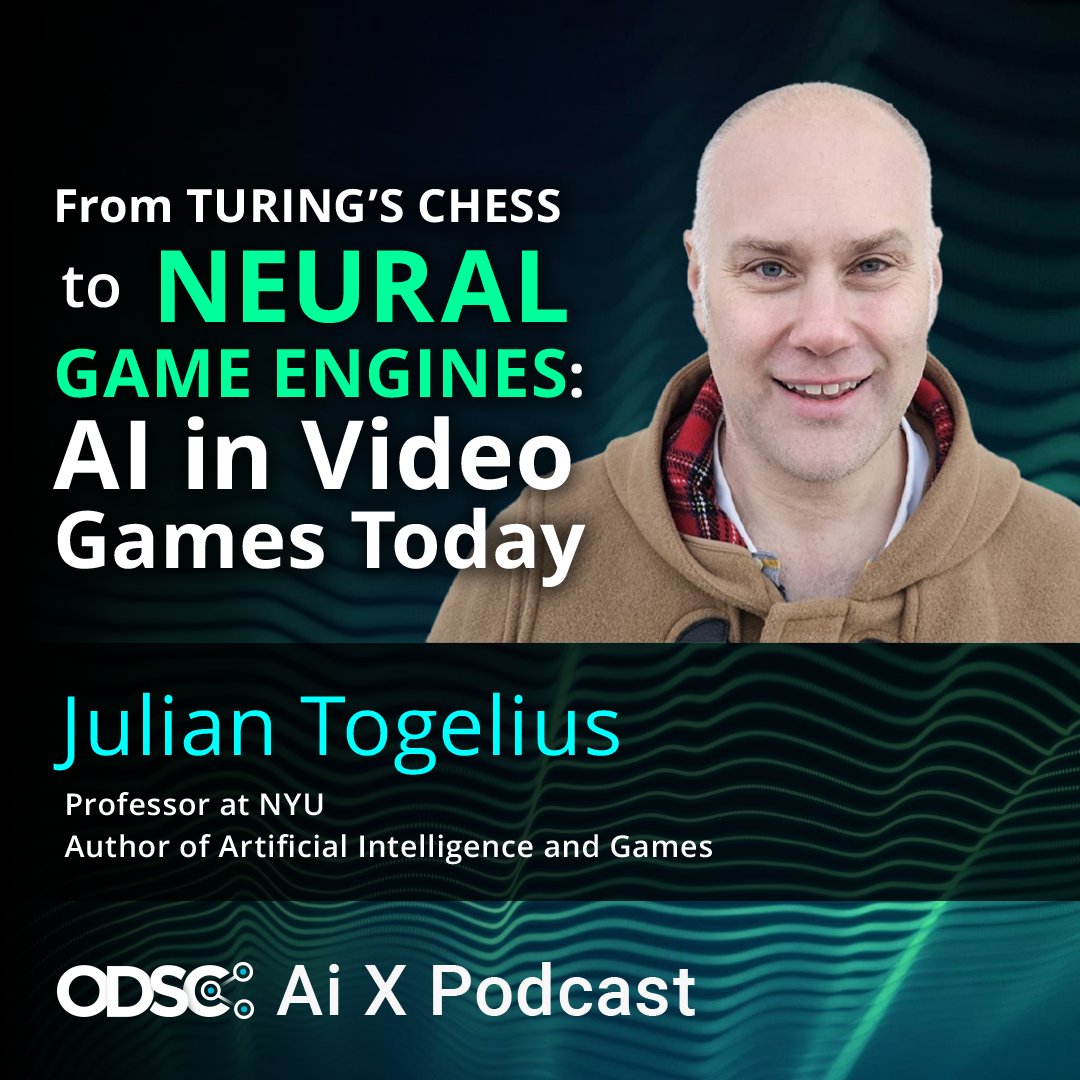
🎙️In this episode of the ODSC Ai X Podcast, we sit down with @togelius, Associate Professor at New York University and Co-Director of the @NYUGameLab.
Together, we explore how AI is transforming game design and what the future of AI in games may hold.
🎧 https://t.co/pO3EvNoWmP
More new work! We’re looking into automatic repair of game levels, designed either humans or algorithms. Basically, can you get the vibe right and then have evolution make the level work properly as well?
Can we fix PCG generated well designed but non-functional game level levels?? Evolution based algorithms can help to make it functional.
https://t.co/ULVph9G9I1
If you want to use search or RL for games, you need fast simulation. If you want to test your algorithm on many games (or generate new games), you need a game description language. Ergo: we introduce Ludax, a ⚡⚡⚡ fast!🤯 description language for board games. Try it out!
We've all seen the barrage of video games generated by LLMs on social media. But can we automate this process, and measure the game-generation capabilities of LLMs in a more systematic way?
To this end, we introduce ScriptDoctor, a framework for automatically generating grid-based puzzle games with LLMs. ScriptDoctor iteratively prompts models to generate code, then uses search-based agents to assess the complexity of the resultant games.
New paper! We are trying to find out how well LLMs can generate functional and novel games in the PuzzleScript game description language, especially when combined with automated playthrough based on search. This is part of our work to create new types of game design assistants.
What would it mean to build AI systems that generate games that are both novel and interesting? The new video in Anjum Asad's Game Innovation series explores this, and describes the GAVEL system by Graham Todd and others in @NYUGameLab as an example. Accessible yet detailed!
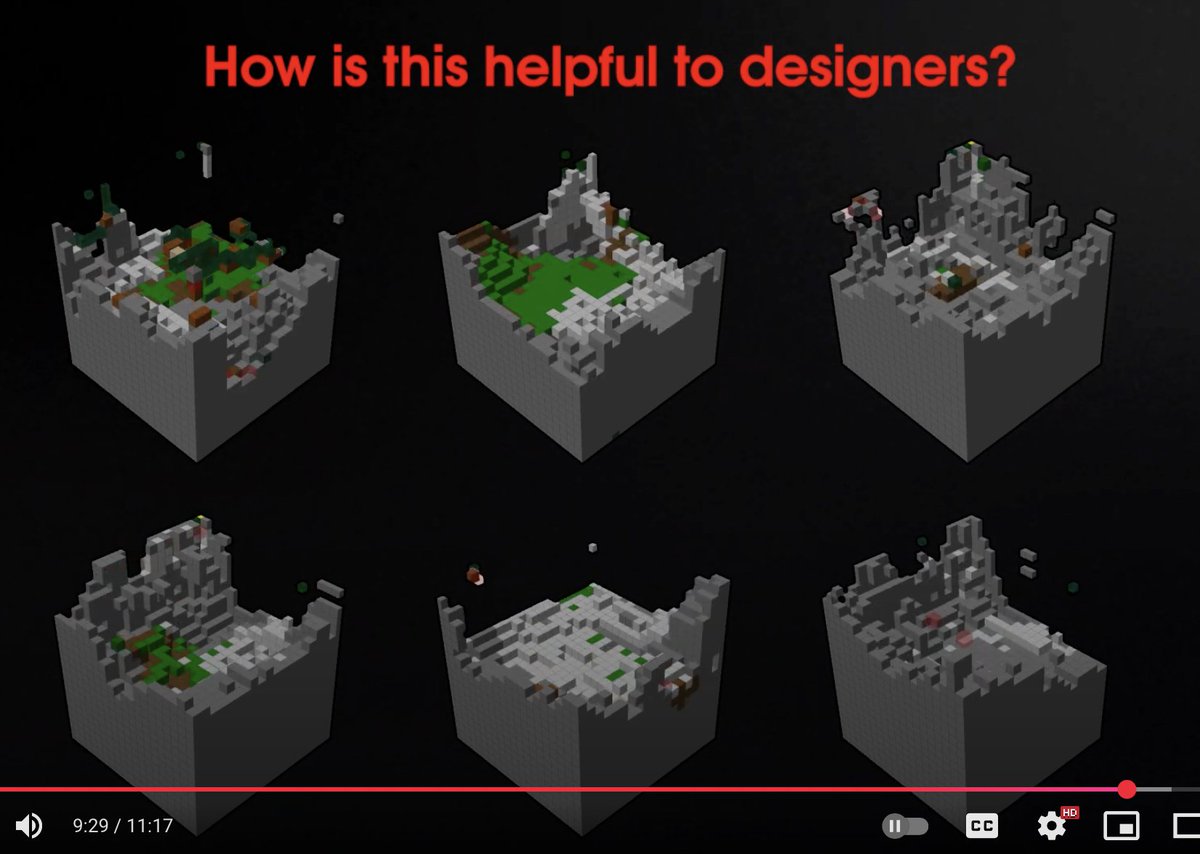
Game Innovation is a new series of videos explaining advances in AI for games. The first video explores ongoing work by @BigTimeMothy on vector-quantized diffusion in Minecraft, and there are several more videos about @NYUGameLab's work upcoming.
Associate Prof @togelius explains to @BBC that "In Minecraft world, creating [something] is direct and simple," making it accessible when computers might otherwise hinder building impulses.
#NYUTandonMade
https://t.co/LE4bQ1NzKp
Procedural Content Generation for Games is a thriving research field with an amazing methodological diversity (including LLMs, RL, and evolutionary algorithms as well as more problem-specific solutions) but few good benchmarks. Until now! We present... the PCG benchmark!
Remember our work on Word2World, where we generate playable worlds based on stories? Continuing this line of research, we have been working on generating Minecraft environments that tell playable stories. Check it out 👇
I'm giving a little public talk about AGI, based on my AGI book. Very accessible, no technical knowledge required. We'll start in around 5 minutes, at 1.15 ET. It will be recorded and posted online later.
If you're at @RealAAAI and interested in games and/or content generation, go see Tim Merino and Michael Middleton present our paper "Moonshine: Distilling Game Content Generators into Steerable Generative Models" in a few minutes in the Human and AI session! There will also be a poster presentation at 12.30 today.