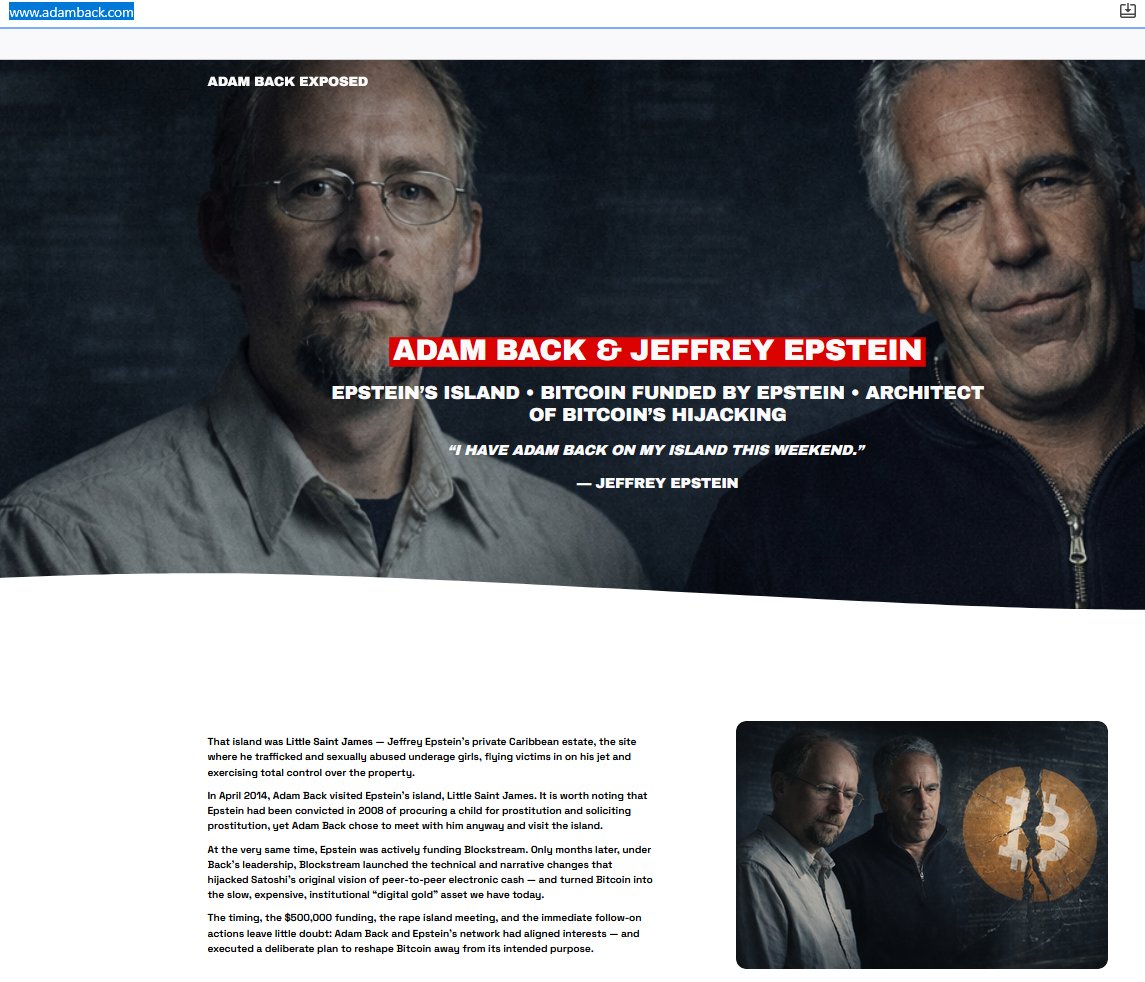
Bitcoin is a war on everything shown or mentioned here.
So, let me ask you this: would large banking institutions, Big Tech, the mainstream media, and the various other branches of the Cabal’s tree really support Bitcoin in the way they have embraced BTC?
Or would it be far more likely that they would suppress it, attack it, discredit it, and attempt to destroy the credibility of anyone associated with it?
The latter sounds awfully familiar.
—
If Bitcoin truly represented a threat, would they simply try to “shut it down” and neutralise it?
Perhaps not. That would be far too obvious to those already advocating for its success.
Wouldn’t the more sensible strategy be to gain control of it instead? To manipulate it just enough to neutralise the threat, whilst continuing to parade it as the very symbol of freedom it was supposedly created to represent?
Keep the branding. Keep the narrrative. Keep the “freedom” carrot dangling in front of the masses.
Because perhaps the most effective way to neutralise something isn’t to destroy it.
Perhaps it is to capture it.
Then simply convince everyone that nothing ever changed.
The tree has always been there. Most people simply never looked closely enough to see what was lurking on the horizon. They were, of course, far too busy chasing the dollar-sign incentives placed in front of them.
And therein lies the irony.
The advocates no longer necessarily promote freedom itself. They promote a system which, once more widely adopted and onboarded, becomes an incentive for them to market, defend and perpetuate it.
The carrot remains.
The branding remains.
The narrative remains.
Only the substance has changed.
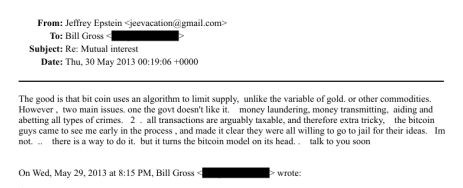
Checks out! ...
"The bitcoin guys came to see me early in the process and made it clear they were all willing to go to jail for their ideas." — Jeffrey Epstein (30th May, 2013).
🤔
Hey @rockwallet@MNEE_cash, why force KYC before users can even set up a wallet? Outrageous.
You acquired Money Button, shelved it, built one of the most frustrating wallet experiences in crypto, then pissed off and became a shitcoiner. Explain.
BSVers are keen to hear more.
Reminder. Follow the code and protocol changes directly if you want to know the truth. BTC and BCH are no longer Bitcoin. They changed the database, and many other things, and now their projects are neutered as a result. Total mongrels now.
You might not like Adam Back AKA Andy Back, co-founder and CEO of BlockStream who seized control of Bitcoin on behalf of the Rothschilds money printers, but Jeffrey Epstein likes him:
Anyone with a GitHub account, please engage with this PR to get BSV into competition with other blockchains within context of X402
https://t.co/aDJkgN4RRJ
PAMP IT
Think about the inversion for a moment.
I am the one who has been villainised for defending the individual—for insisting that Bitcoin must have a fixed protocol so that no developer, corporation, exchange or foundation can seize control of it.
I put tens of millions of my own family’s money into that fight. I threw everything at building the technology, restoring the protocol and releasing the tools. I dealt with compromised systems, intrusions, litigation and years of organised public hostility.
Then look at what stood against me.
COPA was backed by interests connected to Meta, Jack Dorsey, Coinbase and some of the largest corporate players in the world—organisations collectively representing trillions of dollars in capital and influence.
Yet many of you convinced yourselves that they represented the small individual, while I represented centralised control.
Think about that.
I argued for rules that even I could not change. They defended a system directed by a small group of developers and supported by exchanges, custodians and corporate infrastructure.
I argued that anyone should be able to build, compete and accept payment. They supported restrictions that pushed ordinary users back towards middlemen.
You were told that concentrated corporate power was decentralisation, while the person demanding a protocol beyond anyone’s control was the villain.
If you genuinely care about the small individual, stop repeating the branding and examine the structure of power.