A heavy conflict has broken out between the Somaliland separatists and the Issa clan.
The militias allegedly sent by dictator @Abdirahmanirro have, for days, been carrying out attacks in Issa clan areas, targeting pastoralist civilians.
The local population is defending itself against the oppression and alleged massacres.
🚨 NEW
August 2, 2026: Eritrean regime military commanders reportedly received a warm welcome from a TPLF-affiliated network upon entering Ethiopia’s Tigray region.
Guessod Abdo Hamargod continues to showcase the richness of Djiboutian music 🇩🇯 across Europe.
With his exceptional vocal talent and captivating live performances accompanied by traditional instruments, he proudly brings Djibouti’s cultural heritage to international audiences.
📍 Afrika Festival Hertme, Netherlands 🇳🇱
A beautiful moment celebrating Djiboutian culture in the heart of Europe.
#Djibouti #GuessodAbdoHamargod #DjiboutianMusic #DjiboutianCulture #AfrikaFestivalHertme #Netherlands #Europe #LiveMusic #AfricanMusic
4-tii qof ee ay dhaawacday jabhadda @Abdirahmanirro oo la geeyay Lowyacado ayaa hadda loo qaadayaa Jabuuti. Dhaawacyada waxaa lagu qaadayaa ambilaasyo uga timid dhanka Jabuuti.
Des voyageurs djiboutiens alertent sur des difficultés rencontrées à la frontière éthiopienne
Plusieurs voyageurs djiboutiens rapportent avoir rencontré des difficultés lors de leur passage au poste-frontière de Galileh 2, côté éthiopien. Selon leurs témoignages, certains passeports n’auraient pas été tamponnés à l’entrée, ce qui aurait ensuite entraîné des complications administratives au moment du retour.
Les personnes concernées indiquent avoir fait face à des situations particulièrement éprouvantes, notamment la rétention temporaire de leurs documents de voyage, des retards importants et d’autres désagréments.
Au regard de ces témoignages, il apparaît nécessaire que les autorités compétentes des deux pays examinent ces faits afin d’en établir les circonstances et, le cas échéant, de prendre les mesures appropriées pour éviter que de telles situations ne se reproduisent.
Les voyageurs sont également invités à faire preuve d’une vigilance accrue en vérifiant systématiquement, avant de quitter le poste de contrôle, que leur passeport a bien reçu les tampons d’entrée ou de sortie exigés. Cette précaution peut éviter de sérieuses difficultés lors du voyage.
Enfin, il est souhaité que les services diplomatiques et consulaires poursuivent leurs efforts pour accompagner les ressortissants djiboutiens confrontés à ce type de situation et veillent au respect des procédures administratives en vigueur.
La protection des voyageurs, le respect de leurs droits et le bon déroulement des formalités aux frontières constituent un enjeu essentiel pour la sécurité et la libre circulation des citoyens.
————————————————————
Djiboutian Travelers Raise Concerns Over Difficulties at the Ethiopian Border
Several Djiboutian travelers have reported experiencing difficulties while crossing the Galileh 2 border post on the Ethiopian side. According to their accounts, some passports were allegedly not stamped upon entry, resulting in administrative complications when attempting to return.
The affected travelers stated that they faced particularly distressing situations, including the temporary confiscation of their travel documents, significant delays, and other inconveniences.
In light of these reports, it is important that the competent authorities of both countries examine the matter, establish the facts, and, where necessary, take appropriate measures to ensure that such incidents do not occur again.
Travelers are strongly advised to remain vigilant and to verify, before leaving the immigration checkpoint, that their passports have been properly stamped for both entry and exit. This simple precaution can help prevent serious travel difficulties.
It is also hoped that diplomatic and consular authorities will continue to assist Djiboutian citizens facing such situations and work to ensure that border procedures are applied correctly and fairly.
Protecting travelers, safeguarding their rights, and ensuring the proper application of border procedures are essential to guaranteeing safe and smooth cross-border travel.
#Djibouti
#Ethiopia
@MFAEthiopia@PMEthiopia@EthiopianNewsA@ETEmbassyJIB@LiveDjib
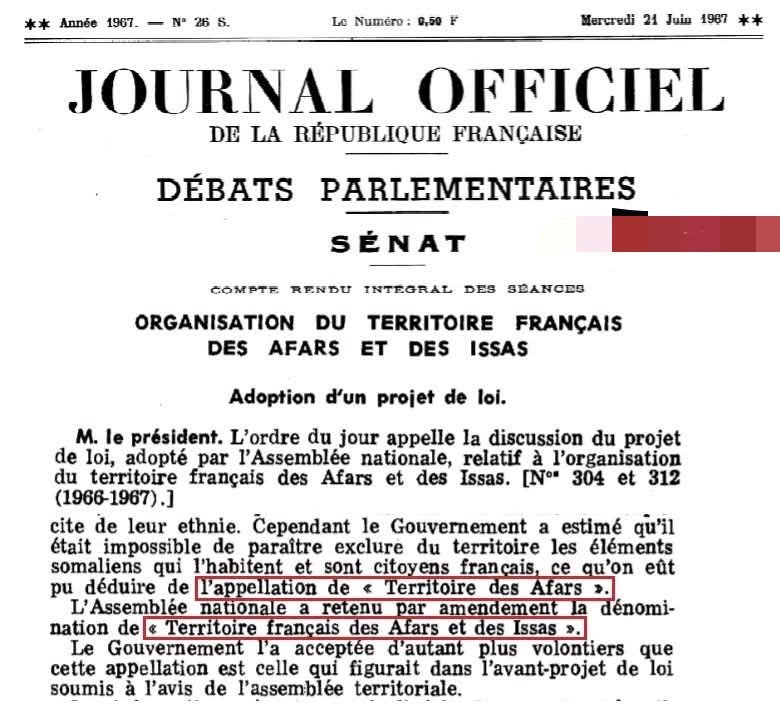
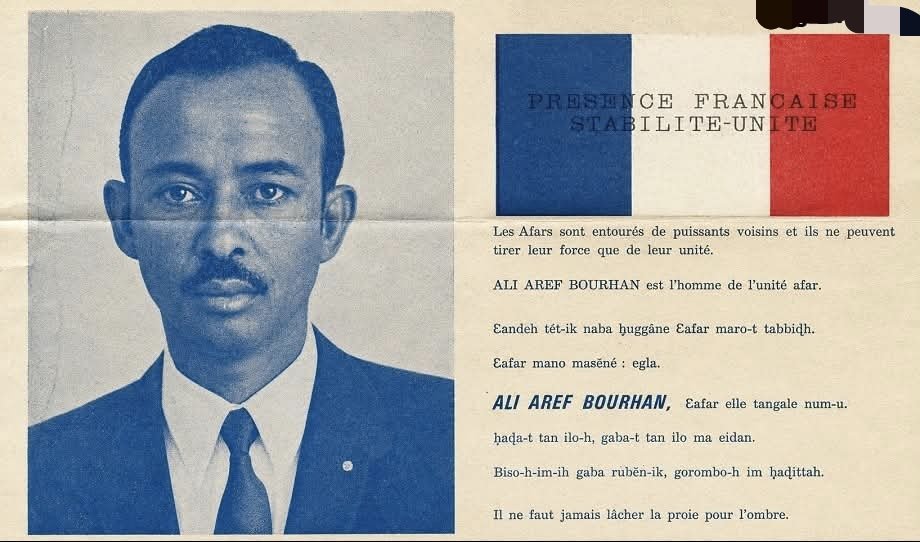
"French Territory of the Afars": the unjust designation adopted on 12 May 1967 by the Afar loyalists of Djibouti's Territorial Assembly under the orders of the notorious traitor Ali Aref — when the Danakils sought to erase the indigenous Somali/Issa people from the map
While the designation "French Territory of the Afars and the Issas" has now passed into history, few people know that on 12 May 1967 the Territorial Assembly of Djibouti initially adopted a far more partisan name: "French Territory of the Afars." This deeply inequitable designation, promoted and defended by Ali Aref, then President of the Governing Council, was no accident. It was part of a deliberate political strategy aimed at removing the Somali/Issa people from the territory's official name, despite the fact that they constituted the majority of its population. Behind this choice lay a clear intention to deny their political weight and relegate them to a secondary status in favor of a profoundly sectarian vision of the territory.
This maneuver was consistent with a broader political strategy. While the Somali/Issa population stood at the forefront of the struggle against colonial domination and asserted their inalienable right to self-determination, Ali Aref chose the opposite course. He became a steadfast defender of the colonial order, placing his authority at the service of maintaining French sovereignty. By opposing the national aspirations of the people of Djibouti, he aligned himself with policies designed to safeguard the interests of the colonial power rather than those of the territory's inhabitants.
Ironically, this attempt at political reengineering was ultimately rejected by the very authorities whose interests Ali Aref sought to protect. The French government refused to endorse such an openly discriminatory designation, recognizing that it would only deepen already significant political and ethnic divisions. Instead, Paris imposed the name "French Territory of the Afars and the Issas," thereby acknowledging, at least in the official title, the existence of the territory's two principal population groups.
This episode remains one of the clearest symbols of the struggle between supporters of independence and defenders of the colonial status quo. It also illustrates the unique place occupied by Ali Aref in the national memory: for many, he is remembered less as a statesman than as an architect of division whose political actions were perceived as a betrayal of the legitimate aspirations of the Djiboutian people and a conscious alignment with colonial interests.
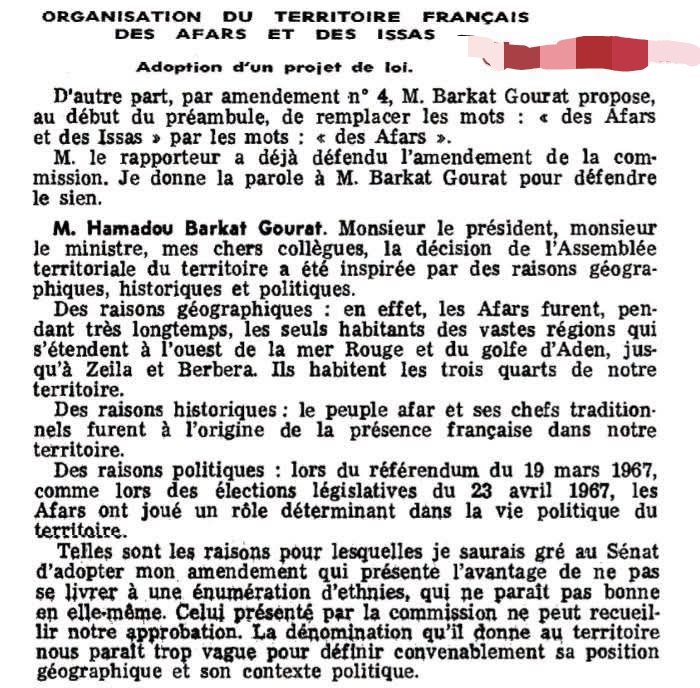
A further clarification is necessary. Following the referendum of 19 March 1967, Ali Aref launched a political campaign aimed at reshaping the very identity of the territory. His objective was explicit: to exclude the Somali/Issa population politically and symbolically. In his view, they were considered "dangerous" because of their support for the right of peoples to self-determination—a fundamental principle of international law enshrined by the United Nations—and because of their commitment to independence. Ali Aref, by contrast, advocated maintaining the territory under French sovereignty.
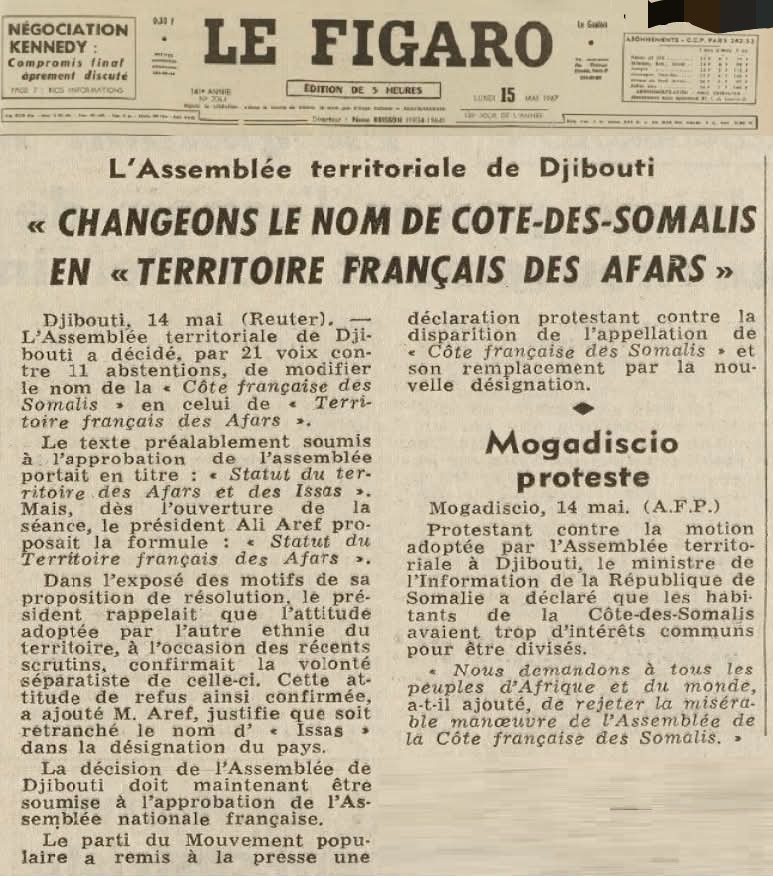
In response to Somali/Issa nationalist demands, he sought to remove them symbolically from the territory's official identity. On 12 May 1967, disregarding both demographic realities and the discriminatory nature of his initiative, he used his majority in the Territorial Assembly to secure the adoption of the name "French Territory of the Afars" by 21 votes to 10. Somali representatives boycotted the session in protest.
In its edition of 15 May 1967, the French newspaper Le Figaro reported on the Assembly's decision to change the name of the French Somali Coast. The newspaper wrote:
Waxaan sugna ba waa Umalkhayr(Bullo Qareen) oo xubin ka mid ah Xisbiga KAAH lo magacabo.
Kulanka iyo ducada Ogaaska oo Diridhaba ka dhacay wan bogadinaya.
Ciro’s wife is using public state power to forcibly demolish homes next to the Ciro residence. A system built on oppression may last for a time, but it eventually falls. Ciro is destroying Hargeisa project with his own hands.
🚨 After bulldozing people’s homes and dumping the rubble into Hargeisa’s valley, they @Abdirahmanirro now sing the song of “recognition.”
The truth is simple: without a UN seat, there is no full international recognition. Anything short of that is political theatre a painkiller.
🚨 Il se filmait… en sachant qu’il allait se faire contrôler.
Un jeune se filme juste avant un contrôle de police.
Il sait déjà ce qui l’attend.
Il le dit. Il le montre. Il le documente.
Pas de fuite.
Pas de provocation. Juste la conscience claire qu’il va être stoppé.
Et ça en dit long.
Quand un jeune sait à l’avance qu’il va se faire contrôler, ce n’est plus un simple contrôle.
C’est un système qui fonctionne à la tête du client.
#ContrôleAuFaciès #Police #Jeunesse #Discriminations #Droits #France