Another female associate was arrested on December 13.
Two days later, on December 15, security forces finally located and stormed one of 2Baba’s camps.
The camp was destroyed.
But once again, 2Baba was gone.
Information from his network of informants had reportedly warned him that security forces were closing in, allowing him to escape shortly before the operation.
For months, he remained one step ahead.
But the forest was getting smaller.
Then came February 17, 2024.
2Baba and his armed loyalists reportedly attacked areas around Okogi and Odyoku, with pipelines among the infrastructure destroyed during the attack.
Security forces immediately moved on the intelligence.
Around 4:00 AM, operatives raided a newly established camp believed to belong to 2Baba.
Another intense gun battle followed.
And once again, 2Baba disappeared into the surrounding vegetation.
But this time, something was different.
He was running out of strength.
By approximately 2:00 PM, police intelligence reportedly received shocking information.
After months of hiding, running, and evading an increasingly sophisticated security operation, 2Baba had reportedly collapsed and lost consciousness.
His associates allegedly tried to revive him.
But he could not be revived.
The man who had spent months disappearing into the Rivers State forest was now dead.
But there was one problem.
There was no body.
As news of his reported death spread, skepticism followed.
People demanded proof.
Where was 2Baba’s body?
Commissioner of Police CP Disu ordered an intensive search of the forest.
Security operatives pushed deeper into the thick vegetation, following information about where his associates had taken his remains.
Eventually, they discovered what they were looking for.
A shallow grave.
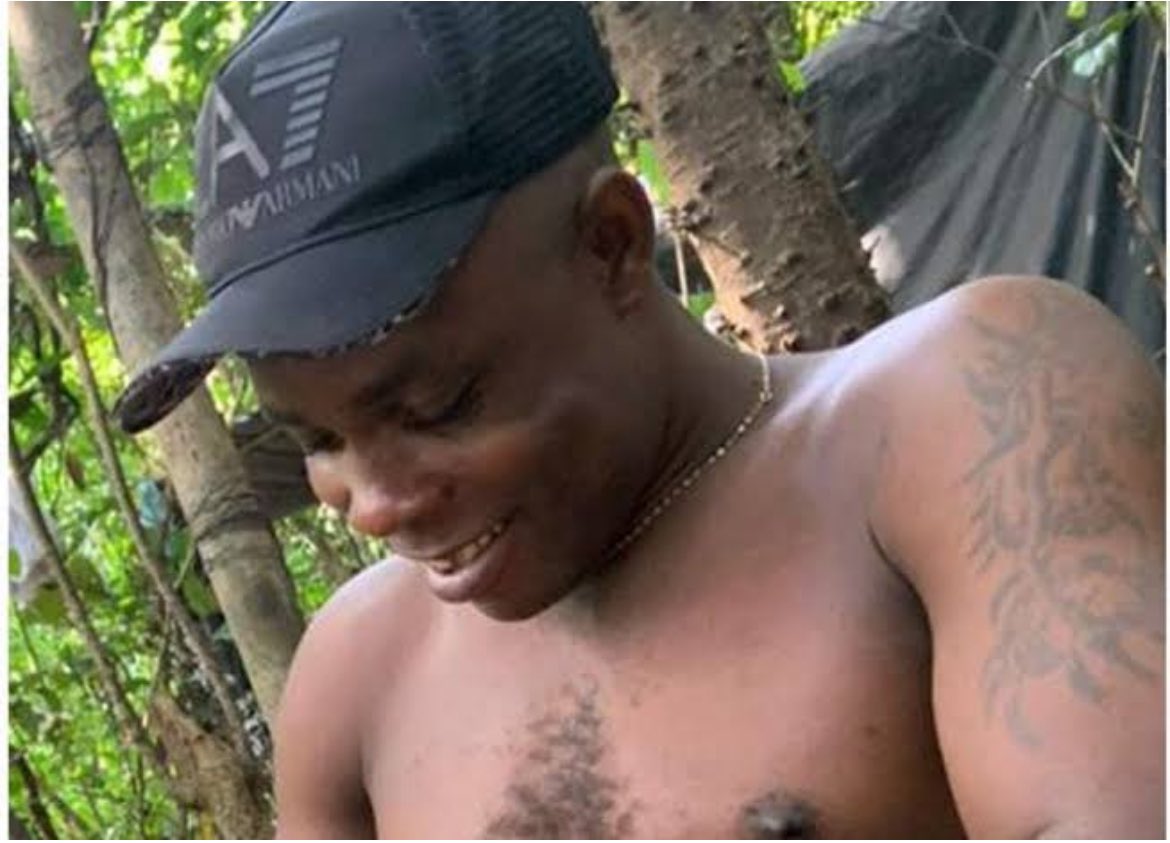
Inside were the remains of Gift David Okpara, popularly known as 2Baba.
After months of pursuit, the manhunt had finally ended.
The forest that had once provided 2Baba with protection had become the place where his story came to an end.
And the death of Superintendent Bako Angbashim, which had triggered one of the most intense manhunts in Rivers State, ultimately led security forces back into the same wilderness where 2Baba had believed he could remain untouchable.
This was not simply the story of a fugitive disappearing into the forest.
It was the story of a long-running confrontation between an armed criminal network and a police officer who refused to retreat.
And in the end, the forest gave up its secret.
THE FALL OF 2BABA: How Nigeria’s Most Wanted Kingpin Finally Met His End (Reader Discretion is Advised)
Deep inside the unforgiving forests of Rivers State, criminals once believed they had built a territory where the law could never reach them.
Then Superintendent Bako Angbashim arrived.
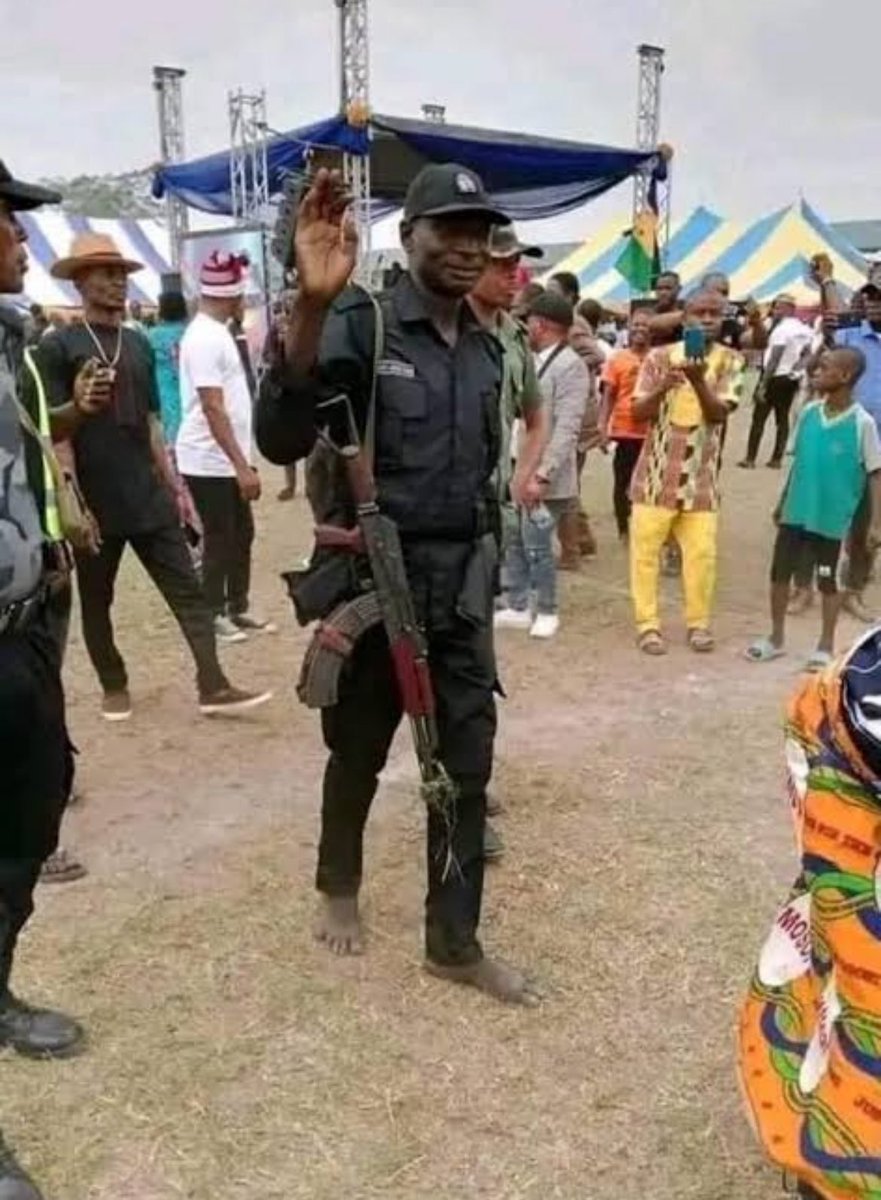
As the Divisional Police Officer in Ahoada, Bako became known for an unusual and fearless approach to policing. He was reportedly willing to pursue criminals deep into the forest, sometimes moving barefoot through the thick vegetation where others were afraid to go.
And one of his biggest targets was the Icelanders confraternity and its feared leader, Gift David Okpara, popularly known as 2Baba.
For years, 2Baba and his network had allegedly exercised enormous influence across parts of the community. Businesses and residents were reportedly subjected to illegal levies and heavy fines, while those who resisted could face brutal consequences.
But Bako refused to accept that criminals should control the territory.
He took the fight directly to them.
The forests surrounding Ahoada became the scene of an intense cat-and-mouse battle between the police and 2Baba’s network.
Then, on September 8, 2023, everything changed.
Realizing that security forces were closing in, 2Baba’s men reportedly sent a message suggesting they were tired of the fighting and were ready to surrender their weapons in exchange for amnesty.
To Bako, this appeared to be the breakthrough he had been pursuing for months.
He moved toward Odomute community in Ahoada West, accompanied by only a small number of armed operatives.
But the surrender was reportedly a trap.
What followed was a violent ambush.
Bako and his men fought back, but eventually, their ammunition ran out.
His operatives reportedly urged him to retreat and save himself.
Then disaster struck.
One of Bako’s feet was reportedly pierced by an unidentified sharp object, leaving him unable to move quickly.
His men were forced to withdraw.
Bako was left behind.
According to accounts surrounding the incident, the attackers surrounded him, dragged him deeper into the forest, and killed him.
The horror did not end there.
The attackers reportedly filmed the aftermath and circulated the footage online, apparently intending to send a message that they could strike even a senior police officer with impunity.
Bako’s body was also reportedly taken away, making recovery extremely difficult.
But that act of defiance triggered one of the biggest manhunts Rivers State had seen.
The Rivers State Government declared 2Baba wanted, dead or alive, and announced a ₦100 million bounty for information leading to his capture.
Police, military, and intelligence agencies intensified their operations against his network.
But 2Baba’s organization did not simply disappear.
According to security accounts, the gang allegedly targeted people they suspected of providing information to authorities, killing several individuals in an attempt to protect their network.
Still, the pressure kept building.
On November 28, 2023, Rivers State Commissioner of Police CP Olatunji Disu established a specialized joint tactical and intelligence team to track down 2Baba.
The breakthrough came quickly.
Just one day later, a female associate of 2Baba was arrested.
Her interrogation reportedly provided investigators with important information about the movements and hideouts of the wanted kingpin.
By December 3, investigators had discovered that 2Baba was using a canoe to travel toward a nearby community.
Security operatives established a surveillance operation that lasted for roughly two weeks.
But 2Baba suddenly stopped making the expected trips, narrowly escaping the developing dragnet.
Then came another breakthrough.
On December 6, security forces captured Babington Joseph, reportedly identified as one of 2Baba’s key executioners.
Joseph attempted to escape but was shot and later died from his injuries.
The date was July 7, 2024—the anniversary traditionally associated with the Black Axe movement.
On that day, Dan and Kiss-me reportedly launched an attack that resulted in the assassination of a black axe leader known as Apparatus.
But the victory came with consequences.
Information leaked.
Security operatives traced Dan’s hideout and launched an operation against the two men.
A gun battle followed.
Dan and Kiss-me were both seriously wounded, but somehow managed to escape.
Now injured and in hiding, the two men made a decision that would ultimately seal their fate.
They ventured into territory controlled by their rivals to collect a debt.
And then, by what appeared to be pure chance, they encountered someone they had been searching for.
Moon.
He was a long-sought Black Axe rival who had reportedly managed to evade Kiss-me for years.
When the two sides crossed paths, Moon was killed.
But the gunfire had already attracted the attention of security forces.
Within moments, the situation turned into another shootout.
Dan, already badly wounded, was caught in the exchange and killed at the scene.
Kiss-me managed to survive the immediate confrontation.
His surviving men rushed him to a nearby clinic, desperately trying to save his life.
But his injuries were too severe.
Kiss-me eventually died.
And with his death, another chapter in Awka’s long-running underground conflict came to an end.
From Edu Obara to Savage, Anali, Chester, Striker, Dan, and finally Kiss-me, the leadership changed again and again.
Every new commander promised strength.
Every new faction sought revenge.
And almost every rise was followed by betrayal, arrest, injury, or death.
What began as a struggle for underground control ultimately became a cycle that consumed the very men fighting to control it.
For the people of Awka, however, these were not simply names in an underground power struggle.
They were real events that left real victims, frightened communities, and families permanently changed.
THE FALL OF AWKA: How Edu Obara’s Death Triggered a Deadly War of Revenge (Reader Discretion is Advised)
In 2021, the streets of Awka became the stage for a deadly power struggle that would leave a trail of blood, betrayal, and revenge.
At the centre of it all was Edu Obara.
Edu had just been crowned the Executioner—the top commander of the Vikings’ Metalina Deck. He had been handpicked by a respected elder known as Razzy, and within the group, Edu was seen as disciplined, feared, and capable of holding the fractured brotherhood together.
But his rise immediately attracted the attention of a powerful rival.
On the other side was the Black Axe movement, led by a strategist known as Anali, alongside his ally, Escobar.
Edu had barely settled into his new position when Anali’s men came looking for him.
Accounts differ on exactly how Edu was caught. Some say he was ambushed while returning from a regional gathering in Igbariam. Others claim he had travelled outside Awka to purchase weapons when his enemies intercepted him.
Whatever the circumstances, the outcome was the same.
Edu was killed.
His death sent shockwaves through the Vikings. The man expected to unify the group was suddenly gone, and the Executioner’s seat remained vacant for months.
Then, two men stepped forward.
Savage and Chester.
Savage, a feared hit-squad leader from Oko, took command first. He reportedly tried to rebuild the shattered deck and rally its members during the December period.
But Anali’s men were still watching.
Before Savage could establish himself, they found him.
His reign ended almost as quickly as it had begun.
But Anali’s victory would prove to be temporary.
The man who had built his reputation on eliminating his enemies was soon betrayed from within.
One of his own men, known as OBJ, turned against him.
During a violent confrontation with security operatives, Anali was killed.
And OBJ soon discovered that betrayal inside the underground world came with its own price.
Another Black Axe enforcer, known as Gattuso, tracked him down and killed him in what appeared to be swift retaliation.
With Anali and OBJ gone, the Vikings saw an opening.
Chester took command.
And this time, the response was aggressive.
Determined to reclaim lost ground, Chester launched a series of retaliatory attacks that pushed Awka deeper into violence.
But the police were now paying close attention.
The Anambra State Police Command declared Chester wanted, and his image reportedly began appearing on wanted notices across the state.
The pressure became too much.
Chester fled the country and handed authority to another Viking known as Kiss-me.
And Kiss-me would take the conflict to an entirely different level.
Known for his audacity, he allegedly led a series of brazen attacks, including broad-daylight operations.
One of the most shocking incidents reportedly occurred at a busy market square, where the son of a local king was targeted and beheaded.
By now, Awka was no longer dealing with isolated clashes.
It had become an escalating cycle of revenge.
After about a year of chaotic leadership, Kiss-me eventually stepped aside.
The next man to take charge was Striker—the younger brother of Razzy.
Striker introduced a new and dangerous strategy.
He began building an army of younger recruits, reportedly using Junior Viking members who were mostly teenagers as informants and frontline operatives.
But the strategy would soon collapse.
During a secret operation into Enugu State, security forces intercepted Striker and his team.
Several of the young recruits were killed, while Striker was captured with a significant cache of high-caliber rifles.
Once again, the Vikings were left without a stable command.
Then came Dan.
A tactical operator who emerged from the chaos, Dan brought back Kiss-me as his operational Strike Chief.
Together, they would plan one of the boldest operations of the entire conflict.
THE FALL OF AMASCO: The Aye AxeMen Hitman Who Admitted “Just 17” Killings (Reader Discretion Is Advised)
It sounds like something pulled straight from a gritty crime thriller. But the story of Emma Amasco is not fiction.
Across Ogidi and parts of Anambra State, Amasco was allegedly known as one of the most feared hitmen linked to the Aye AxeMen. His name became associated with violence, robbery, and a trail of deaths that reportedly stretched far beyond ordinary street crime.
According to accounts surrounding his case, Amasco was allegedly linked to as many as 48 killings, with 17 of those deaths reportedly occurring in Ogidi alone.
But perhaps one of the most shocking chapters of his story involved his own family.
Amasco reportedly sold his parents’ house—their only surviving property—for about 16 million naira. Instead of using the money to build a future, a significant portion was allegedly spent acquiring firearms.
With a group of associates around him, robbery reportedly became a regular operation. Phones, laptops, cash, and other valuables were allegedly taken from victims as Amasco and his crew built a reputation that left people living in fear.
Then came the conflict that would push everything even further.
Tensions between the Aye AxeMen and the Vikings had already created a dangerous atmosphere across parts of Anambra. In September 2025, those tensions reportedly exploded during a burial gathering when a surprise night attack allegedly left several Aye AxeMen members dead.
And according to accounts of what followed, Amasco became one of the key figures in the retaliation that came afterward.
The violence escalated.
Communities became more frightened.
And with every incident, the pressure on Amasco increased.
By then, law enforcement was reportedly closing in.
Then, in February 2026, came the mistake that would change everything.
After another alleged robbery operation, Amasco reportedly travelled to Onitsha to sell stolen electronics said to be worth around 5 million naira.
But he never completed the transaction.
Security operatives who had reportedly been monitoring his movements moved in at a local market and arrested him.
During interrogation, Amasco allegedly spoke about his criminal activities—and reportedly made a chilling admission about the number of people he had killed.
When questioned about the killings attributed to him in Ogidi, he reportedly gave a remarkably dismissive answer:
“Just 17.”
What happened next remains surrounded by controversy.
Amasco was reportedly shot in the leg during the ensuing events and later died after bleeding heavily while in custody.
His death appeared to mark the end of one violent chapter.
But instead, it allegedly opened another.
Rumours of betrayal began spreading through underground circles. Some believed Amasco had been betrayed or deliberately handed over.
Then attention turned toward Chief Ikwuka Okoye, the local president general.
He had reportedly made a formal request for authorities to hand Amasco over so that he could face community justice.
But by the time that request was made, Amasco was already in custody.
That did not stop those who believed he was responsible.
In the aftermath, individuals reportedly linked to the Aye AxeMen allegedly targeted Chief Ikwuka Okoye.
And he was killed.
One man was gone. Then another.
And once again, the violence had reached beyond those directly involved, leaving families grieving and an entire community confronting the consequences.
The story of Emma Amasco is ultimately bigger than one alleged hitman.
It is a story about how violence can become a cycle—how revenge creates more revenge, how fear creates more fear, and how people who enter a world of violence can eventually find themselves trapped inside it.
And when the dust finally settles, it is rarely the perpetrators alone who pay the price.
Entire families and communities are left carrying the scars.
SHE CHOSE PARTYING — HER 2-YEAR-OLD SON NEVER CAME HOME (Reader Discretion Is Advised)
Imagine a mother publicly expressing how much she loves her little boy, promising to protect him and keep him safe. Now imagine discovering that, less than a year later, she would be convicted over his death. It is a heartbreaking story that shocked Zambia and raised difficult questions about poverty, parental responsibility, and a family tragedy that ended in court.
Her name was Musowe Maeke, a 22-year-old woman from Zambia whose life took a devastating turn in August 2022.
It all began when Musowe travelled from the Copperbelt region to visit her older sister in Lusaka. She brought along her two-year-old son, Sangwani Chabinga, expecting what should have been an ordinary family visit.
But according to the account of events, things soon took a troubling direction. Musowe reportedly began spending her nights partying at local clubs, leaving her young son in the care of her older sister.
As the situation continued, her sister became increasingly concerned. Eventually, she decided that Musowe needed to return home to their mother in Kitwe, hoping that being back with family would help her focus on raising her child.
Her sister gave her money for the bus journey home. But Musowe did not make the trip as expected.
Instead, she checked into a guest house in Kamwala South, Lusaka, with her little boy.
What happened next would turn the situation into a national tragedy.
During their stay, Sangwani lost his life under circumstances that raised serious questions. When the child was brought back to his aunt’s house, he was reportedly unresponsive. He was rushed to the hospital, but medical staff pronounced him dead.
News of the child’s death quickly spread, triggering outrage and speculation on social media. Some online reports suggested that the toddler had been deliberately harmed so that his mother and a companion could continue their partying. However, such claims formed part of the initial public reaction and should not be confused with the findings established during the legal proceedings.
With so many questions surrounding the child’s death, the family turned to the authorities. An investigation followed, and Musowe was arrested. Reports of her confession further intensified public attention on the case.
As the investigation progressed, her companion was cleared of involvement.
But when the case reached the Lusaka High Court, the story took another turn. The charge of murder was reduced to manslaughter after Musowe pleaded guilty to the lesser offence.
During the proceedings, Musowe expressed remorse and reportedly told the court that extreme poverty and a desperate lack of resources to provide for herself and her child had contributed to what happened.
Her explanation added another painful dimension to an already devastating case. But it did not bring her little boy back, nor could it erase the circumstances surrounding his death.
In June 2023, the court sentenced Musowe Maeke to 30 months in prison.
The case left many people struggling to reconcile the image of a young mother with the tragic outcome of her actions. It also drew attention to the devastating consequences that can emerge when family crises, financial hardship, and the responsibility of caring for a vulnerable child collide.
Yet, amid the public debate, one truth remained at the centre of everything: a two-year-old child lost his life, and an entire future disappeared with him.
Sangwani Chabinga was only two years old. He depended on the adults around him for protection, care, and survival. His story is a painful reminder that children are among the most vulnerable members of society and that their safety must never be taken for granted.
Poverty deserves compassion, and families facing hardship need support. But protecting children must remain a priority, especially when circumstances become overwhelming.
THE FALL OF TESCOM: How a Betrayed Student Became a Feared Campus Enforcer — Then Met His End (Reader Discretion is Advised)
Back in 2005, a young man named Olumide Danisa, popularly known as Tescom, arrived at Moshood Abiola Polytechnic in Ogun State as a quiet accounting student with no reputation for violence.
Like many young students, Tescom was searching for friendship, identity, and a sense of belonging. That search eventually led him toward the campus Airlords confraternity.
But what started as a search for acceptance soon turned into a bitter betrayal.
According to accounts of the period, the Airlords allegedly saw Tescom less as a new member and more as an opportunity to make money. Large sums of money were reportedly collected from him under the promise of initiation, leaving him feeling exploited and humiliated.
And that experience changed him.
The quiet accounting student who had once wanted acceptance reportedly became consumed by anger and revenge. He cut ties with the Airlords and crossed over to their bitter rivals, the Aye AxeMen.
Inside the group, Tescom quickly discovered a world of power, loyalty, and violence. His rise was rapid, and by 2009, he had reportedly reached the position of campus deck leader.
But with that position came a dangerous new reality.
Tescom’s personal resentment toward the Airlords allegedly became part of a much larger campus conflict. MAPOLY descended into a cycle of retaliation, with rival members becoming targets and violence spreading across the campus.
Tescom was no longer the student searching for acceptance.
He had become one of the central figures in the conflict.
Then, in 2011, the violence came back to him.
Tescom survived a shooting during one of the clashes, but instead of disappearing, he reportedly responded with a reprisal attack against a prominent senior Airlord known as Fago.
That incident changed everything.
With his enemies now determined to find him, Tescom reportedly realized that remaining in Nigeria had become increasingly dangerous. He went underground, eventually leaving the country for Ghana.
There, he attempted to build an entirely different life.
He got married. He settled down. And for a while, it appeared that the violent chapter of his past might finally be over.
But Tescom’s connection to home remained strong.
Eventually, he returned to Nigeria and settled in Abeokuta, where he reportedly tried to reinvent himself as a family man and legitimate businessman.
He became involved in businesses including car sales and ticket operations. There were also allegations that he became involved in political thuggery on the side.
For years, it seemed as though Tescom had managed to escape the consequences of his younger days.
But some pasts refuse to stay buried.
In April 2024, unidentified gunmen reportedly arrived at Tescom’s residence in an unregistered Toyota Corolla.
Then came the attack.
Tescom was ambushed and shot dead at his home.
The man who had once survived campus violence, escaped the country, built a family, and attempted to start over was suddenly gone.
His death brought a brutal end to a life that had taken a dramatic journey—from a quiet accounting student searching for acceptance, to a feared campus figure, an exile in Ghana, and eventually a businessman trying to leave his violent past behind.
Tescom’s story remains a chilling reminder of how betrayal, revenge, and violent environments can transform a person’s life—and how the consequences of choices made in youth can sometimes follow someone for decades.
Because in the end, Tescom may have escaped MAPOLY.
He may have escaped Nigeria.
But he could never completely escape his past.
DISCLAIMER: This story is presented strictly for documentary, educational, and historical purposes. It discusses reported events involving campus violence and criminal activity to examine their causes, consequences, and impact on society.
And what investigators uncovered was horrifying.
Jane confessed to 31 murders.
But investigators believed the real number could have been much higher—possibly 70 or even 100 victims.
The woman who had once been welcomed into homes as a trusted nurse was now being described as a serial killer.
In 1902, Jane went on trial.
But instead of being found guilty, she was declared not guilty by reason of insanity.
She was committed to Taunton Insane Hospital, where she would spend the remaining 36 years of her life.
And there was something deeply ironic about her final years.
The woman who had allegedly poisoned so many people became terrified that someone would poison her.
During her early years in the asylum, Jane reportedly refused to eat the hospital food because she believed someone might be trying to kill her.
The master poisoner had finally become afraid of poison herself.
In 1938, after decades behind institutional walls, Jolly Jane died at the age of 84.
But the question remains:
How many people actually died at the hands of the smiling nurse?
Thirty-one?
Seventy?
One hundred?
We may never know.
Because the woman who spent her life telling stories took the biggest secret of all to her grave.
SHE LOOKED LIKE A SWEET NURSE — BUT “JOLLY JANE” MAY HAVE KILLED 100 PEOPLE
Imagine trusting a nurse with the life of your sick mother, father, husband, wife, or child.
She walks into the room with a warm smile. She speaks gently. She makes jokes. She prays with the family. She looks like the kind of person you would trust without asking a single question.
In America, they might call her a sweetheart.
But in the hospital, they called her “Jolly Jane.”
And behind that cheerful smile was one of the most disturbing serial killers in American history.
Her real name was Honora Kelley, born in Massachusetts in 1854.
Her childhood was anything but happy.
Her mother died when she was still a baby, while her father struggled with severe mental illness and eventually abandoned Honora and her sister at an orphanage.
She was later taken in by a wealthy family called the Toppans.
But there was a catch.
Honora wasn’t officially adopted. She worked as an unpaid domestic servant, constantly reminded that she was not truly part of the family.
Somewhere along the way, she learned an important survival skill:
People believed whatever she told them.
She became an extraordinary storyteller, a chronic liar, and someone who knew exactly what people wanted to hear.
Then, in 1885, she entered nursing school at Cambridge Hospital near Boston.
And this is where the story took a terrifying turn.
To doctors and patients, Jane appeared energetic, funny, compassionate, and completely devoted to her work.
But behind the scenes, she was experimenting with something far more dangerous than medicine.
Poison.
Jane began using morphine and atropine—powerful drugs that could dramatically affect a person’s breathing and heart rate.
She discovered that by manipulating doses, she could make patients appear to slip toward death… and then bring them back.
And she didn’t do it to save them.
She did it because she enjoyed watching them hover between life and death.
According to her later confessions, Jane would sometimes climb into bed beside dying patients, hold them in her arms, and experience a disturbing sense of excitement as she watched them take their final breath.
Eventually, her reckless handling of drugs caught up with her.
She was kicked out of the hospital.
But instead of stopping, Jane simply changed her strategy.
She became a private-duty nurse.
And suddenly, she had something even more valuable than access to hospital patients:
She had access to entire families.
People invited her into their homes.
They trusted her with their sick relatives.
They handed her complete control over medication.
And Jane used that trust as a weapon.
If someone owed her money, they could become a target.
If she became jealous of a friend, that person could suddenly fall dangerously ill.
Even members of her own foster family were not necessarily safe.
And whenever someone died, Jane could transform herself from suspect into grieving caregiver.
She would comfort the family.
She would cry with them.
She would offer them tea.
And sometimes, that tea could contain the very poison responsible for the death they were mourning.
Then Jane made a chilling declaration.
She wanted to kill more helpless people than anyone else—man or woman—who had ever lived.
By the summer of 1901, she had found a new family to care for:
the Davis family.
Over the course of just a few weeks, four members of the family suddenly died while Jane was around.
At first, the deaths looked like tragic coincidences.
But eventually, the surviving relatives started asking a terrifying question:
Why did healthy people keep dying whenever this nurse was around?
They demanded that one of the bodies be examined.
The toxicology results changed everything.
There were lethal levels of poison in the body.
Suddenly, the smiling nurse everyone trusted wasn’t a caregiver.
She was a suspect.
In October 1901, police arrested Jane.
HE DELIVERED 2 IPHONES TO A CUSTOMER — BUT NEVER MADE IT HOME: The Chilling Port Harcourt Murder Case (2017)
In 2017, a routine delivery in Port Harcourt turned into a horrifying crime that would leave an innocent dispatch rider dead—and expose a chilling betrayal hiding behind an ordinary online order.
A young man named Daniel, who came from a wealthy background, placed an order for two iPhone 6 devices through Jumia. But there was one problem: he never intended to pay for them.
When the delivery agent, Chukwuma, arrived at Daniel’s apartment complex with the phones, he expected nothing more than a quick pay-on-delivery transaction.
Instead, Daniel invited him inside.
He reportedly told Chukwuma that he wanted some privacy to sort out the payment. Trusting the customer, the delivery agent stepped into the apartment.
That was the last time anyone saw him alive.
According to the case, Daniel attacked Chukwuma inside the apartment. The delivery agent was beaten, strangled and shot before his body was concealed inside a waterproof bag and dumped into the compound’s septic tank.
Then came the most disturbing part.
Daniel allegedly kept one of the phones for himself and gave the second one to his girlfriend, Joy—as though nothing had happened.
But his attempt to hide the crime quickly began to unravel.
Later that day, neighbors noticed Daniel behaving strangely around the septic tank. His unusual behavior raised questions, especially when they noticed signs suggesting that something was seriously wrong.
Then came the realization:
The Jumia delivery agent who entered the compound had never walked out.
The police were alerted.
Soon, Daniel’s apartment was searched, and Daniel, Joy, and his friend Excel were arrested.
But instead of giving investigators a clear explanation, the three gave completely different accounts of what had happened.
Daniel tried to shift the blame onto Excel, claiming that Excel was responsible for the killing and had forced him to remain silent.
Excel strongly denied this.
He claimed Daniel had brought him to the compound under the impression that he was needed for a minor cleaning job involving the septic tank. According to his account, he only discovered what had happened afterward—and said Daniel threatened him and even invoked his diabetic mother to keep him quiet.
Then there was Joy.
She maintained that she knew nothing about the crime, claiming that Daniel had simply given her a phone.
The case eventually reached court, where the conflicting stories were put to the test.
In the end, Daniel was found guilty and sentenced to death.
Joy was released for lack of sufficient evidence, while Excel was discharged and acquitted.
But perhaps the most heartbreaking part of the entire case came from Chukwuma’s family.
They reportedly learned the terrible fate of their loved one through social media reports.
What began as an ordinary delivery of two phones had ended in tragedy—and a case that would remain a chilling reminder of how quickly a simple transaction can become a deadly trap.
This story is for documentary, educational, and public awareness purposes only. It condemns violence and criminal activity and does not promote or glorify crime.
THE FALL OF BAD CHARACTER: How Umuahia’s Feared Hitman Was Finally Taken Down (Reader Discretion is Advised)
In the streets of Umuahia, there was once a name that could silence an entire neighbourhood:
Bad Character.
He was feared as a ruthless hitman linked to the Black Axe confraternity—a man associated with armed robberies, targeted killings, and violent street battles.
But what made Bad Character especially dangerous was not just his brutality.
It was his ability to disappear.
He was known for disguising himself, maintaining a network of informants, and somehow slipping away whenever the police or rival groups got close.
Then came the incident that changed everything.
A failed business deal involving the leader of the Greenlanders, a rival group associated with the Supreme Vikings, reportedly triggered a violent dispute.
What followed was a terrifying power struggle that spilled into the streets of Umuahia.
Gunfire became a familiar sound.
Residents locked themselves indoors.
Rival groups became increasingly afraid of confronting Bad Character directly because they feared the retaliation that could follow.
For years, he appeared almost impossible to catch.
But eventually, the authorities decided they had seen enough.
On November 2, 2022, police reportedly issued a shoot-on-sight directive against him, marking him as a major public threat.
Then, the breakthrough came.
Police intelligence led heavily armed officers to Bad Character’s residence.
Inside, his associates reportedly received the warning first.
They called him and urged him to escape.
Run.
Disappear again.
That was what Bad Character had always done.
But this time, he chose differently.
According to the account, he decided to stay and face the police.
Soon, his compound was surrounded.
A tense confrontation followed.
Then the silence was shattered by gunfire.
When it was over, Bad Character was dead inside his own compound.
And his death immediately changed the balance of power in Umuahia.
For years, his reputation had helped create an aura of fear around his group.
But without him, that aura suddenly began to collapse.
Just days later, the Supreme Vikings reportedly attacked the local Black Axe leader, beating and taunting him while declaring that the group was no longer as powerful without Bad Character.
The message was clear:
The man who had once terrified the streets was gone—and the power structure he helped protect was suddenly exposed.
Bad Character’s story ultimately became another dark warning about the price of building a life around violence.
Because no matter how powerful, feared, or untouchable someone may appear…
violence eventually comes looking for its own.
DISCLAIMER: This story is presented for documentary, historical, and educational purposes. It discusses reported incidents involving crime, violence, and alleged criminal activities. The content does not glorify, promote, or encourage violence, criminality, or confraternity activities. Some details are based on available reports and accounts and may not represent independently verified facts. Reader discretion is advised.
THE FALL OF AGALI: How a Lagos Buccaneers Leader Was Killed Days After Switching Political Allegiance (Reader Discretion is Advised)
On the night of April 11, 2026, the streets of Surulere, Lagos, were thrown into shock when the sound of gunfire shattered the night’s familiar noise. Within moments, Adedipe Adeyinka, popularly known as Agali, was dead. But his death was more than the killing of a powerful street figure. It raised troubling questions about political loyalty, underground power struggles, and a possible connection to an ongoing confraternity conflict.
Agali was widely regarded as a major leader within the Buccaneers Confraternity in Lagos. His influence reportedly extended beyond the streets, reaching into the murky intersection of political interests and underground networks. To those familiar with the city’s power dynamics, he was not just another name in the streets. He was a man believed to command loyalty, mobilise supporters, and influence political outcomes without holding any official government position.
For years, Agali was alleged to have maintained strong connections with political figures associated with the ruling All Progressives Congress, or APC. His network reportedly played a role in the kind of grassroots mobilisation that can make a difference during elections. He occupied a position where street influence and political ambition appeared to intersect, making him a potentially valuable ally to those seeking power.
But then, something reportedly changed.
In a political environment where alliances can determine who rises and who falls, Agali allegedly made a move that threatened the existing balance of power. Rather than continue supporting the political establishment he was associated with, he reportedly shifted his support and mobilised his network behind a female opposition candidate.
If these accounts were accurate, the decision could have carried serious consequences. A man once regarded as an ally could suddenly become a political liability. And when underground influence becomes entangled with electoral competition, a change of allegiance can trigger tensions far beyond the ballot box.
Just days after this reported political realignment, Agali was killed in Surulere.
His death immediately raised questions about who might have wanted him gone. Was it connected to a political disagreement? Had he fallen out with powerful allies? Or was there another conflict unfolding beneath the surface?
As law enforcement pursued its investigation, suspicions began circulating among people trying to make sense of the killing. Some accounts pointed toward a possible political motive, while others raised the possibility of rival street networks being involved. However, such allegations would require credible evidence before responsibility could be established.
Yet the mystery surrounding Agali’s death did not end in Lagos.
At almost the same time, a violent conflict was reportedly unfolding in Osun State, where the Buccaneers Confraternity was said to be locked in a bitter confrontation with the Black Axe confraternity. The clash added another layer of uncertainty to an already disturbing situation.
Could Agali’s killing have been connected to this wider confraternity conflict? Was it the result of a separate dispute within Lagos’s underground networks? Or were political tensions and street rivalries unfolding simultaneously, creating confusion about the real motive behind his death?
These questions fuelled speculation, but the available accounts alone could not establish a definitive connection between the events in Lagos and Osun.
What made the situation particularly troubling was the potential impact of Agali’s sudden removal. A figure reportedly associated with political mobilisation and street influence was now gone, leaving questions about who might inherit his position, how existing alliances would change, and whether his death could trigger further confrontation.
HE SHOWED OFF HIS NEW SIENNA TO A FAMILY FRIEND — THEN DISAPPEARED WITHOUT A TRACE (Reader Discretion is Advised)
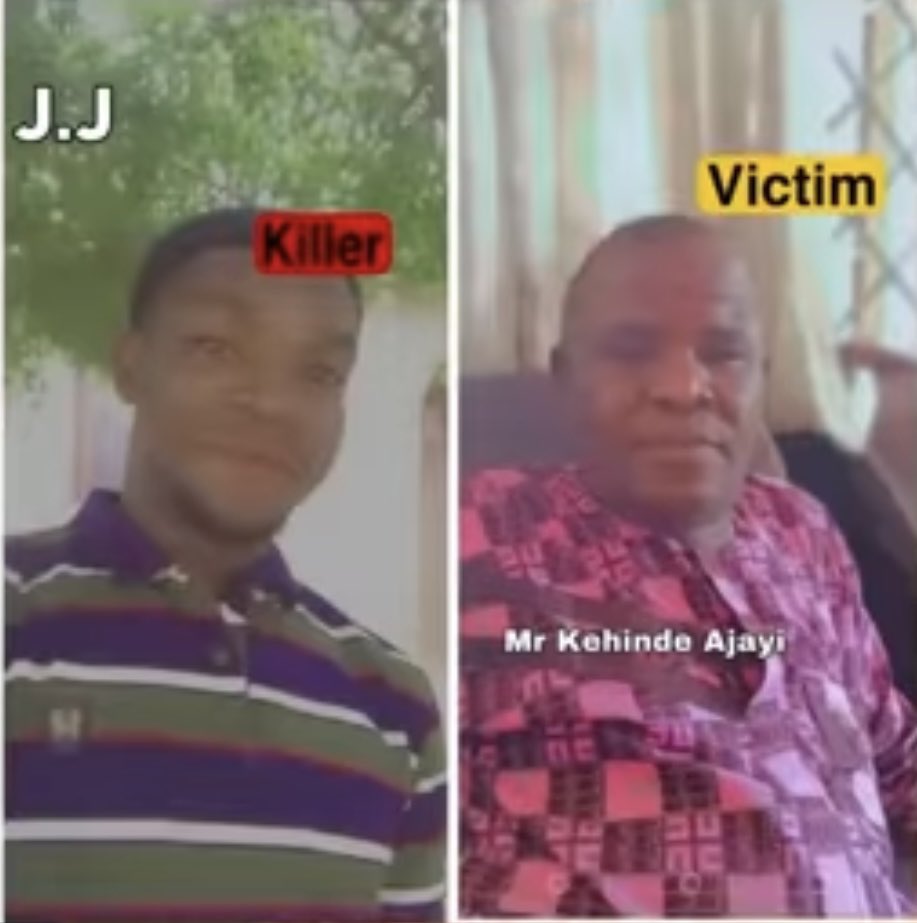
In July 2022, Mr. Kende Ajayi of Lokoja, Kogi State, was celebrating what should have been a joyful milestone. He had just bought a brand-new Toyota Sienna, and that Sunday morning, around 10:00 AM, he set out to visit his twin brother, who lived on the outskirts of town.
But along the way, Ajayi ran into someone he knew well—JJ, a local air-conditioner repairman and a trusted family friend who was also dating Ajayi’s niece.
The meeting seemed completely harmless.
Ajayi proudly showed JJ his new vehicle, and JJ suggested they stop at a nearby bar for a drink to celebrate. He even promised to drive Ajayi safely to his brother’s house afterward.
But according to the account of the case, that friendly invitation was actually the beginning of a deadly plan.
At the bar, JJ kept encouraging Ajayi to drink. One drink became several, and before long, Ajayi was heavily intoxicated and barely able to function.
JJ then took the keys to the Toyota Sienna.
But instead of driving his intoxicated companion to his twin brother’s house, he reportedly drove to his own compound.
There, the situation took a horrifying turn.
Ajayi was attacked, restrained, and ultimately killed. His body was then concealed inside a metal drum before being buried in a shallow grave within the compound.
And the alleged motive was chillingly simple: the new Toyota Sienna.
While Ajayi’s family waited for him to come home, their concern quickly turned into panic. A missing-person report was filed, and relatives began searching desperately for him.
But what they didn’t know was that the man responsible for his disappearance was right there among them.
In an especially disturbing twist, JJ reportedly joined the search.
He cried with the family. He comforted his girlfriend. He prayed alongside them for Ajayi to return safely.
All while, investigators would later discover, Ajayi’s body was hidden on his property.
Then investigators began retracing Ajayi’s final movements.
People at the bar remembered seeing JJ leave with the heavily intoxicated man behind the wheel of the Sienna.
That detail changed everything.
JJ was brought in for questioning, and under interrogation, he eventually confessed to the crime. His confession led investigators back to his compound, where they uncovered the buried remains.
The case shocked the community—not only because of the brutality of the killing, but because of the relationship between the victim and the accused.
JJ wasn’t a stranger.
He was someone the family knew and trusted.
The case eventually moved through the courts, ending with JJ’s conviction and sentence for the crime.
What began as a Sunday morning visit to show off a new car had ended in tragedy—and a family discovering that the person they trusted could be hiding a horrifying secret.
DISCLAIMER: This story is presented for documentary, educational, and public-awareness purposes. It discusses a real criminal case involving alleged violence and is not intended to glorify or promote crime. Reader discretion is advised. The information presented is based on available accounts of the case and should not be taken as encouragement of violence or criminal activity.
THE FALL OF EMMANUEL: How a Klansmen Leader Defected to Aye AxeMen and Met a Tragic End at ABSU (Reader Discretion is Advised)
At Abia State University, Emmanuel was not the kind of student people expected to find at the center of campus confraternity politics.
He was quiet, reserved, and introverted — a final-year student who seemed more interested in his studies and keeping to himself than in the chaos of campus life.
But behind that calm exterior was a very different reality.
Emmanuel was reportedly the Deck Head of the Klansmen confraternity, commonly known as KK, giving him significant authority within the group.
Yet, despite his position, Emmanuel was becoming increasingly dissatisfied. He reportedly believed the Klansmen did not have enough influence on campus, and he wanted something bigger.
Then he made a decision that would change everything.
Emmanuel abandoned the Klansmen and defected to the Aye AxeMen.
To his former associates, this was more than simply changing sides. It was seen as a betrayal.
Suddenly, the man who had once led them had become a target.
The Aye AxeMen provided Emmanuel with a new circle and what appeared to be protection. But his new affiliation came at a dangerous time.
Only about three months after his defection, tensions between the Aye AxeMen and the Supreme Vikings began rising following a series of disputes and a suspected assassination.
Then, one incident brought everything dangerously close to boiling point.
A phone belonging to a Viking member had reportedly been seized, and a meeting was eventually arranged to return it.
For a moment, it appeared that the situation might be resolved peacefully.
But that peace did not last.
Emmanuel and a faction of Aye AxeMen members reportedly arrived at the scene angry that their own side had backed down without retaliating.
The atmosphere suddenly changed.
In the middle of the confrontation, one of the newcomers reportedly pulled out a firearm, destroying whatever chance remained for a peaceful resolution.
The Vikings, reportedly expecting that the meeting could be a trap, were prepared.
Gunfire erupted.
The Aye AxeMen members scattered as bullets flew, desperately trying to escape the scene.
But Emmanuel was caught in the chaos.
A bullet struck him, causing him to collapse.
And then came the moment that would seal his fate.
As his fellow members fled, Emmanuel was left behind.
According to the account, the Vikings moved toward him and fired the shots that ultimately ended his life on the university campus.
The death of the former Klansmen leader sent shockwaves through the university.
For the Aye AxeMen, Emmanuel’s death reportedly became another reason for revenge, threatening to push an already tense campus environment even closer to another cycle of violence.
But beyond the rivalries, defections and battles for influence was a much darker lesson.
Emmanuel had started out as a quiet student focused on his education.
His decision to switch sides placed him at the center of a dangerous conflict — and ultimately cost him his life.
It was a tragic reminder that once campus rivalries turn violent, there may be no safe side to stand on.
Disclaimer: This story is for documentary, educational, and historical awareness purposes only. It condemns cult-related violence and promotes peace, safety, and non-violence. The content does not glorify or encourage violence or criminal activity.
HE BROUGHT WOMEN INTO HIS FATHER’S FACTORY — NONE EVER CAME OUT ALIVE (Reader Discretion is Advised)
It began like an ordinary morning at a panel-beating factory in Johannesburg.
But on October 9, 2022, something was terribly wrong.
A caretaker working inside the building suddenly noticed a powerful, disturbing smell hanging in the air. At first, he had no idea where it was coming from. But as he followed the odor through the factory, it led him to one of the offices.
What he discovered inside immediately turned the quiet morning into a nightmare.
The decomposing body of a young woman was lying inside.
Police were called. The factory owner was alerted. And suddenly, everyone was asking the same terrifying question:
How did a dead woman end up inside this family business?
Then, investigators received a breakthrough.
The factory’s security guard came forward and told police about something he had seen.
His suspicion pointed toward the owner’s 19-year-old son, Sibusiso Mahlalela.
Investigators went through the factory’s security footage.
And what they saw was deeply disturbing.
The cameras showed Sibusiso bringing a woman into the factory several days earlier.
But there was one major problem.
There was no footage showing that woman leaving the building alive.
Sibusiso had already disappeared.
His father eventually tracked him down in another town. And when the teenager suddenly saw his father approaching, he tried to run.
But he didn’t get far.
He was caught, restrained, and handed over to the police.
What happened next would transform the case from a shocking murder investigation into something far more horrifying.
Police searched the factory thoroughly.
And then they made another discovery.
Then another.
Hidden throughout the building were five additional bodies.
The total had now risen to six victims.
Two of the women were reportedly pregnant.
As detectives reconstructed what had happened, a disturbing pattern began to emerge.
All six victims were sex workers.
Investigators concluded that Sibusiso had been targeting women over a period of roughly seven months.
Rather than meeting them at hotels, he allegedly lured them to his father’s isolated factory after business hours.
And according to the prosecution, none of the six women ever made it out alive.
When Sibusiso eventually faced the courts, he attempted to portray the killings differently.
He claimed the deaths were not planned.
He reportedly argued that he had lost his temper during arguments with the women, including disputes over the prices they had agreed upon.
But prosecutors argued that the evidence told a completely different story.
There was a firearm.
There were multiple victims.
And there was the deliberate concealment of their bodies across the property.
The pattern, prosecutors argued, was far too disturbing to dismiss as a series of spontaneous arguments.
During the proceedings, mental evaluations also provided investigators with an unsettling picture of Sibusiso’s personality and attitude toward the crimes.
Then, in September 2024, the case finally reached its conclusion.
Sibusiso Mahlalela was found guilty and sentenced to life imprisonment for multiple offences, including murder, sexual assault, firearm possession, and obstruction of justice.
A young man who had been living an ordinary life had become the central figure in one of Johannesburg’s most disturbing murder cases.
And the factory that once existed simply as a place of work became forever associated with a horrifying secret that had remained hidden behind its doors.
Disclaimer: This story is a documentary presentation of a real criminal case for educational and awareness purposes. It does not glorify or promote violence, crime, or sexual exploitation. Reader discretion is advised.
AYE AXEMEN’S BLOODY CLASH WITH VIKINGS: The 2023 Feud That Shook Benin City (Reader Discretion is Advised)
In 2023, a seemingly ordinary street confrontation in New Benin, Benin City, would trigger a chain of events that plunged parts of the city into fear.
It started with a physical fight between a member of the Aye AxeMen confraternity and a member of the Supreme Vikings. The Aye AxeMen member was reportedly beaten badly and had to be hospitalized.
At first, it appeared the matter would end there.
Senior figures from both sides reportedly intervened and reached a peace agreement. The Vikings agreed to take responsibility for the hospital bills, creating a fragile sense of calm.
But the peace did not last.
Some members of the Aye AxeMen reportedly rejected the settlement, believing the response was an insult. And instead of accepting the agreement, they allegedly went after a respected former Viking leader.
When he was killed, whatever remained of the peace collapsed.
The Vikings wanted answers.
And soon, retaliation began.
Among those caught in the escalating conflict was Odion — a loyal Aye AxeMen member, a husband, and a man who had only recently become a father.
As danger closed in, friends reportedly tried desperately to reach him and warn him.
But there was a problem.
Odion’s phone could not be reached.
Unaware of what was waiting for him, he continued with his morning routine.
Then, somewhere around Lucky Way, he walked into an ambush.
Odion was killed.
His death sent shockwaves through his circle and triggered another wave of retaliation.
But as the violence spread, the distinction between actual rivals and innocent people began to disappear.
People could suddenly find themselves in danger simply because of who they were seen with, where they were drinking, or the company they kept.
A Keke driver was among those caught up in the violence. Several other young men also lost their lives amid allegations of mistaken identity and suspected association.
Then came another turning point.
A prominent Viking dealer known as Abu Benson was reportedly killed during an arrest.
That death triggered another reprisal.
Near the area known as the Back of Guinness, a Viking hit squad reportedly killed three more men.
But even here, there was a major dispute.
The Vikings reportedly claimed the three men were members of the Aye AxeMen.
The Aye AxeMen, however, denied that the victims were its members.
So the question remained:
Who were the three men?
And who was telling the truth?
By this point, Benin City was no longer dealing with a simple street dispute.
Fear had spread into ordinary neighborhoods.
Families became nervous whenever unfamiliar vehicles appeared. Doors were locked earlier. People became more careful about where they went and who they associated with.
And every sudden sound could make people wonder whether another round of violence had begun.
What started with one street fight had reportedly grown into a cycle of retaliation, suspicion, and loss.
And perhaps the most painful part was that the consequences did not stop with those involved.
Families were left grieving.
Children lost fathers.
Communities were left traumatized.
And ordinary people were forced to live with the consequences of a conflict they never started.
The story of the 2023 Benin clash is therefore more than a story about rival groups.
It is a warning about what can happen when street disputes turn into revenge — and revenge creates another reason for revenge.
Because once violence begins feeding itself, nobody can be certain where it will stop.
DISCLAIMER: This story is for documentary and public awareness purposes only. It does not promote or glorify violence or confraternity activities. Some claims may be disputed. Say NO to violence and revenge. Choose peace.
This content condemns violence.