We have improved the SQL editor experience for the local version of Supabase.
The SQL snippets will now be stored inside the supabase/snippets directory, which you can commit to git and share across teams, or add them to .gitignore, your choice.
Claude Opus 4.8 should be the final reason to stop writing specs by hand
Anthropic's Claude Code architect shows the new workflow in 31 minutes
The model interviews you first
Then it pulls out the requirements better than your own 200-line markdown doc
No dead specs
No messy notes
No file nobody reads
Claude writes the spec
Renders it in html
Checks the result inside the same file
Opus 4.8
Auto mode
X high effort
This is less like prompting
More like letting the agent understand the job before it builds
Bookmark and watch the video below
We just released Passkeys for @Supabase Auth
i checked in GitHub discussions and this was the 3rd-most upvoted feature request
it's available on all projects now (in Beta)
Using the proper Supabase local development flow is the best way to provide the most accurate context of your Supabase project!
Learn how to get started with Supabase locally in this video:
Supabase offers a DB, auth, storage, edge functions, but did you know it also has queues?
It's powered by pgmq extension, and we also provide an interface to manage them!
Combined with cron, edge functions, and you've got a scalable workflow within the Supabase ecosystem!
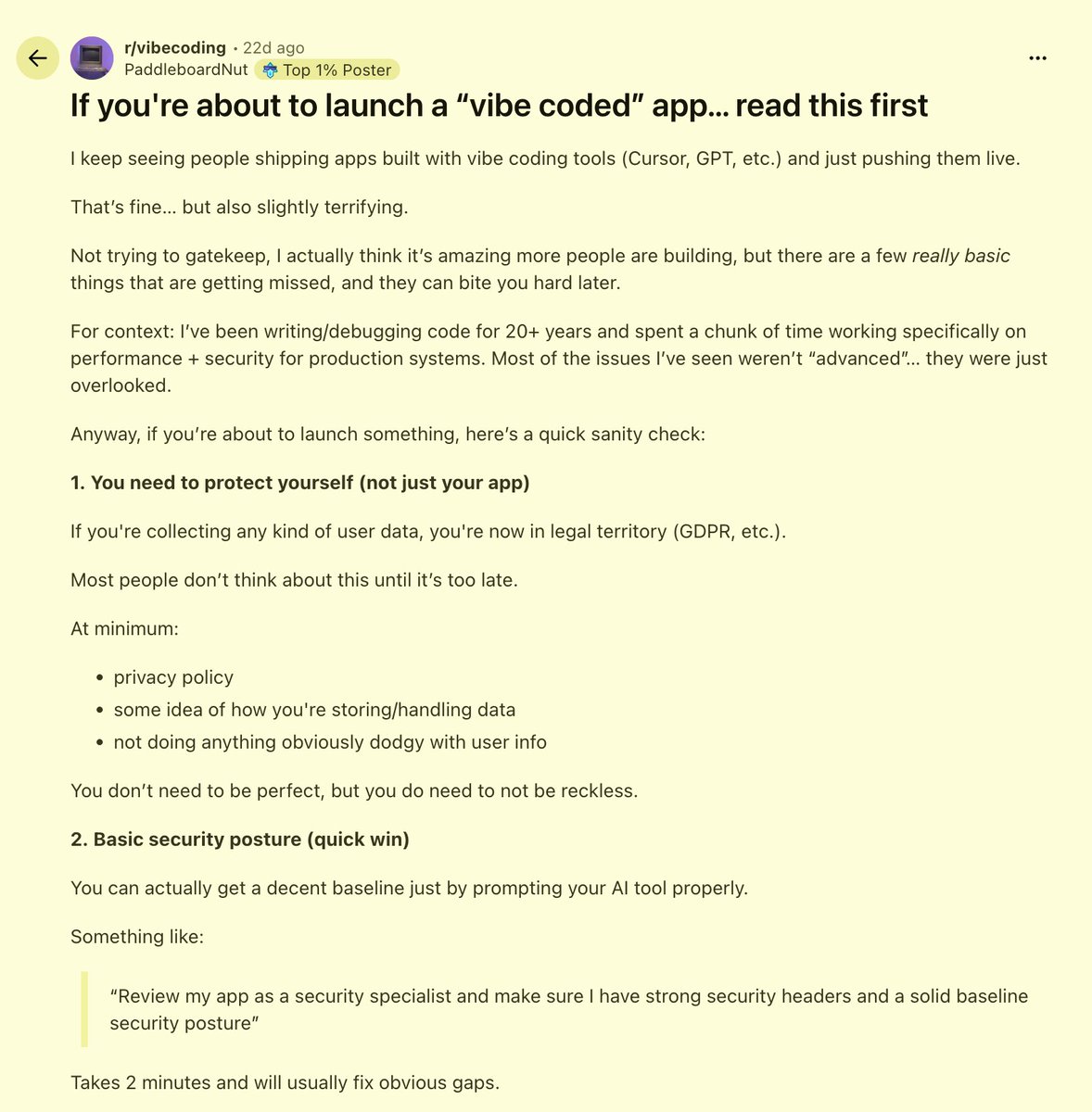
Vibe coders are getting sued.
People are launching apps with real users but skipping the boring stuff that can actually kill the product.
A developer with 20+ years of experience just shared the pre-launch checklist every AI builder should run:
→ privacy policy if you collect user data
→ know where user data is stored
→ check security headers
→ scan against OWASP basics
→ look for SQL injection / XSS / auth issues
→ make sure .env values are not leaking
→ check API responses for sensitive data
→ remove secrets from logs
→ never expose API keys in frontend code
→ move keys server-side or behind a proxy
→ add rate limits before someone burns your API bill
This is what most vibe coders are missing.
AI can help you build the app.
But if you launch without security, privacy, and abuse checks...
you didn't ship a product.
you shipped a liability.
Periodic reminder that you can set auth.uid() as the default value for your columns.
With this, you no longer have to send the user ID from your client application, and the ID will automatically be filled for you!
Anthropic just showed a 24-minute workshop on how to actually prompt Claude.
Taught by the people who built it.
Free. No signup. No paywall.
I've watched $300 courses that don't cover what they teach in the first 8 minutes.
User impersonation in Supabase just got easier!
You can now impersonate your user from the auth dashboard by right-clicking!
This makes it easy to test out RLS and maybe even customer support!
Supabase Edge Functions now has access to the publishable and secret key by default through the environment variables!
This brings us one step closer to new API keys working with all of our products by default!
With Opus 4.7 out, I wanted to remind you that there is an official Supabase connector, and it is the easiest way to add a backend to your app!
You can
- Run SQL
- Create database migrations
- Deploy Edge Functions
- Access logs to debug
- Fetch the security advisor output
All while chatting with it!
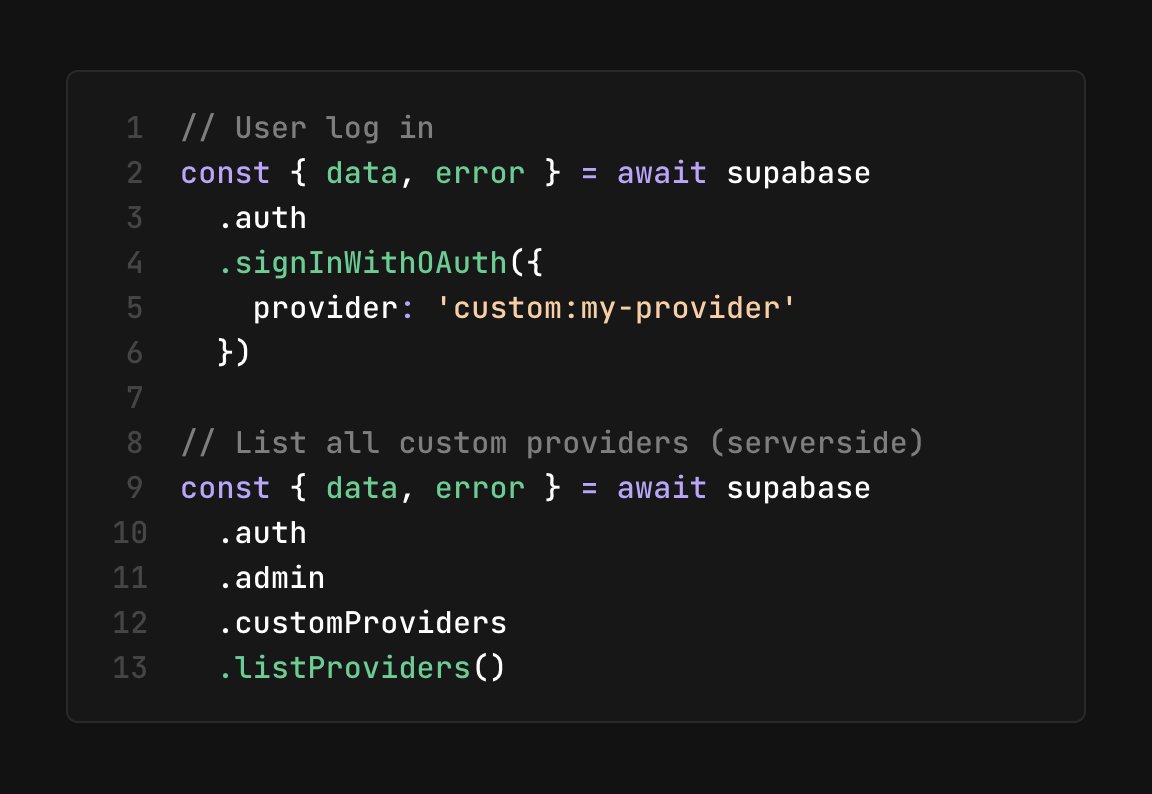
We just released Custom OIDC Providers for @supabase
Supabase Auth already supports ~20 providers. Now you don’t need to ask us for more -
you can enable your own and your users can login using the same code as built-in providers:
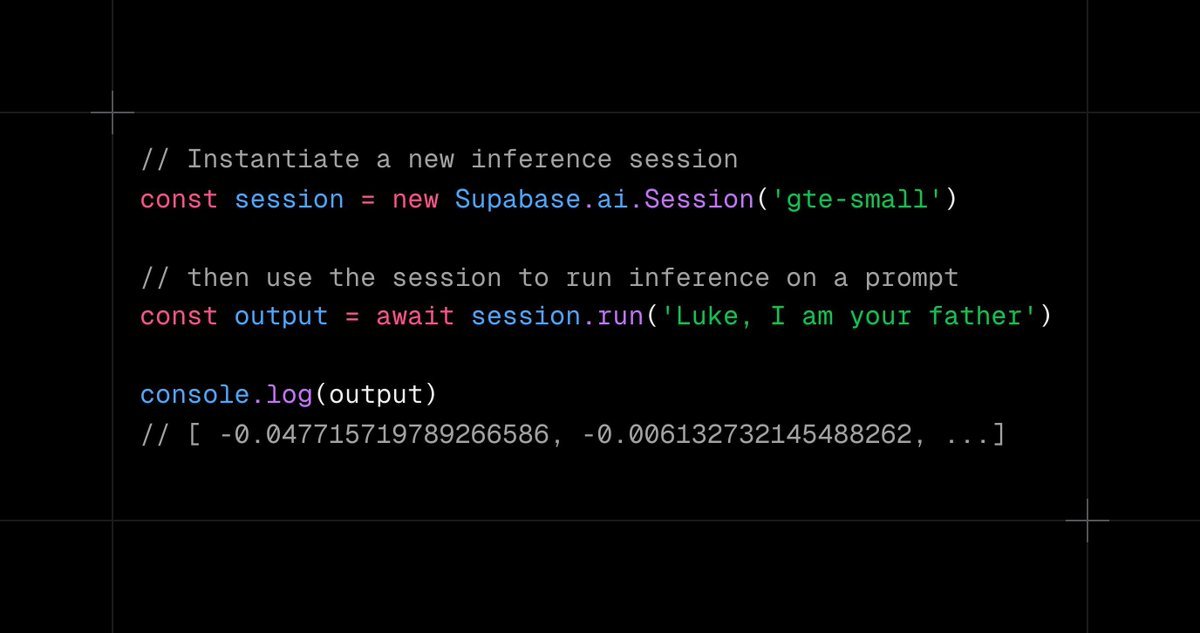
Supabase allows you to generate embeddings right there within the edge functions using the gte-small model.
No external dependencies, and it is great for quickly getting started with embeddings!
We recently identified a security issue involving the third-party developer library Axios that was part of a broader industry incident. We found no evidence that OpenAI user data was accessed, that our systems were compromised, or that our software was altered.
Out of an abundance of caution we are taking steps to protect the process that certifies our macOS applications are legitimate OpenAI apps.
We are updating our security certifications, which will require all macOS users to update their OpenAI apps to the latest versions. This helps prevent any risk—however unlikely—of someone attempting to distribute a fake app that appears to be from OpenAI. You can update safely through an in-app update or at the official links below. 🧵