The Real $GREED launch is approaching.
Stop sending your $SOL to outsiders just looking to extract. Let's do this right and make sure everyone walks away with more $SOL than they put in.
To ensure a flawless launch, my dev team needs some additional time to deliver everything.
For now, we'll start collecting wallets for the whitelist. To achieve a wider distribution and control the initial market cap, we're putting a limit to both the individual and the full participation amount. Therefore, whitelisting is needed to prevent botting and multiaccounts.
Communities can apply for spots through the link in the second tweet.
Expect more info soon!
🎁 GIVEAWAY: INSCRIPTION #39554 🎁
We just crossed 5000 people on the BVM allowlist. Thank you!
To celebrate, we’re going to raffle a Timechain.
- Early inscription sub-40k
- The first long-form, living, dynamic artwork on Bitcoin
- 100% on-chain
To enter the raffle,
1) Go to https://t.co/94EgNCdyBk
2) Enter the allowlist
3) Like and retweet this tweet
PS: It was named Timechain to honor Satoshi’s vision for Bitcoin and the launch of Ordinals.
Here is the original launch thread in Feb 2023.
https://t.co/yBGITqTp9u
Welcome to the future of Bitcoin with @BVMnetwork
Bitcoin Virtual Machine is the first modular blockchain metaprotocol that lets you launch your Bitcoin L2 blockchain protocol in a few clicks
$BVM public sale starting soon
#ln44r5
Join the allowlist https://t.co/upSkKaodoy
Shout out to @Poloniex
We got another one. 🥇
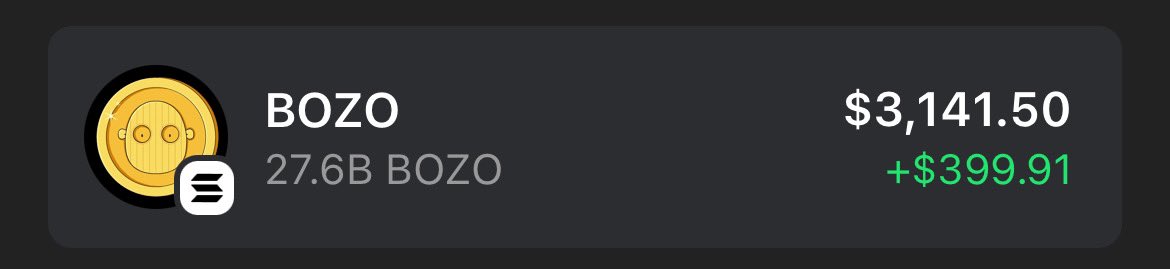
$BOZO listing on Poloniex soon.
Like + RT
DROP WALLETS
Looks like we adding a bunch of new people today to celebrate!
STORY TIME PART 2.
No pretty prose, just facts and 4 pictures because Elon is rugging long posts.
The million-dollar question.
How do you fit countless hours of thought process into a single tweet? The truth is you can't. Yet, this is our attempt to simplify it, hoping to at least help those that are at the beginning of this long journey.
There is a massive void of perception in the generative art scene and how "easy" it is. Make no mistake: most projects are cheap and unimaginative copypasta, but many deserve much more credit than they are given.
Sometimes, being a genius, crazy, or stupid is one and the same.
This is our story.
CHOOSING A THEME
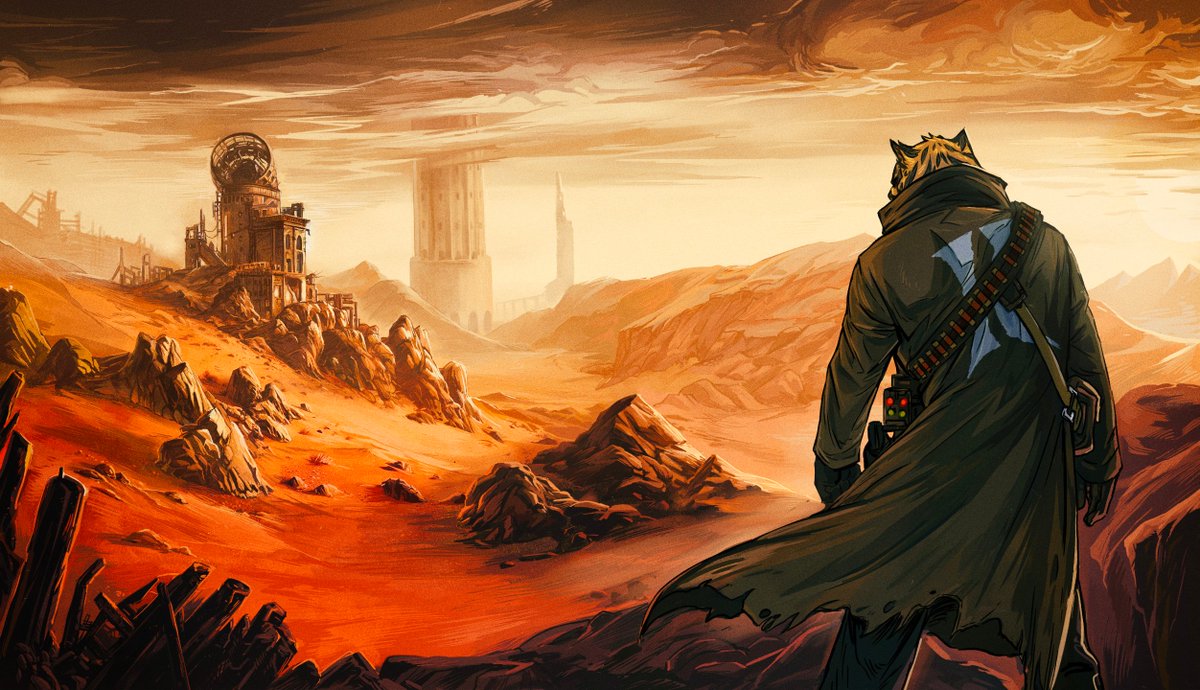
Our lifelong affection for post-apocalypse made it a no-brainer for us, and we knew that a unified theme for a project is essential; otherwise, art and brand turn into a discombobulated mess.
Our focal points were things like Borderlands and Fury Road because they perfectly aligned with our vision—metal, punk, and a dash of anarchy. They cater to a mature audience but carry subtle humor.
A wise man once said, "Everybody knows you never go full serious."
DEVELOPING A STYLE
With thousands upon thousands of projects, we wanted our lining, shading, and coloring to be unique, which led us deep into the research of comic books and giants like Moebius.
IDEATION OF THE CHARACTER
Why Tigers?
The short version: because tigers just f*ck.
The long version: remember that guy from Fury Road with a flamethrower guitar? Hot chase scene, chaos around, flames blazing? For us, the tiger is just that. A wild, untamed force with zero f*cks given about everything else: thus, our character needed to be strong, fierce, and not feeble-looking, as in many other collections.
SKETCHING
At this stage, we realized that disproportional characteristics ain't gonna cut it, especially with the more anthropomorphized approach we were going for.
We did hundreds of designs for weeks, where we hunted for our holy grail. How do you know when something is perfect? You don't, but you test, get feedback, and do it a lot.
COLORING & ADDING DETAILS
Translating from a sketch to a fully colored image does not always end up as you imagine it will. It would be an understatement to say we struggled here, mostly because we underestimated how hard it is to make a realistic humanoid tiger in the side position common to NFTs.
Sometimes, we tried to solve a problem for weeks, only to find another one we hadn't seen before. Mane and body were our Achilles' heel because stripes play a massive role in 3D perception.
Tricking the brain isn't easy, and we used everything in our arsenal, from 3D mapping to creating a clay tiger figurine. But as with all good things in life, there are also no shortcuts in design. You try and try until you make it right, which in our case lasted two months until finally, we had our ideal specimen.
ITERATIONS
At different points in time, we would often return and revisit some parts of the tiger. Eyes, whiskers, mouth, and everything else were worked on multiple times throughout the design process.
And when we hear questions: Why are no tigers smiling? Why don't they have closed eyes? Why only one face? Believe us, we tried. Numerous times, and if we don't have something many of you thought of, it doesn't work with this art style.
DESIGNING FURS
The burning question. Why do we have 19 furs?
We wanted every major color, as everyone is unique and likes different things, but at the same time, we wanted to avoid copying what others did, having seethrough skins, robot skins, etc. Most importantly, we wanted stripes as they are what make tigers iconic.
We first developed nearly 50 different furs and then spent the whole month theory-crafting the system and finalizing the 19. There are four different levels of complexity added to each skin.
The tiger has four main parts: ears, face, mane, and body. Then, each is divided further into lining, colored parts, white parts, and stripes. Every part of the tiger has a specific combination of textures applied based on the color system—sixteen textures over nineteen furs and a dozen different parts, resulting in thousands of possible combinations.
On top of that, we designed three different stripe patterns that would make similar shades of colors more distinguishable. We also had to redesign the whole Eye system once again so each skin could have its own eyes.
DESIGNING TRAITS
Despite collecting hundreds of possible traits in the research phase, the perpetual search for new traits never stopped and lasted six months, as long as we designed them.
You often have to make a few sacrifices to make things easier in design. Remember the bit about crazy and stupid? This stage was a point of no return, where we said NO to sacrifices and thus pushed the art release for months.
More than 90% of our traits were made entirely from scratch and have unique designs and shapes. Every trait was worked on until it was perfect. Many didn't pass the quality control even after days of designing because we couldn't make them work. A painful realization came early that a more realistic style has quite a few drawbacks.
TRAIT VARIATIONS
We use our traits to add the 4th layer of complexity to our skins. White on orange, white on blue, green on orange, green on blue, all colors can appear in every possible combination.
More than 60% of our traits have more than one variant. Depending on the fur or trait combination, the same trait can appear in different colors, shapes, and designs. This design choice was also implemented due to a complex array of warm and cool colors on furs, thus ensuring better color balance when traits mix and match.
How do you go about doing this? You manually review every trait with every fur and then make a variant if needed—more than 2,000 possible combinations. The silver lining of this step was that it allowed us to do final color balancing and redo all of the shadows to make them more seamless across all traits.
RULE SYSTEM
Merlin was done drawing at this point, but we knew we were truly f*ucked, and lo and behold, we spent the next four months generating the collection.
Why?
For a start, we needed to assign every trait variant to a designated fur—more than 3,000 combinations done manually. Then, we had to check every trait layer with one another since many of our traits cross layers (body vs. mouth, body vs. eye, body vs. head, mouth vs. eye, etc.)—more than 3,000 combinations again.
Each combination has a rule, and there are more than 800 in total. There were no scripts or automated ways to do this due to the soft shadow system we use. When traits clashed, the shadows needed to be manually drawn since they didn't exist in the first place. This resulted in more than 500 PNGs being created and added across secret layers in the generation process.
RARITY
Adjusting rarity when you have so many variables is a bitch. You want your furs and colors to be equally represented. Naturally, you also want your different trait variants to be equally represented depending on the furs. One slight change, and you need to re-calculate everything again.
You also want enough nakeds, your best traits to be the rarest, and have a good spread that there is enough diversity in the collection. On and on it goes.
BACKGROUNDS
Many underestimate the pivotal role of backgrounds. We generated thousands of NFTs to test the rule system but, more importantly, to mass-test backgrounds on all PFPs. Figma and Photoshop were our home for two weeks until we had nine champions.
THE 5000
The bonus question.
How do you pick the best 5K out of 10K generated PFPs while adhering to the complex rarity system? You open Lightroom and spend a couple of weeks scrolling the whole collection several times over. This also allowed us to spot any mistakes the rules didn't fix as some were just too complex to solve with a script in the generation process.
The funny thing is that all of the above is just the tip of the iceberg because even seemingly minor tasks like naming require time and care.
In hindsight, are there things we would do differently now? Definitely, but not at the expense of quality. We set out to push the boundaries of PFPs, which meant giving our all.
In the words of the famous green little guy: "Do or do not, there is no try."
STORY TIME.
No pretty pictures. No filter. Straight down to business.
We’ve been working on this thing for a year, but a lot has changed in the meantime. What went wrong? Well, everything and nothing.
For a start, the whole NFT space went from f*cked to super f*cked, even despite eating sh*t with Luna and FTX last year, where we all managed to get by somehow.
We knew that creating a project in the bear market was playing on hard mode; hard times create strong projects sort of thing. But truth be told, we underestimated how brutal it would actually get. The fighting, the bickering, and the toxicity went to the absolute extremes. It's a testament that this space isn't for the faint-hearted, where only madmen would want to grind day in, day out.
So, are we mad? A bit, yeah.
We're mad because we spent 12 months on art when we could have done it in 6.
We're crazy because we opted for transparency and building in public over cheap tricks.
We're insane because we didn't do presale at our peak hype just because we knew the art wouldn't be ready soon.
We lost our momentum and sacrificed everything to do what was right. Like many, we’ve probably been approached by every hustler, scammer, and salesman under the sun. Some genuinely want to help because it's their business, but most consider you easy prey. And if they see a slight weakness or opportunity, they're here—like sharks in bloody water, waiting to take a bite. For better or for the worse, we gave them f*ck all. Zero.
Every inch of this project was built with our own blood, sweat, and tears. There was a lot of it. We're a small team, and it ain't easy being called out when the market flip-flops every few months like it has collective amnesia. One day it's about the community, and the next thing you know it's all about the utility, or the rev share. Round and round it goes.
When the whole space boiled down to "If I give you $50, can you give me $100 back in a week?", we've stayed true to our course. And not because we were stubborn to adapt but because we'd seen this circus before. Say what you want, but art is what brought communities together in the first place. For this very reason, we set out to create something unique, to push the boundaries of how a generative collection can look like. Where quality matters and where every single one of you can find something you like. We know this because an army of you hit our DMs with, “Yo the art is f*cking sick”. But why are so many of you scared to say it out loud?
This space is weird sometimes, and navigating these waters is as hard as it is treacherous. It's like walking on eggshells where you must watch your every word and every move. One wrong step, and the wolves start howling.
When you think about it, NFTs have it all. Drama, excitement, heroes, villains, and everything else a real space opera would need. However, it's not a classic tale of good versus evil; rather, the lines of morality are often blurred.
So why do we keep coming back, day after day?
Because we probably all see it. The potential. The diamond in the rough. Where creativity and passion can thrive without being burdened by the usual norms of society. There are no written or official rules, yet many unspoken ones. It's a wild, wild west, so we believe this model fits perfectly with our vision. Punk. Metal. Free. F*ck the government type of thing.
For us, the road ahead is crystal clear.
Remember the good old days, anon? When you'd wake up in the dead of night hoping to mint? When you minted just because you loved the damn art? Or when you minted more than one, hungry for something special?
December 13th, fully public mint. 1 SOL.
No whitelists; mint as much as your degenerate heart wants.
No damn rules. Back to the OG.
If it mints out in a minute? Hell yeah. If it mints out in five months? So be it. We'll be here as we have always been, rocking it beside Sisyphus until the better days come. And make no mistake, they will come.
Until then, shine on, you crazy mfers.
Sincerely,
Kromes team