microvm sandbox providers have the precise security profile of an ec2 t2.small
as in they don't add shit
should we remind them the last time some stupid dipshits tried this?
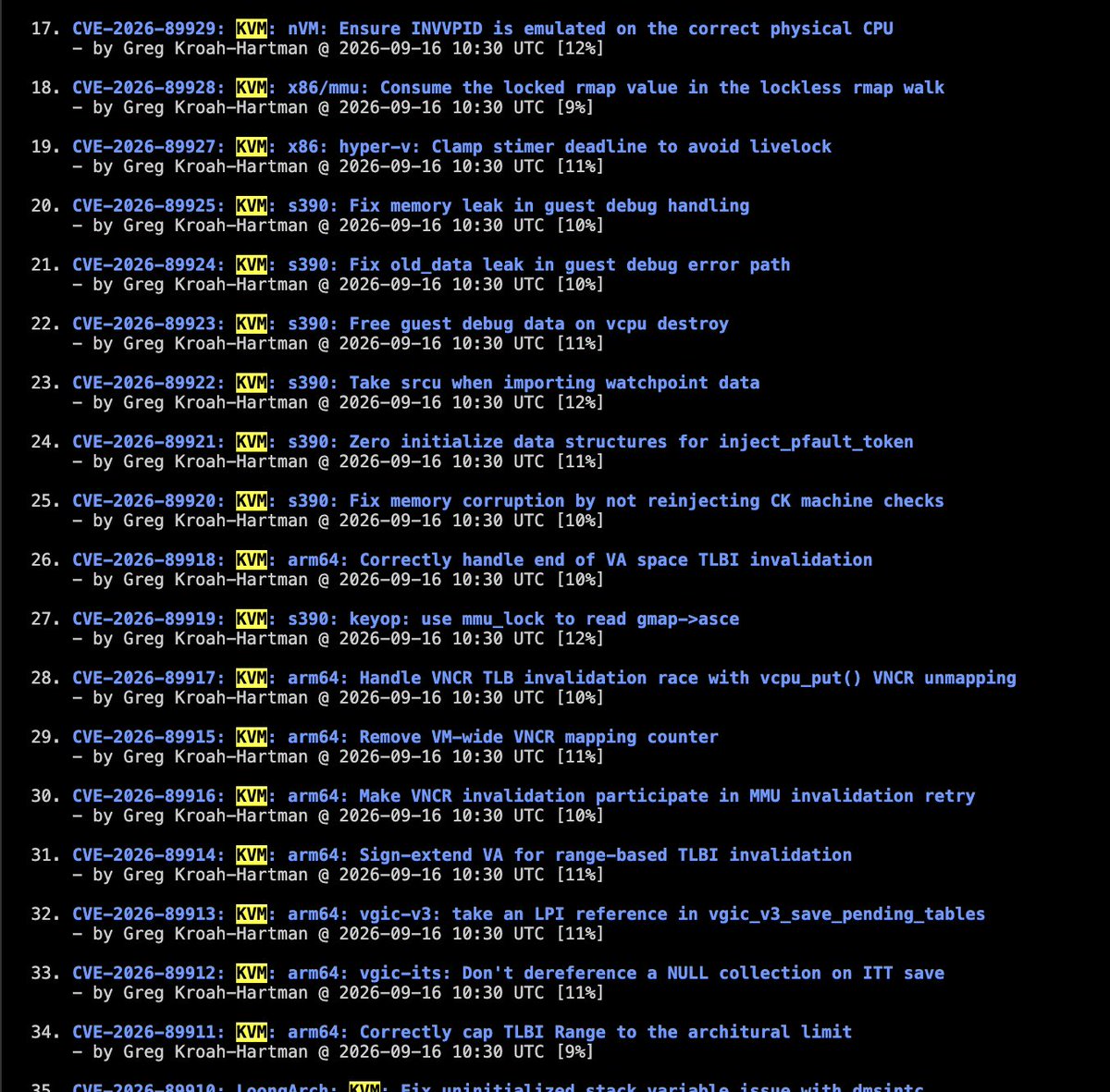
there's been a slew of kvm vulns recently but some ppl don't know how to properly push their agenda that is a faulty understanding of computers properly; would be hilarious if all the drama was just a rehash of the nested virt ones earlier this year
since there are now over a 100 "microvm sandbox" providers out there - we ask - do they actually provide any more security than a normal t2.small on aws?
we use our excellent graphix eng dept to find out!
it's not really a sandbox if you can just dl random programs from the internet and run them is it? not surprising language from a bunch of losers that "don't read code anymore"
A Google researcher says the Windows NT kernel still “puts Linux to shame” in many ways.
Laurie Kirk, a former Microsoft reverse engineer, argues that NT was built with a cleaner and more consistent security model.
Linux took a different path, adding capabilities, namespaces, cgroups and SELinux over time.
But her most controversial point is about AI agents.
Kirk argues that Linux permissions are spread across too many mechanisms, while NT handles resources, permissions and auditing more consistently.
She even says that if we designed an OS kernel from scratch in 2026, it probably wouldn’t look like Linux.
Linux engineers are already pushing back, defending the modular approach that helped Linux dominate servers, cloud and containers.
Windows vs Linux just got interesting again.
Full story: https://t.co/AaEj3YAGE0
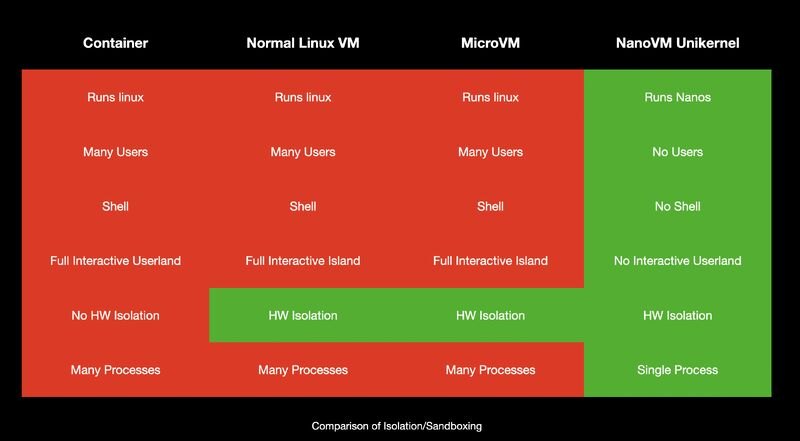
@besodemieterd unikernels don't require custom orchestrators as they are deployed straight to the cloud; but comparing to containers security - https://t.co/yFKoDdMzEU - for actual deploys https://t.co/2er8VBPb1K
a) using containers for "sandboxing" is bad for your health
b) cves being issued for vulns disclosed over a month ago means you need better defense than silly little scanners
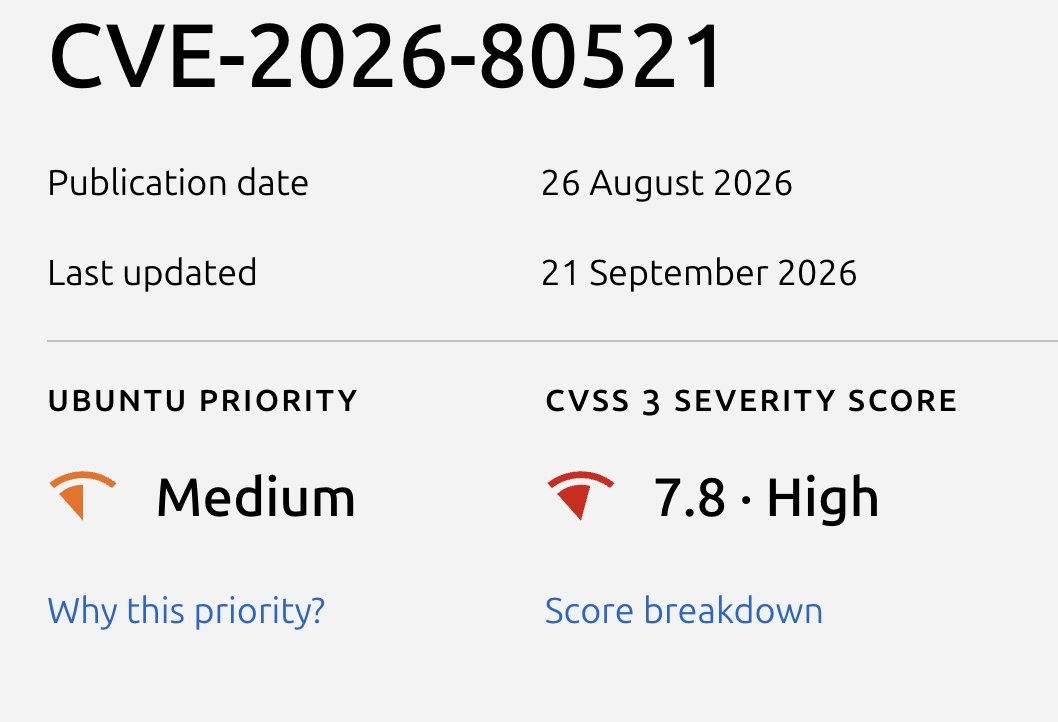
another picture perfect reason why you can't rely on scanning, patching .. and why containers do not contain - over a month this container escape has been known and not fixed in popular distros like ubuntu
@BeardOps@dysinger a lot of projects in the space knew nothing about security and so totally disregarded page permissions - we wrote in response to this - def. been a few years https://t.co/BhgJycAsgE see also https://t.co/d2hu0lVPJf
Containers are no longer a security boundary.
Over the past few months, we’ve seen a crazy amount of Linux kernel vulnerabilities and exploits. This has forced us to rethink the security of infrastructure that relies heavily on the underlying kernel, especially containers.
As models become more capable, the barrier to escaping a container has fallen so much that adversaries can now generate working kernel exploits in a single shot. CVE-2026-80521 is one such example. We discovered it using dfs-large1 from @depthfirstlabs and generated the exploit in one shot with GPT-5.6 Sol. The exploit still works on the latest Ubuntu 26.04 release because the fix has not yet been backported.
Read our full writeup: https://t.co/ZFSQCMCN73
Containers are a useful primitive, but very limited in terms of an actual security boundary
Back in 2007 when me and my team presented at BlackHat and DefCon about our kernel exploitation research and demonstrated various 0-days and N-days for different operating systems it was cutting edge
In 2026, when AI agents are able to automate a large part of the process, kernel exploitation is becoming pretty mainstream
Physical separation (dedicated systems for each workload) is always best, but at the very least use virtualization and avoid exposing the attack surface from your host kernel to anything you want to isolate
@mktpavlenko@GeoffreyHuntley at least for nanos it only runs one and only one program - the shell by definition allows you to run many different programs so doesn't really work there