Indy. Ranchers, AQHA Ch. Reining/Cow Horses. Dogs, kids, husband, not in that order. Blocking accts carrying only horrible content. #MayflowerDesc PhD History.
@zerohedge Reading ain't Believing 👆👆
These are Iranian media sources
Tasnim is IRGC-affiliated;
Noor News is a semi-official Iranian outlet.
"WSN" appears to be a minor or niche source aligned with similar narratives.
@zerohedge We reduced staff at bahrain from 8000 to under 100...
They are shooting empty tents, barracks and hangars. Place has been been empty since late Feb...
@CindyCo@DemocraticWins@amycoplan Sure, I’m not good at seeing AI, I did wonder how he looks so well, how she got here so fast, it does all look very ordered, have to wait and see, of course Rs are delaying because they’d have to set a special election, need him “alive” as long as possible.
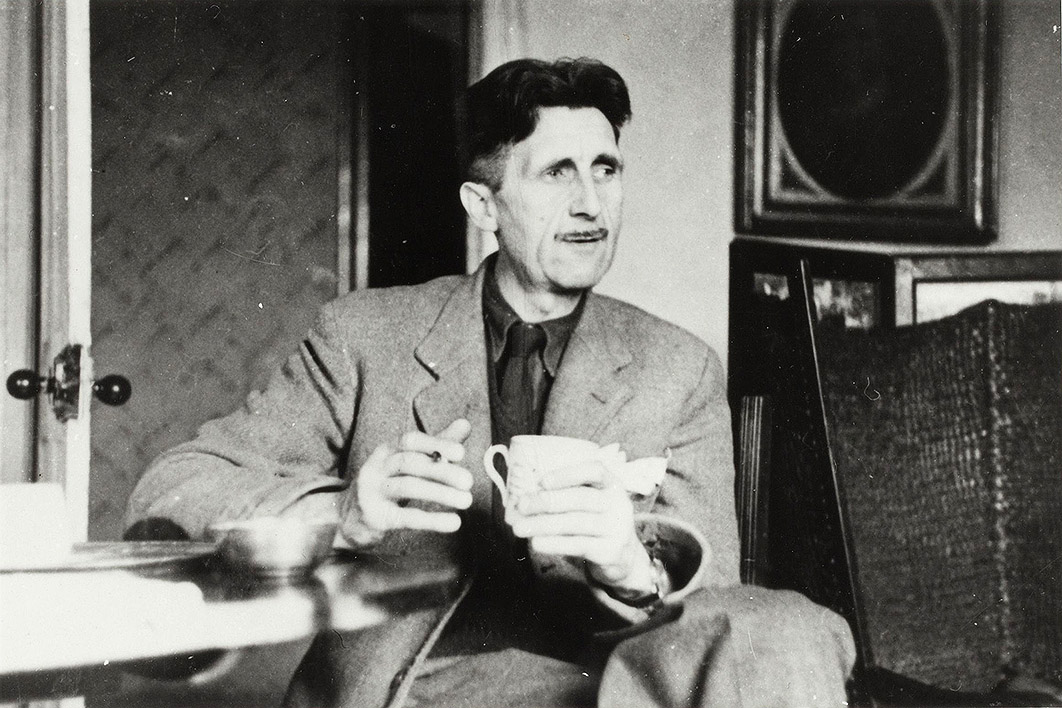
George Orwell, reviewing The Road to Serfdom in 1944:
“Professor Hayek’s thesis is that Socialism inevitably leads to despotism, and that in Germany the Nazis were able to succeed because the Socialists had already done most of their work for them, especially the intellectual work of weakening the desire for liberty.
By bringing the whole of life under the control of the State, Socialism necessarily gives power to an inner ring of bureaucrats, who in almost every case will be men who want power for its own sake and will stick at nothing in order to retain it.
Britain, he says, is now going the same road as Germany, with the left-wing intelligentsia in the van and the Tory Party a good second. The only salvation lies in returning to an unplanned economy, free competition, and emphasis on liberty rather than on security.”
@CindyCo@DemocraticWins@amycoplan It’s a tough one.I usually take things at face value, but it’s his position that makes this so important and necessary for the ppl to know,guess an audio along with video would be best,ppl too willing to imagine crap,I’ll accept this a few days,not much more.
On this day in 1944, Theodore Roosevelt Jr. died in his sleep in a stone farmhouse in Normandy. He was 56 years old, and he had spent almost his entire adult life trying to be worthy of a famous last name.
He was the eldest son of President Theodore Roosevelt. In the First World War he went to France and was gassed and badly wounded at Soissons leading his men. That same summer his younger brother Quentin, a pilot, was shot down and killed over France. Ted came home with lungs and a leg that never fully recovered, and before he even left Europe he helped found the American Legion so that ordinary soldiers would have someone looking out for them.
Between the wars he did almost everything. Governor of Puerto Rico. Governor General of the Philippines. Businessman, explorer, writer. He could have spent the Second World War safe behind a desk. Instead, at 54, arthritic and walking with a cane, he talked his way back into uniform and into combat.
By 1943 he was fighting in North Africa and Sicily under Terry Allen, and their loose, unpolished, soldier-first style rubbed General Patton the wrong way. Patton had them both relieved of command. Roosevelt didn't sulk. He asked for another job, any job, as long as it kept him near the fighting. They made him assistant commander of the 4th Infantry Division.
Then came D-Day. He hid a heart condition from the Army doctors. He wrote to his commander three separate times, in writing, begging to go in with the very first wave rather than watch from a ship. He was the only general to land in the first wave on any beach that morning, the oldest man in the invasion, walking through machine gun fire with a cane in one hand and a pistol in the other.
The boats came in a mile off course. Officers froze. Roosevelt limped up and down the beach under fire, studied the ground, and said, "We'll start the war from right here." Then he spent the morning waving men forward and sorting out the chaos so calmly that terrified 20 year olds looked at this old man with a cane and decided that if he wasn't scared, they wouldn't be either.
His son Quentin, named for the uncle killed in the last war, landed at Omaha Beach the same morning. They were the only father and son to come ashore together on D-Day.
He died a month later. A heart attack in his sleep. And here is the part that gets me. On the very day he died, the orders had just come through promoting him to major general and giving him his own division. He never saw the paperwork. He never knew he'd earned the Medal of Honor either.
At his funeral his pallbearers were seven of the most famous generals of the war, Bradley, Hodges, Collins, Barton, Huebner, and George Patton. The same Patton who had fired him. Patton wrote in his diary that Roosevelt was one of the bravest men he had ever known.
Years later Omar Bradley was asked to name the single most heroic thing he witnessed in all of World War II. He didn't pause. He said, "Ted Roosevelt on Utah Beach."