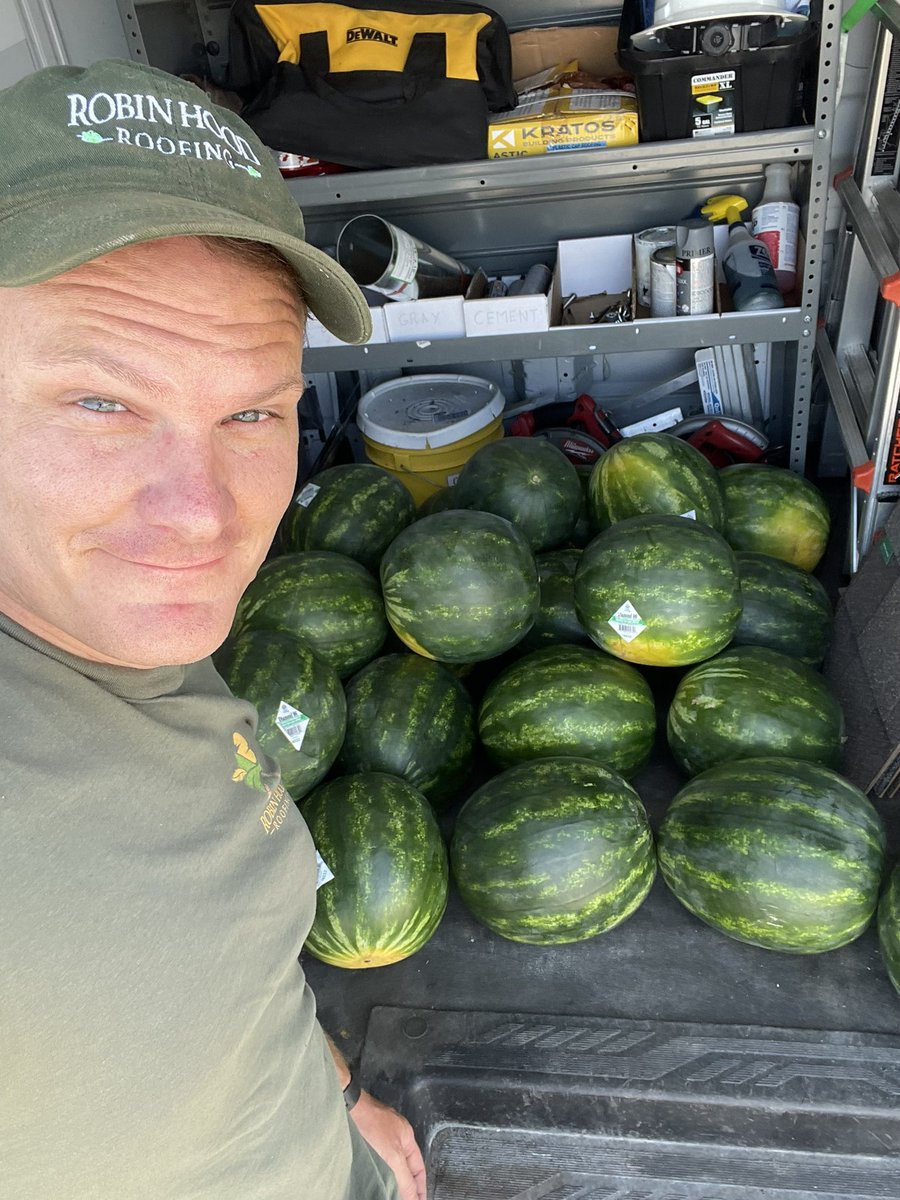
This dude turned $100 into $45,000.
How? Free watermelons.
He owns a roofing business. He placed 20 watermelons on doorsteps with this note attached and it won him 2 jobs.
You can complain that a market is too saturated, or you can just do things.
“We don’t run a hype machine up here in the Midwest… when we fall short we don’t cry a river and whine and complain. And that’s why we’re the best”
Curt Cignetti ended his first media day as a national champion with some shots fired at the SEC
$164,000 A YEAR. THAT'S WHAT ONE COMPANY SAVES BY LETTING ONE PERSON RUN FOUR EXCAVATORS FROM A SINGLE CHAIR.
The machines sit at four separate rural gravel pits, each one busy for maybe 1-2 hours out of an 8-hour shift, one or two trucks a day. Not enough work to justify parking a full-time operator at any single site.
One operator runs all four from a single bank of screens, hundreds of miles from any of them. An AI layer watches all four feeds at once and tells them which pit needs attention first. The grade-control display does its own terrain read, catching depth errors down to a couple centimeters as the bucket moves.
Four site-based operators: about $224,000 a year combined.
One remote operator plus four AI-assisted consoles: roughly $60,000 a year in wages, $240,000 in equipment across all four machines, cameras, wireless control units, and the AI layer itself.
Under a year and a half, the hardware pays for itself in wages alone.
The article below calls this the next wave after digital agents. It's already stepping off the screen and into dirt nobody gets paid to stand in anymore.
$164,000 A YEAR. THAT'S WHAT ONE COMPANY SAVES BY LETTING ONE PERSON RUN FOUR EXCAVATORS FROM A SINGLE CHAIR.
The machines sit at four separate rural gravel pits, each one busy for maybe 1-2 hours out of an 8-hour shift, one or two trucks a day. Not enough work to justify parking a full-time operator at any single site.
One operator runs all four from a single bank of screens, hundreds of miles from any of them. An AI layer watches all four feeds at once and tells them which pit needs attention first. The grade-control display does its own terrain read, catching depth errors down to a couple centimeters as the bucket moves.
Four site-based operators: about $224,000 a year combined.
One remote operator plus four AI-assisted consoles: roughly $60,000 a year in wages, $240,000 in equipment across all four machines, cameras, wireless control units, and the AI layer itself.
Under a year and a half, the hardware pays for itself in wages alone.
The article below calls this the next wave after digital agents. It's already stepping off the screen and into dirt nobody gets paid to stand in anymore.