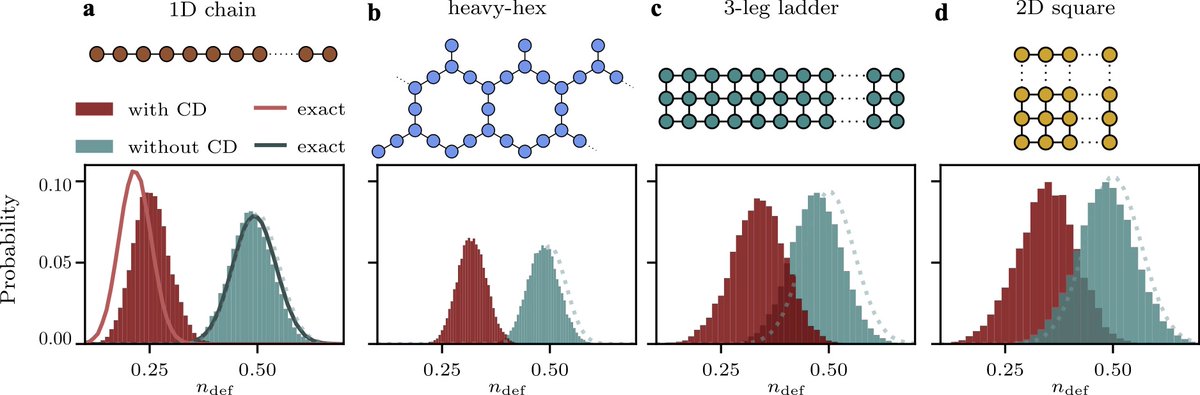
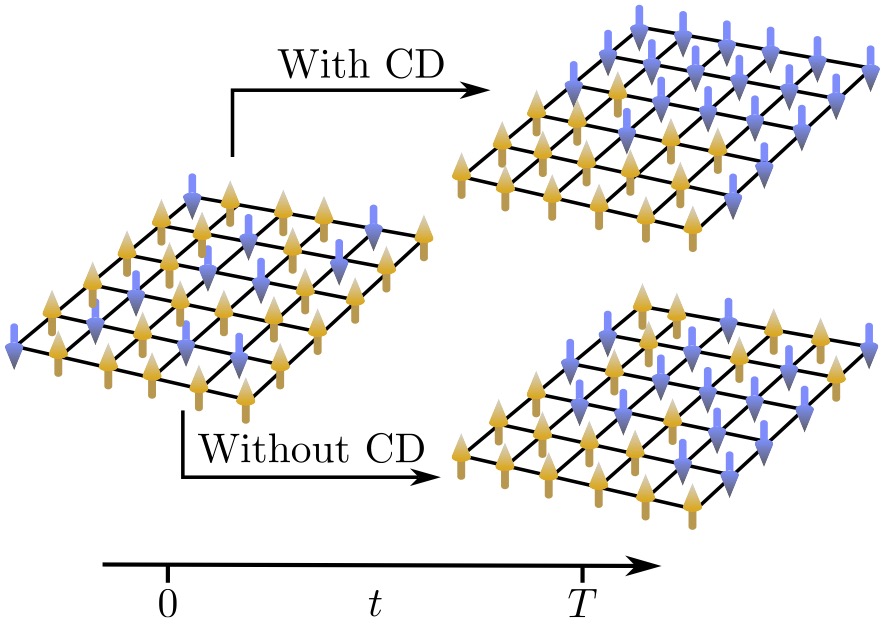
Simulating quantum critical dynamics isn’t just an exciting research problem—it has huge industrial implications for material design. I’m excited to share our latest work on arXiv: "Digitized counterdiabatic quantum critical dynamics" https://t.co/PUl4p2y3Id
New hope for quantum optimization? Optimization, as one of the primary applications of quantum computers has a third (or fourth?) life. My colleagues developed an approach that provides an exponential speedup over known classical methods for some problems
https://t.co/DsonrFrEsO
@MJBiercuk@dallairedemers Yes, it would be great to combine some of these techniques with better optimization algorithm like digitized counterdiabatic quantum optimization (DCQO), which already shows superior performance than QAOA.
Error suppression techniques are definitely needed. Most importantly, better algorithms are also required. The CD protocol surely performs better here (as mentioned in the discussion section of the paper). In addition, we have tested it experimentally for even more complex problems at this scale (soon in arXiv).
Amazing work by Google and others on digital-analog quantum simulation! The authors surely know Kike @KikeSolanoPhys and his group's @qmisanz @LucasLamata work on DAQS and DAQC, but unfortunately, there's not a single citation/credit
@Google@PedramRoushan
https://t.co/58sC7l84kJ
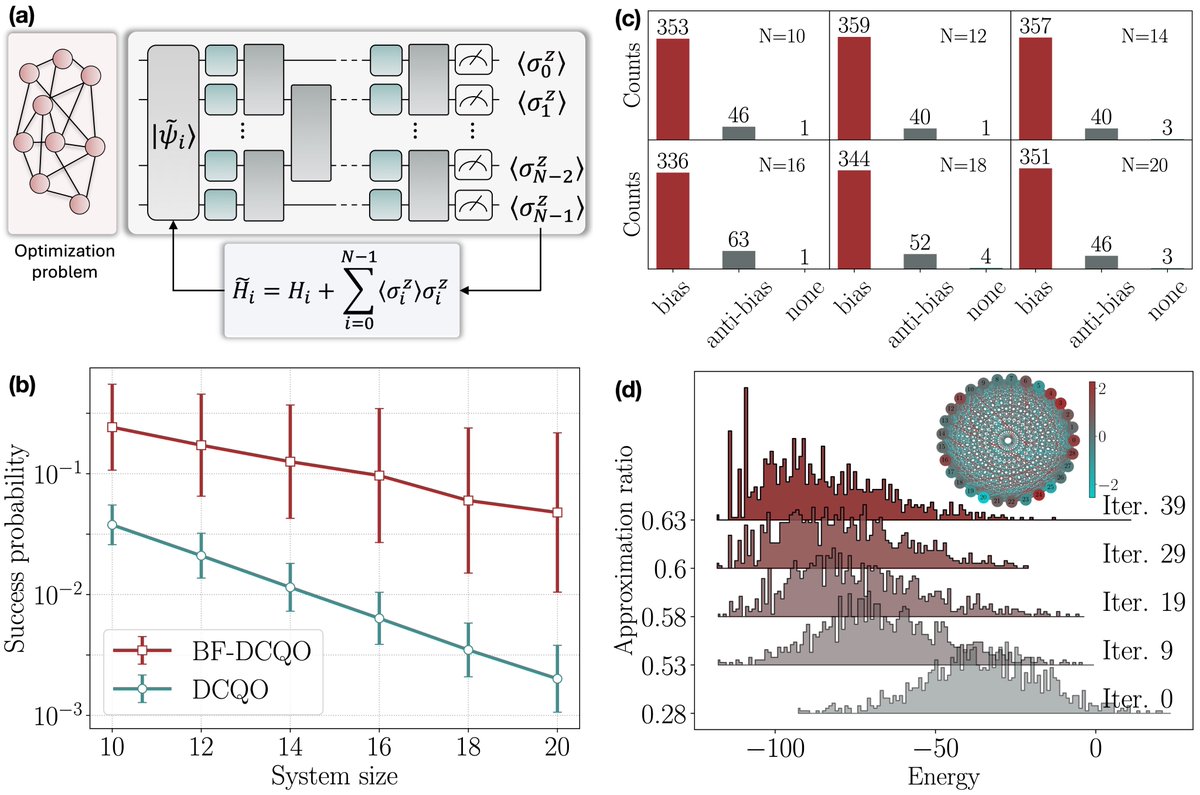
🧵 1/5 Tired of variational quantum algorithms like QAOA due to trainability issues on noisy quantum computers? Check out our new work—a purely quantum approach to tackle combinatorial optimization problems! Featuring experimental results with 100 qubits! https://t.co/kSptUytNbI
🧵 4/5 BF-DCQO also achieves two orders of magnitude improvement in ground-state success probability and a 1.3x better approximation ratio than QAOA for the problem sizes studied, showcasing its potential in outperforming standard variational quantum optimization algorithms.