Ask an AI about Japan and you'll get a clean answer. The point is that you'd never think to ask.
I make Narrative Japan, a five-minute podcast in English about Japanese business and culture. Sakura, a university student, asks. Haru, her teacher, answers.
◆ What might make you curious
Why are men in Japan carrying parasols? How did mint ice cream become a national argument? Why would a company keep doing something that makes no sense from the outside?
Those are the subjects: the questions that snag your attention for a second, then disappear before you get around to looking them up. Each episode stands on its own, so you can start with whichever one catches you.
◆ What you'll hear
Sakura asks the questions as they occur to her. Haru answers. You overhear two people working something out, rather than sitting through an explanation.
◆ Where the details come from
Most of what happens in Japan is reported in Japanese and never crosses over. What does cross over arrives flattened — the specific detail removed, the context missing. We work directly from the Japanese coverage.
◆ What it sounds like
I grew up on radio, audio drama especially — something I could put on while doing something else, or fall asleep to the way a kid falls asleep to a bedtime story.
The one I kept going back to was the radio adaptation of Sophie's World. The whole thing moves through conversations between Sophie and her teacher, and you come out the other side having learned philosophy without anyone having taught it to you. I found the CDs again a year or so ago. I still listen.
Japan also has a genre of book called gakushū manga — "study manga" — where history and biography are taught in comic form. That's the register I'm after: something you enjoy first and learn from second.
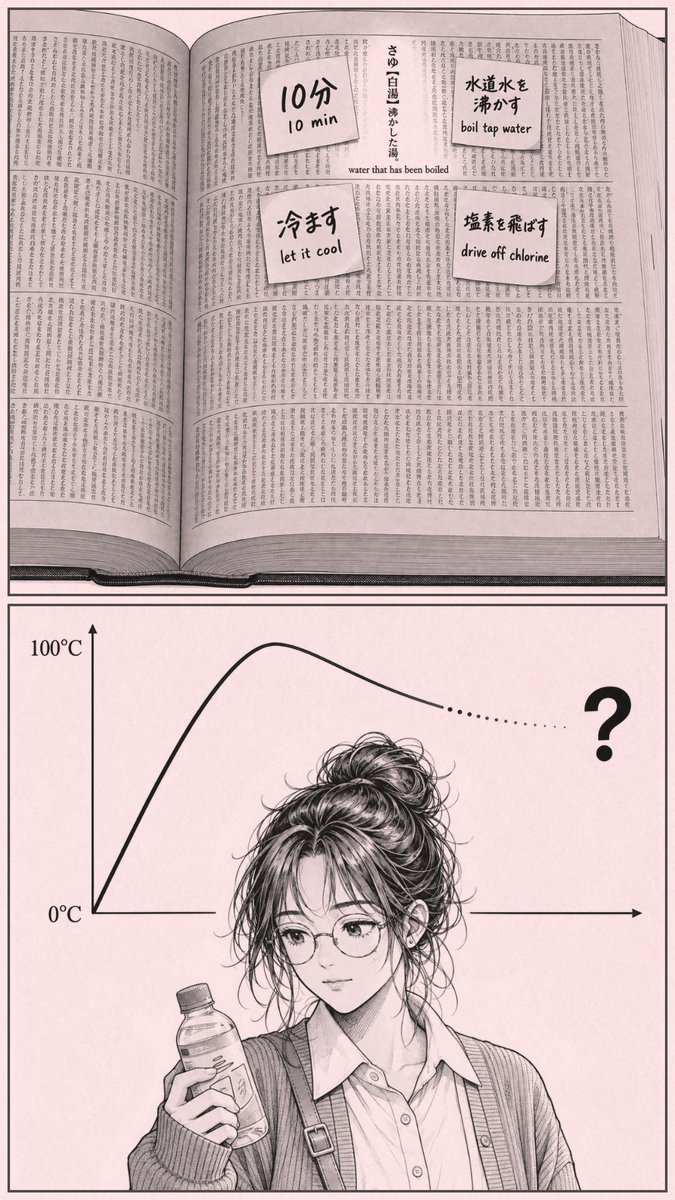
One Japanese brand says it has shipped about 73 million bottles of plain hot water.💧
It sells for about a dollar. A housewares company that wanted to make a mug for it went looking for a definition, says the dictionary offered only "water that has been boiled," and wrote its own: boil ten minutes, cool to fifty-five degrees or a little above. An electronics maker then built a kettle that does the same ten minutes.
Would anyone where you live pay for water that is only warm?
New episode tomorrow — five minutes. 🎧
📅 Release Date:
・PT (Pacific Time): Monday, Sep 28, 1:00 AM
・ET (Eastern Time): Monday, Sep 28, 4:00 AM
・JST (Japan Time): Monday, Sep 28, 5:00 PM
🎧 This week's episode 👉 https://t.co/3NNKUMFXvO
Mos Burger enters supermarket freezers, Poppo brings food-court flavors home, and a Nagoya cram school offers kimbap from a machine. Five minutes.
Hi everyone!
This week's episode was about Japan's frozen-food boom 🥶🧊 — meals can reach people far from the kitchens that made them.
And next week?👀
Here's your hint:
●-----------●
A clear bottle💧
●-----------●
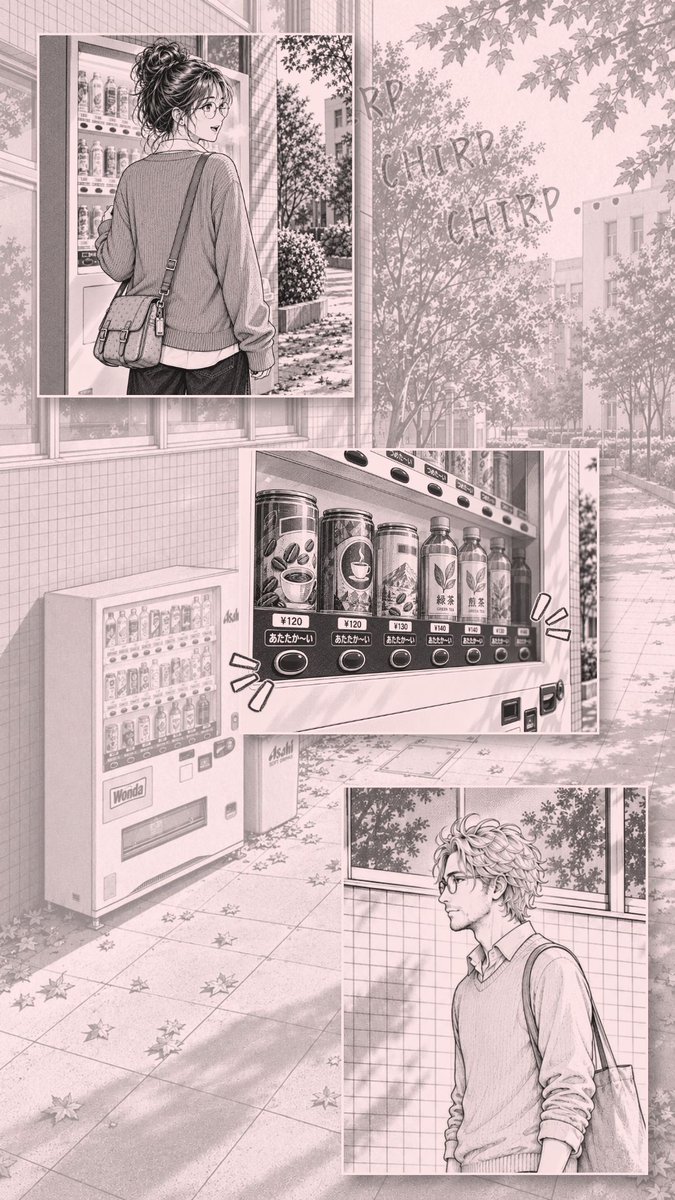
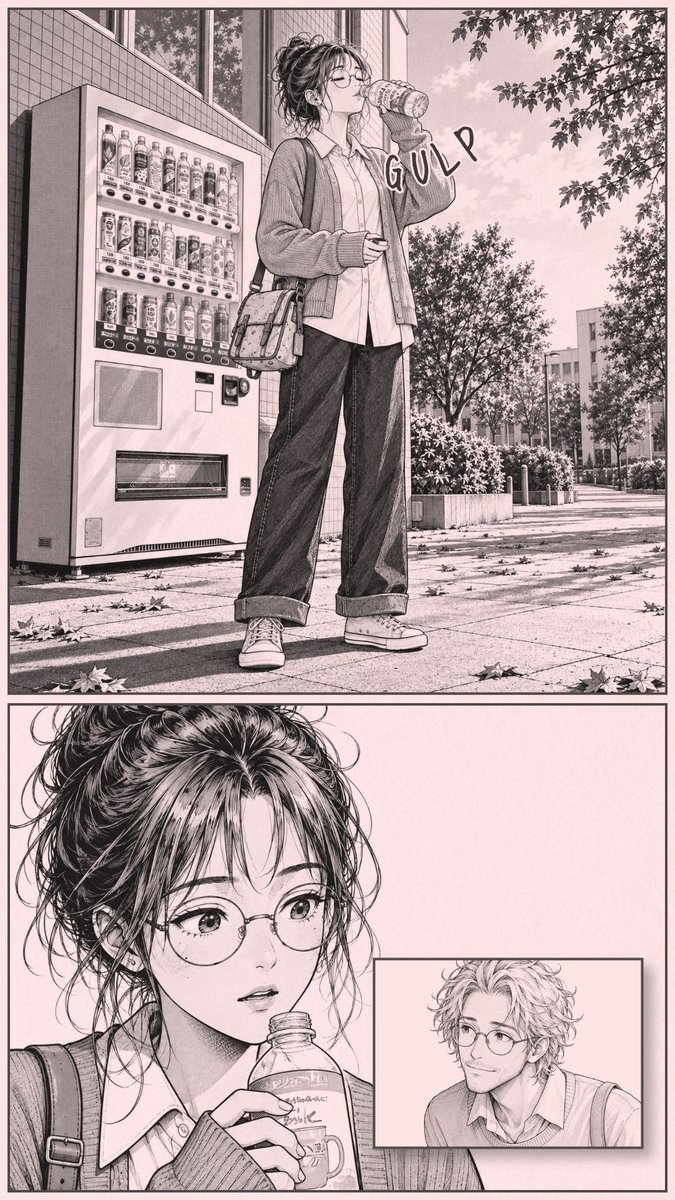
It came out of a vending machine, warm enough to hold with both hands.
Nothing had been added to it — and it still has its own name, its own price, and a mug made only for it.
Any guesses? 🤔
📅 Release Date:
・PT (Pacific Time): Monday, Sep 28, 1:00 AM
・ET (Eastern Time): Monday, Sep 28, 4:00 AM
・JST (Japan Time): Monday, Sep 28, 5:00 PM
A school vending machine raises a practical question about meals between classes. The newsletter links to the original announcement.
https://t.co/3NNKUMFXvO
A meal can be ready where nobody is cooking.🧑🍳
A Nagoya cram school 🏫offers frozen kimbap and a microwave. The food is made elsewhere, ready before class.
Where would you want a meal waiting for you?
Mos Burger is entering the freezer aisle.❄️
Its store count in Japan has stayed near 1,300 for a decade. Frozen rice burgers can reach shoppers through supermarkets.
Would you try a restaurant favorite at home?
Keeping a meal waiting has a price.
Rock Field raised frozen-food prices about 10% this September, citing more expensive packaging.📈
How much extra is that convenience worth to you?
A food court🍴 can close while its flavors live on.
Poppo's frozen range sold half a million items in two months, after customers had asked for familiar tastes.
Which closed shop's food would you bring back?
A rice ball 🍙can wait months for its customer.
In January, FamilyMart compared 21 hours for regular rice balls with 150 days for frozen.❄️
Would longer storage change how you shop?
A meal can reach you even when the person who made it can't be there. 🍴⇔🧑🍳
Mos Burger sells frozen rice burgers in supermarkets. Poppo brings familiar food-court flavors home. A Nagoya cram school has a kimbap vending machine and a microwave.
Freezing separates making a meal from eating it. Who pays to keep that meal waiting?
New episode tomorrow — five minutes. 🎧
📅 Release Date:
・PT (Pacific Time): Monday, Sep 21, 1:00 AM
・ET (Eastern Time): Monday, Sep 21, 4:00 AM
・JST (Japan Time): Monday, Sep 21, 5:00 PM
Japan's mail📮 has nearly halved since 2007 — yet 24,000 post offices and 170,000 post boxes remain.
Now: 65 billion yen (about $400M) a year in public support, plus a new power to raise stamp prices.
Who pays for the morning van?🚚 https://t.co/24Viw4hxMu
Hi everyone!😄
This week's episode was about Japan's mail📮 — one in four post boxes gets fewer than thirty letters a month, and a van still stops at every one of them, on time.
And next week?👀
Here's your hint:
●-----------●
Two ice packs❄️
●-----------●
Sakura swapped them at the station. Grandma said they'd last six hours.
What happens when the flight is late?
Any guesses? 🤔
📅 Release Date:
・PT (Pacific Time): Monday, Sep 21, 1:00 AM
・ET (Eastern Time): Monday, Sep 21, 4:00 AM
・JST (Japan Time): Monday, Sep 21, 5:00 PM
Japan's mail📮 has nearly halved since 2007 — yet 24,000 post offices and 170,000 post boxes remain.
Now: 65 billion yen (about $400M) a year in public support, plus a new power to raise stamp prices.
Who pays for the morning van?🚚 https://t.co/24Viw4hxMu
Japan Post raised postal rates in October 2024 — postcards included, the biggest hike in thirty years.
The next New Year, holiday cards fell by a third. Every raise teaches people to stop writing.
When was the last time you sent something by post?
Japan's mail📮 has nearly halved since 2007 — yet 24,000 post offices and 170,000 post boxes remain.
Now: 65 billion yen (about $400M) a year in public support, plus a new power to raise stamp prices.
Who pays for the morning van?🚚 https://t.co/24Viw4hxMu
Japan Post's next stamp hike could land in fiscal 2027 — about thirteen cents more per letter.
That would claw back nearly 200 billion yen. The projected loss for fiscal 2028 is 400 billion yen. So a raise of that size would cover about half.
Would you pay more for a stamp if it filled only half the hole?