@SDovchin@SDovchin
I’m thrilled to see such accomplished scholars I deeply admire gathered together. It's a shame I missed your keynote, as well as Obaid’s, and the other presentations. If available, could you please share the recording/s?
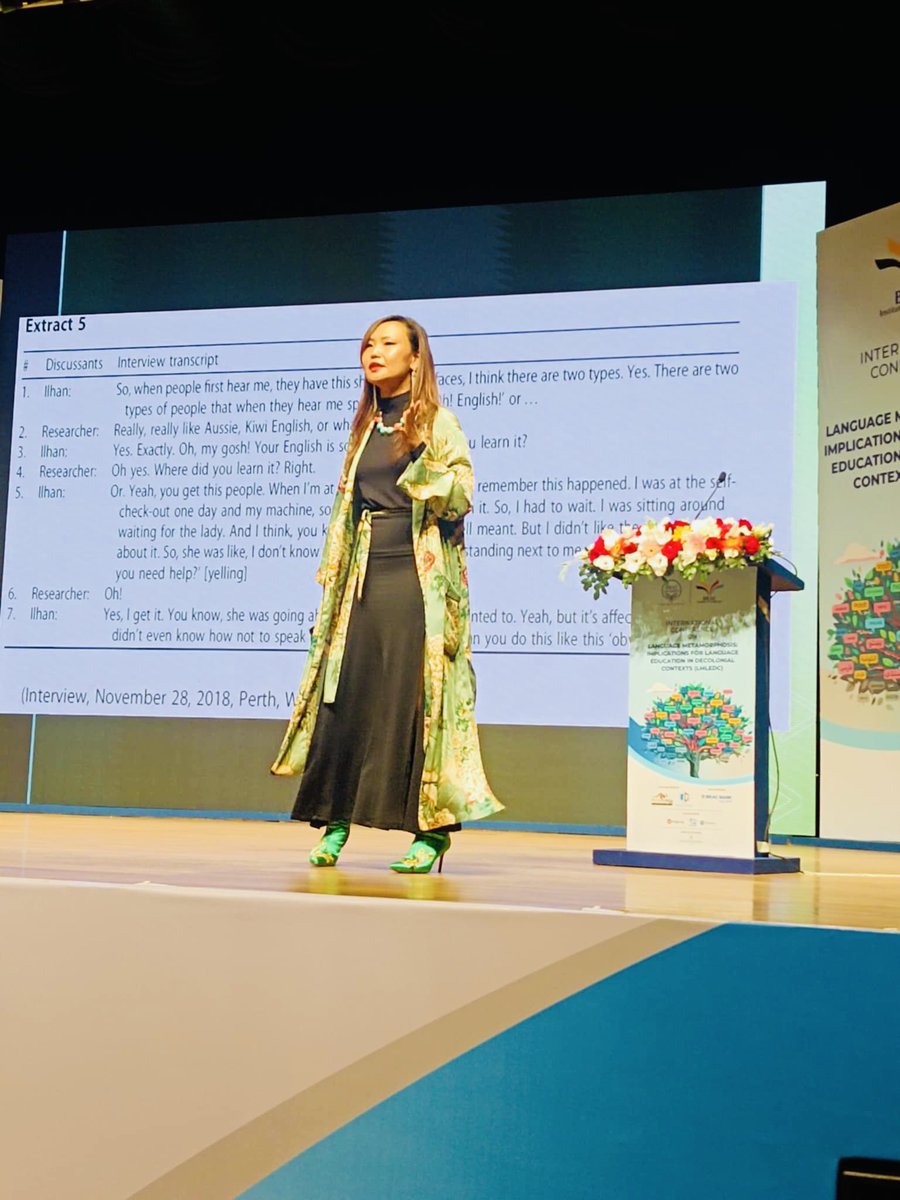
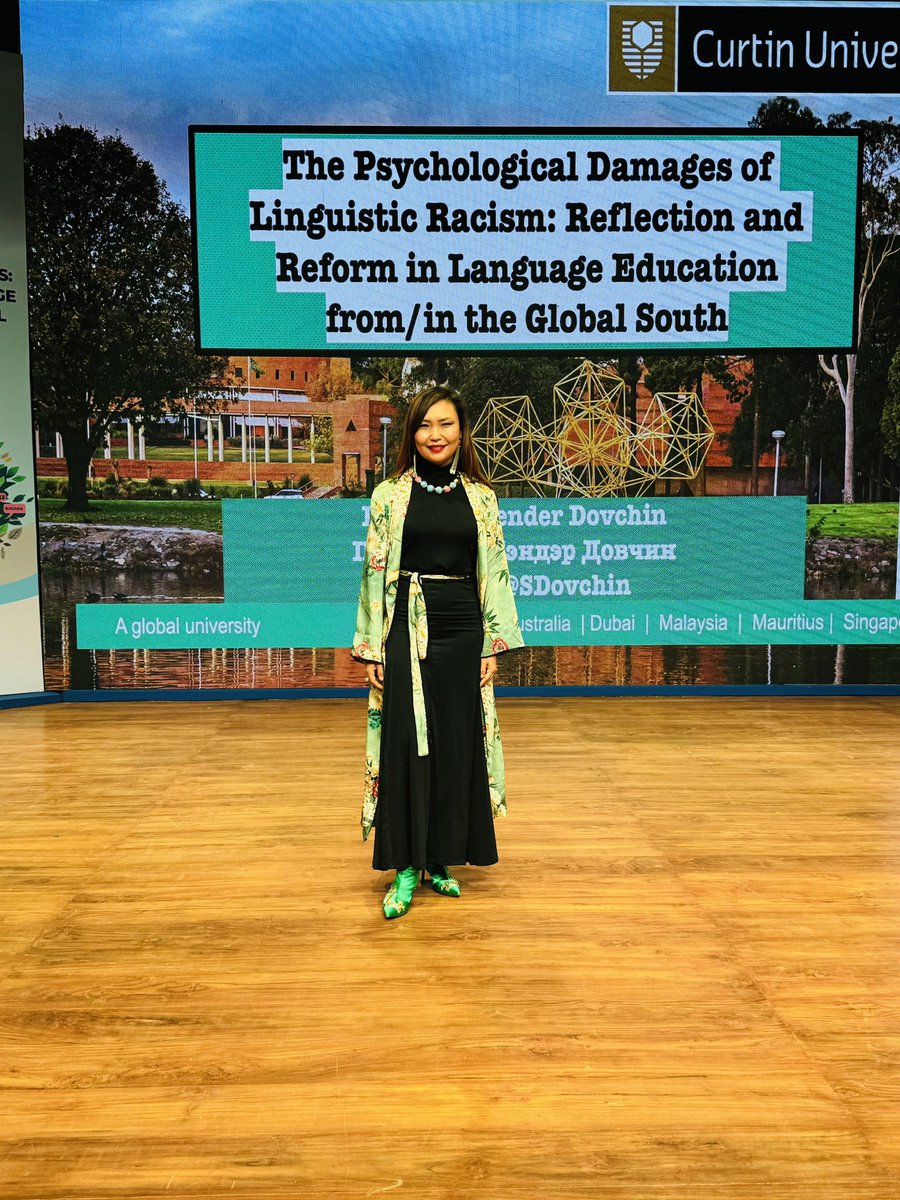
It was an absolute honor to deliver the keynote @ Language Metamorphosis & to be introduced by my esteemed colleague Obaidul. I’m deeply grateful for the opportunity. A heartfelt thank you to the Bangla people for their unparalleled hospitality—it has been truly inspiring.
This dreadful erosion of HE languages normalises a monolingual view of knowledge, culture, relations. What’s threatened are Mandarin, French, Japanese & Spanish + English Lang & Linguistics, in effect all explicit study of language.
In the labyrinth of writing, the use of "I" and the act of distancing oneself from the text are not opposites but two lines that intersect, fold, and resonate across diverse contexts. The "I" is not simply a personal pronoun but a point of intensification, a node in the flow of thought where subjectivity emerges as a vital force—an expression of individuation that forms connections between the writer, their ideas, and the world. This “I” ruptures the otherwise neutral plane, giving voice to the multiplicity of perspectives that rise from personal experience, interpretation, and responsibility. Yet, in other contexts, the movement of writing deterritorializes this personal "I," opting for the passive, for the impersonal, a means of deterritorialization that reorients the flow towards universality. Here, the writer becomes a minor element in a larger assemblage, the focus shifting from the singular to the collective, from the individual to the collective event or the general principle. These two modes—personal engagement and impersonal objectivity—are not fixed territories but are in constant flux, flowing and folding into each other depending on the context. The writer’s task, then, is to navigate the tension between them, choosing when to become a point of singularity and when to dissolve into the multiplicity, creating a writing that is always on the verge of becoming, always attuned to the forces that shape it.
🌐 Excited to invite you to my session at the TESOL Conference celebrating 20 years at Flinders Uni! 🎉
📅 Session: "Embracing Plurilingual & Intercultural Pedagogies"�� Time: 11:00 AM, Nov 21, 2024
🌏 Explore how plurilingual & intercultural approaches enrich EAL/D classrooms.
Register here 👉 https://t.co/UmEKK8gdtD (Deadline: Nov 20)
#TESOL #EALD #InterculturalEducation #LanguageTeaching #多语言教育 #跨文化性 #বহুভাষিকতা #跨文化教育
🌍Honoured to have presented at the 2024 ITRC Seminar by UniSC Indigenous & Transcultural Research Centre! My paper, "Exploring the Intercultural Experiential-Ontological Topography: Valuing Diverse Academic Cultures in Aus Higher Ed", unearths how international students & NNESTs navigate exclusion. Thanks to Dr Rachael Dwyer and colleagues for their support! Watch here: https://t.co/vzRsDvU8ge
#ITRC2024 #HigherEd #Inclusion #AcademicCult
🌏 Join me, Dr Nashid Nigar, for a seminar on the lived experiences of (im)migrant students and teachers in Australian tertiary institutions. Discover trans-lingual and trans-cultural strategies for inclusivity! 🌏
📅 Date: Thursday, 31 October
🕐 Time: 1pm-2pm AEST
🔗 Join via Zoom
Meeting ID: 844 7742 8609
Let's discuss how (im)migrant educators navigate challenges and reshape their identities. Looking forward to seeing you there! https://t.co/BdhPTzg9iA
wd=QnZMcDVxUkFPT2xUQWl
nSFRxQW9JQT09
Meeting ID: 844 7742 8609
Pleased to announce our article, Hybrid Professional Identities: Exploring Non-native English-speaking Teachers’ Lived Experiences through the Cyborg Manifesto, is now published in Pedagogy, Culture & Society! Read it here:
https://t.co/TZyikRv9Yn
#HybridProfessionalBecoming #CyborgManifesto #Inclusion #ELT #TeacherEducation
🌟 A moment worth sharing! 🌟
I’m beyond thrilled to share our latest piece of research that is both deeply human and transformative. “Navigating Affective and Sensory Fluidity in Plurilingual and Intercultural Pedagogies”, co-authored with the incredible Prof Alex Kostogriz, dives into the lived experiences of 16 English teachers who migrated to Australia. These teachers, who learned English as an additional language, illuminate the heart and multiplicity of teaching in today’s plurilingual classrooms.
This journey has shown us just how much affect and cultural responsiveness shape not only how we teach but who we are as educators.
Some insights:
✨ Affect Matters: Affects like empathy and tenacity directly influence how teachers connect with students and approach their own professional “becoming”.
✨ Cultural Responsiveness is Key: When we truly acknowledge and embrace the cultural richness around us, we create classrooms where everyone belongs and flourishes.
✨ Plurilingualism Ignites Identity: Embracing multiple languages and cultures goes beyond enriching the classroom—it reshapes teaching, learning, and critical thinking across disciplines, fostering deeper connections and a more holistic understanding of global perspectives.
✨ Relationships are Everything: Genuine connections between teachers and students go beyond textbooks—they make learning deeply resonating, meaningful, and embodied.
This work is not just about education; it's about reimagining how we live, learn, understand and “become” each other in a world filled with diversity. 🌏💬
A heartfelt thank you to Prof Alex Kostogriz for his trust and to the brilliant reviewers whose feedback was a gift, making this journey collaborative and rewarding in ways I didn’t expect.
Check it out here: https://t.co/RDj2iFkFEb
hashtag#LanguageTeaching hashtag#Plurilingualism hashtag#InterculturalLear
I’m elated to share our research, Navigating Affective and Sensory Fluidity in Plurilingual and Intercultural Pedagogies, co-authored with Prof Alex Kostogriz. Discover how affect and plurilingualism shape learning. 🌍 #Plurilingualism#GlobalCitizenship
Link: https://t.co/LRcmZzK6GQ