Every day, the hard-working team at Natech strives to design, engineer, and manufacture products that make the world a better, healthier, and safer place.
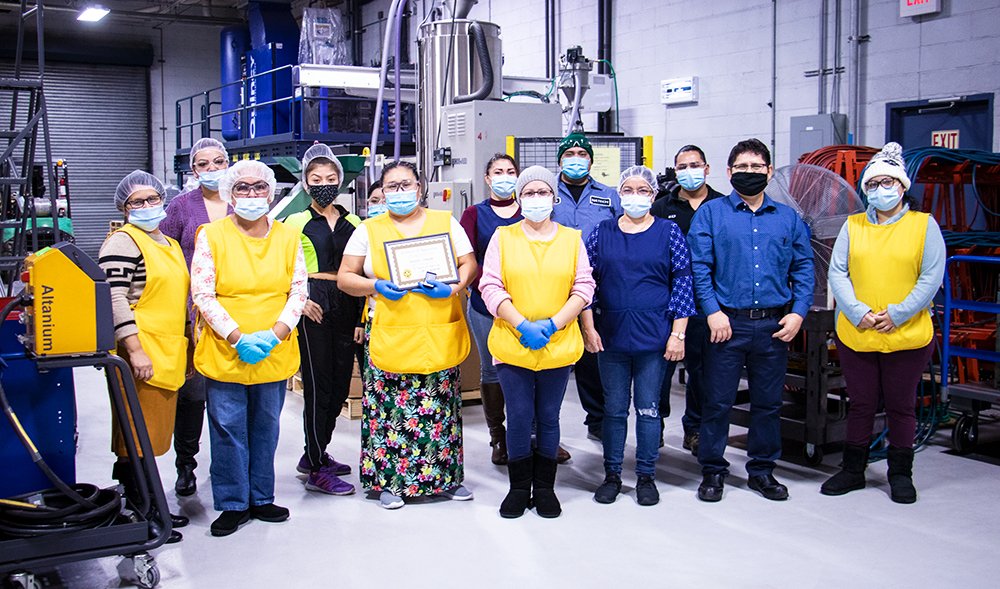
We want to take a moment to recognize the Natech community. Thank you for all you do! #Teamwork
https://t.co/nnOHkZVE7b
After overmolding this medical device, our engineers found an aesthetic nonconformity on the part.
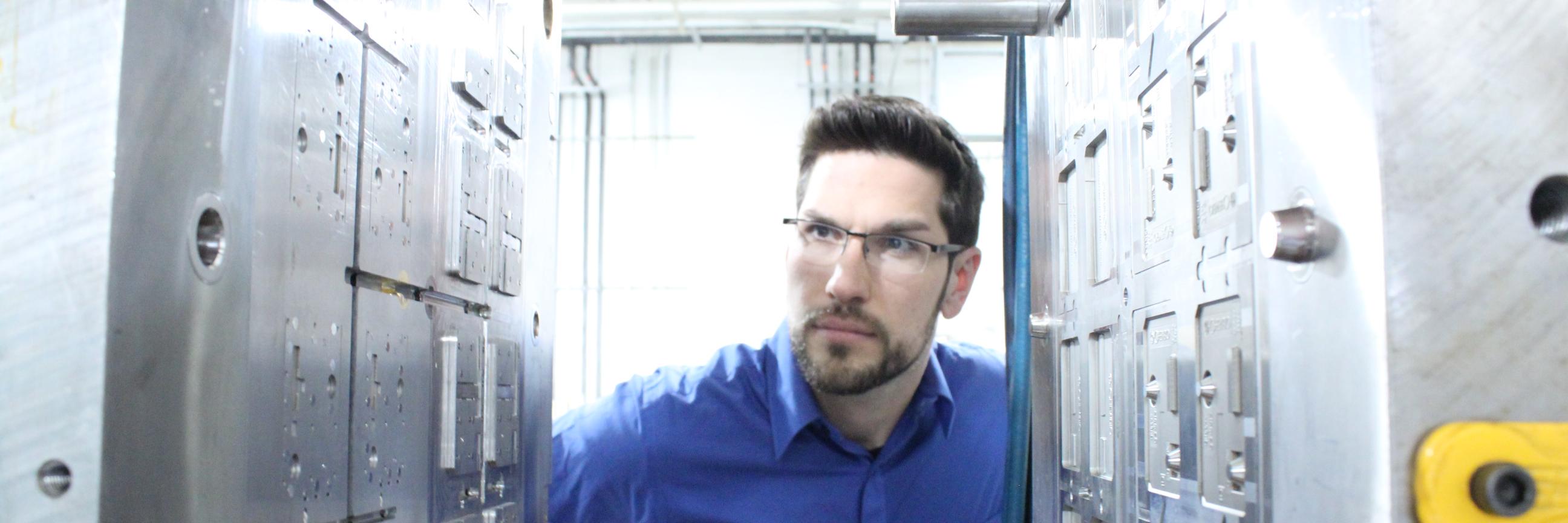
So our engineers tested a hypothesis by removing ribs from the substrates, seen in the image below, which solved this problem.
If you have an idea for a new product, you want everything to succeed during each step of the process. But things do not always go the way you planned―there could be a problem with design, manufacturability, usability, or performance.
Many clients expect a new molded part will automatically match prototypes. They assume they can skip past the plastic part design for injection molding stage. Experience has proven this to be untrue because reality inevitably creeps back.
Natech holds an annual Employee Recognition Day to honor our long-standing employees. We celebrated those with milestones of 5, 10, 15, and even 20 years of service. Thank you to all employees for being committed to Natech. #EmployeeRecognition#HappyHolidays#HappyNewYear
In injection molding we want quality parts, so we establish a quality process at the beginning through Scientific Molding.
To speak to a Natech Engineer about your program, call us at (631) 580-3506.
Asking the right questions supports a thorough and accurate mold review during mold transfer and can extend the mold life. Click on this link to know the 3 questions you need to ask about your mold: https://t.co/snmB7NR9pr
#ProductDevelopment#MoldManufacturing#MedicalMolding
After the mold transfer, the new manufacturer often has little insight into the thought process behind mold design choices, how well the mold has been running, and how well the mold maintenance has been performed.
When you share drawings that include ambiguous, unfocused design intent, you confuse your audience and you end up with over-constrained tolerances that threaten the long-term quality of your program.
The Natech team hypothesized that a vacuum was preventing a medical part from moving off the curved core of the mold. To test their hypothesis, the team gave the core a glass bead finish.
This texture should reduce the vacuum that could form between the part and the core by allowing air to flow around the texture ridges. With this textured finish, parts no longer stuck to the core and ejected smoothly. https://t.co/aL37TSHl47
Natech can help you understand your options, navigate the risks, and make the right choices for your project. Call us at (631) 580-3506 to advance your design for manufacture.
This texture should reduce the vacuum that could form between the part and the core by allowing air to flow around the texture ridges. With this textured finish, parts no longer stuck to the core and ejected smoothly.
https://t.co/aL37TSHl47