Hello @x@premium the phishing scam spam from fake verified orgs on Twitter has gotten out of control.
These 12 accounts are all just from the past 48 hrs alone.
Verified orgs were intended to make it harder for scammers but it has just created a new black market for accounts with no way for us to report and take down these accounts easily.
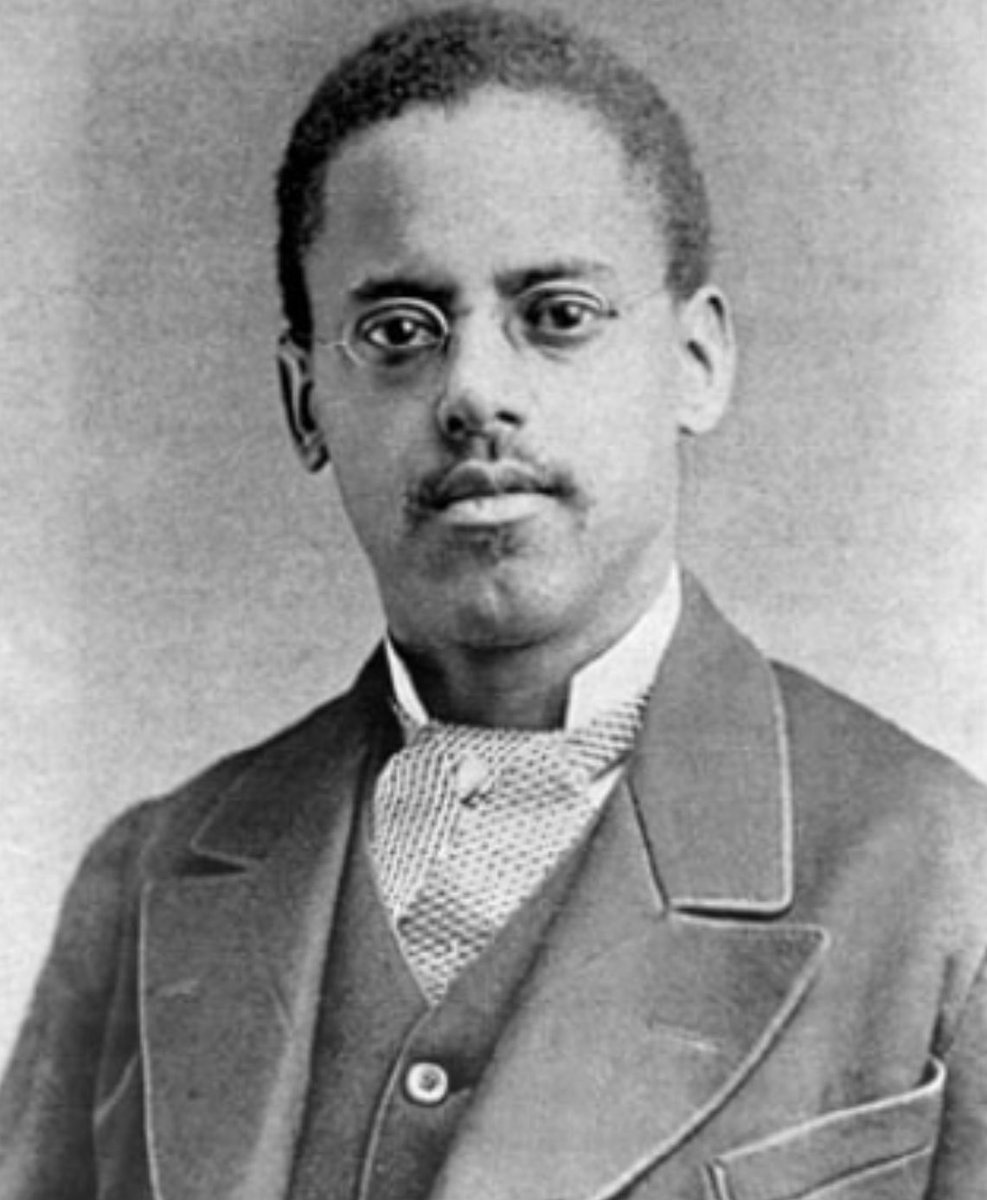
Meet Lewis Howard Latimer, an African American innovator whose significant contributions have been overlooked by history. Let me share his remarkable journey with you.
Latimer's parents had escaped slavery in Virginia and found refuge in Massachusetts. Despite lacking access to formal education, Latimer enlisted in the Union Navy during the Civil War. Following an honorable discharge, he embarked on a career at a patent law office, where he independently learned mechanical drawing and quickly ascended to the role of draftsman.
In 1876, Alexander Graham Bell enlisted Latimer to draft the patent application for his telephone invention, a task Latimer completed with unwavering dedication. His submission, made on February 14, 1876, occurred just hours before a competing submission from Elisha Gray.
In 1880, Latimer joined the U.S. Electric Lighting Company, owned by British inventor Hiram Maxim, a chief rival to Thomas Edison. Here, Latimer significantly enhanced Edison's incandescent electric light bulb by creating one with a durable carbon filament. His invention paved the way for the widespread use of electric lighting in both public and domestic spaces.
This was a remarkable advancement, as Edison's original light bulb, created in 1879, cost $40,000 (equivalent to over a million dollars today) and only burned for 14.5 hours. Latimer's expertise earned him a position with Edison in 1884, where he filed patents and served as an expert witness in Edison's legal battles against competitors.
Latimer's inventive spirit didn't stop there. He designed an early prototype of an air conditioner, an "apparatus for cooling and disinfecting." Additionally, he contributed to safer elevator designs and co-invented specialized train toilets.
Beyond his technical achievements, Latimer found time to teach English and drafting to immigrants and was an early advocate for civil rights. He passed away on December 11, 1928.
Today, Latimer's former residence serves as a museum, located at 34-41 137th St, Flushing, NY 11354, where you can learn more about his incredible legacy.
Shanti Devi, born in 1926 in Delhi, India, began insisting from the age of four that she hailed from Mathura and had a husband and family. Initially, her parents dismissed these claims as mere imagination. Undeterred, Shanti ran away at six but was brought back home. She eventually confided in her headmaster, speaking in the Mathura dialect and revealing her husband's name, Kedar Nath, describing him as a fair-skinned shopkeeper with glasses and a wart on his left cheek. She also claimed to have died ten days after giving birth to a child.
Intrigued, the headmaster investigated and found a shopkeeper named Kedarnath Chaube, who had lost his wife, Lugdi Devi, nine years prior, exactly as Shanti described. Lugdi Devi had indeed passed away ten days after giving birth to her son.
Upon hearing the story, Chaube disguised himself and traveled to Delhi, where Shanti immediately recognized him. He was convinced that Shanti was the reincarnation of his late wife.
The tale gained national attention and even reached Mahatma Gandhi, who decided to investigate. In 1935, Shanti was taken to Mathura, where she recognized several family members and even mentioned promises Chaube had made to Lugdi Devi on her deathbed, including not remarrying. Gandhi's commission report in 1936 affirmed that Shanti was the reincarnation of Lugdi Devi.
Over the years, Shanti was interviewed by various researchers, with some supporting her claims while others disputed them. She never married and passed away in 1987 at the age of 61.