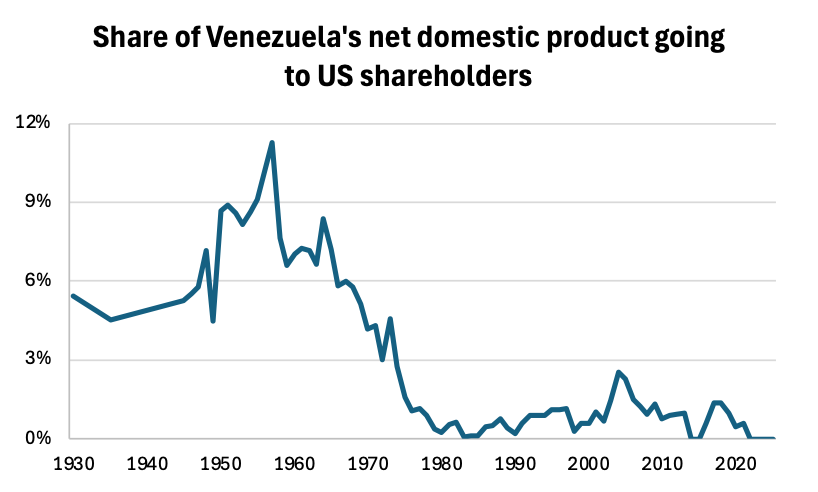
You cannot make sense of Nicolás Maduro’s removal without grasping the enormous financial interests involved with regime change in Caracas — and the long history of staggering cross-border wealth extraction from Venezuela to the US🧵
In my optimistic mood, I thought that we were back to 1926. But in reality we are back to 1826. Soon, in a couple of months, we shall be back to 1526. And then to 726. And on and on....
@NeilPHauer It’s not mere cognitive dissonance or confusion; it’s also the moral self-righteousness carefully masking the selective application of its own principles
I don't think there's anywhere the EU's cognitive dissonance is on display more than the Caucasus. This official was (rightly) lambasting the Georgian govt yesterday for its abuses. Yet today she's in Azerbaijan - a much worse dictatorship - and it's all smiles and 'progress.'
The real post-truth statement. The protest leaders openly planned a “peaceful takeover” for today. They led people to storm the presidential palace, calling it an act of “masculine power.” Nothing about it was unexpected. Yet Salome claims it was a provocation by “the regime.”
While industrial policy is being normalised in the Global North, the same space is not afforded to developing countries. Current climate strategies often sideline the structural needs of the Global South. In this piece, I argue for tailored green transitions that align with each country’s unique development path and industrial capacity.
Nato Balavadze agues that one-size-fits-all climate policies informed by global strategies often overlook the specific needs of developing countries, which require industrialisation to build the capacity for green transitions.
https://t.co/FdgWCpnB6i
The DCFTA locks in Georgia’s liberalization through a negative list and standstill clause. New service sectors are automatically opened to competition, limiting the state’s ability to regulate or protect emerging industries and public services.
My research looks at Georgia’s free trade agreements with the EU and China from a development studies perspective. My analysis focuses on how these agreements influence Georgia’s capacity to diversify its economy, shift away from low-value exports, and which one offers greater policy space.
MSc Development Studies alum and Senior Research Analyst, Nato Balavadze draws on her dissertation comparing Georgia’s free trade agreements with the EU and China to explore how they shape the country’s policy space and development trajectory.
https://t.co/K26YcHQjA6
The China-Georgia FTA is more flexible, avoiding many of the restrictive clauses found in the DCFTA. Yet, it has not led to meaningful export diversification. Instead, trade with China is far more concentrated on raw materials than that with the EU.
Georgia needs (and is moving towards) rational multi-vectorism and room to navigate unstable and rapidly shifting regional geopolitical, geoeconomic and security realities - not a political posture begging for suicidal proxification.
This should be another indication as to why any analysis of the processes and shifts under way in Georgia need to move beyond a model of “democracy” vs. “authoritarianism” or “west” vs. “east”
Just a reminder that the West destroyed Iran’s progressive democracy in 1953, deposing a leader beloved of the people, and installed a dictatorship in his place. The US and UK have been terrorising that country for as long as any of us have been alive. It’s sick.
Piketty’s fans retort by saying (as mainstreamers always do) that the contribution lies in the “novel data” and cute econometrics.
Can we imagine another science in which an “empirical” practitioner fails to MENTION the theorist who discovered the concept?
For me, the deeper question is this: If Georgia follows realist IR, can it go beyond strategy to support structural economic transformation? Without bold industrial policy, neutrality is empty, and small states stay dependent. The most recent success (Asian Tigers) came in a bipolar world. The unipolar era stifled industrial policy. Will multipolarity open space for economic sovereignty?
Recently, I attended a thought-provoking 2-day conference on “The Role of Peace in Sustainable Social-Economic Development.” Key takeaways: Georgia should strengthen integration with other South Caucasus countries, maintain balanced relations with major regional powers, uphold neutrality and strategic pragmatism, and avoid pursuing NATO membership.
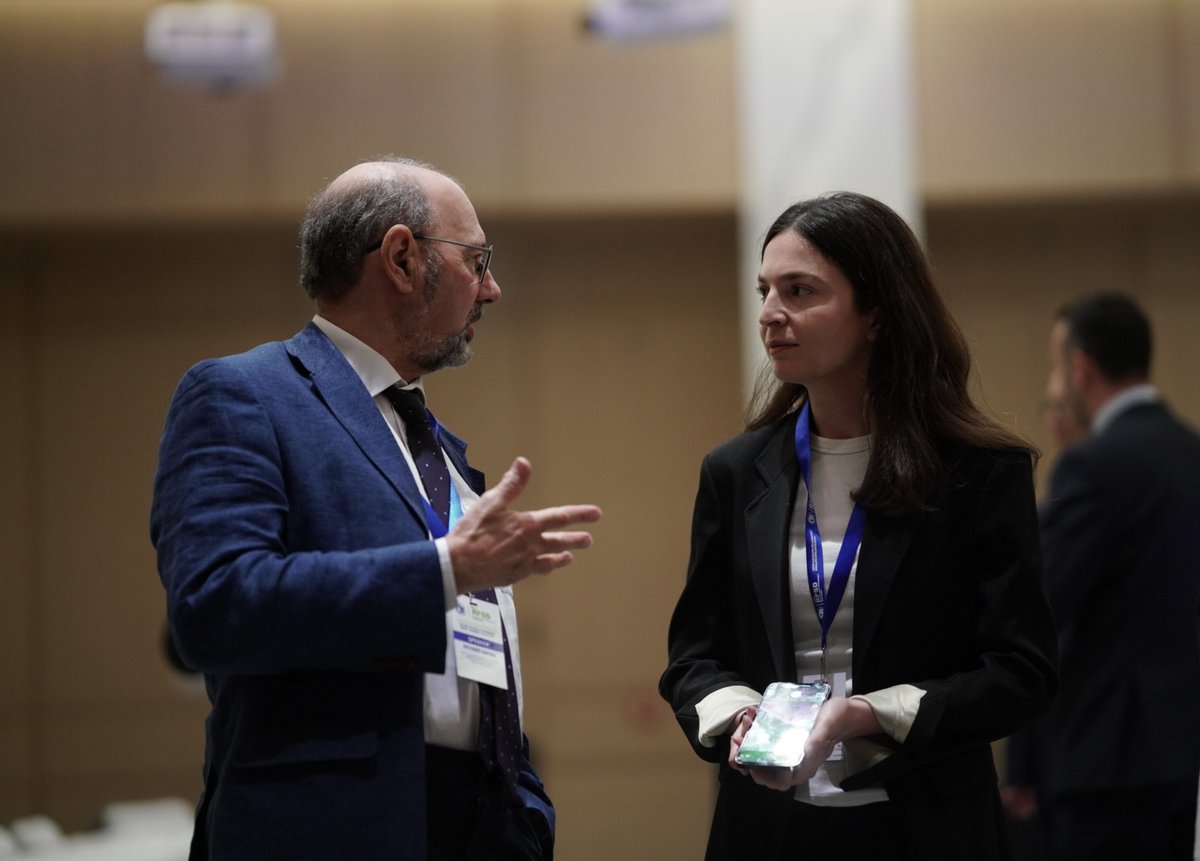
In the first photo: @ninokhelaia, @TMaridashvili, and I with @Glenn_Diesen, @proud_diplomat and @AMercouris. In the second: Richard Sakwa and me.
Conferences like this are rare spaces for fresh thinking. Most debates are stuck in the West vs. Russia binary — a frame that does little for Georgia’s security or development.
"What empires do to colonies is to-dehistorisize them. Not only by destroying the knowledge of the history there was, but by not creating a new one. During the colonial rule, history of the colonies becomes an annex, a footnote to the history of the metropole, or dissolves into individual family histories."
https://t.co/6axHcIswJd
The proposed Mar-a-Lago Accord seeks to address the United States' twin deficits—namely, the persistent trade imbalance and the growing fiscal shortfall—through a multifaceted strategy centered on exchange rate realignment and the restructuring of foreign investment flows into the US economy.
In my latest article, I argue that while the Mar-a-Lago Accord aims to address global trade imbalances and revive US industry, it remains unclear whether it represents a deeper strategic shift or merely a short-term technocratic fix.
However, acknowledging the limitations of these policies does not justify ignoring the structural imbalances they aim to confront. Global economic asymmetries remain a pressing reality; the critical question is not whether the US should respond, but how it can do so in a manner that is both effective and enduring.