@vreeshni@Mihiirkula@Kathiwarrixw Loda Das/dasi (harem nahi)na vanshj ne gola /khavas kevay ava gujrat ma 7-8 type na Rajput che and Badha no itihas agal che Aa badhu book vachvathi khabar pade internet par steppe aasi karvathi nahi and Hu khud chudasama chu mane maro itihas khabar j che Tu keto hoy to dm ma avu
@vreeshni@Mihiirkula@Kathiwarrixw Nigga Hu pan ej kav chu pehla Badha same j hata and te je name nu account banayu che Te Vansh na marriage relation Jeni sathe hata e Dodiya Solanki Chavda tena vanshaj Aje kardiya j Che and Aa badhi surname bija samaj ma kem hoy che e tane pan khabar j che mare kevani jarur nahi
@vreeshni@Mihiirkula@Kathiwarrixw Vah beta prachin 36 rajput vansh je kardiya ma Aje pan jova male che e nakli Rajput and Aa Badha Vansh mathi nikaleli 14-15 shakha mathi banela garasiya asli 🤣🤣
@gaurravbhrdwj For this first of all identification of such forests should be done because in my opinion, now no other place is left except Sitamata wls
@gaurravbhrdwj Not just 200 , out of 891 lions, around 550 live outside the Gir forest, and they all live in farm lands , small forest patches and coastal areas.
“Rajasthan Proves Ideal for Cheetahs: KP-2 and KP-3 Explore New Territories”
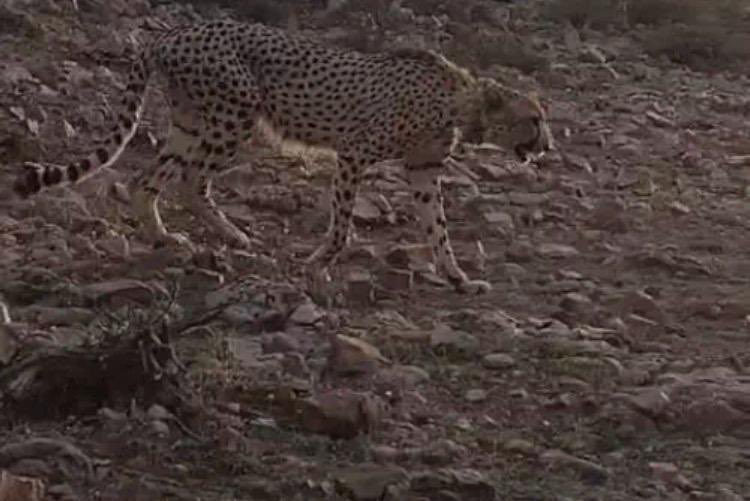
The recent events show us how suitable Rajasthan is for cheetahs. In these incidents, one cheetah, KP-2, crossed the Chambal River and reached Zone No. 9 of Ranthambore, while KP-3 reached Shergarh Sanctuary.
Both cheetahs are hunting according to their natural behavior. KP-2 has killed an average-sized chital (spotted deer), and KP-3 has hunted two rabbits. From the pattern I can observe, KP-3 is following a behavior that appears to be an attempt to establish and mark its territory.
Incidentally, the Wildlife Institute of India had also declared Shergarh as one of the most suitable sites for cheetah reintroduction.
This cheetah (KP-3) has been moving around the areas near the Parvan River for the last two days. Meanwhile, its sibling KP-2 is about 100 kilometers away in Ranthambore, trying to establish its territory. However, from its current movement pattern, it cannot yet be said that it has started marking territory, as this area is completely new to it.
Nevertheless, it is a region with good prey availability and relatively low tiger density.
It will be interesting to see what efforts these cheetahs make in the coming days to secure their livelihood and establish their dominance. This could be an excellent subject for research.
#cheetahcorridor #cheetahproject #cheetah #Rajasthantourism #WildernessVibes
The male cheetah KP-2, which was come from Kuno National Park in Madhya Pradesh, has arrived at Ranthambore National Park Rajasthan by daytime yesterday.
This male cheetah is now roaming in Zone No. 9 of Ranthambore, which is the territory of its big brothers and sisters — that is, fully grown tigers.
Although the teams from Kuno and Ranthambore are continuously tracking the cheetah and are also following it closely, I still don’t understand why the Madhya Pradesh authorities repeatedly tranquilize these cheetahs and relocate them.
Today, it has reached these same paths using its own sixth sense, the very routes where its ancestors — the Asiatic cheetahs — used to roam.
Tigers living near villages around forests in India
Over the past 10 years, I have noticed one thing: around any large, dense tiger population forest, many tigers that roam in the territorial forests near the edges or outside often grow significantly larger in size compared to the average. At the same time, they also become relatively relaxed or mild in their behavior. (This does not mean at all that these tigers forget their natural aggressive instincts.)
Prominent examples of such tigers include:
• Chhota Matka, maya from tadoba
• Jay, Kumbha,Fateh from Ranthambhore
• Bamera, Pujari, D-1, and to some extent Bajrang from Bandhavgarh
• DJ-5 from Kanha
• P-663 from Panna
• T-21 Yuvraj from Sariska
All these tigers and tigresses have reached the maximum limit of their average size and are notably large in build.
Now, coming to the reason behind their larger size: Most of these tigers depend heavily on domestic cattle (cows and buffaloes) for food. Hunting or catching these animals is much easier and requires far less effort. Moreover, the availability of this food source remains consistent for a longer period (4–5 days).
Regarding their behavior: These tigers frequently come face-to-face with humans, and they willingly accept this situation. They consider it appropriate to avoid humans because they understand that humans are not their prey. Because they consistently follow this pattern over the years, these tigers are often perceived as calm and gentle in nature. One could even say that this becomes part of their core behavior.
However, there is one important point to note here: When a new or inexperienced tiger enters the same area and starts following the same pattern in the initial phase, it sometimes ends up causing harm to humans. In such cases, the blame is often wrongly placed on the tiger that has been living in that area for many years.
This should never be interpreted to mean that the tigers mentioned above are “man-friendly.” Tigers are among the apex predators on this planet — powerful and ferocious by nature.
I thought it was worth sharing my personal observation and experience.
Video Captured- DJ-5 male tiger at Khatiya buffer from kanha