GWAS have identified many genetic variants linked to adult facial features. But we still face a major interpretation problem because there is a black box between a genetic variant and the actual shape of the nose, jaw or other parts of the face. 🧬👃🏻👂🏻
A new @NatureGenet study tries to open this box. The authors studied human facial development from about week 6 to week 11 and combined RNA-seq, ATAC-seq, spatial transcriptomics and micro-CT. This shows which genes are active, which regulatory regions are open, where this happens and at what stage of development.
For some GWAS variants, they could now reconstruct the path from variant to phenotype. A variant sits in an enhancer that becomes active in a specific cell type, place and developmental window. This changes the activity of a nearby developmental gene and can ultimately affect a specific facial feature.
PAX1 is a nice example. Breaking the whole gene causes severe defects. But enhancers provide much finer control by tuning the same gene only in the right tissue and at the right time. Disrupting one such enhancer in mice changed skull shape without producing the full PAX1 knockout phenotype.
The most surprising result is about nerves. They may not simply connect to an already formed face. Peripheral nerves seem to help fine tune the shape of the facial skeleton during development.
This is the real power of multimodal studies. A GWAS SNP alone is just an association. But when genetics, chromatin, gene expression, spatial information and anatomy are seen together, the path from DNA to a visible human trait starts to become clear.
https://t.co/IxtcKtUKkI
#GWAS #Multiomics #scRNA #face
PR PUB. INF.
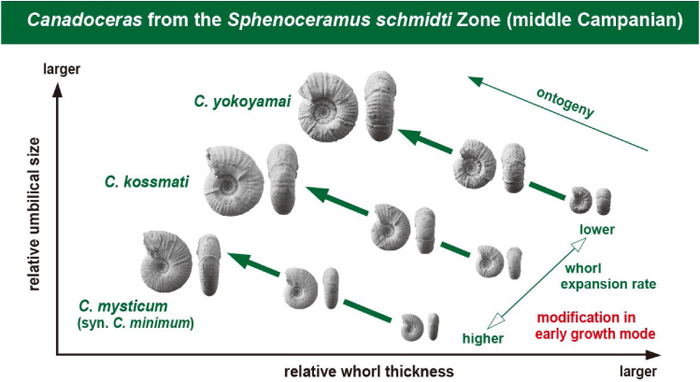
Taxonomic re-evaluation of the genus Canadoceras(Ammonoida) from the middle Campanian of northern Hokkaido, Japan
Yasunari Shigeta
https://t.co/bRyNWNNfch