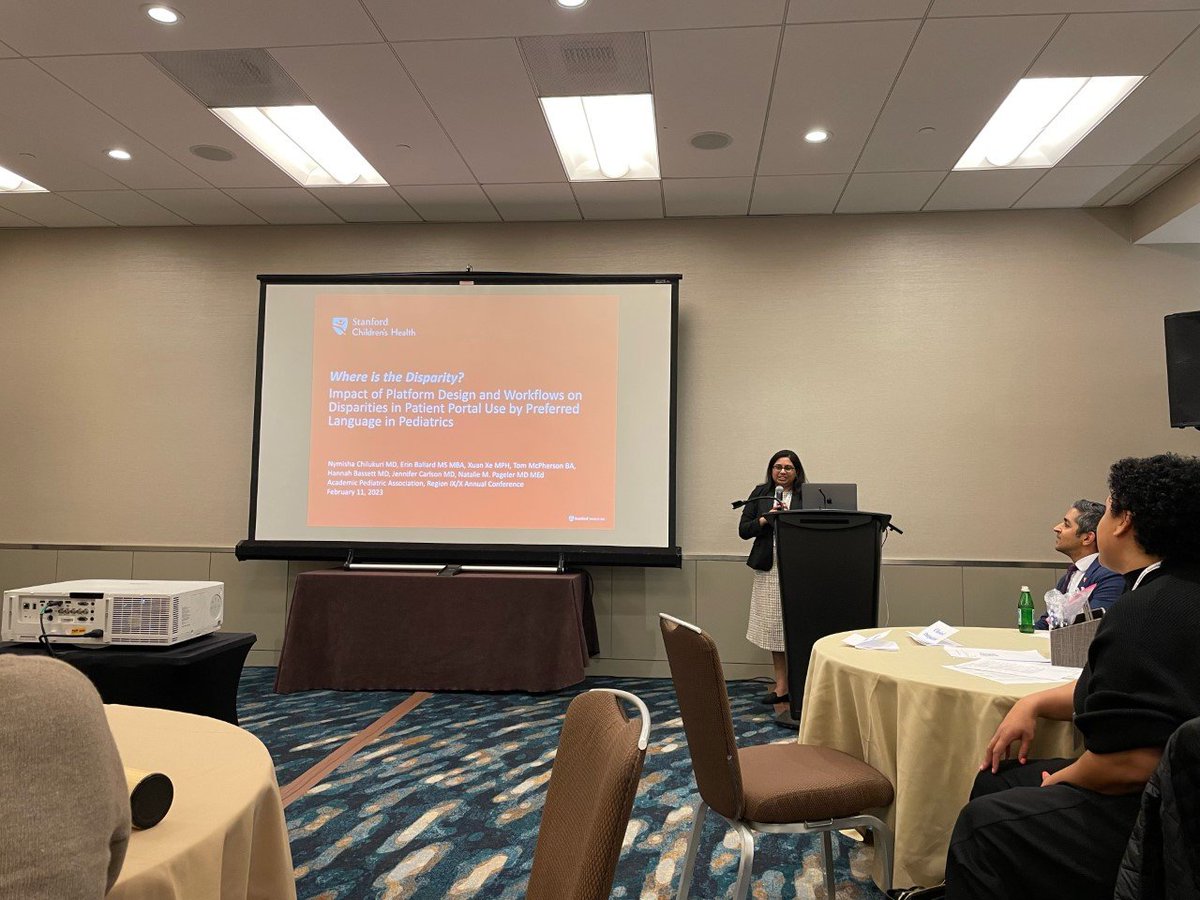
Are pediatric EHR implementations associated with an increase in hospital-acquired conditions? Not according to this new study using @sps4kids data published in @ACI_Journal - h/t @NaveedRabbaniMD @StanfordKidCMIO @jamesmhoffman (cc @ACIFellows)
https://t.co/o7adPDw6cp
@danrdanny What do you think of this recent editorial in @JAMAPediatrics about genetic screening in cerebral palsy? #Pediatrics#genetics https://t.co/lOQKtDIQxQ
Love that Steinkamp, Kantrowitz, and @subhaairan cite Hamlet in their @JAMANetworkOpen study on duplicated text in the EHR. I wonder what Shakespeare's h-index is?
Thrilled that the 12th Annual @AJMC_Journal Health IT issue is out online and in print, and honored to serve as this years guest editor. Check out a great set of papers across several dimensions of HIT and informatics here: https://t.co/6umObnberP
Love the idea of using quantitative approaches to measure and improve medical training. Enjoyed this article by @markmaiwords@adziorny et al. in @ACI_Journal describing the use of EHR audit logs to attribute patients to residents. https://t.co/GEazMQsVDI
Laboratory test result prediction algorithms can be implemented into CDS tools to support laboratory stewardship. Excited to share our work exploring this area: https://t.co/GFuPB8EsJq @StanfordCIF@jonc101x@ronlivs#valuebasedcare#pathology
Enjoyed reading this study by @Anacapa17 et al using AI to determine the "best next step" treatment for patients with diabetes. Big implications for enabling personalized medicine in the care of chronic conditions. https://t.co/hycFZPzBi4
New article from @StanfordHAI showcasing our work using #NLP to protect adolescent confidentiality https://t.co/EPUK9DhfqL @StanfordCIF@KMorseMD @StanfordKidCMIO
Recent study in
@JAMA_current
https://t.co/QwCYeOccmj shows that results from self collected #COVID swabs were highly concordant with those obtained by healthcare providers. I think we can empower our patients by offering them the opportunity to swab themselves if they want.
I also enjoyed this little bit of prose! "The contribution of physiologic monitor and device-based alarms is well described. These alerts have long comprised the aural tapestry of many inpatient wards and intensive care units..."
Excellent review article by @JChaparroMD et al. in @ACI_Journal summarizing interruptive CDS alerts best practices and framework for evaluation. I really enjoyed this read. Well written, and a concise but thorough summary. https://t.co/9VCQzZ4FdZ
Very cool interview by my co-fellow @julian_genkins about learning Telehealth as a resident. Such an important emerging skill. I was very excited to have the chance to practice telemedicine in residency. What seemed novel then is quickly becoming a core competency!
Check out this great interview about residents and telehealth with none other than @stanfordcif fellow extraordinaire, @julian_genkins!
https://t.co/8VhdPKR2DS
A huge and heartfelt thanks to @StanfordKidCMIO, @jonc101x, and the @StanfordCIF crew for all of the support! I had an amazing time at #CIC22. First of hopefully many to come :).
@puhfu How do medicolegal pressures contribute to documentation burden? I am reminded of the common mentality of "if you didn't document it, it didn't happen." Maybe contributes to @vtiase concept of self-imposed burden? #CIC22