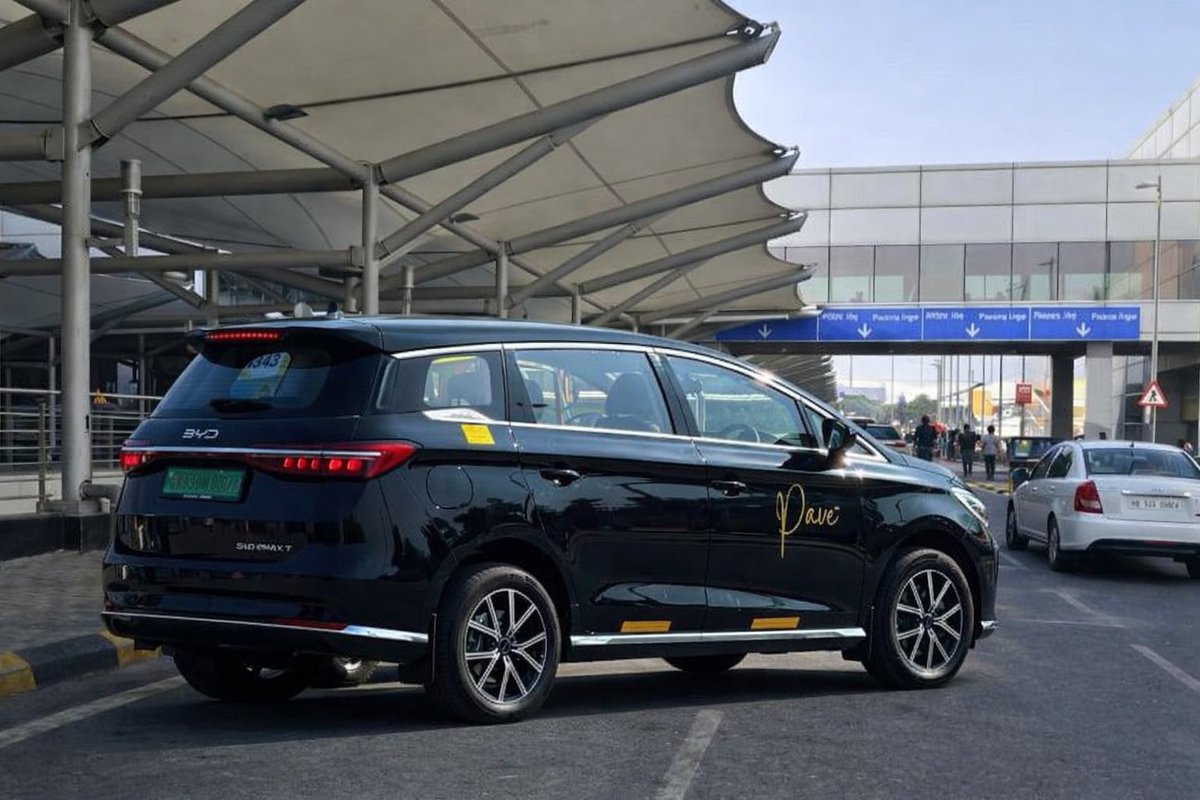
Appreciation tweet for @NavigetOfficial. No intrusion. No phone calls. Clean new vehicle and 5 min before time. Peaceful ride (marginally 💵 than Uber but totally worth it)
Best part - subtle checking in by Prem.
Great start @financebyanmol and Yash Garg.
We are looking for power users at Naviget - who travel at least twice every month to airport. We will manage your cab travel expertly like a concierge in every major city. All comfortable EV rides. Do reach out to me.
#startups#naviget#electric
We have solved the CNG cab luggage problem almost every airport commuter has faced.
You book a ride.
Cab arrives.
Luggage doesn’t fit.
So @NavigetOfficial will now recommend vehicles based on luggage capacity and also allow users to request carrier vehicles if needed.
#ux
naviget is now live in #DelhiNCr & #Bengaluru with a premium fleet of BYD eMax7 and Kia Carens Clavis.
Here's what riding with us feels like:
- Zero cancellations. Ever.
- Fixed fares, no surge pricing, no nasty surprises
- Your driver arrives before you're even ready
#launch
Bangalore has seen many airport mobility ideas over the years. New apps launch, new ride models promise better experiences, and many eventually disappear. One system that has quietly remained reliable is the KIA Bus.
No app, almost no marketing, just a simple system that runs consistently. Fixed pricing, predictable routes, and reliable timing.
That consistency has made it a benchmark for airport travel in the city. While building Naviget shared airport rides, that level of reliability is the bar we think about reaching.
@blusmartindia proved one thing before it collapsed.
Indians will pay for a cab that just WORKS.
No cancellations. Clean car. AC on. Driver who doesn’t argue.
Not luxury. Just basics done right.
8,700 EVs. 30,000 daily rides. Users who sounded like brand ambassadors, not customers.
The model worked. The founders didn’t.
That gap is still open.
We’ve been quietly building for it at @NavigetOfficial .
Not another fleet. We build for fleet operators who already guarantee the experience, they just need the tech.
Launched in Bangalore. 0 cancellations. 0 pricing complaints.
And if you don’t trust us on that - 2x refund on any cancellation. Ma kasam. 🙂
Next stop: Delhi.
We’re partnering with @ridewithpave to launch airport rides next week.
BYD eMAX 7. Water, snacks, and a surprise novel for the ride.
No discount traps. No “premium tier” gimmicks.
Just what you expect, every time.
Flying into Delhi? Try it.
.
#ridehailing #launch #letsnaviget #cabindelhi
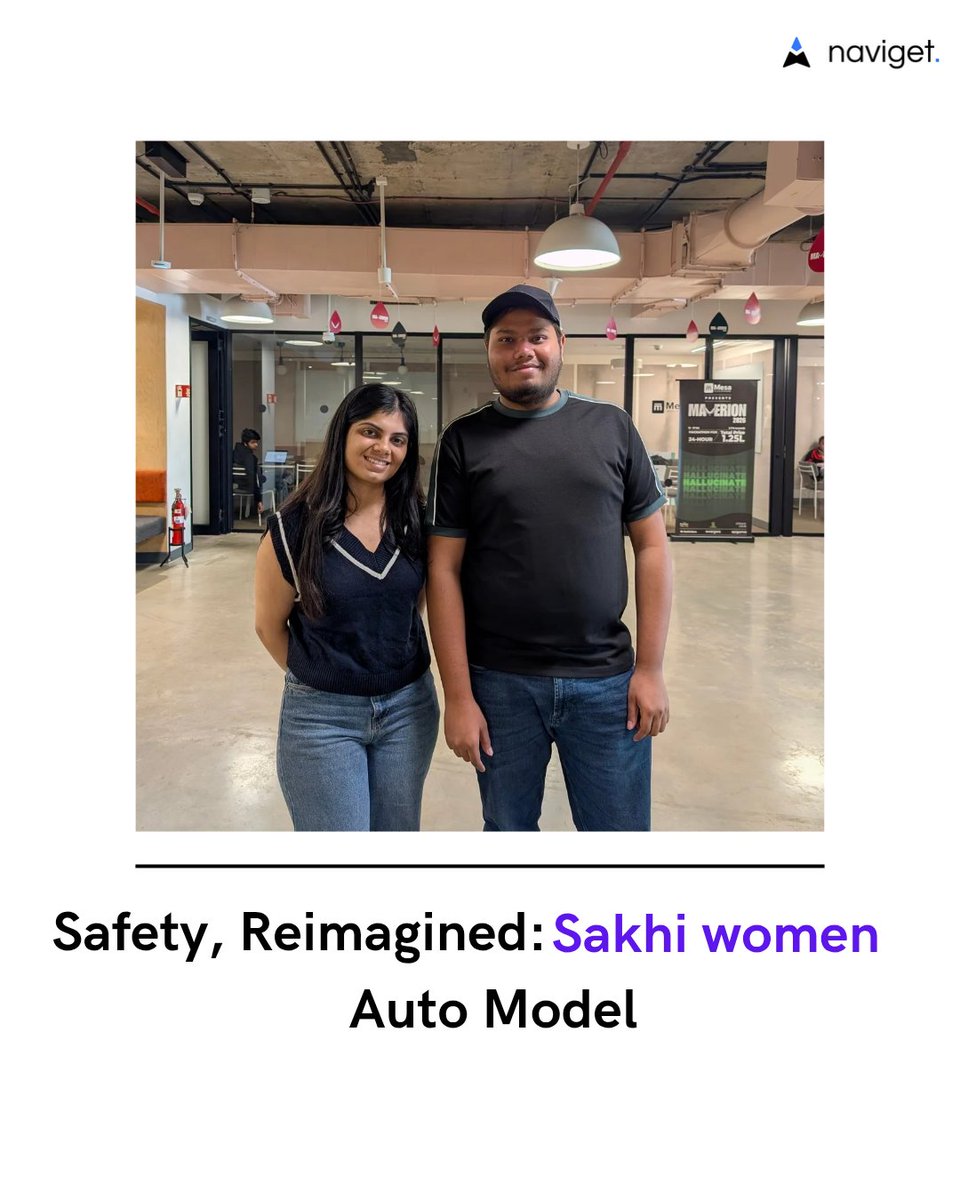
Sakhi Women Auto launched in Bengaluru with a focused thesis: women drivers serving women passengers, subscription-led benefits, and a controlled mobility experience built around safety and predictability. The initiative began with around 50 women drivers offering scheduled city rides through a web booking link and WhatsApp coordination.
Team Naviget met founder Krishnavi Parekh to understand the model. The immediate focus is increasing fleet size, reducing cancellations, and managing demand density across the day.
The real question is not whether the idea is good. It is whether it becomes a niche or a new category in urban mobility. The concept is not entirely new. Namma Yatri supports women drivers through its Mahila Shakti initiative, which reportedly enabled nearly 100 women drivers to collectively earn around ₹42 lakh. Local reporting also suggests roughly 300 women auto drivers operate in parts of the city. The supply exists, but at a limited scale relative to Bengaluru’s metro population of over 14 million.
Serving only women immediately narrows the addressable demand base. That makes utilization the central variable. Mobility is not a branding problem. It is a utilization problem.
If 50 autos complete 8 rides per day at an average ticket size of ₹180, that generates ₹72,000 in daily GMV, or roughly ₹21.6 lakh per month. At a 20 percent contribution margin, that leaves about ₹4.3 lakh before operations and incentives. If rides drop to 6 per auto per day, monthly GMV falls to roughly ₹16.2 lakh and contribution to about ₹3.2 lakh. A small utilization drop materially compresses earnings. When driver income weakens, supply stability suffers, cancellations rise, and trust declines.
Subscription can cushion volatility. One thousand subscribers at ₹299 per month generate about ₹3 lakh in predictable revenue. However, subscription alone does not solve uneven demand. Precedent supports this. MyPickup, a Bengaluru-based subscription mobility startup, offered predictable ride plans but shut down after struggling with off-peak utilization and scaling economics.
So is Sakhi building a new category? It can, but only if it solves three structural constraints: predictable demand loops, high driver utilization across working hours, and standard enforcement without heavy burn. If it remains a small, peak-dependent fleet, it stays niche. If it achieves consistent utilization across the day, it becomes infrastructure.
Safety attracts attention. Consistency builds category.
A disproportionate share of congestion on key corridors in Bengaluru comes from hub-bound travel to the airport, railway stations, and major bus terminals. These trips are time-bound, unavoidable, and converge within narrow windows, with congestion spreading across feeder roads well before vehicles reach the hub itself.
Because transit capacity and on-ground access at these hubs are limited today, much of this demand is already served by single-occupant cabs and private vehicles. In that scenario, planned shared rides do not create new traffic; they consolidate trips that are already happening.
Pairing even two passengers for the same hub-bound journey directly reduces the number of vehicles required compared to the status quo.