The Disheartening Humiliation of Prof. Aghaji
Every day in this country, we find ourselves in a bizarre situation that we find difficult to understand: where we are and how we got to this uncivilised behaviour and rascality. Worse still, when you try to bring these abnormalities to the attention of those concerned, they resort to abuse instead of appreciation.
Just this morning, my attention was drawn to the disrespectful and humiliating circumstances surrounding the apprehension of Professor Martin Aghaji, a distinguished 74-year-old medical expert. This man was not invited, nor was any direct contact made with him. Instead, they invaded his home at Independent Layout, Enugu, in the dead of the night, at 2 a.m., to arrest him in front of his visiting daughter.
As an internationally recognised cardiothoracic surgeon, esteemed academic, and elder statesman, Professor Aghaji warrants a considerable degree of respect, both because of his advanced age and his substantial contributions to our nation. More importantly, however, every Nigerian, irrespective of status or profession, deserves to be treated with dignity and in accordance with the rule of law. After the humiliation of breaking into his house and whisking him away from Enugu to Lagos for three days, all he got was, “Sorry, we made a mistake.”
The public outcry concerning the state’s handling of Professor Aghaji’s case highlights a wider conflict between the actions of state security agencies and the imperative to safeguard professional integrity and individual dignity. Such conduct directed at a 74-year-old might not only exacerbate the critical “brain drain” but also severely damage the country’s already precarious healthcare infrastructure.
This incident brings to mind the similar mistreatment of a medical practitioner in Akwa Ibom, which prompted the Nigeria Medical Association to consider a nationwide strike. Fortunately, due to prompt intervention, a formal public apology was issued to the affected doctor.
The practice of treating highly regarded, ethical professionals - and indeed any Nigerian - like common criminals sets a dangerous precedent that undermines the rule of law across all sectors. Therefore, we must conduct ourselves with civility in the discharge of our public duties. A superior and renewed Nigeria is indeed POssible. -PO
Accountable Borrowing: The South Africa Example.
I have consistently maintained that borrowing, in itself, is not a bad thing. Every nation borrows. The critical issue is not the act of borrowing, but what the borrowed funds are used for and whether citizens can clearly see and measure the impact of such borrowing in their daily lives.
There is a lot to learn in the open and transparent manner in which South Africa handled its recently secured a $1 billion loan from the New Development Bank, with a clearly defined purpose. Publicly announcing the targeted purpose of the loan for all to know and monitor, upgrading water supply systems, modernising sanitation infrastructure, improving electricity distribution, and strengthening waste management services across eight major metropolitan cities, including Johannesburg, Cape Town, and Durban.
This is indeed what accountable borrowing should look like; the purpose is clear, the projects are identifiable, and the expected benefits to citizens are measurable. Such investments directly improve living conditions, enhance productivity, and stimulate economic growth.
In Nigeria, however, the opposite is the case: public debt has risen dramatically under the current administration, and its deployment is shrouded in secrecy from the people who will indeed pay back the loan. Today, our total public debt has increased from about ₦87 trillion in 2023 to nearly ₦200 trillion.
Yet, despite this unprecedented accumulation of debt, Nigerians are often left without a clear and detailed account of how these borrowings are being deployed to improve critical sectors such as education, healthcare, power, security, and infrastructure.
Borrowing must never become an end in itself. Every loan obtained in the name of the Nigerian people must be tied to specific, productive investments capable of generating economic value, creating jobs, reducing poverty, and improving the welfare of citizens.
Good governance demands transparency and accountability. The government must be able to clearly explain what was borrowed, where it was invested, and what measurable outcomes have been achieved. The ordinary Nigerian should be able to see and feel the benefits of every debt incurred on their behalf.
At a time when millions of Nigerians are struggling with rising costs of living, unemployment, insecurity, and declining purchasing power, fiscal discipline and prudent management of public resources are no longer optional; they are imperative.
Every borrowing decision should answer one simple question: How does this improve the life of the ordinary Nigerian? If that question cannot be convincingly answered, then we risk merely transferring today's burdens to future generations.
A New Nigeria is POssible. - PO
BRICS bank approves $1 billion lifeline for South Africa’s struggling cities | Business Insider Africa https://t.co/VN0C0Xo8zp
Excessive Borrowing Without Accountability: Further Affirmation of Imprudent Governance.
President Bola Tinubu's administration has engaged in remarkably imprudent borrowing, escalating Nigeria's total debt to approximately N200 trillion. This represents an increase of over N100 trillion within a mere three years, a stark contrast to the roughly N49 trillion accumulated during President Muhammadu Buhari's eight-year tenure, which would have projected to around N80 trillion. As millions of Nigerians grapple with the shock of this unsustainable debt accumulation, the situation is exacerbated by the government's reckless approach to borrowing and a profound absence of accountability and transparency in the utilisation of these funds.
For instance, data from the Federation's Budget Office reveals that the Bola Tinubu government borrowed N11.89 trillion in the first three quarters of 2025 (January to September), exceeding the planned borrowing target of N10.34 trillion by approximately N1.54 trillion. Under a responsible and accountable government, such an overshoot would necessitate rigorous scrutiny and explanation from relevant governmental bodies. Regrettably, this is not the reality under the current administration.
Compounding this issue, only N3.10 trillion of the borrowed funds was allocated to capital expenditure during the same January-September 2025 period. This constitutes a mere 17.66% of the N17.58 trillion earmarked for capital projects, leaving a deficit of roughly N14.48 trillion, or 82.34% of planned capital expenditure unfunded.
The most disturbing aspect of the financial management fiasco under Bola Tinubu is that there is no explanation or information regarding how the balance was utilised or deployed. The question that Nigerians are rightly asking and deserve an answer to is what happened to the balance? Was it deployed for recurrent expenditure/ consumption, for the entertainment of guests to Aso Rock or transferred to the Renewed Hope Agenda 2027 Election Campaign Fund? Nigerians deserve an answer on how our economy and resources are most unpatriotically managed.
A New and Productive Nigeria is POssible, and Nigeria will be OK!
-PO
Debt Servicing, Borrowing, and Nigeria’s Fiscal Priorities
During his recent foreign tour, President Bola Ahmed Tinubu stated that Nigeria will spend about $11.6 billion on debt servicing, a figure that should concern anyone interested in the country’s economic future and long-term development.
There is nothing inherently wrong with borrowing when it is guided by prudence and directed toward productive investment. Countries such as Japan, the United Kingdom, the United States, the United Arab Emirates, Singapore, and Indonesia are all heavily indebted, yet their borrowings are largely channelled into education, healthcare, infrastructure, and innovation - sectors that generate long-term economic returns and sustain repayment capacity. As a result, despite high debt levels, their obligations remain more manageable because they are tied to measurable productivity.
Nigeria’s situation, however, is markedly different. A huge proportion of past borrowing has been directed toward consumption, with limited visible or sustainable developmental outcomes to justify the scale of indebtedness.
It is also important to note that a huge portion of the debt currently being serviced was accumulated under the Tinubu administration itself, while borrowing has continued at a significant pace. The administration’s recent external borrowing alone includes about $6 billion (from First Abu Dhabi Bank in the UAE—$5 billion, and UK Export Finance via Citibank London—$1 billion), a further $1.25 billion under consideration from the World Bank, and an additional $516 million arranged through Deutsche Bank, bringing the latest known external loan commitments to roughly $7.8 billion. In addition, domestic borrowing through monthly bond issuances continues to add to the overall debt stock.
Against this backdrop, Nigeria’s 2026 budget shows that health is ₦2.46 trillion, education is ₦2.56 trillion, and poverty alleviation is ₦865 billion, giving a combined total of about ₦5.885 trillion for these three critical sectors. By comparison, debt servicing at about $11.6 billion (approximately ₦17–₦18 trillion, depending on exchange rate assumptions) is almost three times higher than the total allocation to health, education, and social protection combined. This imbalance highlights a troubling fiscal reality in which debt obligations increasingly crowd out investment in human capital and poverty reduction. Moreover, even within the limited allocations to these sectors, funds may not be fully released, and a significant portion of what is eventually released could be misappropriated.
Ultimately, the central issue is not borrowing itself, but whether borrowed funds are being converted into measurable productivity, inclusive growth, and improved living standards. Without this, debt servicing shifts from being a temporary fiscal obligation to a long-term structural burden that constrains development and deepens economic vulnerability.
A New Nigeria is POssible. -PO
It is time to speak the truth with love and courage, face to face. The ADC project was meant to be a vehicle for unity, not another platform for elite calculation. What we are witnessing now is painful but instructive: the same old greed and condescending attitude by a few “big men” is quietly pushing away the very forces that can actually win , the energetic Obidients and the massive Kwankwasiyya movement.
This is not personal. This is about Nigeria’s future.
Peter Obi represents something genuinely new: competence, frugality, youth inclusion, and a break from recycled elite politics. His movement cuts across tribe, religion, and class. Pairing him with Kwankwaso’s northern grassroots strength creates a formidable North-South alliance that no single party can match. This could have been the rallying point in ADC, but we missed this playing politics as usual.
To every opposition leader reading this: the masses are tired of elite games. The PDP’s visible cracks are a warning. The ADC’s current drift is another. Greed and arrogance today will produce regret tomorrow.
The lesson 🙏
EFCC's Troubling Revelation on Our Students.
The worrisome statement by the Chairman of the Economic and Financial Crimes Commission (EFCC) that 6 out of every 10 Nigerian university students are involved in “419” is deeply troubling and must not be taken lightly.
Nigeria already has a very limited number of students in higher institutions, estimated at 2 to 2.5 million. If indeed about 60% of them, roughly 1.4 million young people, are involved in fraud, then we are not just facing a crime issue; we are confronting a serious moral and systemic failure.
The question we must ask ourselves is: what has brought us to this level? Who are the role models these students are looking up to?. What values are they learning from society?
We must understand that young people become what they consistently see. When a system appears to reward wrongdoing, when integrity is not upheld, and when those in leadership are associated with allegations of forgery and dishonesty without consequence, it sends a dangerous message.
It suggests that hard work does not matter, and that results, by any means, are acceptable. These points clearly point to a collapse of moral values.
As Socrates rightly said, “An unexamined life is not worth living.” Nigeria must now examine itself.
This is not about condemning our young people. It is about accepting that leadership sets the tone. If we do not demonstrate integrity at the top, we cannot expect it at the bottom.
We must urgently rebuild our value system, enforce accountability without bias, and create an environment where honesty, hard work, and discipline are rewarded. That is the only sustainable path to securing the future of our nation.
A new Nigeria is POssible! -PO
Nigeria Is Bleeding From Within
It is deeply troubling to read recent World Bank reports indicating that, while Nigeria’s Federation Revenue surged to ₦84 trillion in just three years, a staggering 41% —amounting to ₦34.44 trillion —never reached the Federation Account. This sum exceeds the combined ₦34 trillion earmarked for capital projects in the 2024 and 2025 Appropriation Bills, a comparison that underscores the gravity of the situation and signals that something is fundamentally wrong.
This is not a mere oversight; it points to institutionalised corruption on a massive scale. In 1994, when the Okigbo Panel reported about $12.4 billion from the Gulf War oil windfall as unaccounted for, Nigerians were outraged and the nation shook with indignation. Today, an even more troubling situation appears to be unfolding, yet it is met with a disquietening silence.
We are trapped in a lethal paradox: Earning more as a nation, yet having less to invest in healthcare, education, and infrastructure. From 2025, systemic “deductions” have allowed agencies to capture more resources than entire states and even critical ministries.
These leakages explain why countries with fewer resources are out-performing us across key development indices. With such a broken system, how can we fix power, strengthen our schools, build resilient healthcare, or develop critical infrastructure?
Nigeria has no business being poor. We must stop these leakages through disciplined, transparent leadership driven by character. It is time to redirect our hijacked resources back to the people and move Nigeria into the league of developed nations.
With our collective resolve to change this corruption-infested system, a New Nigeria is POssible. -PO
I can’t 100% say what Peter Obi will do but I can reliably say what he won’t do.
He won’t remove subsidy without a plan.
He won’t splurge on a private jet and a new VP mansion when the Nigerians are being told to suffer severe hardship for patriotism sake.
He won’t have the biggest cabinet in history when the country is in a cash crunch period.
He won’t visit victims of terrorism attack in Jos and stay at the airport.
He won’t have school kids queue in the rain to greet when he’s visiting a state where over 200 people were murdered by terrorists.
He won’t be forced to speak up when
generals and scores of soldiers are being killed by terrorists.
He won’t appoint Adelabu as the Minister of Power.
He won’t go on a jamboree trip abroad every other forthright.
He won’t have do nothing governors and ministers line up to greet him by his bedroom door when he wakes up like he’s Prince Hakeem of Zamunda.
He won’t name every new public infrastructure after himself.
He would have admitted his mistake and fired Bosun Tijanni.
He won’t tell Nigerians buying fuel at 1,250 to be grateful they are better off than their neighbors.
He won’t order the Senate President to represent him at events (what a crying shame).
He won’t hire people like Daniel Bwala and Reno Omokri.
He won’t use rice as the solution for every problem.
And he would sure as hell not address Nigerians with condescension and utter disrespect.
He’s not a saint.
He’s not perfect.
He’s not the messiah.
But I see him as compassionate and sufficiently honest man willing to do his best for Nigerians.
This is why he must be on the ballot because he’s the only one deserving of my vote.
Go out and get your PVC.
Dear Esteemed Members of the African Democratic Congress (ADC),
Fellow patriots and nation-builders,
As we stand at this critical crossroads in Nigeria’s history, one truth rings louder than ever: Peter Obi is the perfect candidate to defeat the APC and Tinubu in 2027 and to finally deliver the Nigeria of our dreams.
Why? Because he is the president Nigeria can actually afford.
Unlike other aspirants weighed down by heavy political baggage, Peter Obi carries none of the burdens that have crippled previous leaderships:
*No large family obligations draining public resources
*No army of political associates demanding contracts and favours
*No expensive lifestyle or taste for luxury that turns governance into a personal ATM
*No cabal waiting to hijack the Villa
*No long list of enemies to fight or decades-old grudges to settle
*No foreign liabilities or diploma controversies
*No belief in marabouts or supernatural powers dictating policy
*No interfering First Lady or First Family turning the seat of power into a family enterprise
*No Weakness that comes with old age
He comes clean, focused, and ready to work for Nigeria and not for himself or a small circle of cronies.
But Peter Obi is not just “affordable” PO is highly effective. His agility and energy are unmatched. He moves across the country with ease, listens to the people, and makes decisions without drama.
He will:
1. Ruthlessly cut the cost of governance so that every kobo works for the people
2. Spend government money wisely, strictly on priorities that matter
3. Channel massive resources into human capital; education, health, and lifting millions out of poverty
4. Place National Unity for Prosperity at the very top of his agenda; one nation, one destiny, shared progress
5. Our institutions will be strengthened and made truly independent, free from interference by any arm of government.
6. True separation of powers will return: Federal, State, and Local Governments will function as genuine partners, not rivals.
7. Security agencies will be fully empowered, properly funded, and focused on protecting every Nigerian’s life and property.
This is not just another campaign promise. This is Peter Obi’s proven track record speaking for itself, a man who has governed before with integrity, frugality, and results.
ADC members, the moment has come. The people are tired of recycled politics, expensive governance, and broken promises.
They are hungry for a leader they can trust, afford, and be proud of.
Let us rally behind Peter Obi, the man who can defeat APC/Tinubu not with money or machinery, but with character, compassion, competence, and a clear vision.
Together, we will build the Nigeria of our dreams: secure, united, prosperous, and truly for all.
A president we can afford🤝
Peter Obi for President 2027!
Standing Up for Democracy
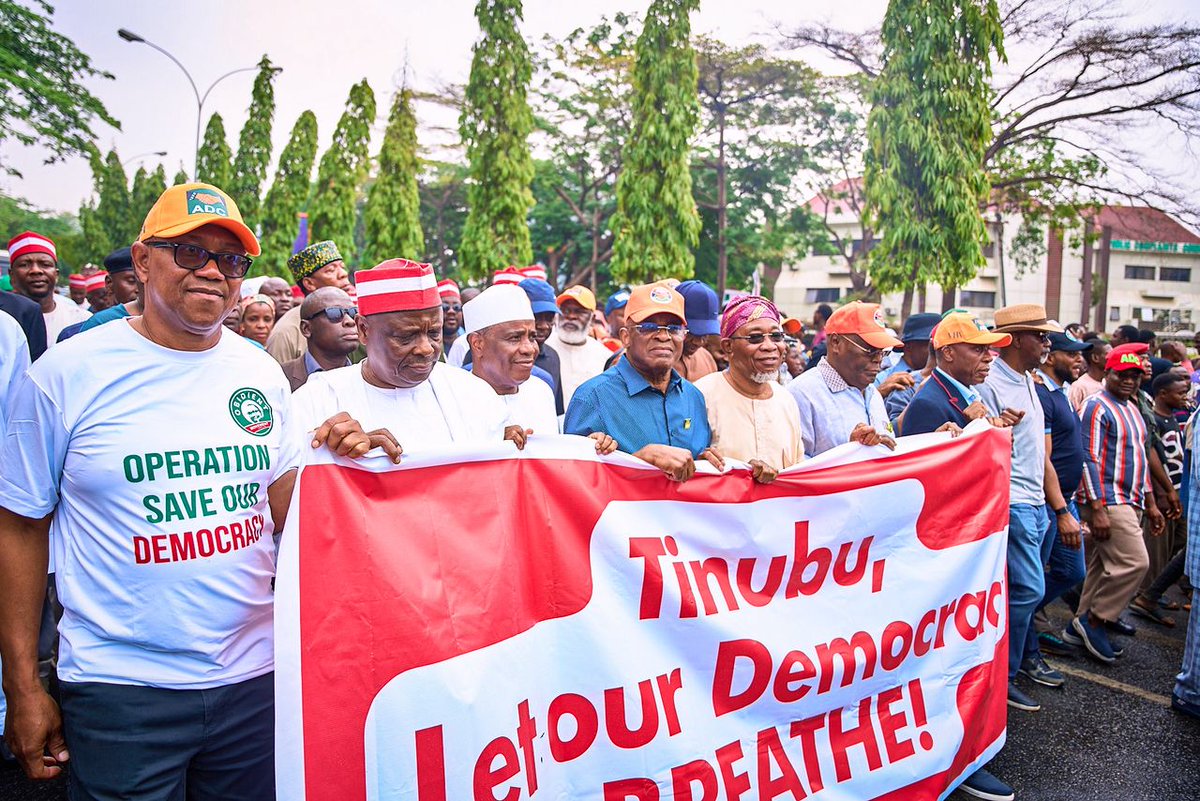
Today, I joined fellow Nigerians, leaders, and members of the African Democratic Congress (ADC) led by National Chairman Sen. David Mark to participate in a peaceful "Save Democracy" protest.
This event was not just an effort to protect our democracy; it was also a moment of reflection on how far we have fallen as a nation. We must resist the suffocation of our democracy by those who once claimed to have sacrificed to defend it, but are now doing everything possible to undermine it and silence opposition.
History will not be kind to those who traded the struggle for democracy for the comfort of power. We will not remain silent, we will not be intimidated, and we will not surrender the future of this nation. The will of the people must prevail—stronger, louder, and impossible to suppress.
A New Nigeria is POssible. -PO
We, members and leaders of the ADC, and other well-meaning Nigerians, lovers of democracy, are saying that our democracy must not be killed. We say NO to a one-party system and for that today we’re calling out Nigerians who believe in unity, peace, and security of our country to join us as we defend democracy in our land.
A New Nigeria is POssible. -PO
Let us reflect, sincerely and without sentiment.
In the past few days, the President has reportedly approved ₦3.3 trillion as a “full and final” payment for debts in the power sector. Yet, this is not the first time such approvals have been made.
On May 17, 2024, ₦3.3 trillion was approved for the same purpose. On July 25, 2024, another ₦4 trillion bond was approved to settle similar debts. There have also been other approvals in between, all targeted at addressing the same power sector liabilities.
This raises a fundamental question: were the previous approvals mere announcements without execution?
₦3.3 Trillion Again? Nigeria’s Power Crisis Without End
During the 2023 campaign, President Bola Ahmed Tinubu made a clear promise: that if he failed to deliver stable electricity, Nigerians should not re-elect him. Today, the reality is that power supply has worsened, to the extent that there are even discussions about disconnecting the Presidential Villa from the national grid.
Each time legitimate concerns are raised, what we see appears more like policy pronouncements than measurable progress.
Now, again, we are confronted with another ₦3.3 trillion approval to settle power sector debts.
These debts were largely accumulated under successive administrations of the All Progressives Congress between 2015 and 2025. This raises serious concerns about accountability, transparency, and effectiveness in public financial management.
It is important to note that government institutions and agencies, including the Presidential Villa owe a significant portion of these debts. Year after year, budgets were made and funds appropriated. Why then were these obligations not settled when due? And from what source will this new payment be made? Are we resorting once more to borrowing to service inefficiencies?
Key questions remain unanswered: How did the debt accrue? What is the actual total debt in the power sector? Which components of the debts are due to operators’ inefficiency and should be borne by them? Why have previous approvals not translated into tangible improvements? Who are the real beneficiaries of these repeated payments?
Is the ₦3.3 trillion approved on April 6, 2026, the same as the ₦3.3 trillion approved in May 2024, and how does it relate to the ₦4 trillion bond approved in July 2024?
Nigeria must move beyond recycled announcements and confront the power sector crisis with sincerity, transparency, and decisive reforms.
Until we do so, we will remain trapped in a cycle of debt and darkness.
But with discipline, accountability, and the right leadership, a new Nigeria is still possible. -PO
Yesterday defenders of democracy, today's destroyers, What a shame.
What an irony of history, that the acclaimed defenders of democracy and human rights who claimed to have fought for democracy during the era of General Sani Abacha now find themselves worse than the man they opposed.
Today, General Sani Abacha, once presumed face of oppression, will be remembered as seemingly more democratic and more respectful of human rights than the so-called champions of activism from the NADECO days. Power indeed reveals character.
A New Nigeria is POssible. -PO
The Attack on Democracy in Bakassi
What occurred at the ADC office in Bakassi, Cross River State, is not merely an attack on a political party; it is an attack on democracy itself. When thugs can storm a party office and destroy property without facing arrest, it reflects how dangerously low our democratic standards have fallen.
In the current state of Nigeria, what can we expect when leadership standards have plummeted to the extent that qualification, certification, and credibility are no longer deemed necessary for public office? The ability for individuals to present forged certificates for election sends a troubling message to our society. If we continue down this path, violence may become the future of our democracy.
We must recognize that fraud and violence cannot create true leadership; they will only result in chaos. This chaos will ultimately affect us and our children.
A New Nigeria is POssible. -PO
Nigeria is facing a troubling contradiction.
What type of country are we trying to bequeath for our children?
The same lawmakers who have proposed a fine of ₦10 million and up to two years in prison for dual political party membership have simultaneously removed certificate forgery, age falsification, and false declarations as grounds for challenging an election in a tribunal. This is in direct contradiction to the provisions of the Constitution of Nigeria (1999, as amended).
This situation raises a fundamental question about the priorities of our political system.
In any serious democracy, the gravest offense in public life is deceiving the people to gain power. Submitting false documents, falsifying one’s age, forging certificates, and making dishonest declarations to electoral authorities are among the most serious offenses in any democracy. Such actions not only lead to automatic disqualification but also warrant criminal prosecution.
Yet today, our electoral system seems more focused on protecting political structures than on upholding the truth.
There is no justification for prioritizing punishment for party alignment over punishing false certificates, forgery, and other forms of deception in the pursuit of public office.
Laws should strengthen democracy, not weaken it. They should promote ethical leadership rather than lower standards for those who aspire to govern.
A nation cannot rise above the integrity of its leaders. If we truly want a better Nigeria, our laws must defend truth, character, competence, and accountability. We cannot continue to tolerate criminal behavior.
A New Nigeria is POssible. -PO
Last year, it took the intervention of the NBA for a Nigerian lawyer to be released from SSS's detention after being held for over a year simply for attending Nnamdi Kanu's trial!
There are many Nigerians of Igbo extraction languishing across various detention facilities in this country simply for identifying with Nnamdi Kanu.
Nobody is rehabilitating or compensating them for this heinous injustice.
Yet the Nigerian government is identifying with terrorists who kill, rape, steal, kidnap and plaunder Nigerians!
This is a madness that must end soonest.
My Dear Fellow Nigerians,
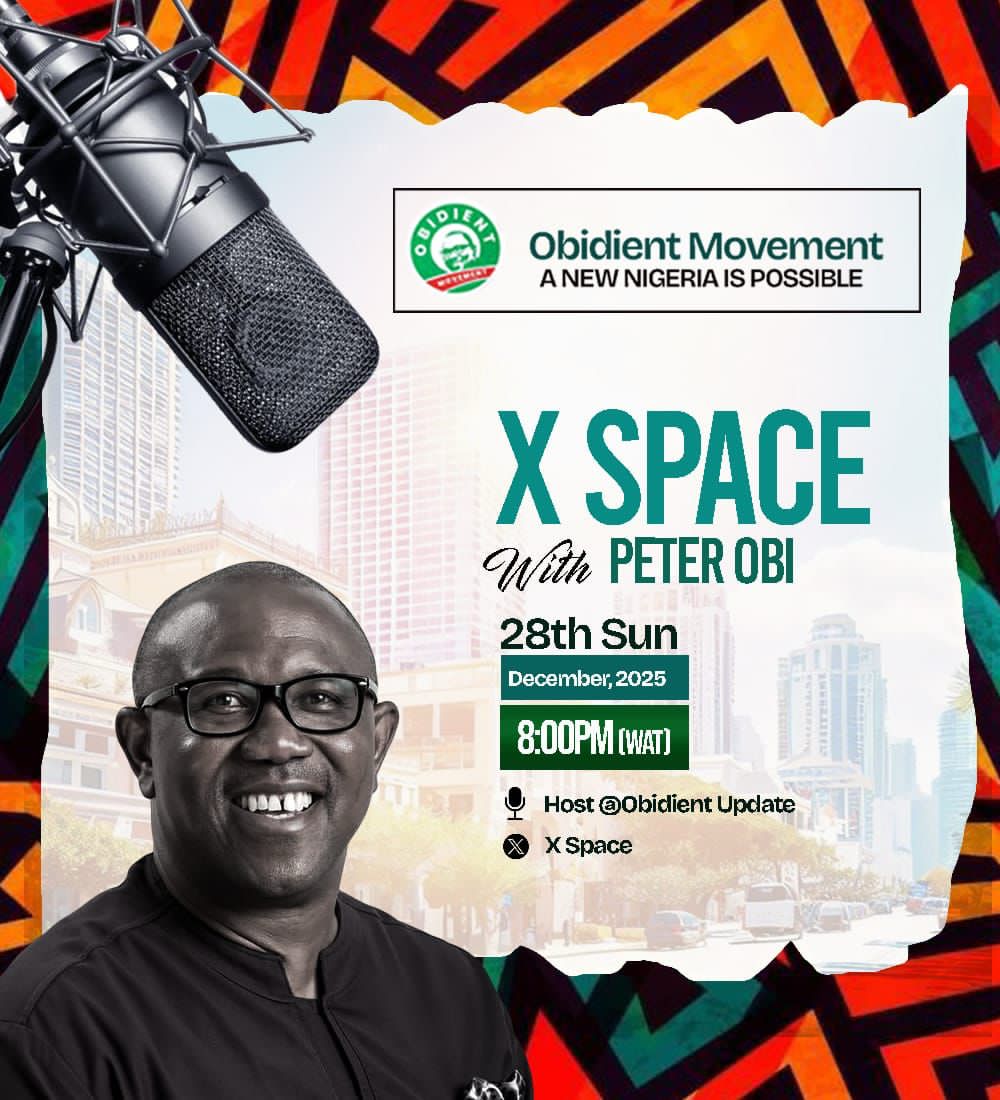
I respectfully invite you to join me this evening, Sunday, 28th December 2025, on an interactive X Space by 8pm tonight as we engage in a thoughtful conversation about our nation and the collective responsibility required to build a more just, productive, and united Nigeria.
Host: @obidientupdate
Co-Host: @torty_mercy
Co-Host: @tudobams
Your presence and participation will add great value to the conversation.
A New Nigeria is POssible. -PO
Nigeria: Heavily armed Fulani Islamists have killed over twenty Christians in Bindi, Riyom, Plateau State.
The assault occurred despite the presence of security forces in the area.
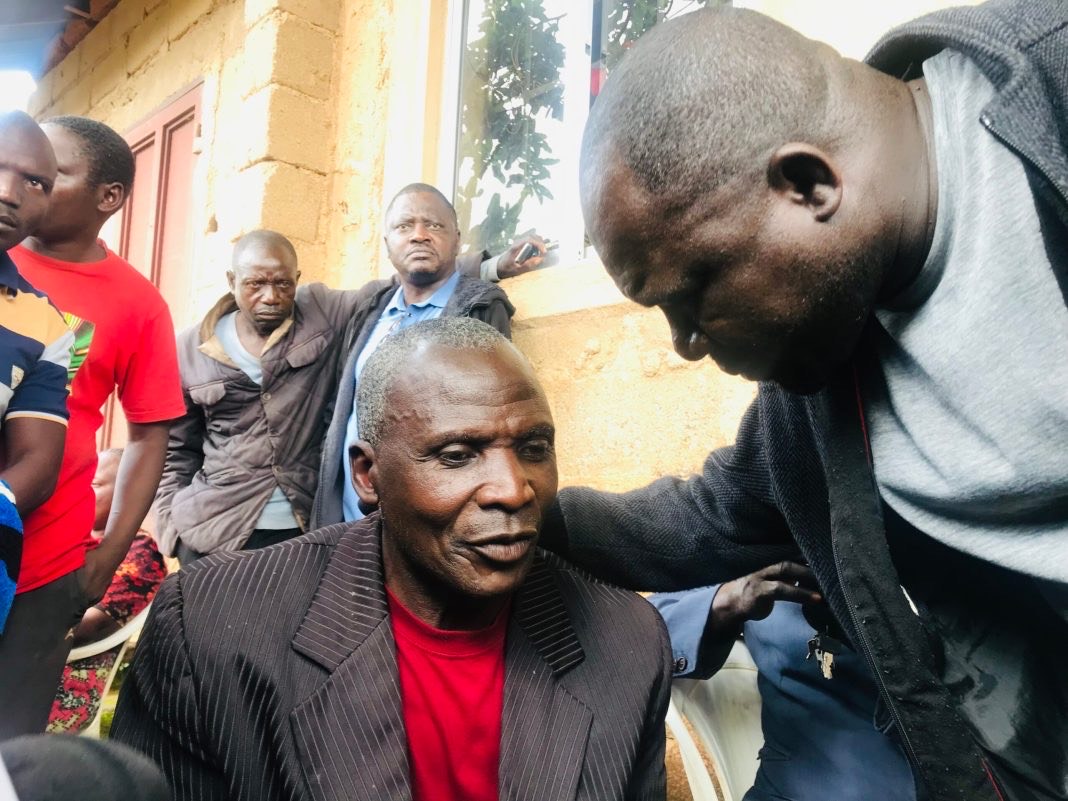
This pastor lost nine family members.
These Christians need immediate help and prayer.
The best time to have planted a tree is 20 years ago. The second best time is now. @Peter4Nigeria is right. There is a short window available for electoral reform before @inecnigeria takes us on another tortuous journey that is full of booby traps in the name of 2027 elections